
Questioning the definition of justice from past laws.
- The concept of Gang Sang Jae, the strict standard for punishing sexual crimes in the Joseon era
- The high probation rate and secondary victimization issues in the modern judicial system
- Specific judicial reform proposals through comparisons of the past and present
In the streets of Joseon, the severed heads displayed were symbols of state-imposed morality. Today, news that punishments for sexual crimes end with probation starkly contrasts this barbaric image. One side represents the extreme of state violence, while the other reflects a disconnect with public sentiment. This article aims to dissect the issues within the modern judicial system through the lens of seemingly brutal past laws and seek a path toward better justice.
Part 1: Law Without Forgiveness: Punishment of Sexual Crimes in the Joseon Era
Order, Hierarchy, and Gang Sang Jae
Joseon utilized the Gyeongguk Daejeon, its own legal code, along with the Ming Dynasty’s criminal law, Daemyungryul. These legal codes were expressions of a Confucian worldview aimed at maintaining strict hierarchical order.
The core concept is Gang Sang Jae (綱常罪), which refers to crimes that undermine the foundations of society, particularly certain sexual crimes (especially those violating social order), which were considered acts of rebellion against the state and natural order. An example is a slave raping his master’s wife.
This clearly illustrates the principle that protecting hierarchical order takes precedence over individual protection. The severity of punishment was directly proportional to how much the crime challenged the existing order, with the primary function of the law being to uphold class structure rather than individual rights.
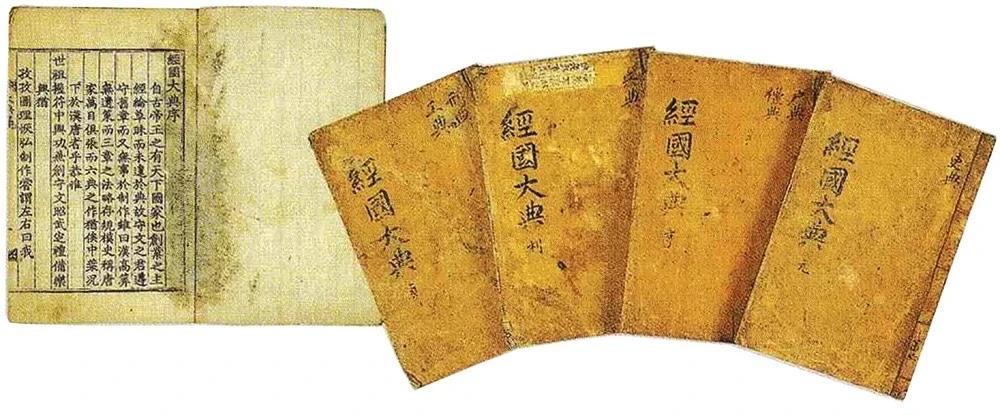
Chronology of Crimes: Case Studies from Historical Records
Actual cases vividly illustrate the legal sentiments of the time.
-
Case 1: Slave Silguji (1404) The slave Silguji and his accomplices, who gang-raped a noblewoman, were subjected to Lingchi for committing a ‘Gang Sang Jae’ crime that ‘contradicted the principles of heaven.’ This was not merely a death sentence but a declaration of the state’s will to erase their very existence.
-
Case 2: Child Sexual Assault (Taejo & Sejong Era) Perpetrators who raped 11-year-old and 8-year-old girls were swiftly and decisively sentenced to hanging. Notably, Sejong declared, “Rape is not forgiven even when a pardon is issued,” demonstrating a minimal consensus to protect the most vulnerable.
-
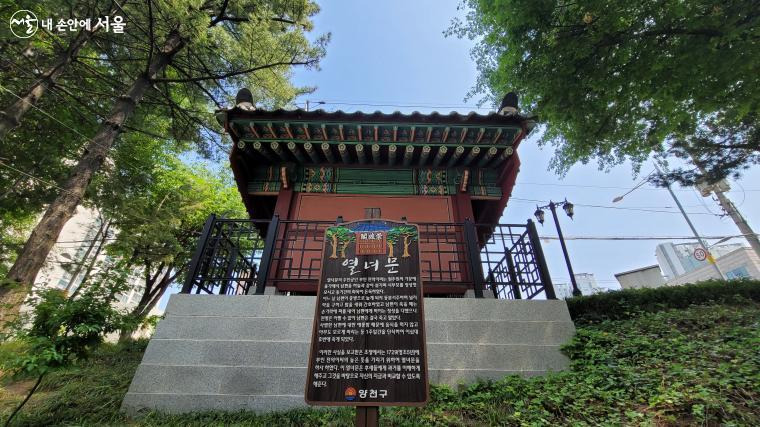
Case 3: The Burden of Chastity and the Yeolnyeomun The ‘protection’ of women was a double-edged sword. Even if raped, women had to prove themselves, and even if they did, their family’s honor was tarnished. If they resisted and died, the state would erect a Yeolnyeomun, transforming the tragedy of women into a symbol of patriarchal virtue. This led to the irony where, to avoid punishment, consensual relationships were falsely claimed as “I couldn’t refuse due to weakness.”
The Yeolnyeomun, which wrapped women's sacrifices in patriarchal virtue. -
Case 4: Corrupt Officials (1472) A pastor and judge in Sangju, who accepted bribes to cover up a rape case, received severe penalties of 100 and 90 lashes, respectively. This shows that negligence in law enforcement was considered a serious crime against the state.
Part 2: The Dilemma of Modern Times: Leniency, Discrepancy, and Victims’ Trials
The Shift in Law: From Social Order to Sexual Autonomy
Modern South Korean law (e.g., Criminal Law, Sexual Violence Punishment Act, Youth Protection Act) prioritizes the protection of individual sexual autonomy over patriarchal ‘chastity.’ This stands on a fundamentally different philosophical foundation than that of the Joseon era.
I believe this philosophical shift is undoubtedly progress for humanity, but paradoxically, it has sometimes pushed the essence of ‘victim suffering’ behind procedural legitimacy or the potential for rehabilitation.
The Gap in Sentencing and ‘Genuine Reflection’
The problem lies in the gap between the strictness of the legal code and actual rulings. The probation rate (35.7%) for first-instance sexual crime trials is higher than the actual imprisonment rate (29.3%). Particularly shocking is the statistic that the probation rate for child and adolescent rape cases exceeds 40%.
The main mitigating factor, ‘genuine reflection,’ is easily recognized through submissions of letters of reflection or payment of compensation, leading to a de facto inequality where the perpetrator’s economic capacity influences sentencing. This means that a system that abolished class is reproducing another hierarchy based on economic power.
The Victim’s Second Trial: Secondary Victimization
Secondary victimization refers to the additional suffering victims endure while seeking justice. This includes insensitive investigative processes, character defamation in court, and malicious comments online.
This bears a striking resemblance to the burden faced by women in the Joseon era, who had to prove their ‘chastity.’ Today, victims also face societal pressure to prove they were not intoxicated and that they ‘sufficiently’ resisted. Although the legal standard has shifted from ‘chastity’ to ‘consent,’ the irony remains that victims must prove their innocence. What do you think about this?
Comparison: Punishment of Sexual Crimes in Joseon and Modern Times
The approaches of the two eras show clear differences, revealing the failure points of the modern judicial system.
| Legal Concept | Joseon Dynasty | Modern South Korea |
|---|---|---|
| Goal of Law | Gang Sang (綱常), maintaining Confucian social/moral order and hierarchy | Protection of individual sexual autonomy and human rights |
| Child Rape | Hanging or execution. Swift and absolute punishment | Legal penalty is life imprisonment or over 10 years, but actual probation is problematic |
| General Rape | Hanging | Legal penalty is over 3 years of imprisonment, but high probation rates and mitigating factors are problematic |
| Inequality | Explicit/legalized class-based inequality | Implicit/economic inequality (differences in consent and legal representation) |
| Burden on Victims | Burden of proving ‘chastity,’ tied to patriarchal honor | Burden of proving ‘credibility,’ exposed to secondary victimization and character attacks |
Checklist: Suggestions for Correcting the Scale of Justice
This is not a call to return to the past. To establish current principles correctly, the following reforms are necessary.
- Reform Sentencing Guidelines: The criteria for probation in violent sexual crimes must be significantly strengthened. ‘Genuine reflection’ should be redefined to be proven through substantial efforts such as participation in restorative justice programs.
- Strengthen Victim Rights: Legalize victims’ rights to access information and introduce strict evidentiary rules to limit character attacks during trials to prevent secondary victimization.
- Empathy Training for the Judiciary: Mandate ongoing education for judges and law enforcement personnel on victim-centered perspectives and trauma understanding to reduce the disconnect with public sentiment.
Conclusion
By comparing past laws with present justice, we have discovered three key points.
- The Joseon era governed sexual crimes, particularly Gang Sang crimes, with a zero-tolerance principle to maintain social order.
- The modern judicial system aims to protect individual rights but fails to achieve more due to high probation rates and secondary victimization issues.
- True justice can only be realized when the current principles consistently recognize the seriousness of sexual crimes and fully protect victims, rather than relying on the brutality of the past.
I hope this article serves as an opportunity to reconsider the standards for punishing sexual crimes and the role of the judicial system in our society.
References
- Gang Sang Jae - Namu Wiki Link
- Gang Sang Jae (綱常罪) - Sillok Wiki Link
- [One Cut Exploration Team] A fear comparable to ‘Treason’? What is ‘Gang Sang Jae’ in
? - iMBC Entertainment Link - Beomgan (犯奸) - Sillok Wiki Link
- Punishments for Adultery and Rape - Our History Net Link
- Sexual Crimes Without Time or Space… What About the Joseon Era? - SBS News Link
- [Hidden History 2cm] In the Joseon era, child rapists were hanged or beheaded - Yonhap News Link
- Rape was not forgiven even when a pardon was issued - OhmyNews Link
- Who verifies the ‘genuine reflection’ of sexual offenders? - SisaIN Link
- Over 40% of sexual offenders against minors receive probation - Policy Briefing Link