
One Event, Thousands of Stories. How has the confrontation between the Yellow Emperor and Chiyou been reborn in modern politics and culture?
Overview
- The official narrative of the Battle of Zhuolu recorded in Chinese orthodox historical texts
- Alternative interpretations from Korean fringe historiography and their points of contention
- Reasons for the revival of the Battle of Zhuolu in modern politics and culture
The Intersection of Myth and History: The Battle of Zhuolu
The Battle of Zhuolu (涿鹿之戰), said to have occurred during the dawn of ancient East Asia, is a complex narrative that goes beyond mere military conflict, intersecting with the origins of Chinese civilization and various ethnic identity discourses. This distant event was established as a narrative of unification of Chinese civilization through Sima Qian’s Records of the Grand Historian (史記), framing the Yellow Emperor (黃帝) as the progenitor of civilization and Chiyou (蚩尤) as a brutal rebel.
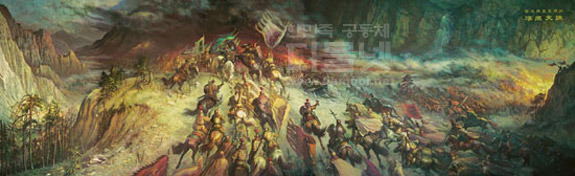
However, behind this story lies a mythological interpretation found in texts like the Classic of Mountains and Seas (山海經), and an alternative perspective from Korean fringe historiography that views Chiyou as a hero of the Korean people. In modern times, the narrative has been revived through China’s ‘Three Ancestors of China (中華三祖)’ project and Korea’s ‘Red Devils’ symbol, leading to a new ’narrative war.’ This article explores the various layers of the Battle of Zhuolu and traces how past stories shape present identities.
Part 1: The Battle of Zhuolu from the Perspective of Chinese Orthodox Narratives
We will examine the classical narratives centered on China that have dominated interpretations of the Battle of Zhuolu for over two thousand years. We will delve into how complex tribal conflicts were established as myths of national origin.
The Triad Before Conflict: The Yellow Emperor, Yan Emperor, and Chiyou
The narrative of the Battle of Zhuolu unfolds around three figures: the Yellow Emperor, Yan Emperor (炎帝), and Chiyou. Their relationships were far more complex and fluid than the later ‘hero versus villain’ dichotomy.
-
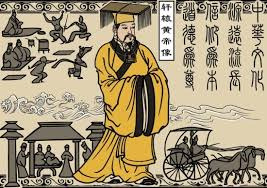
The Yellow Emperor (黃帝), the Rising Monarch of Unification A civilizational hero who ended chaos and established order. He is revered as the progenitor of the Huaxia people (華夏族) and is deified as the founder of civilization who invented writing, calendars, and carts.
The Yellow Emperor in Chinese mythology -
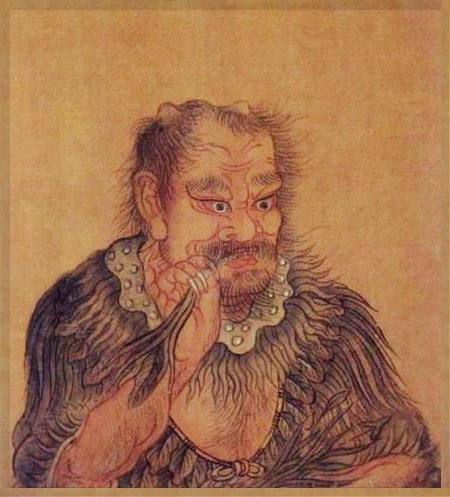
Yan Emperor (炎帝), the Chief of a Declining Era Identified with the god of agriculture and medicine, Shennong (神農). As his era waned, a power vacuum arose for the Yellow Emperor to rise, and it is said he formed an alliance after being defeated by the Yellow Emperor at the Battle of Banquan (阪泉之戰).
Yan Emperor Shennong worshipped as the god of agriculture -
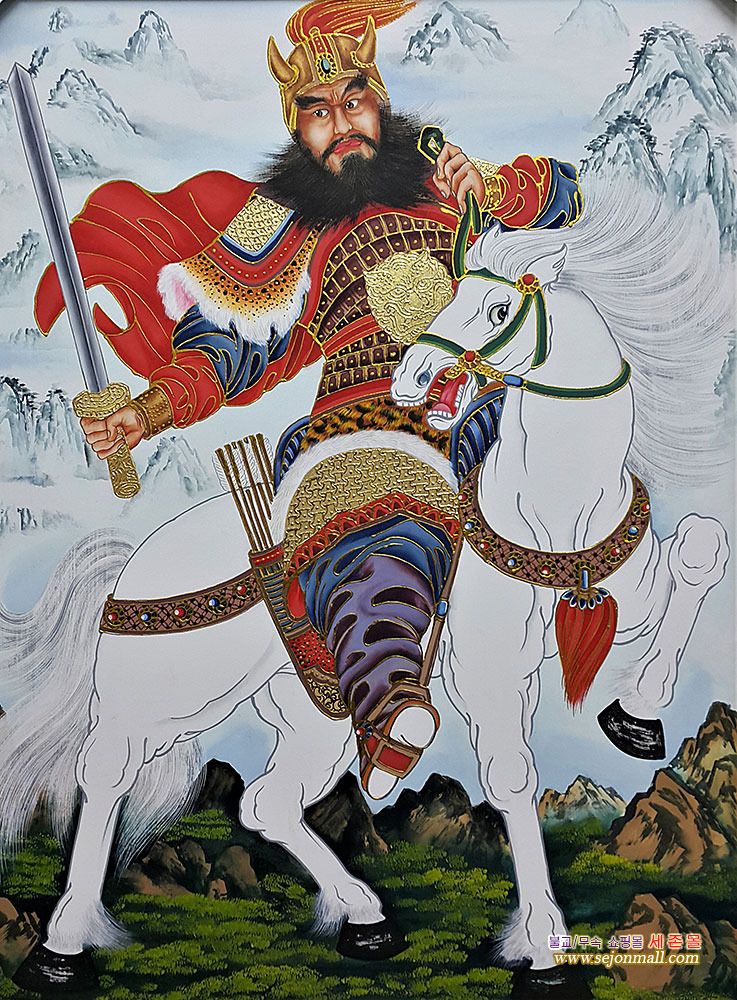
Chiyou (蚩尤), the Powerful Outsider Leader of the Jiu Li (九黎) tribe, associated with the Eastern Yi (東夷) group. He is depicted as a master of metallurgy who created the first metal weapons and as a fearsome warrior with a “copper head and iron forehead (銅頭鐵額).”
Chiyou depicted as a powerful warrior
As history was reshaped around the Huaxia people, Yan Emperor was incorporated into the bloodline, while Chiyou, seen as the most alien, was defined as a rebel to be eliminated.
Establishing the Orthodox Narrative: Sima Qian’s Records of the Grand Historian
Sima Qian defined the Battle of Zhuolu as a decisive moment in the unification of China in the Records of the Grand Historian in the “Annals of the Five Emperors.” His narrative clearly contrasts the Yellow Emperor as ’the one who governs chaos (治亂者)’ with Chiyou as ’the one who incites chaos (作亂者)’.
The Records present a logical sequence where the Yellow Emperor first subdues the Yan Emperor at Banquan to unify the internal factions, and then defeats the external threat, Chiyou, at Zhuolu, thus being elevated as the Son of Heaven (天子). This transformation of tribal conquest wars into legitimate acts of establishing order for a unified empire became a historical precedent justifying the expansion of subsequent Chinese dynasties.
Mythical Struggle: The War of Gods and Monsters in the Classic of Mountains and Seas
While the Records constructed a political narrative, the Classic of Mountains and Seas depicts the Battle of Zhuolu as a cosmic struggle between gods, monsters, and supernatural forces.
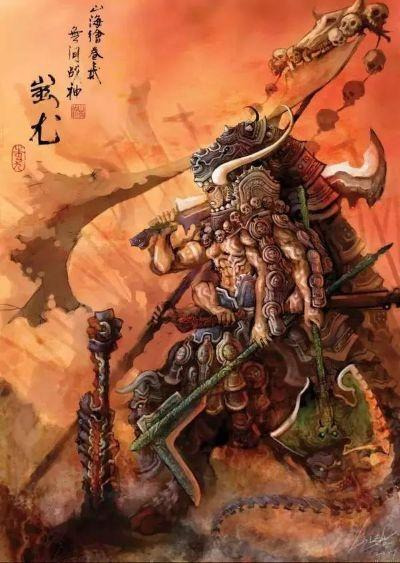
- Chiyou’s Legion (Forces of Chaos): Summoning the wind god Fengbo (風伯) and the rain god Yusha (雨師) to create storms and thick fog.
- The Yellow Emperor’s Legion (Forces of Order and Civilization): Summoning the winged dragon Yinglong (應龍) and the drought goddess Ba (魃), and inventing the ‘guiding cart (指南車)’ to overcome the fog.
This confrontation symbolizes the victory of civilization (the Yellow Emperor) over unpredictable nature (Chiyou). However, the story of the goddess Ba remaining on earth to cause drought as a price of victory hints at the sacrifices and tragedies inevitably accompanying the establishment of order, adding depth to the myth.
Part 2: Alternative Interpretations Surrounding the Battle of Zhuolu
We will explore counter-narratives that challenge the China-centered narrative, showcasing examples that demonstrate history as a multi-layered interpretive field.
The Eastern Hero Chiyou: The Perspective of Korean Fringe Historiography
In Korean fringe historiography (在野史學), which studies history outside the mainstream academia, Chiyou is reinterpreted as a heroic progenitor of the Korean people. At the center of this perspective is the Chronicles of the Three Kingdoms (桓檀古記).
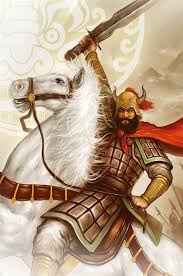
In this narrative, Chiyou appears as ‘Jaoji Hwanung (慈烏支桓雄)’, the 14th Hwanung of the Baedal Kingdom (倍達國), while the Yellow Emperor is depicted as a rebel against his rule. Thus, the Battle of Zhuolu is completely recharacterized as Chiyou’s suppression of the ‘Great Victory at Zhuolu (涿鹿大捷)’.
While mainstream historians regard the Chronicles of the Three Kingdoms as a forgery (僞書), this narrative holds cultural and ideological significance as an important case of ‘counter-history’ that resists China-centric views and seeks to establish an independent origin.
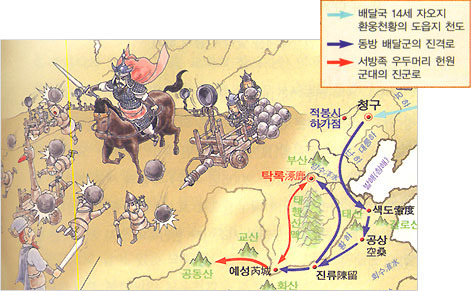
The Core of the Controversy: What is the Identity of the Eastern Yi (東夷)?
At the core of the logic connecting Chiyou to the Korean people is the interpretation of ‘Eastern Yi (東夷)’.
- Claims of Fringe Historiography: Viewing Chiyou’s Jiu Li tribe as a faction of the Eastern Yi, this perspective considers this Eastern Yi to be the direct ancestor of the Korean people. It connects to the advanced Longshan culture (龍山) of the Shandong Peninsula and aligns with records of Chiyou using metal weapons.
- Criticism from Mainstream Academia: The term ‘Eastern Yi’ is seen as a comprehensive exonym used by ancient China to refer to various heterogeneous groups in the east, making it difficult to equate with the modern concept of ‘Korean people.’ The equation ‘Chiyou = Eastern Yi = Korean people’ may represent an anachronistic approach projecting modern nationalism onto ancient times.
Radical Hypothesis: Was the Battle of Zhuolu a Myth of ‘Salt Production’?
Beyond the question of whether the Battle of Zhuolu actually occurred, there is a non-historical interpretation focusing on what this story signifies. One of the most intriguing hypotheses is that the Battle of Zhuolu mythologically personifies the ancient process of salt production.

This hypothesis intricately connects the core elements of the battle to the salt production process.
- Phonetic Similarities:
Zhuolu (涿鹿, Zhuōlù)sounds similar to ‘murky brine (濁鹵, Zhuólǔ)’, andChiyou (蚩尤, Chīyóu)resembles ‘salt from a pond (池鹽, Chíyán)’. - Correspondence of Processes:
- The Sun (Yellow Emperor) evaporates the brine (Chiyou), which is central to the battle.
- The rain and fog, obstacles to salt production, are Chiyou’s allies (Yusha, Fengbo).
- The drought, a necessary condition for salt production, is the Yellow Emperor’s ally (goddess Ba).
This interpretation compellingly explains the mythical elements of the Battle of Zhuolu, which lack clear archaeological evidence, and presents a new perspective that transcends the historicality debate.
Part 3: The Revival of the Battle of Zhuolu in Modern Times
How are ancient myths being reinterpreted within the political and cultural landscapes of 21st-century China and Korea?
Chiyou in China: The Backstory of the ‘Three Ancestors of China’ Project
In the late 20th century, China undertook a radical historical reconfiguration, elevating the past enemy Chiyou alongside the Yellow Emperor and Yan Emperor as ‘Three Ancestors of China (中華三祖)’. The ‘Three Ancestors Hall (中華三祖堂)’ built in Zhuolu County, Hebei Province, symbolizes this.
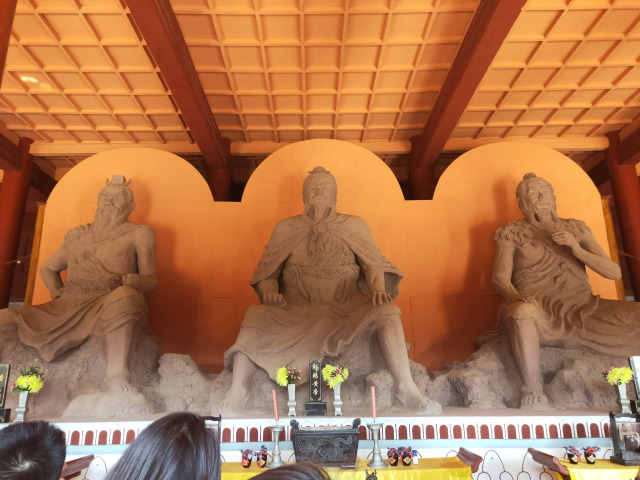
The political objectives of this project are clear.
- Integration of a Multi-Ethnic State: By embracing Chiyou, an ancestor of ethnic minorities like the Miao (苗族), it aims to incorporate their histories into mainstream Chinese history and strengthen national unity.
- Reinforcement of Historical Territorialism: By solidifying the principle that “all history within current Chinese borders is Chinese history,” it seeks to block claims of historical ties from neighboring countries.
Interestingly, in the murals of the Three Ancestors Hall, Chiyou is depicted wielding a primitive stone axe, while the Yellow Emperor and Yan Emperor are shown armed with advanced metal weapons. This clearly illustrates a dual strategy of embracing Chiyou while maintaining civilizational superiority for the Huaxia people, subverting historical facts.
| Feature | Classical Texts (Records, Classic of Mountains and Seas) | Modern Representations (Three Ancestors Hall) |
|---|---|---|
| Yellow Emperor (黃帝) | Civilizational hero, uses divine powers | The highest ancestor with supreme technology, armed with advanced metal weapons |
| Yan Emperor (炎帝) | Chief of a declining agricultural society | Co-founder of civilization alongside the Yellow Emperor, armed with metal weapons |
| Chiyou (蚩尤) | Master of metallurgy (copper head, first metal weapon), mobilizes natural forces | Subordinate ’third ancestor’, depicted as a less civilized being wielding a primitive stone axe |
Chiyou in Korea: The Cultural Icon of the ‘Red Devils’
While China reinterprets Chiyou through state-led initiatives, in Korea, Chiyou has spontaneously revived within popular culture. Following the 2002 World Cup, he was adopted as the symbol of the football supporters ‘Red Devils’, becoming an icon representing a strong and resistant national spirit.
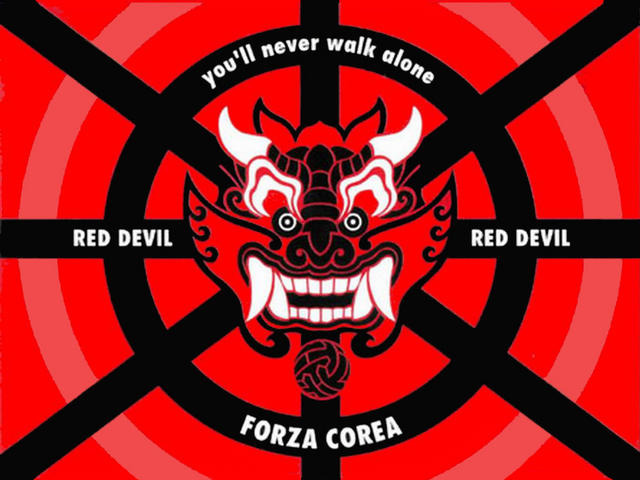
The image of the Gwi-myeon-wa (鬼面瓦) mascot of the ‘Red Devils’ has been interpreted as the face of Chiyou, the ‘god of war’ known through fringe historiography, forming a strong connection between the two. This phenomenon is a bottom-up cultural occurrence created by the public’s cultural aspirations, rather than a top-down historical narrative led by the state. On the international stage of the World Cup, Koreans needed a powerful symbol that did not conform to the static image of the past or the China-centric historical view, and Chiyou perfectly met that demand.
Comparison of Modern Interpretations of Chiyou in China and Korea
Comparing how the same figure, Chiyou, is interpreted differently in modern times reveals clear distinctions. Where do you think these differences originate?
| Category | Chiyou in China (Three Ancestors) | Chiyou in Korea (Red Devils) |
|---|---|---|
| Subject | State, government (top-down) | Public, supporters (bottom-up) |
| Purpose | Political integration, inclusion of ethnic minorities | Expression of cultural identity, spirit of resistance |
| Nature | Symbol of inclusion (ancestor from within) | Symbol of confrontation (hero against the outside) |
| Medium | Historical education, monuments (Three Ancestors Hall) | Popular culture, sports support (mascot) |
Conclusion
In summarizing this article, I have once again realized that history is not a fixed past but a living resource that is constantly recreated according to present needs. The legend of the Battle of Zhuolu leaves us with three key points.
- One Event, Multiple Stories: The Battle of Zhuolu is a multi-layered narrative where the records of the victors (Chinese official history), the resistance of the vanquished (Korean fringe historiography), and mythological imagination (Classic of Mountains and Seas) overlap.
- Historical Interpretation as a Mirror of the Present: China’s ‘Three Ancestors’ project and Korea’s ‘Red Devils’ phenomenon illustrate how the same mythical figure is mobilized differently according to modern political and cultural needs.
- The Unending War of Narratives: While the physical battle between the Yellow Emperor and Chiyou has ended, the ‘war of narratives’ surrounding their stories and identities continues into the 21st century.
The story of the Battle of Zhuolu poses important questions about how we should view and interpret history.
References
- Battle of Zhuolu Wikipedia
- 涿鹿之战 维基百科
- Battle of Zhuolu Wikipedia
- Chiyou (蚩尤) Daesoon Jinrihoe Research
- [Lee Deok-il’s Love] The Three Ancestors Hall of Zhuolu Chosun Ilbo
- Do you know the Chiyou Cheonhwang symbol of the ‘Red Devils’? Seoul Newspaper
- [Wu Xiaodong] The Battle of Zhuolu: A Story of Salt Production China Folklore
- Various other references provided in the input