
Isn’t the pace of technological innovation these days astonishing? \Generative Artificial Intelligence (AI)\ and Large Language Models (LLMs) are rapidly transforming our lives. But to be frank, the physical infrastructure that supports this innovation is now hitting its limits.
Big tech companies like Google, Meta, Amazon, and Microsoft plan to pour as much as $375 billion into the AI infrastructure arms race in 2025 alone. McKinsey & Company estimates that to meet AI-driven demand by 2030, the world will need roughly $5.2 trillion in data center investment — an astronomically large figure.
However, such explosive expansion of terrestrial infrastructure presumes unsustainable consumption of two critical resources: power and water. Actually, to be precise, we’ve already reached their limits.
The power required by data centers has exceeded what existing grids can handle, and the enormous volumes of fresh water needed to cool servers are beginning to directly conflict with local community survival. According to McKinsey’s analysis, roughly 70% of the increase in data center demand through 2030 will come from AI workloads. This is a structural bottleneck that efficiency improvements alone cannot fix.
In this article, I propose \\\\\‘Orbital Data Centers (ODC)\\\\\’ as a fundamental alternative to overcome the physical, environmental, and economic limits faced by terrestrial infrastructure. ODCs completely escape the constraints of Earth’s power grids by directly harnessing effectively unlimited solar energy. They also use the empty space at about 3 K (Kelvin) — around minus 270 degrees Celsius — as a vast heat sink that requires no cooling water. This has the potential to eliminate the energy and cooling problems at their root.
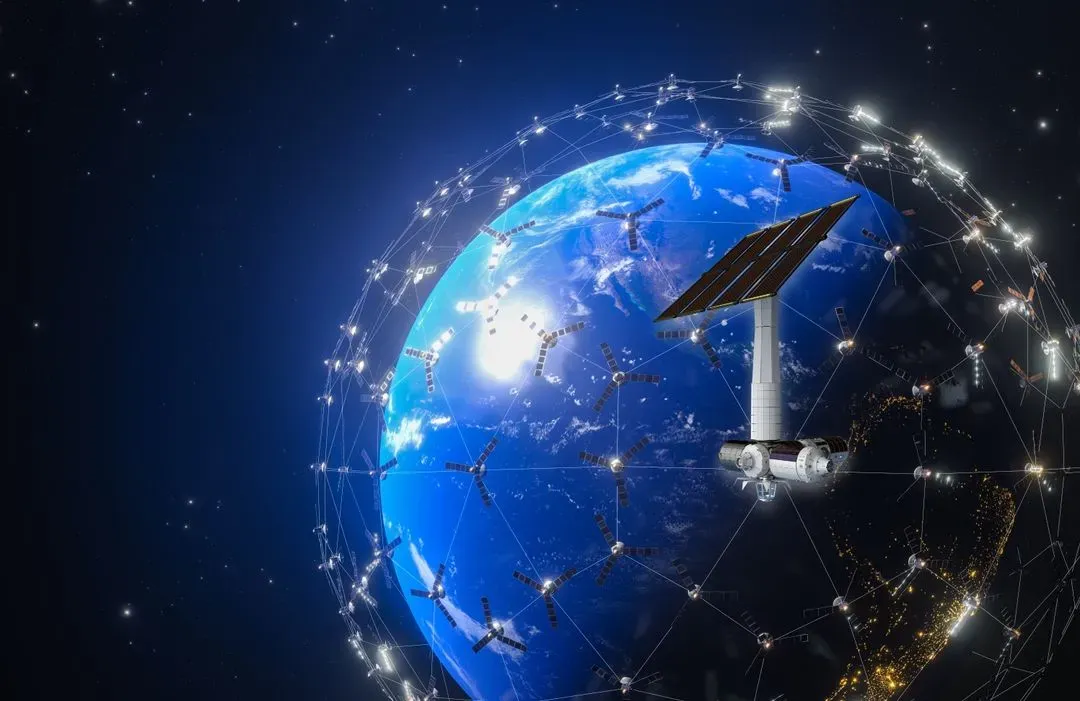
From here on, I will quantitatively analyze the terrestrial crisis that has triggered the need for ODCs, examine how far the key enabling technologies for ODC economic feasibility (launch cost, thermal management, radiation resilience) have progressed, and diagnose the future directions for scaling to gigawatt (GW)-class space infrastructure as well as emergent macro environmental issues (atmospheric pollution, orbital debris).
Why ‘space’ now?: The unsustainability of terrestrial data centers
As the AI revolution accelerates, the operational model of terrestrial data centers is being driven to its limits. Two key constraints — energy consumption and water resource depletion — are making fundamental alternatives like ODCs urgently necessary.
Energy bottleneck: A power demand crisis driven by AI
The AI revolution literally grows by consuming electricity. And that appetite… wow, it has exceeded what we can bear.
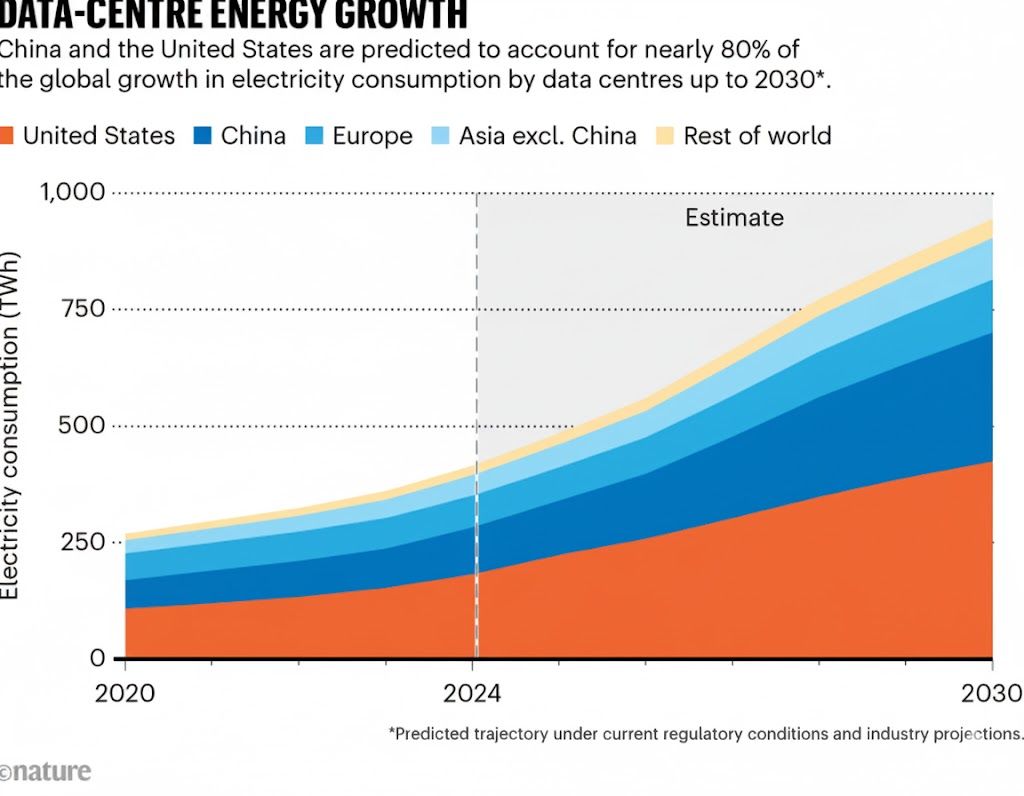
According to the IEA’s reference scenario, global data center power consumption could reach 945 TWh (terawatt-hours) by 2030. That’s double the 2024 consumption and approaches about 3% of total global electricity use in 2030 — an enormous amount.
The main driver of this surge is unquestionably AI. AI workloads require much higher power densities than traditional IT services, and some analyses suggest that AI could increase data center power usage by 40% in 2025 alone. McKinsey forecasts that roughly 70% of the increase in data center demand through 2030 will come from AI workloads. AI is now the primary demand driver for computing infrastructure.
But the real crisis is not the ’total’ power consumption. It’s about ‘concentration’ and ‘connectivity.’ Data centers are highly concentrated in certain regions such as the U.S., China, and Europe. For example, Northern Virginia already consumed 26% of the entire state’s power supply for data centers as of 2023. This has caused local grids to become completely saturated, creating a bottleneck where connecting new data centers to the grid becomes physically impossible.
This indicates the problem cannot be solved simply by building more renewable generators elsewhere. The core issue is that supplying gigawatts of power reliably to a single site — as required by AI hyperscalers — exceeds the architecture of existing power grids.
ODCs fundamentally remove this “connectivity” constraint. By generating power directly in orbit from solar energy and consuming it at the same location, they completely bypass the complex, saturated terrestrial grid infrastructure.
Resource constraint: Cooling systems that have become ‘water hogs’
The huge power consumption of data centers inevitably produces vast amounts of heat. Currently, data centers spend as much as 38% of total power not on running IT equipment but on cooling systems to remove that heat. Next-generation AI chips like NVIDIA’s Blackwell GPUs consume more power to achieve higher compute performance, which immediately demands more powerful cooling systems.
Terrestrial data centers primarily rely on evaporative cooling towers that vaporize water. This has turned data centers into huge consumers of freshwater. A single large data center can use up to 5 million gallons per day (about 18.9 million liters), comparable to the daily water use of a town of 10,000 to 50,000 people.
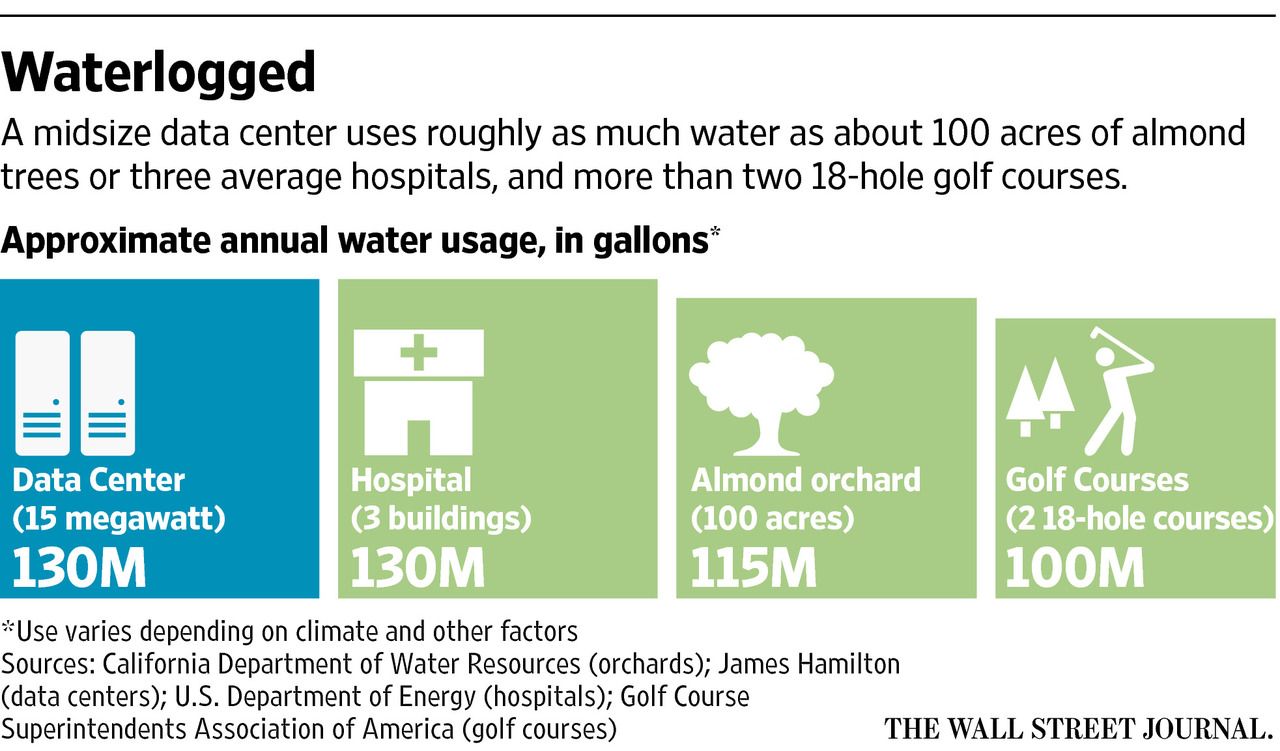
The problem is exacerbated because many data center hubs overlap with water-stressed regions. In Texas, which faces water scarcity, data centers were expected to consume about 25 billion gallons in 2025. Around 60 data centers in the Phoenix, Arizona area reportedly require 177 million gallons per day. This places data centers in direct competition with local communities’ drinking and agricultural water supplies, triggering serious social conflict.
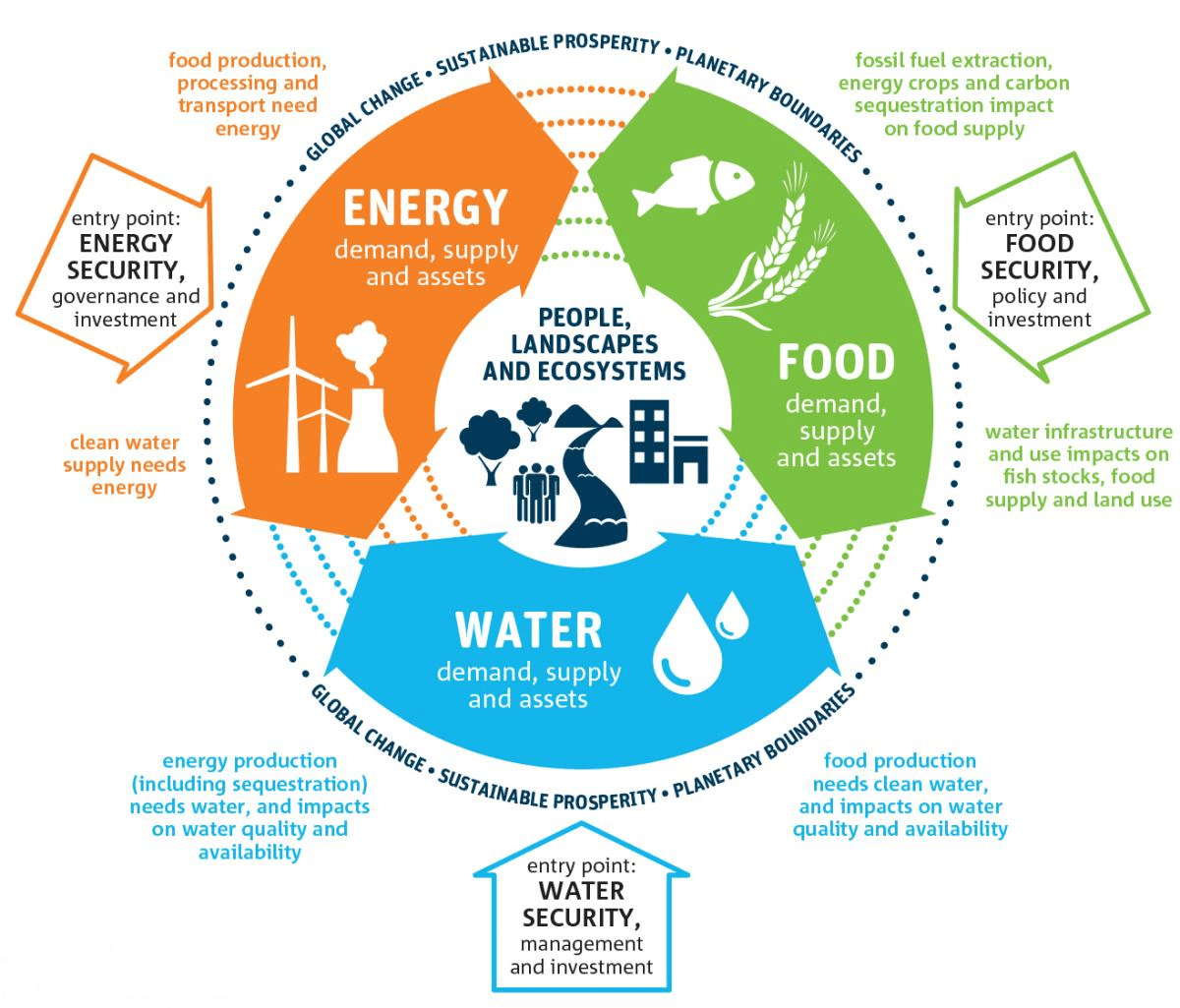
This demonstrates that terrestrial data centers are trapped in a deadly Energy-Water Nexus vicious cycle. The adoption of high-performance chips to improve AI performance leads directly to (1) increased power consumption, (2) increased heat generation, (3) increased cooling water demand, and (4) freshwater resource depletion.
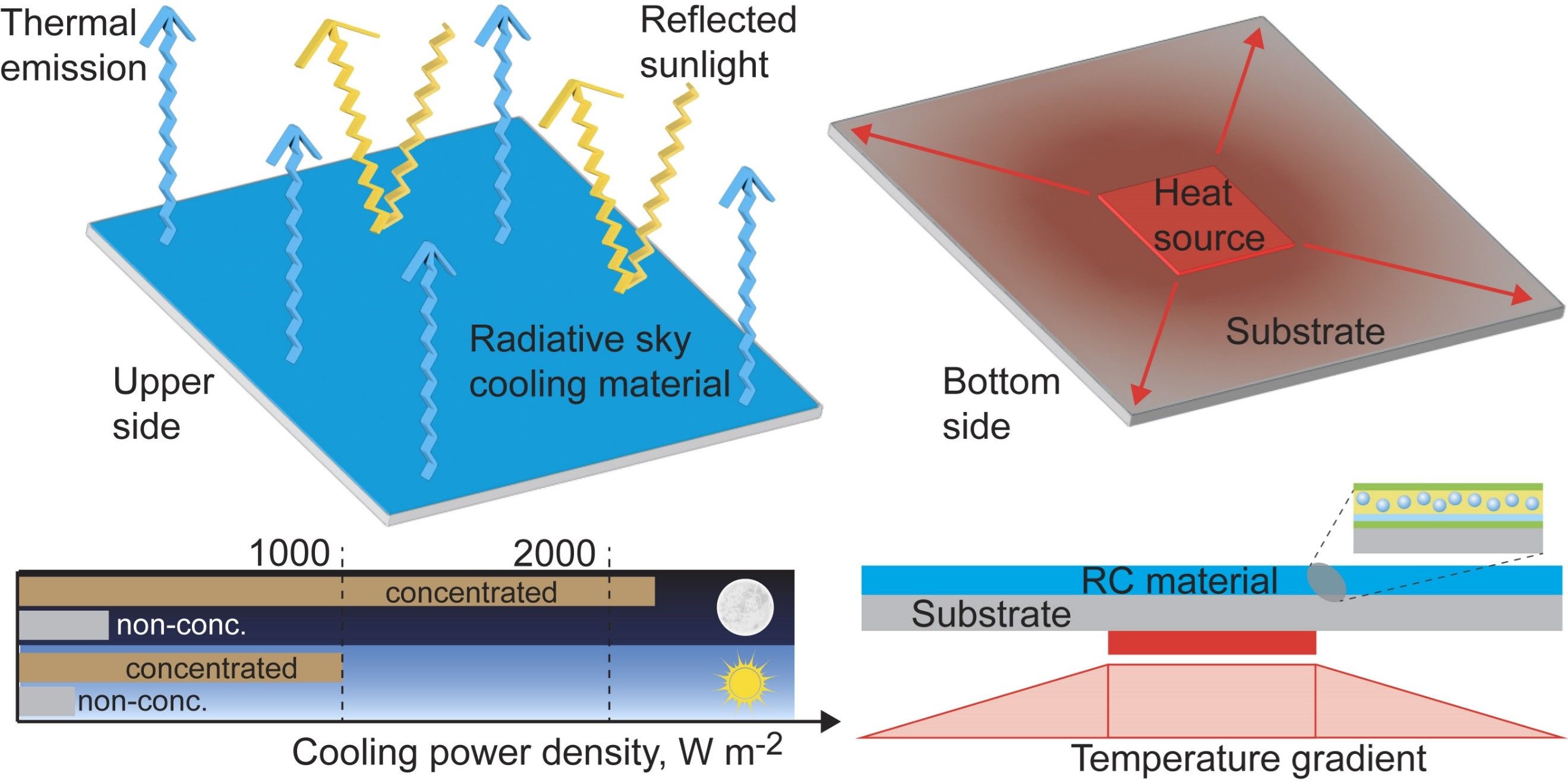
ODCs break this vicious cycle at the source. While securing effectively unlimited solar energy, they emit zero cooling water and instead use **\Radiative Cooling\ to dump heat into space. This simultaneously solves both power usage efficiency (PUE) and water usage efficiency (WUE) issues in a way no terrestrial solution can.
<Table 1. Quantitative analysis of terrestrial data center resource constraints (2025-2030 outlook)>
| Category | 2024-2025 status | 2030 outlook | Key constraint |
|---|---|---|---|
| Power consumption (global) | ~470 TWh in 2024 | 945 TWh (2x 2024) | IEA reference scenario. Approaches 3% of global power consumption. |
| Power consumption (AI share) | 40% surge in power use from AI in 2025 | AI workloads account for 70% of demand increase | AI is the primary driver of power demand. |
| Regional grid stress | Northern Virginia: 26% of state power used by data centers (2023) | Connecting new data centers to local grids becomes physically limited | The issue is local grid saturation, not total capacity. |
| Water use (per facility) | Large centers: up to 5 million gallons/day (city of 10k–50k scale) | Cooling water demand will continue to increase with AI chip heat output | 38% of power consumed by cooling systems. |
| Regional water stress | Texas: 25 billion gallons/year (2025 estimate) | Texas could account for 2.7% of statewide water use | Data center hubs overlap with water-scarce regions (Texas, Arizona). |
| (Note: Data above is reconstructed from various sources cited in the main text.) |
The future already underway: Technology demonstrations for space computing
As terrestrial infrastructure limits become clear, ODCs have moved beyond concept into early technology demonstrations and commercialization at high speed. U.S.-centric startups are leading the initial market, and government-led projects are underway in Europe and the Middle East.
Leading companies and early demonstrations
The current ODC market is being pioneered by players with differing strategies.
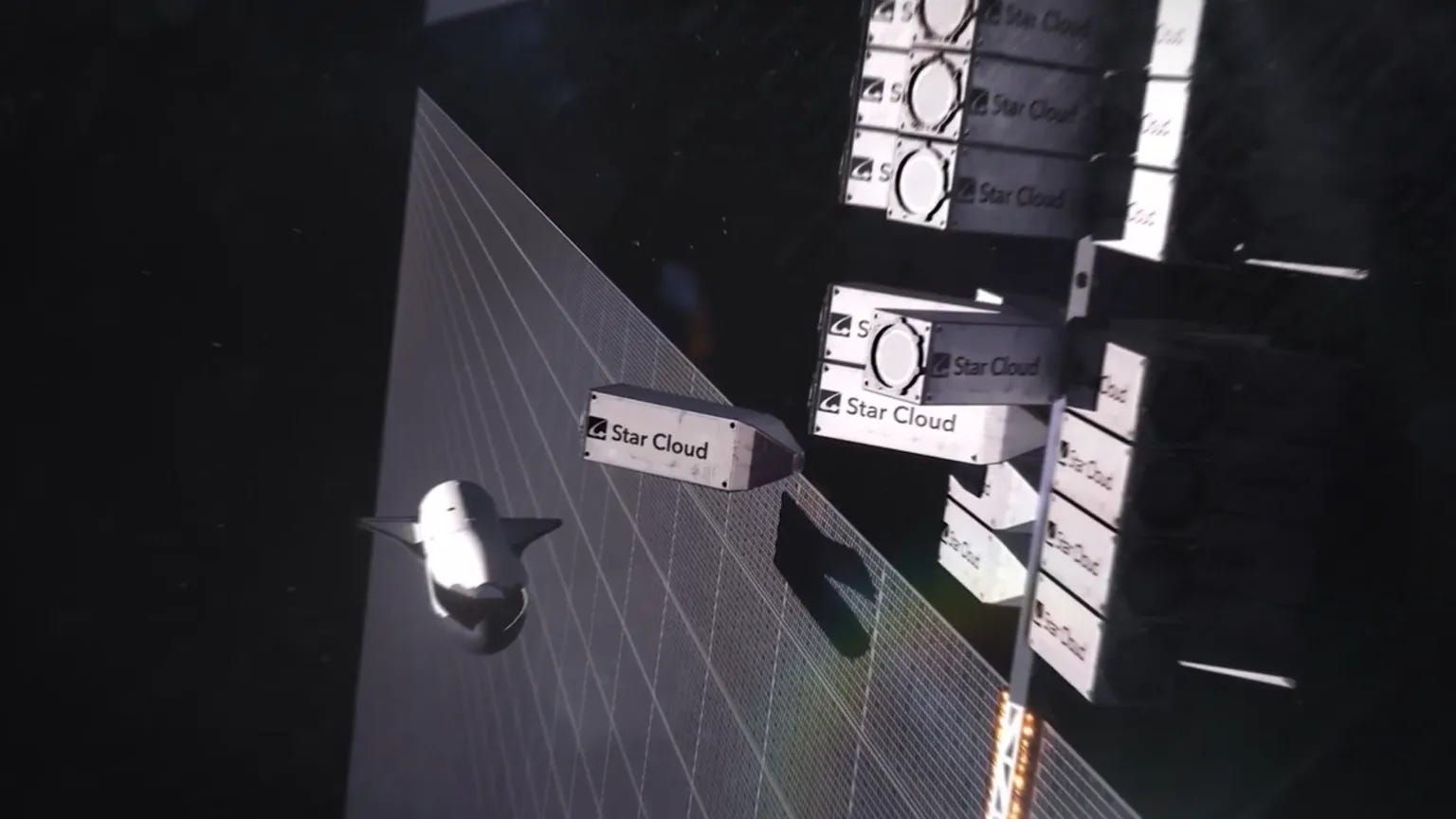
- Starcloud (USA): Founded in January 2024 with $21M in seed funding, Starcloud is one of the most notable companies. They successfully launched the ‘Starcloud-1’ satellite equipped with NVIDIA high-performance H100 GPUs. This is remarkable because it is one of the first demonstrations of operating high-performance commercial off-the-shelf (COTS) hardware in space to run AI inference and fine-tuning. It was a major event proving the technical feasibility of ODCs.
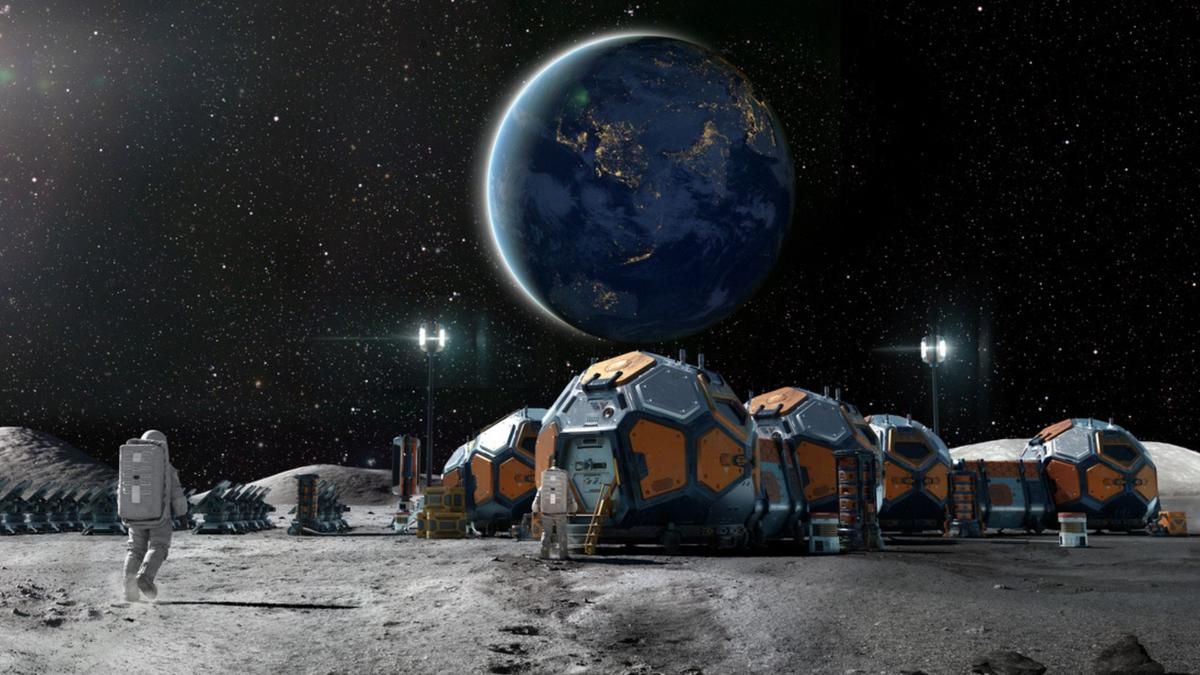
Starcloud space data center - Lonestar Data Holdings (USA): Lonestar takes a different approach, focusing on data security rather than AI compute. They are pursuing the physically most secure “Moon” data center. In March 2025 they sent an 8 TB small data center named ‘Freedom’ on a lunar lander to test data upload/download and validate security protocols on the Moon’s surface.
Lonestar Data Holdings building a data center on the Moon - Thales Alenia Space (Europe): Supported by the European Commission, they completed an 18-month feasibility study project called ‘ASCEND’ for space data centers. This is part of a government-led long-term strategy aimed at commercialization by 2036.
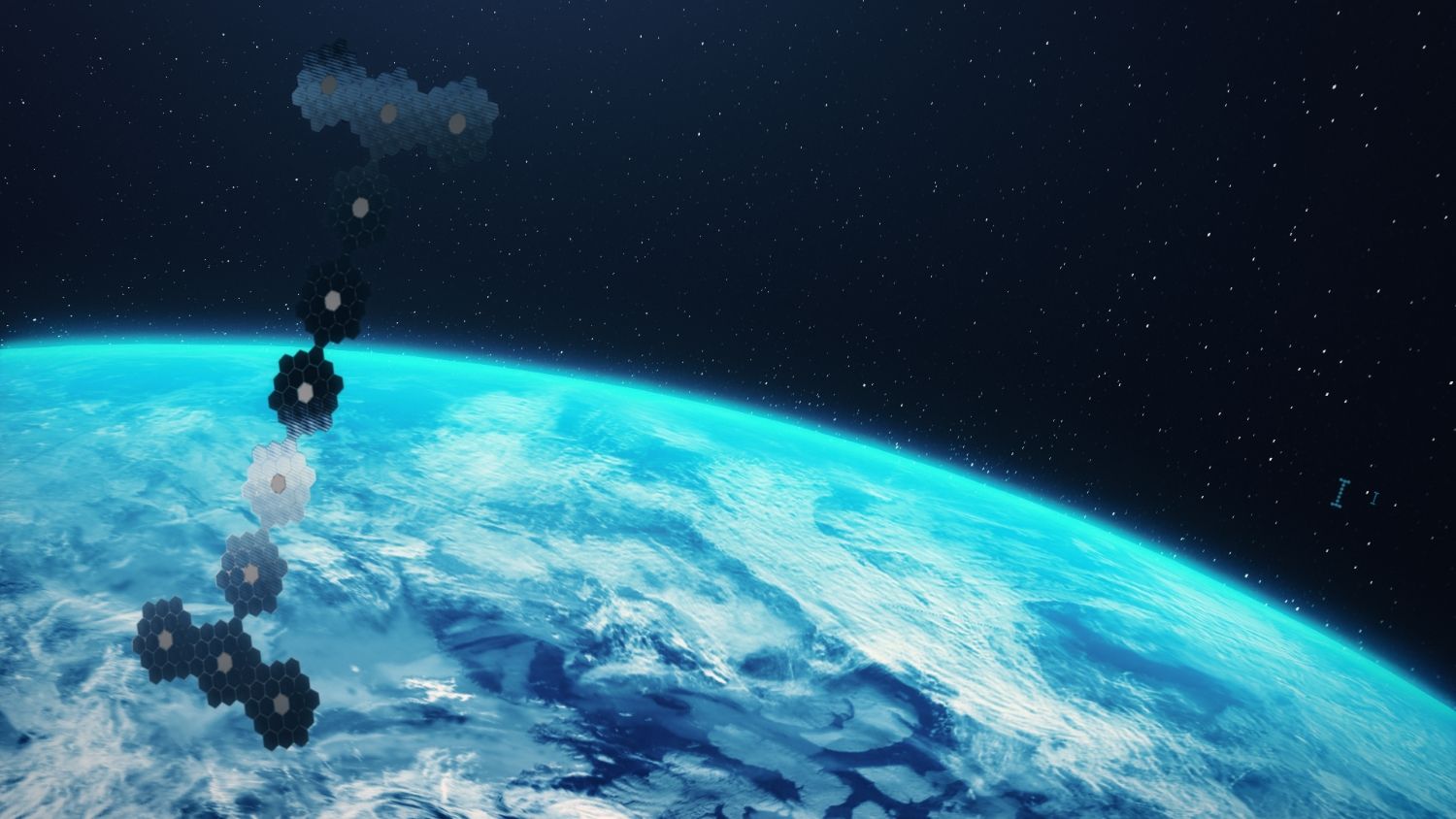
Thales Alenia Space - Madari Space (UAE): Planning a pilot satellite launch in 2026. Their approach emphasizes “space edge computing,” processing the huge volumes of raw data generated in space (e.g., Earth observation satellites) locally in orbit to reduce downlink burdens to the ground, rather than lifting terrestrial data into orbit.
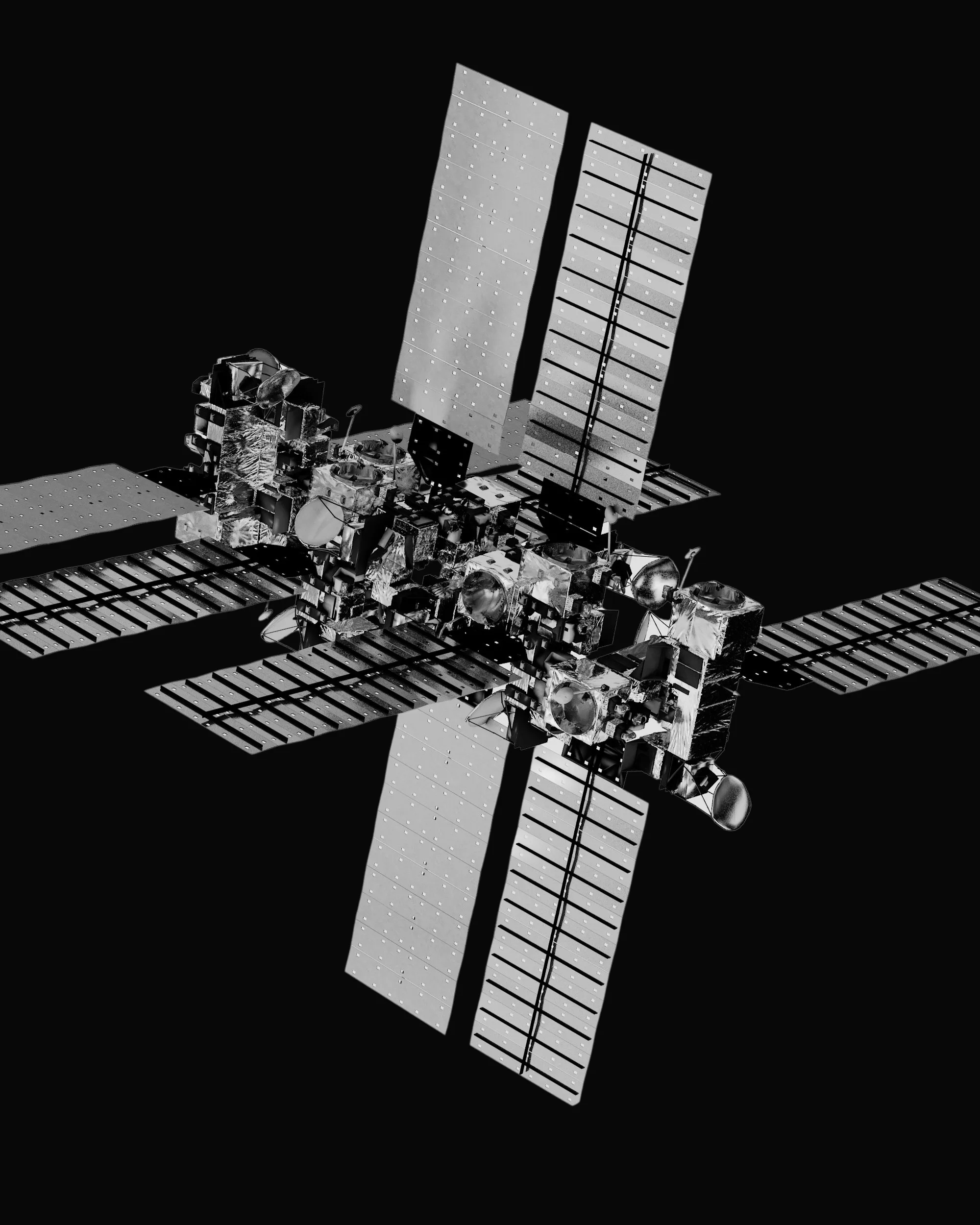
Madari Space - Sophia Space (USA): Also specialized in space edge computing, developing a modular computing platform called ‘TILE’ with radiation-resistant design. TILE is planned to support NVIDIA Jetson and next-generation Blackwell chipsets.
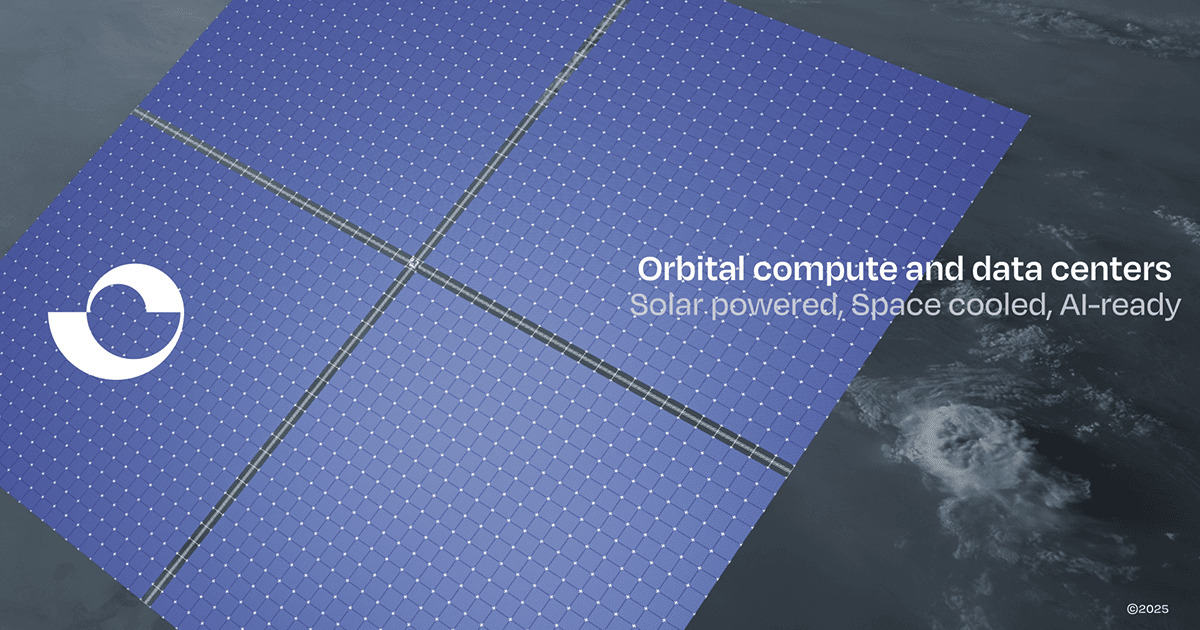
Radiation-hardened module under development at Sophia Space
From these early players, it’s clear that the ODC market is not a single market. Starcloud and Thales target the huge market of alleviating terrestrial data center burdens — effectively “solving Earth’s problems.” Conversely, Madari Space and Sophia Space target the immediate niche of processing data generated in space — “solving space’s problems.”
The latter (space edge) has immediate demand but a limited market size, while the former (Earth substitution) has enormous potential. However, a massive economic hurdle remains: “launch cost.”
Economics: The tipping point of $100/kg
The commercial success of ODCs hinges entirely on ’launch cost.’ Completely.
Using SpaceX’s Falcon 9 today, launch cost to LEO is roughly $2,940/kg. Under that cost structure, building a 2 MW-class ODC would cost 2.7x to 4.4x more than a comparable terrestrial facility, making it commercially uncompetitive. There’s no feasible business case.
The only potential game-changer is SpaceX’s Starship. SpaceX already accounts for an estimated 87% of global launch mass as of 2023 and has transported three-quarters of the world’s launched spacecraft over the past decade, effectively dominating the market. Starship is being developed to deliver an overwhelming payload capacity of 150 tons to LEO when fully reusable.

If Starship’s launch cost approaches **$100/kg**, the deployment cost of ODCs would fall dramatically to levels that are comparable to terrestrial facilities. If costs reached around $20/kg, ODCs would achieve a structural cost advantage over ground-based facilities. Currently, Starship’s per-launch cost is estimated around $100 million, but if full reusability is realized, reaching those target costs becomes possible.
This implies that the ODC market is not a market that will mature gradually. The moment Starship achieves full reusability and a $100/kg economics metric, the market lock will open and ODCs will explode into being.
Therefore, predicting ODC market maturity is effectively the same as monitoring SpaceX Starship’s development milestones (especially reuse success rates and launch pricing). Investing in ODCs is, frankly, a bet on Starship’s success.
The three great space challenges: How can ODCs survive?
Okay, suppose the money problem (launch costs) is solved. Space is still harsh. For ODCs to survive technically, they must overcome the three great challenges of space: radiation, heat, and communications.
Challenge 1: Radiation and survival of COTS hardware
To run AI workloads, ODCs need cutting-edge GPUs like NVIDIA H100 or Blackwell. But these are designed for Earth environments as Commercial Off-The-Shelf (COTS) products and are highly vulnerable to high-energy radiation in space. Conversely, traditional space-grade “rad-hard” chips are reliable but lag COTS in performance by 5–10 years, making them unsuitable for AI compute. This is the dilemma.
COTS chips are particularly vulnerable to Single Event Latch-up (SEL), where a radiation particle induces an overcurrent in the chip’s circuitry, causing permanent damage.
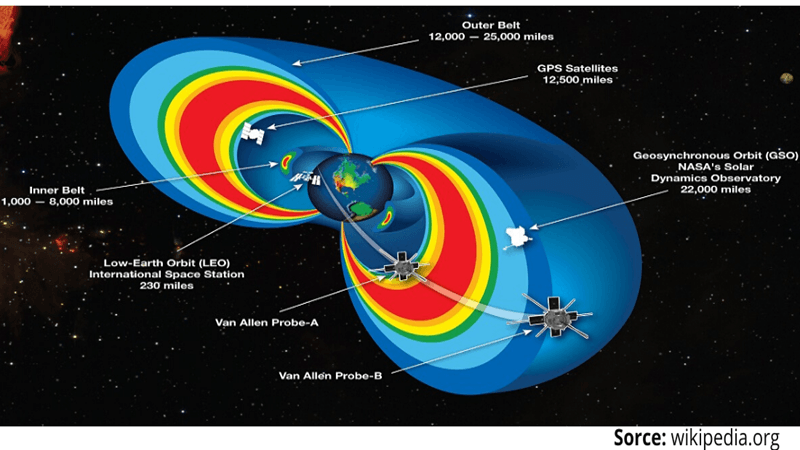
There are three approaches to resolve this dilemma:
- Screening and testing: Not all COTS are equally vulnerable. Recent Total Ionizing Dose (TID) tests on NVIDIA Jetson Orin NX modules showed they withstood over 36.20 krad(Si) of radiation, suggesting a 1–2 year operational lifetime in LEO missions. This demonstrates the feasibility of using COTS technologies in space.
- Logical mitigation (Error Mitigation): Apply design techniques like Triple Modular Redundancy (TMR). Three identical circuits perform the same computation, and a majority-vote circuit chooses the correct value to ignore transient Single Event Upsets (SEUs) caused by radiation.
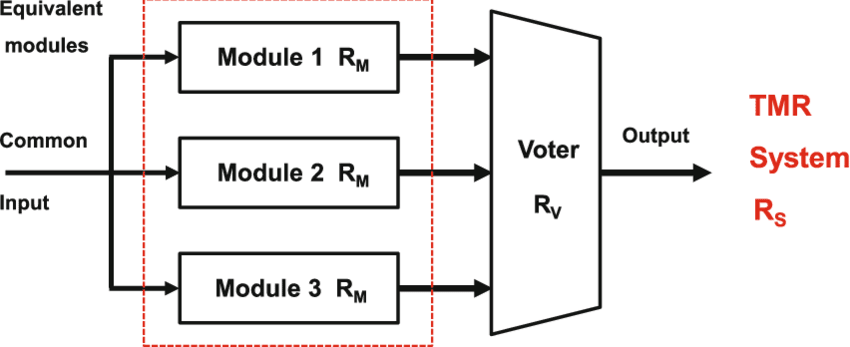
Triple Modular Redundancy - System-level mitigation (Fault Tolerance): The most pragmatic and powerful option is a system architecture such as Curtiss-Wright’s “Smart Backplane” (KAM/CSB/12U). This approach mounts inexpensive, high-performance COTS modules (GPUs) in a rad-hard chassis/backplane. The rad-hard backplane continuously monitors the states of COTS modules and, if it detects permanent faults like SEL, forcibly cycles the module’s power to recover the system immediately.
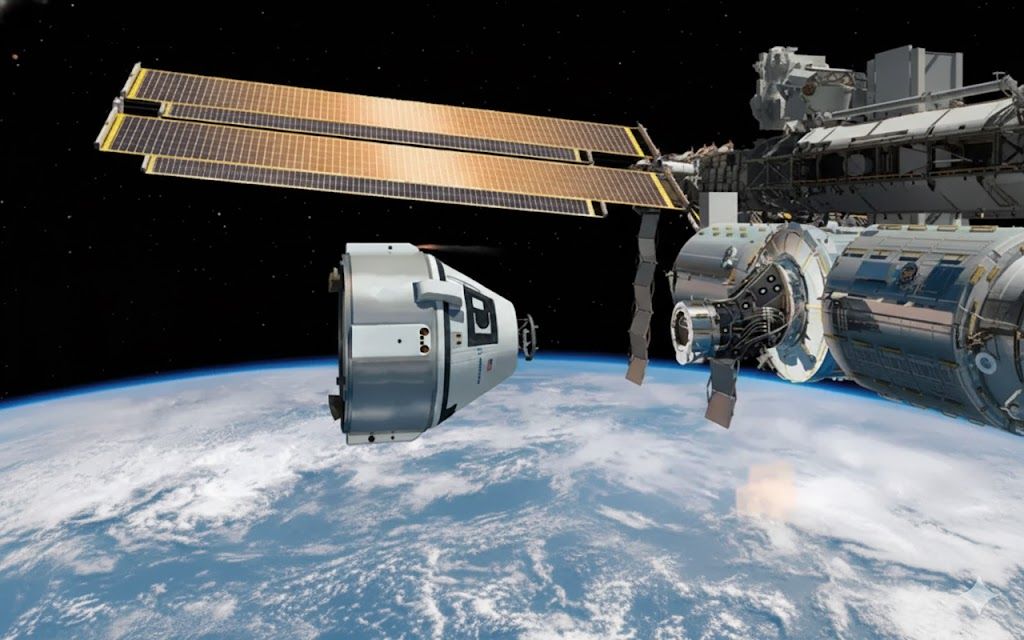
SMART BACKPLANE
These approaches imply a fundamental shift in ODC hardware design philosophy. Instead of building expensive “space fortresses” intended to operate for 15+ years, the paradigm is to deploy cheap COTS GPU modules at peak performance for 1–2 years. When they fail, the Smart Backplane reboots them or the entire module is retired and replaced — a “Disposable Compute” paradigm. Of course, this strategy is economically viable only if Starship provides the overwhelmingly low replacement launch costs.
Challenge 2: Megawatt-scale thermal management in vacuum
Terrestrial data centers cool via convection using air or water, but in the vacuum of space, radiation is the only way to reject heat since there are no air molecules. ODCs receive immense energy from the Sun on one side and must radiate heat to the ~3 K cold background on the other, creating an extreme thermal environment.
When Starcloud said it operated “without separate cooling units,” it meant there’s no need for large active chillers like on Earth — not that it has no thermal management. In reality, a highly sophisticated passive thermal management chain is essential, and this is composed of technologies that have already matured.
- Heat absorption (D2C / Immersion): First, heat must be absorbed from the GPU chips. Proven terrestrial technologies such as Direct-to-Chip (D2C) liquid cooling and two-phase fluid immersion cooling are applied as the primary stage.
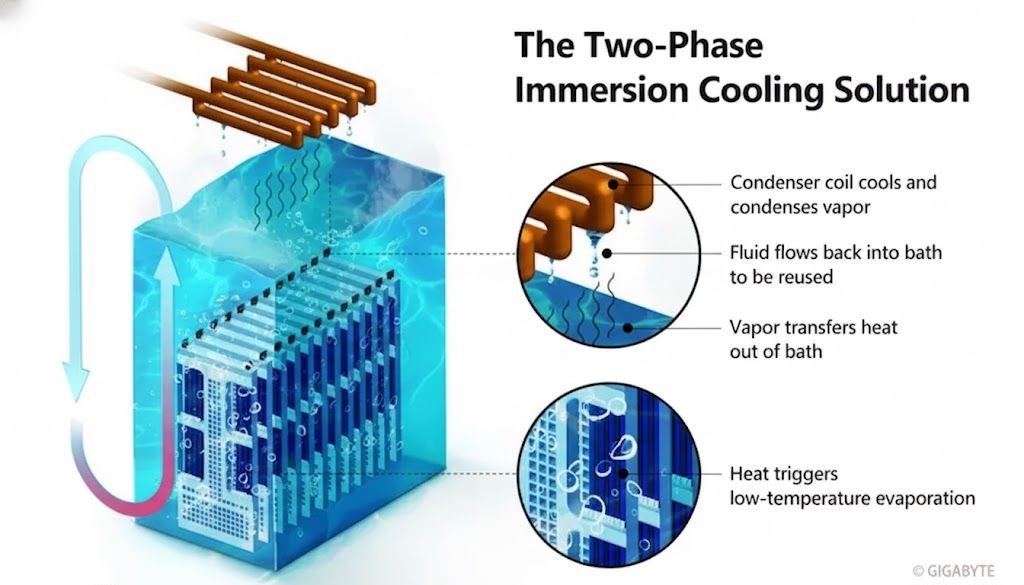
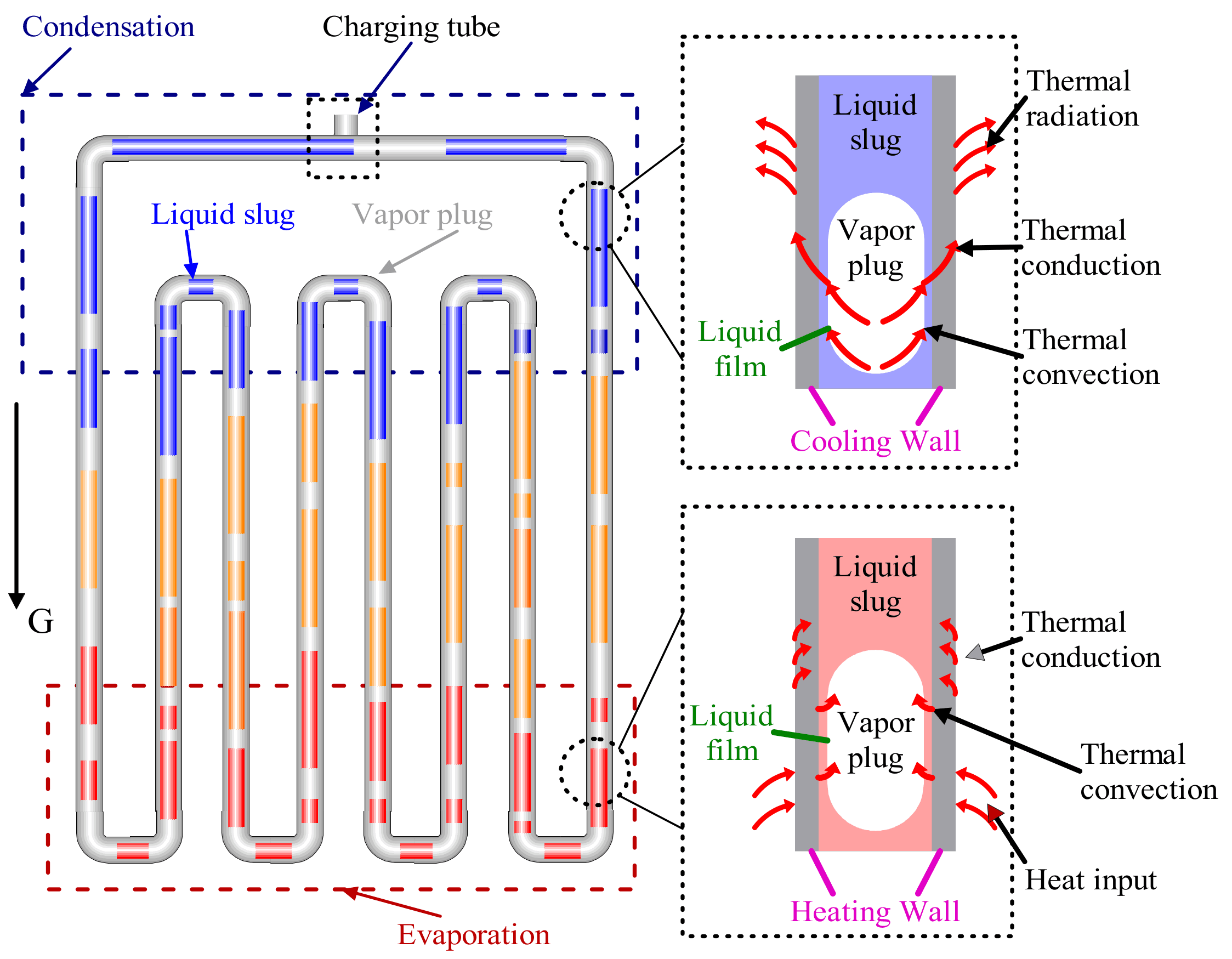
D2C / Immersion - Heat transport (OHP): Heat absorbed from the chips must be efficiently transported to external radiators. This role is played by heat pipes, and in particular Thermavant’s Oscillating Heat Pipe (OHP) technology is critical. As of mid-2025, OHPs have been successfully deployed and operated in orbit in over 1,000 units, achieving TRL 9 (final flight validation complete).
Oscillating Heat Pipe - Heat rejection (Radiator): Heat conveyed via OHPs is finally emitted to space through large deployable radiators.
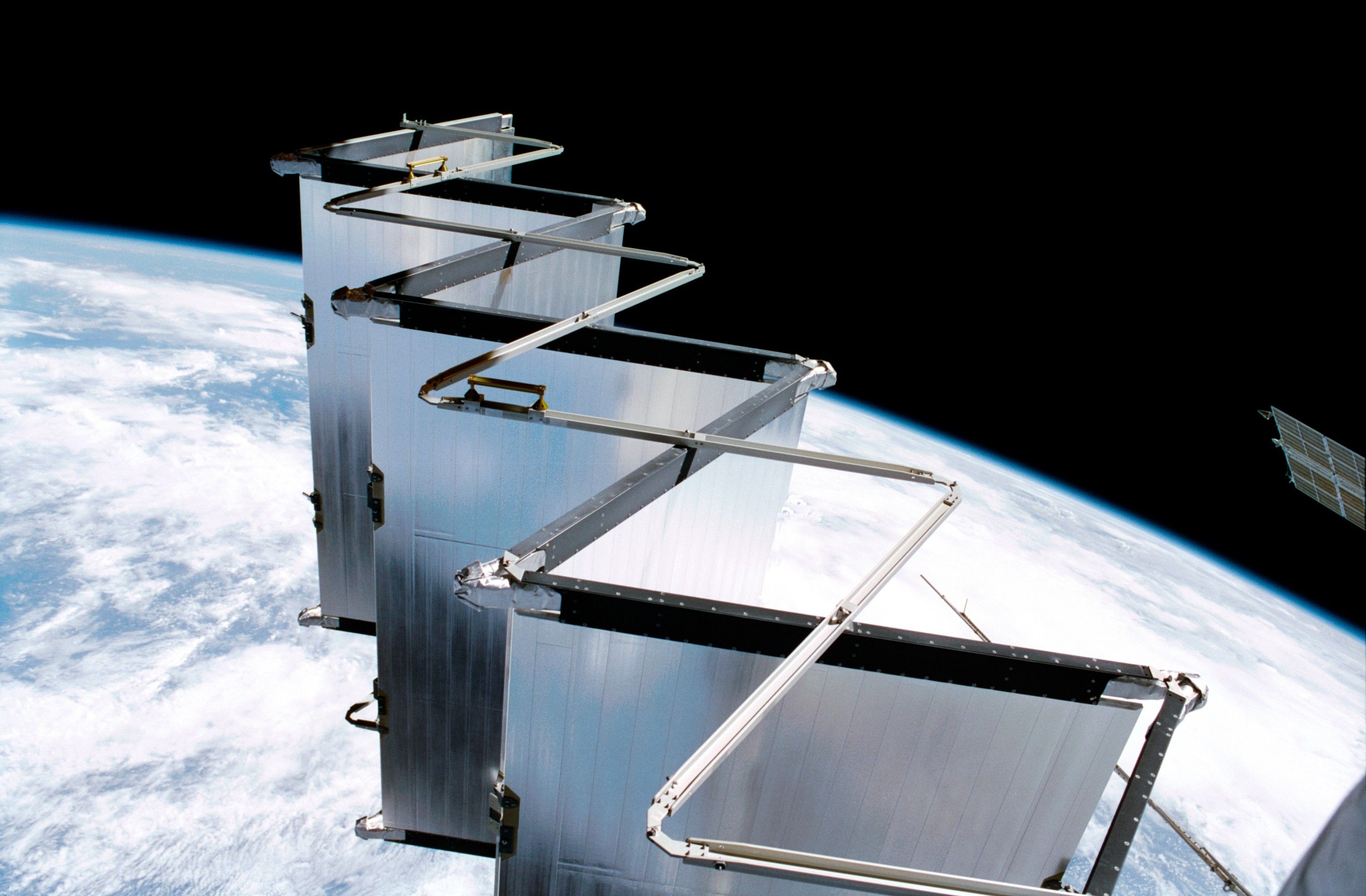
Deployable Radiator
In conclusion, ODC thermal management is realized through a hybrid cooling chain:
\[GPU (heat)\]→
\[D2C/immersion cooling\]→
\[OHP\]→
\[deployable radiator\]→
\[space\]. The fact that OHP technology has already reached TRL 9 as the critical link in this chain is strong evidence that one of ODC’s biggest technical challenges has essentially been solved. That’s hugely significant.
Challenge 3: Tbps-scale data transfer
No matter how fast ODCs compute, results are useless if they can’t be delivered to the ground quickly. Traditional RF communications have reached bandwidth limits as satellite communication demand surges.
The key solution is laser communication (Lasercom), specifically \\\\\Optical Inter-Satellite Links (OISL)\\\\\. OISL provides 10x to 100x bandwidth increases compared to RF.
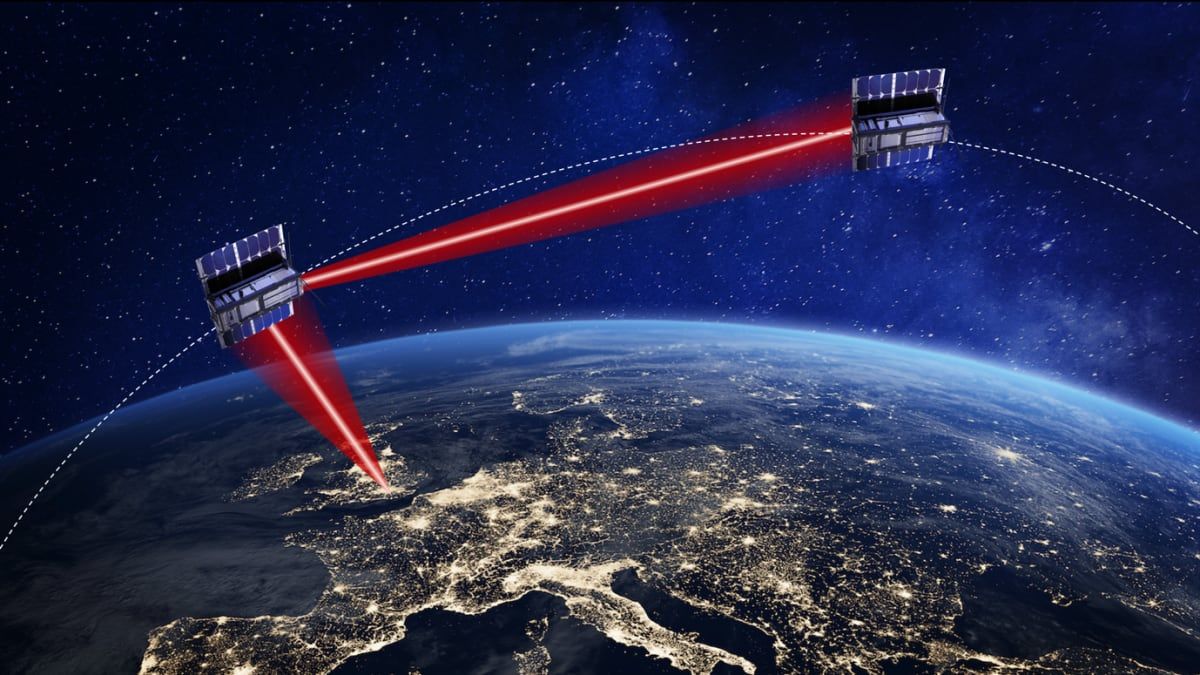
This technology is already becoming operational. NASA validated the technology with the LCRD (Laser Communications Relay Demonstration) project, and the U.S. Space Development Agency (SDA) is building a large mesh “transport layer” in LEO based on OISL. SpaceX’s Starlink V3 satellites also include OISL as standard for inter-satellite data transfer.
This means ODCs will not be “isolated hard drives that must pass over a specific ground site.” ODCs will become active nodes within the emerging OISL mesh network. Future data architecture will evolve as [Satellites (data generation)] → [ODC (orbital AI processing)] → [OISL mesh network] → [ground users]. This frees ODCs from line-of-sight constraints with ground stations and lets them process and transmit results in real time from any overhead location worldwide via the OISL network.
Next steps: Building gigawatt-class space infrastructure
With successful early demonstrations, ODCs are preparing to enter a “economies of scale” phase to replace terrestrial gigawatt-scale hyperscale data centers.
Economies of scale: On-orbit assembly and manufacturing (OSAM/ISAM)
Even if Starship can carry 150 tons per flight, you cannot build a huge ODC that produces and consumes gigawatts of power in a single launch. Multiple modules must inevitably be launched and then combined via on-orbit assembly.
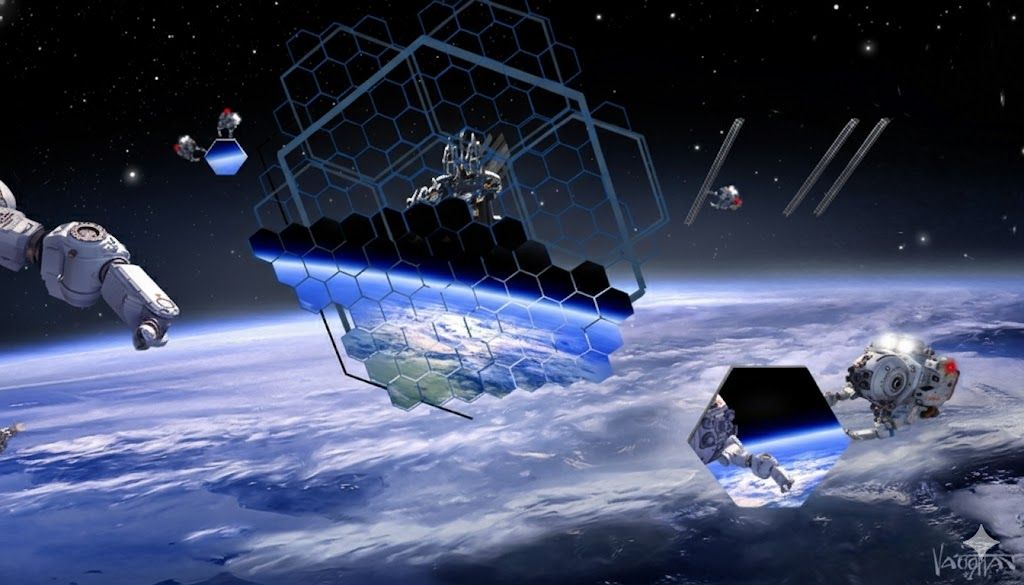
The most notable movement in this area is the partnership between Starcloud, an ODC frontrunner, and Rendezvous Robotics, which has autonomous assembly robots. Their goal is to combine Rendezvous’s autonomous assembly system with Starcloud’s orbital computing modules to build gigawatt-scale data and power infrastructure directly in orbit.
Rendezvous Robotics’ core tech is a self-assembling tile module called ‘Tessaray.’ They plan an early 2026 demonstration on the International Space Station (ISS) where 32 tiles will autonomously join to form a structure. Very exciting. Massive capital previously required to expand AI infrastructure on Earth is now driving “autonomous assembly” in space into a viable commercial technology.
This represents a paradigm shift in OSAM/ISAM. NASA’s OSAM-1 mission focused on delicate servicing tasks like refueling existing satellites, but technical and cost challenges have delayed some projects. In contrast, the commercial approach led by Rendezvous Robotics focuses on repeated combination of standardized modules rather than complex repairs, which is more realistic. Therefore, ODC expansion will be accelerated by the combination of Starship’s mass transport and Rendezvous’s autonomous assembly, independent of NASA OSAM-1’s setbacks.
Technology roadmap: Orbit-specific optimization and near-term challenges
Even if ODCs are successfully built, LEO has intrinsic limitations. LEO’s proximity to Earth provides low latency, but it also experiences slight atmospheric friction — \\\\\‘atmospheric drag’\\\\\, which becomes a serious issue. Large structures like ODCs face greater drag and require continuous station-keeping propulsion to maintain orbit, often limiting operational lifetimes to around 5 years.
LEO is also crowded with satellites and debris, increasing collision risk. In contrast, the Moon or GEO (geostationary orbit), as Lonestar chose, have no atmospheric drag and are more physically isolated, making them better for long-term data storage and security.
This suggests that ODC infrastructure will bifurcate based on location, like cache memory and hard drives on Earth.
- LEO (Hot Cache): Low latency, high-performance AI inference and real-time processing. Uses short-lived (1–2 year) COTS hardware due to drag and radiation issues, with a high-turnover model of periodic module replacement via Starship.
- GEO / Cislunar (Cold Archive): Long-term, high-security data archiving, like Lonestar’s approach. With no atmospheric drag but stronger radiation exposure, these locations require rad-hard, high-reliability systems for long-term storage.
<Table 2. Core technology TRL and economic analysis for orbital data centers>
| Core area | Technology element | Current TRL (1–9) | 2030 TRL target | Key players / tech | Economics |
|---|---|---|---|---|---|
| Launch cost ($/kg) | $2,940 (Falcon 9) | < $100 (Starship) | SpaceX | ||
| Survivability | COTS radiation mitigation | TRL 5–6 (demonstration) | TRL 9 (operational) | Starcloud (H100), Curtiss-Wright (Smart Backplane) | |
| Thermal management | Two-phase / OHP | TRL 9 (flight-validated) | TRL 9 (large-scale application) | ThermAvant (OHP), terrestrial D2C tech | |
| Communications | OISL (optical links) | TRL 8 (system validation) | TRL 9 (global mesh) | SpaceX (Starlink), SDA (Transport Layer) | |
| Scalability | On-orbit autonomous assembly | TRL 4–5 (prototype) | TRL 8–9 (large-scale demos) | Rendezvous Robotics (Tessaray) | |
| TCO | 5-year TCO, 2 MW class | Ground: X | |||
| Orbit (Falcon 9): 2.7X ~ 4.4X | Ground: Y | ||||
| Orbit (Starship $100/kg): ~1.0Y | ODC economics become comparable to ground when Starship hits $100/kg. | ||||
| (Note: TRL = Technology Readiness Level, from 1 (basic) to 9 (final).) |
Space is not free: New environmental considerations
It’s great that ODCs can solve Earth’s energy and water problems. But they also risk shifting significant environmental burdens to space and the upper atmosphere. This is an uncomfortable truth we must confront.
Earth’s problems vs. space problems: Shifting atmospheric pollution
Claims that ODCs are “green” have serious blind spots. ODCs may solve terrestrial carbon emissions, but they could accumulate different pollutants in the upper atmosphere.
- Launch pollution (Black Carbon): Rocket launch frequency is increasing exponentially, with 259 launches recorded in 2024. Rockets using kerosene (like Falcon 9) directly emit black carbon (soot) into the stratosphere. Black carbon in the stratosphere has up to 500 times the warming effect of the same amount of soot emitted at ground level and can catalyze chemical reactions that destroy ozone. WMO’s 2022 ozone assessment concluded that the impacts of rocket emissions on the ozone layer are still highly uncertain and called for urgent further study.
- Reentry pollution (Alumina): Mega constellations like Starlink are designed for “design to demise” disposal, burning up on reentry. Because satellites are often made of aluminum alloys, this process injects large quantities of aluminum oxide (alumina, $Al\_2O\_3$) aerosols into the stratosphere. Recent NOAA research suggests that accumulated alumina particles in the stratosphere can reflect solar radiation, alter upper-atmosphere temperatures (up to 1.5 K), change stratospheric wind circulation, and potentially hinder recovery of the Antarctic ozone hole.
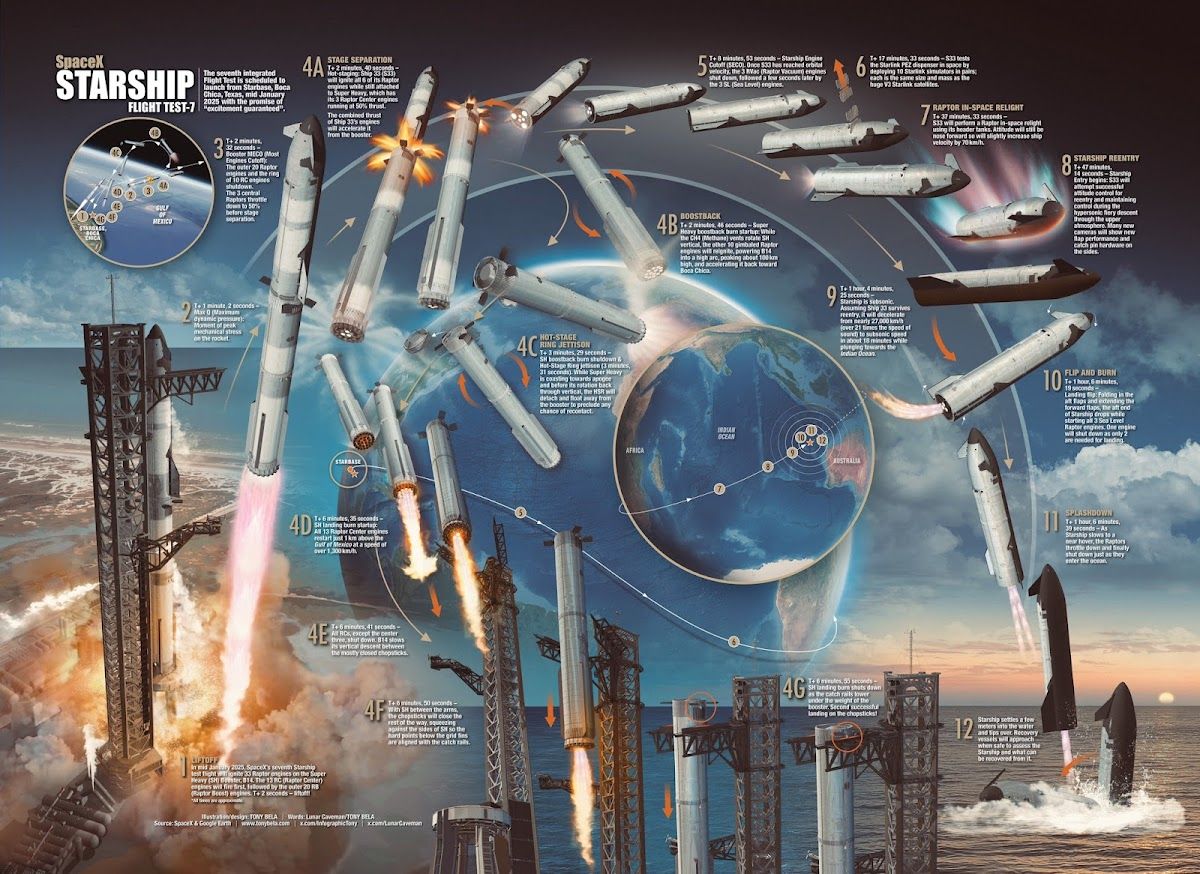
This strongly suggests ODCs might not be “environmentally friendly” but rather a case of ‘pollution shifting.’ We could be exchanging a known terrestrial carbon problem solvable with renewables for an unknown, potentially irreversible stratospheric black carbon/alumina problem.
Unsustainability of the orbital environment
The LEO environment where many ODCs would be placed already shows signs of unsustainability.
- Kessler Syndrome: LEO is becoming extremely congested due to the surge in mega constellations. Collision probabilities are rising sharply, and a single large collision could cascade into chain reactions that render an entire orbit unusable. Large structures like ODCs become bigger “targets,” increasing collision risk.
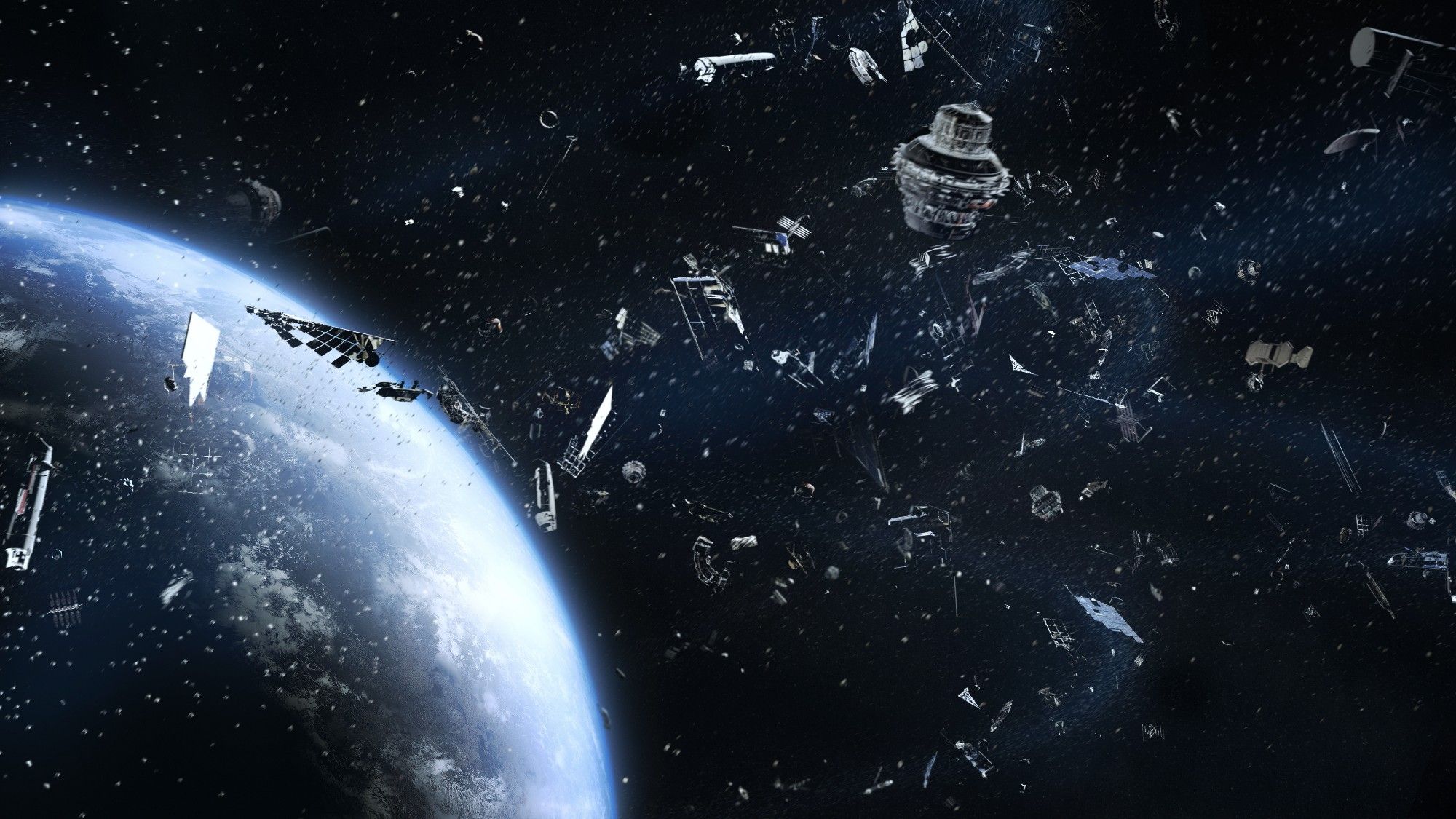
Kessler Syndrome - Climate change feedback loops: Even more serious is that terrestrial environmental issues are directly worsening the orbital environment. A 2025 MIT study indicates that increased CO2 emissions on Earth cool and contract the thermosphere. A contracted thermosphere reduces atmospheric density, which lowers atmospheric drag on LEO satellites and debris. Atmospheric drag is the only natural mechanism that cleans orbital debris; if this mechanism weakens, debris remains in orbit much longer, exponentially increasing collision risk.
This means Earth and orbit are trapped in a dangerous feedback loop: (1) Terrestrial AI data centers emit CO2 that drives climate change; (2) the CO2 cools and contracts the thermosphere, reducing natural orbital decay; (3) debris and satellites remain in orbit longer, increasing collision risk; (4) to solve terrestrial problems we then launch large infrastructures like ODCs into an increasingly hazardous orbit. This is a perfect contradiction of exposing critical assets to risks of our own making.
Conclusion: Inevitable expansion, and our responsibility
Seeing the energy and water crisis triggered by the AI revolution, ODCs are emerging not as science fiction but as an inevitable techno-economic alternative. That is my view.
The economic feasibility of ODCs hinges entirely on SpaceX Starship achieving a $100/kg launch cost. Technically, the major ODC challenges — radiation for COTS GPUs (mitigated via Smart Backplanes) and megawatt-scale thermal management (with OHP at TRL 9) — have surprisingly mature solutions or clear resolution paths.
From this analysis, I draw the following strategic recommendations:
-
Market strategy (dual orbital asset allocation): The ODC market will not be singular.
(1) LEO-based low-latency/high-performance AI inference (“Hot Cache”) and
(2) Lunar (Cislunar) or GEO-based high-security/long-term data archives (“Cold Archive”) will clearly bifurcate.
Investors and technology firms should focus not only on ODC operators but also on the ecosystem of enabling technologies that make ODCs possible: autonomous assembly robotics (OSAM), optical inter-satellite links (OISL), and COTS mitigation chassis like Smart Backplanes.
-
Policy and regulation (proactive response to pollution shifting): ODCs carry a clear risk of shifting terrestrial carbon problems into chemically polluting the stratosphere. As WMO warned in 2022, the long-term impacts of rocket launches (black carbon) and satellite reentries (alumina) on ozone and the upper atmosphere are poorly understood. Independent scientific research and international regulatory discussions on these impacts must happen urgently before the industry expands. We must not solve one terrestrial crisis only to create potentially irreversible stratospheric crises. That would be foolish.
Reference List
- The race to power AI data centers | McKinsey
- One force is propping up the economy. Now it’s getting stronger. | The Washington Post
- Boom or bubble? Inside the $3tn AI datacentre spending spree | The Guardian
- The cost of compute: A $7 trillion race to scale data centers | McKinsey
- 데이터센터 전력소비 빠르게 증가…전력망 연결·부하변동 우려 | 전기저널
- What we know about energy use at U.S. data centers amid the AI boom | Pew Research Center
- Data Centers and Water Consumption | Article | EESI - Environmental and Energy Study Institute
- Thirsty for power and water, AI-crunching data centers sprout across the West | Stanford University
- AI power: Expanding data center capacity to meet growing demand | McKinsey
- StarCloud Launches Space Data Center, First-Ever H100-Powered Satellite Deployment | YouTube
- Radiative-cooling-based nighttime electricity generation with power density exceeding 100 mW/m2 | NIH
- 세계 데이터센터 전력 수급 현황 및 전망(IEA) | 에너지경제연구원
- Amazon Stock Rises, Meta Falls: Q3 Earnings Show Split Paths in AI and Clean Energy | Carbon Credits
- 2025년 AI 데이터센터 전력 사용량 40% 폭증… 효율성 개선해도 전력 수요 계속 늘어난다 | AI Matters
- A review of thermal management and innovative cooling strategies for data center | Request PDF | ResearchGate
- Data Centers and Water Use | NASUCA
- Data centers are thirsty for Texas’ water, but state planners don’t know how much they will need | The Texas Tribune
- 우주 데이터 센터, AI 시대 데이터 인프라의 새로운 대안 | 한국과학기술기획평가원(KISTEP)
- Madari Space to Pilot Sending Data Centers into Space | Baxtel
- The LEO toll road: How the constellation gold rush is paving over the path to the planets | The Space Review
- Space-Based Data Centers: First Principles Deconstruction and Market Ecosystem Analysis Through 2035 | Vixra.org
- Space launch market competition | Wikipedia
- What future for SpaceX? | The Space Review
- SpaceX Starship | Wikipedia
- Starship | SpaceX
- Space launch: Are we heading for oversupply or a shortfall? | McKinsey
- (PDF) An Economic Analysis of Launch Cost Reductions for Low Earth Orbit Satellites | ResearchGate
- NASA should consider switching to SpaceX Starship for future missions | Reason.org
- What are up to date estimates of Starship cost? | r/ArtemisProgram | Reddit
- An Analysis of Radiation Protection in the NVIDIA H100 GPU | New Space Economy
- (PDF) Total Ionizing Dose Radiation Testing of NVIDIA Jetson Orin NX System on Module | ResearchGate
- A Case for Application-Aware Space Radiation Tolerance in Orbital Computing | arXiv
- Space | Curtiss-Wright Defense Solutions
- Air Data Computers | Curtiss-Wright Defense Solutions
- Rad Tolerant Data Acquisition | Curtiss-Wright Defense Solutions
- Why we should train AI in space - White Paper | GitHub Pages (Lumen Orbit)
- Why Liquid Cooling Is the New Standard for Data Centers in 2025 | DataCenters.com
- Data Center Immersion Cooling Fluids Market Forecast Report | GlobeNewswire
- Two-Phase Data Center Liquid Immersion Cooling Market, 2032 | Fortune Business Insights
- OHP Radiators | ThermAvant Technologies
- Small Spacecraft Technology State of the Art Report: Thermal Systems chapter | NASA
- 7.0 Thermal Control | NASA
- Microvascular Composite Radiators for Small Spacecraft Thermal Management Systems | DigitalCommons@USU
- Exploration and Space Communications: LCRD | NASA
- Laser communication in space | Wikipedia
- LASERCOM KEY TO BUILDING INTERNET IN SPACE | The Aerospace Corporation
- Laser Communications Relay Demonstration (LCRD) | NASA
- Starlink V3 satellites could enable SpaceX’s orbital computing plans: Musk | Teslarati
- Rendezvous Robotics and Starcloud Partner to Enable Gigawatt-Scale Orbital Power and Data Infrastructure | PR Newswire
- On-orbit Servicing, Assembly, and Manufacturing 1 (OSAM-1) | NASA
- Roundtable Proceedings: Ways Forward for On-Orbit Servicing, Assembly, and Manufacturing (OSAM) of Spacecraft | IDA
- 5K. IN-SPACE SERVICING, ASSEMBLY, AND MANUFACTURING FOR THE NEW SPACE ECONOMY | Aerospace Center for Space Policy and Strategy
- Orbital data and energy collaboration accelerates space-based assembly | SpaceDaily
- The Data Center Boom Is Fueling The Space Solar Race | CleanTechnica
- Rendezvous Robotics: Building Large Scale Self-Assembling Structures in Space | YouTube
- Self-assembling data centers in space are becoming reality… | Tom’s Hardware
- On-orbit Servicing, Assembly, and Manufacturing (OSAM) State of Play | NASA Technical Reports Server
- The evolving role of LEO satellites in Europe’s connectivity future | EY
- Modeling Orbital Decay of Low-Earth Orbit Satellites due to Atmospheric Drag: A Simplified Analytical Approach | arXiv
- The impact of space weather on very low Earth orbit (VLEO) satellites | AMOS Conference
- Preliminary Safety Analysis of Megaconstellations in Low Earth Orbit: Assessing Short-Term and Long-Term Collision Risks | MDPI
- Scientists call for action to address air pollution from space launches | The Guardian
- Near-future rocket launches could slow ozone recovery | PMC - PubMed Central
- Projected increase in space travel may damage ozone layer | NOAA Research
- 2022 News & Events: Projected increase in space travel may damage ozone layer | NOAA Chemical Sciences Laboratory (CSL)
- The new space age could thin the ozone layer | ETH Zurich
- Impact of Spaceflight on Earth’s Atmosphere: Climate, Ozone, and the Upper Atmosphere | NASA Technical Reports Server
- AAS Statement on the Atmospheric Impacts of Spacecraft Reentries and Launches | American Astronomical Society (AAS)
- Within 15 years, plummeting satellites could release enough aluminum to alter winds, temps in the stratosphere | CIRES
- First study to examine environmental impact of deorbited satellites | University of Southampton
- 2025 News & Events: Within 15 years, plummeting satellites… | NOAA Chemical Sciences Laboratory (CSL)
- ESA Space Environment Report 2025 | European Space Agency (ESA)
- Managing Mega-Constellation Risks in LEO | Viasat
- Understanding the misunderstood Kessler Syndrome | Aerospace America - AIAA
- Study: Climate change will reduce the number of satellites that can safely orbit in space | MIT News