
Designers of a New Industrial Revolution
In July 2025, NVIDIA surpassed a market capitalization of $4 trillion, standing at the pinnacle of the tech industry. This remarkable achievement marks the culmination of a grand journey spanning 30 years, resulting from bold bets when others overlooked opportunities and overcoming numerous crises. NVIDIA’s growth signifies not just a corporate success but a fundamental shift in computing and the driving force of the generative AI era.
- NVIDIA’s 30-year growth narrative: From a niche gaming chip company to an AI giant
- The technological moat dominating the AI era: The immense power of the CUDA ecosystem
- An ambitious vision for the future: Sovereign AI and embodied AI (robotics)
Part 1: The Birth of a Giant - From Graphics Chips to GPUs
Founders’ Vision (1993)
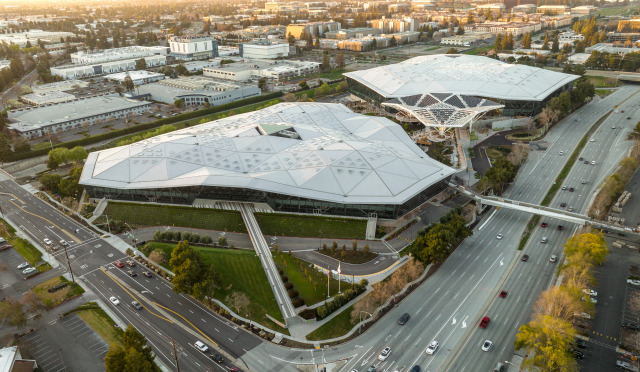
NVIDIA was founded on April 5, 1993, by Jensen Huang, Chris Malachowsky, and Curtis Priem. Their core vision was the then-overlooked PC gaming market.
Video games are a rare market that is computationally challenging yet has immense sales potential. They accurately identified this opportunity. Their great journey began with just $40,000 in capital.
Moment of Trial: NV1 and Bankruptcy Threat
NVIDIA’s first product, NV1, launched in 1995, was an innovative design integrating 2D/3D graphics and audio, but it commercially failed. This was due to its insistence on unfamiliar technology instead of the polygon method that was the standard at the time, leading to rejection by game developers. This failure nearly drove the company to bankruptcy and became a significant ’trial moment’ that later honed NVIDIA’s perseverance.
First Victory: RIVA 128 and TSMC
The RIVA 128, released in 1997, was NVIDIA’s first commercial success, establishing the company as a powerhouse in the 3D graphics market. In 1998, a pivotal moment in NVIDIA’s history occurred with the partnership with TSMC.
The ‘desperate letter’ sent by CEO Jensen Huang to TSMC’s Morris Chang during the bankruptcy crisis is legendary. Morris Chang boldly bet on this struggling startup, a decision that became a lifeline for NVIDIA. Thanks to this partnership, NVIDIA could focus entirely on its core competency in chip design.
Invention of the GPU: GeForce 256 (1999)
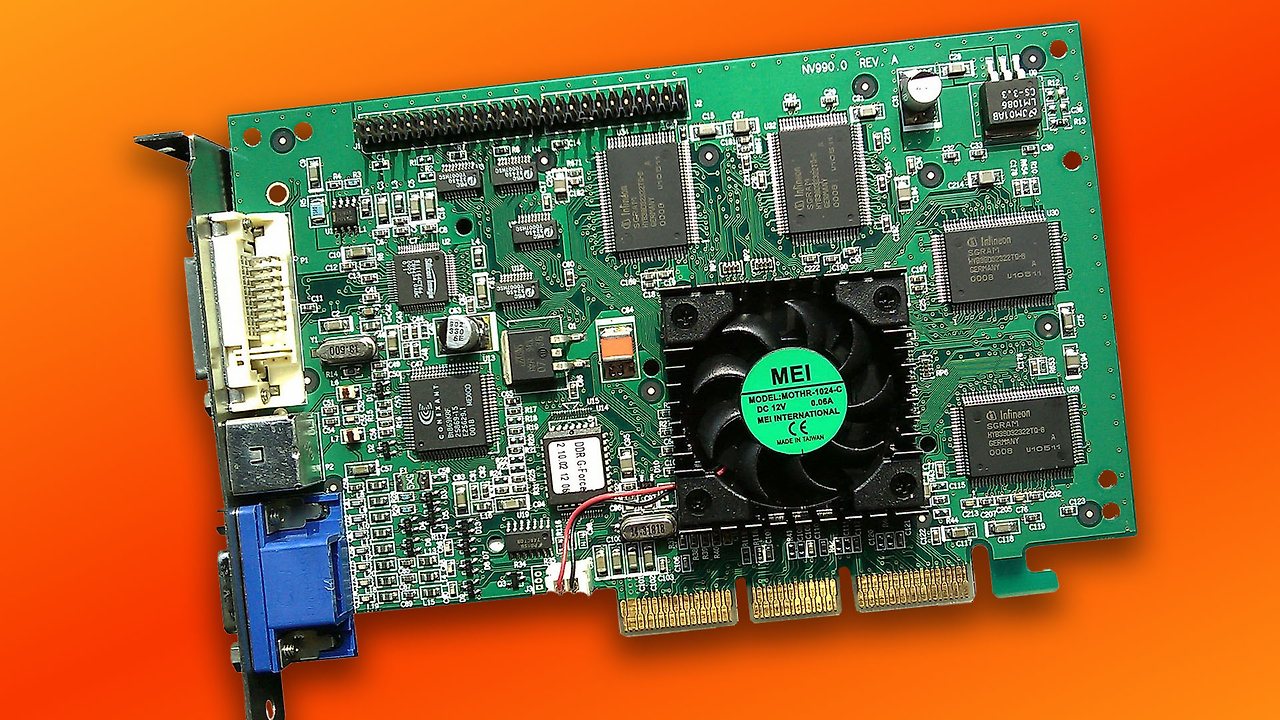
Launched in 1999, the GeForce 256 was marketed as the “world’s first GPU.” This was a strategic move that redefined the market. The key was transferring geometric calculations from the CPU to the chip’s built-in ‘Transform and Lighting (T&L)’ engine.
This product fundamentally changed the concept of graphics processing architecture, rendering competitors’ technologies obsolete almost overnight. NVIDIA created the term ‘GPU,’ showcasing a long-term vision of seizing technological standards over short-term victories.
Part 2: The AI Inflection Point - AlexNet and the CUDA Moat
GPGPU and the Vision of CUDA
NVIDIA’s AI revolution was concretized with the launch of the CUDA (Compute Unified Device Architecture) platform in 2006. This was a deliberate and strategic bet to utilize GPUs for general-purpose computing (GPGPU) long before the AI boom. NVIDIA recognized early on that its parallel processing engine had the potential to solve much more complex problems beyond graphics.
The “Big Bang” of Modern AI: AlexNet (2012)
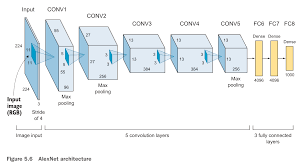
The 2012 ImageNet competition is recorded as the “Big Bang” of modern AI. The AlexNet model won with overwhelming performance, showcasing the potential of deep learning to the world.
This historic achievement was made possible by training the model for 5-6 days using two NVIDIA GTX 580 3GB GPUs. AlexNet’s victory proved that NVIDIA’s GPGPU strategy was correct and opened the door to the AI competition.
CUDA: The Impregnable Software Fortress
CUDA is not just a simple API; it is NVIDIA’s core competitive advantage, an impregnable ‘moat.’ NVIDIA’s true dominance comes from the CUDA software ecosystem. As a developer, I remember being amazed by the vast libraries and community support when I first encountered CUDA. It provides a powerful developer experience that goes beyond mere technical documentation.
Decades of optimization, thousands of community libraries, and the collective knowledge of an entire generation of AI researchers constitute this ecosystem. For competitors to catch up, they would need to replicate not just a chip but an entire developer nation.
Part 3: The AI Engine Room - Architecture and Strategic Alliances
Symbiosis with TSMC: Decades of Partnership
The partnership between NVIDIA and TSMC has evolved beyond mere manufacturing to a stage of joint development. This relationship allows NVIDIA to prioritize using TSMC’s most advanced custom process technologies, such as the 4NP node used in the Blackwell architecture.
Now, NVIDIA’s cuLitho platform is used to accelerate TSMC’s chip manufacturing processes. This has created a symbiotic virtuous cycle where NVIDIA technology improves TSMC manufacturing, which in turn leads to enhanced performance of next-generation NVIDIA GPUs.
The Blackwell Revolution: Breaking Physical Limits
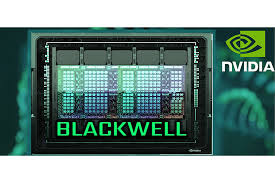
The most decisive feature of Blackwell is its multi-die design that connects two massive dies with a 10 TB/s ultra-fast interface, allowing them to operate as a single integrated GPU. This is a direct architectural answer to the physical size limits of a single chip (reticle limit).
Comparison of Hopper H100 vs Blackwell B200
| Metric | NVIDIA H100 (SXM) | NVIDIA B200 (SXM) |
|---|---|---|
| Architecture | Hopper | Blackwell |
| Process Node | TSMC 4N | TSMC 4NP (Custom) |
| Number of Transistors | 80 billion | 208 billion |
| Die Design | Monolithic | Dual Die |
| Max AI Performance | ~4 PFLOPS (FP8) | 20 PFLOPS (FP4) |
| Memory (Capacity) | HBM3 80GB | HBM3e 192GB |
| Memory Bandwidth | 3.35 TB/s | 8 TB/s |
| Interconnect | NVLink Gen 4 (900 GB/s) | NVLink Gen 5 (1.8 TB/s) |
The Next Bottleneck: Interconnect and Silicon Photonics
As chip performance becomes more powerful, the bottleneck has shifted to data movement between GPUs. NVIDIA provides 1.8 TB/s bandwidth with the 5th generation NVLink and is moving towards silicon photonics technology. This technology transmits data using light instead of electrical signals, drastically reducing power consumption and latency, which is crucial for building massive AI factories.
Part 4: The AI Kingdom - Market Dominance and Financial Ascendancy
NVIDIA’s Monopoly Power in Numbers
NVIDIA’s market dominance is clearly reflected in the numbers. Particularly in the most important and profitable data center GPU sector, it is estimated to hold about 98% market share as of 2023.
| Market Segment | NVIDIA Share | Competitor Share |
|---|---|---|
| Discrete Graphics Cards (Q1 2025) | 92% | AMD 8%, Intel 0% |
| Data Center GPU (2023) | ~98% | AMD <2%, Intel <1% |
This 98% market share is the most critical single number defining NVIDIA’s power.
National-Level Valuation and Its Implications
NVIDIA’s valuation of approximately $4 trillion surpasses Microsoft and Apple, exceeding the GDP of France or the UK. This is nearly double the total market capitalization of the entire Korean stock market (KOSPI) of about $2.18 trillion as of July 2025.
This valuation reflects a consensus among investors that AI represents a fundamental technological shift comparable to the internet, and NVIDIA holds an almost monopolistic toll on this transition.
Part 5: Competition and Geopolitics - Navigating a Complex Environment
Competitive Landscape on Multiple Fronts
NVIDIA is fighting various challengers on multiple fronts. It faces traditional competitors (AMD), radical architectures (Cerebras), geopolitical competitors (Huawei), and even its largest customers (hyperscalers).
| Competitor | Key Differentiator | Software Ecosystem |
|---|---|---|
| NVIDIA (Blackwell) | Full-stack platform, ecosystem integration | CUDA (dominant, mature) |
| AMD (MI300X) | Large memory (192GB) | ROCm (growing, immature) |
| Cerebras (WSE-3) | Wafer-scale architecture | Proprietary software stack |
| Huawei (Ascend 910C) | Domestic ecosystem in China, government support | CANN (growing as an alternative to CUDA) |
| Google (TPUv5p) | High efficiency for specific workloads | Internal use (JAX/TensorFlow) |
Geopolitical Chessboard: The US-China Chip War
The US export controls against China have directly impacted NVIDIA, but the company has responded in multiple ways. It has developed regulatory-compliant chips like the H20 with reduced performance and has turned geopolitical risks into strong business opportunities through its ‘Sovereign AI’ strategy.
Part 6: The Horizon of the Future - The Next Decade of AI
Sovereign AI: A New Geopolitical Frontier
‘Sovereign AI’ is NVIDIA’s core strategy to support countries in building AI infrastructure while maintaining control over their own data. Through this strategy, NVIDIA is elevating itself from a mere component supplier to a strategic partner realizing the technological ambitions of various nations.
Betting on Embodied AI: Project GR00T
Project GR00T (Generalist Robot 00 Technology) is an ambitious challenge to advance to the next stage of AI: physical, or ’embodied’ intelligence. GR00T is designed to be the ‘mind’ of humanoid robots, capable of understanding various commands and learning complex tasks through human demonstrations.
This signifies NVIDIA’s large-scale expansion from the ‘bit’ world of data centers to the ‘atom’ world of robotics and automation. NVIDIA aims to seize the essential platform for the embodied AI era with GR00T and the Omniverse.
Vision of the AI Factory: The Ultimate Goal
All the elements mentioned so far converge into NVIDIA’s ultimate vision of becoming a turn-key provider of an ‘AI factory.’ The goal is to provide a fully vertically integrated stack that goes beyond just selling chips, encompassing hardware, software, systems, and data center management.
Conclusion: Key Takeaways and Next Steps
NVIDIA’s journey from a gaming chip startup to a $4 trillion AI giant is a narrative shaped by long-term vision, strategic ecosystem building, and relentless execution.
Three Key Points
- Victory of Long-term Vision: The foresight to invest in CUDA a decade before the AI market opened has created the current monopoly.
- Impenetrable Ecosystem: The CUDA software ecosystem built over decades serves as a true moat beyond hardware performance.
- Expansion Towards the Future: Preparing for the next decade by expanding markets beyond data centers into sovereign AI and embodied AI (robotics).
Do you think NVIDIA’s dominance will continue, or could new competitors emerge to change the landscape? I would love to hear your thoughts.
References
- The Japan Times AI giant Nvidia becomes first company to reach $4 trillion milestone
- Investopedia Nvidia’s Market Cap Hit $4 Trillion for the First Time Today
- Sequoia Capital Nvidia: An Overnight Success Story 30 Years in the Making
- PrimaryMarkets NVIDIA: History, Innovations and Future Prospects
- NVIDIA Newsroom Jensen Huang
- Wikipedia Nvidia
- Acquired Podcast Nvidia Part I: The GPU Company (1993-2006)
- AInvest From Desperation to Billions: The Nvidia-TSMC Partnership
- Wikipedia GeForce 256
- Modular What exactly is “CUDA”? (Democratizing AI Compute, Part 2)
- Computer History Museum CHM Releases AlexNet Source Code
- Wikipedia AlexNet
- NeurIPS Proceedings ImageNet Classification with Deep Convolutional Neural Networks
- NVIDIA Blog Accelerating AI with GPUs: A New Computing Model
- Wikipedia Blackwell (microarchitecture)
- NVIDIA Blog TSMC and NVIDIA Transform Semiconductor Manufacturing With Accelerated Computing
- TechPowerUp NVIDIA Grabs Market Share, AMD Loses Ground, and Intel Disappears in Latest dGPU Update
- The Times of India Nvidia becomes first public company to cross $4 trillion market cap
- The Korea Herald Korea’s market cap tops W3,000tr for 1st time amid Kospi rally
- Grand View Research Data Center GPU Market Size & Share | Industry Report 2033
- CSIS DeepSeek, Huawei, Export Controls, and the Future of the U.S.-China AI Race
- Nasdaq NVIDIA Bets on Sovereign AI: Will It Shield Against Trade War?
- NVIDIA Developer Isaac GR00T - Generalist Robot 00 Technology