
As the era of lithium-ion batteries wanes, fierce competition for the throne among next-generation batteries has begun.
It’s hard to imagine our daily lives without lithium-ion batteries powering smartphones, laptops, and electric vehicles. Thanks to this unsung hero that has dominated the tech world for the past 30 years, the mobile revolution and the age of electric vehicles have become possible. However, the hidden limitations in safety, performance, and resources are revealing themselves, signaling the decline of this once-mighty king. It’s time to meet the contenders vying for the new throne of next-generation batteries.
Part 1: The King is Weary - The Inevitable End of Lithium-Ion Batteries
The current king, lithium-ion batteries, is struggling under the weight of three enormous challenges: fire hazards, performance limitations, and resource supply chain issues.
Crack in the Crown 1: Fiery Temperament - Safety Crisis
Lithium-ion batteries inherently carry fire risks due to their flammable liquid electrolytes. If the separator is damaged and an internal short circuit occurs, an uncontrollable chain reaction known as ‘Thermal Runaway’ begins.

Lithium-ion batteries have been at the center of horrific accidents, such as the fires at the Mars Arisell plant and the Pangyo data center. Particularly, ‘Dendrites’ that grow like branches on the anode surface during charging act as hidden assassins, damaging the separator and triggering thermal runaway. These issues have created a strong market demand for ’non-flammable batteries.’
Crack in the Crown 2: Wall of Performance - Energy Density Limitations
While the energy density of lithium-ion batteries has more than doubled over the past 20 years, it has now nearly reached the theoretical maximum of graphite anode-based structures. This directly contributes to the lack of significant increases in electric vehicle range, causing drivers to experience ‘Range Anxiety.’ The current technology is unable to meet the market’s demand for longer-lasting and more powerful performance.
Crack in the Crown 3: Shackles of Resources - Supply Chain Crisis
Key minerals like lithium, cobalt, and nickel are subject to severe price fluctuations, and the mining and refining processes are concentrated in specific countries like China, creating serious geopolitical risks. This has become an ‘Achilles’ heel’ that threatens national security beyond mere cost issues. Additionally, environmental destruction and human rights issues during the mining process have intensified the need for cheaper, more stable, and ethical alternatives.
Table 1: Summary of Key Limitations of Lithium-Ion Batteries
| Category | Specific Issues | Root Causes |
|---|---|---|
| Safety | Risk of thermal runaway and fire | Use of flammable liquid electrolytes, separator damage |
| Safety | Internal short circuits due to dendrite formation | Unstable lithium crystal growth on the anode surface during charging |
| Performance | Reached limits of energy density improvement | Physical capacity limits of graphite anode materials |
| Cost/Supply Chain | Price volatility of key minerals | High dependence on specific minerals like cobalt and nickel |
| Cost/Supply Chain | Geopolitical supply chain risks | Concentration of mining and refining processes in specific countries (especially China) |
| Cost/Supply Chain | Environmental and human rights issues | Environmental destruction and labor issues in mineral extraction |
Part 2: Challengers - Meet the Heirs to the Next-Generation Battery Throne
As the era of lithium-ion batteries fades, challengers armed with different technologies are vying for the throne. When I first encountered these technologies, it felt like a scene from a science fiction movie.
Absolute Safety - All-Solid-State Battery (ASSB)
The all-solid-state battery starts with a simple yet revolutionary idea: replacing the flammable ’liquid’ electrolyte that causes fires with an incombustible ‘solid’ electrolyte.
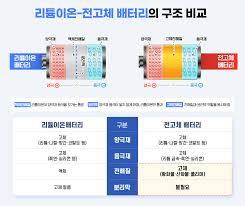
This change alone can secure ultimate safety and increase energy density, paving the way for electric vehicles that can travel over 800 km. However, there are still many challenges to overcome, such as the ‘ionic conductivity’ issue where ions have difficulty passing through solids, leading to lower output, and high manufacturing costs. Currently, Samsung SDI, Toyota, and QuantumScape are fiercely competing for the lead with a goal of commercialization by 2027.
Table 3: Current Status of All-Solid-State Battery Development (2027-2030 Outlook)
| Company | Target Commercialization Date | Key Technology | Major Partners/Investors | Key Performance Goals |
|---|---|---|---|---|
| Samsung SDI | 2027 | Sulfide-based / No anode technology | BMW, Stellantis, in-house | 900Wh/L energy density |
| Toyota | 2027-2028 | Sulfide-based | in-house | Over 1000 km range, 10-minute fast charging |
| LG Energy Solution | 2030 | Sulfide-based/polymer hybrid | GM, Hyundai, in-house | Specific goals not disclosed |
| QuantumScape | After 2025 | Ceramic separator without anode | Volkswagen | High energy density |
People’s Battery - Sodium-Ion Battery (Na-ion)
Sodium-ion batteries tackle resource issues head-on by using common and inexpensive ‘salt’ (sodium), which can be obtained from seawater, instead of expensive lithium. They are 30-40% cheaper than LFP batteries and maintain performance even in extreme cold at -20 degrees Celsius.
Of course, sodium atoms are larger than lithium, resulting in lower energy density, but they can be the best alternative in the affordable electric vehicle and energy storage system (ESS) markets where price is crucial. Currently, CATL from China is leading this field with a goal of mass production by 2025, necessitating a swift response from domestic companies.
Skyward - Lithium-Sulfur Battery (Li-S)
Lithium-sulfur batteries boast unmatched ’energy density per weight’ by using lightweight ‘sulfur’ as the cathode material. They can store the same energy as lithium-ion batteries at half the weight, making them game changers in aviation mobility fields like Urban Air Mobility (UAM) and drones, where weight is critical.
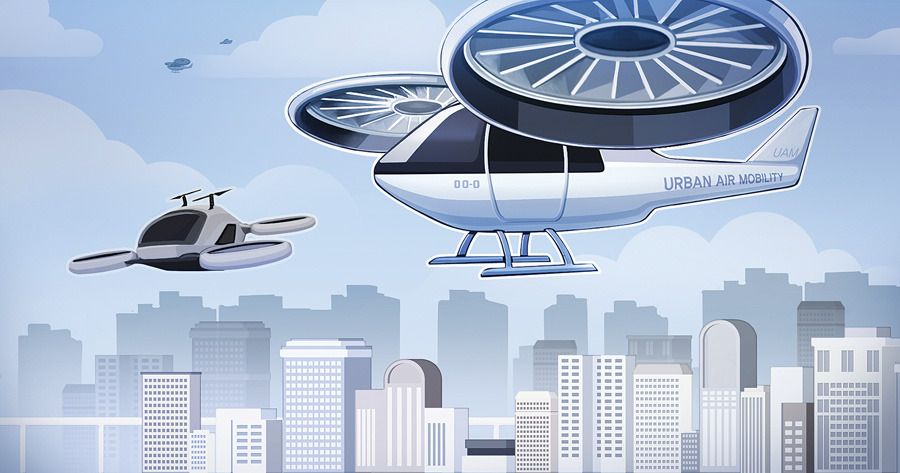
However, they have a critical weakness of short lifespan due to the ‘shuttle effect,’ where active materials are lost during charging and discharging, making them unsuitable for electric vehicles. LG Energy Solution is leading development in this area, strategically betting on capturing the future aviation market.
Comparing Key Technologies of Next-Generation Batteries at a Glance
Each battery has clear strengths and weaknesses, optimized for targeting specific markets.
Table 2: Overview of Next-Generation Battery Challengers
| Type | Key Strength (Nickname) | Energy Density | Safety | Cost | Lifespan | Major Targets |
|---|---|---|---|---|---|---|
| All-Solid-State Battery | “Absolute Safety” | High | Very High | High | Potentially Long | Premium Electric Vehicles |
| Sodium-Ion Battery | “People’s Battery” | Medium-Low | High | Very Low | Medium | Affordable Electric Vehicles, ESS |
| Lithium-Sulfur Battery | “Skyward” | Very High (per weight) | Medium | Low | Low | Aviation (UAM), Drones |
| Metal-Air Battery | “Distant Dream” | Theoretically Highest | Uncertain | Uncertain | Very Low | Long-Term Research |
Conclusion: An Era of ‘Coexistence’ Rather Than Winner-Takes-All
The outcome of the next-generation battery wars will not be a ‘winner-takes-all’ scenario where one technology dominates everything. Instead, it is likely that an era of ‘coexistence’ will emerge, where each technology leverages its strengths to share the market.
- First, the era of lithium-ion is fading. It has hit clear limits in safety, performance, and resource issues.
- Second, the future is an era of ‘right place, right time.’ All-Solid-State will target premium electric vehicles, sodium-ion will focus on affordable electric vehicles and ESS, and lithium-sulfur will aim at the aviation mobility market.
- Third, the era of ‘Battery of Things (BoT)’ is coming. Innovations in battery technology will support not just electric vehicles but also serve as platform technologies underpinning the entire future industry, from autonomous robots to smart cities.
In this wave of monumental change, which next-generation battery do you think will first transform our lives? Imagine the future these technologies will bring and keep an eye on trends in related industries.
References
- [Industry News] [Overseas Expert Report] Battery Explosion Accidents, Are You Safe Now?
- [Alchera] Guide to Major Causes and Solutions for Electric Vehicle Fires
- [Korea Fire Science Society] Analysis of Vehicle Fire Cases Related to Lithium Batteries and Investigation Techniques
- [Goover] Lithium-Ion Battery Fires: Causes, Current Status, and Response Measures
- [Renewable Energy Followers] Secondary Batteries: Is the Era of Lithium Ending and Magnesium Coming?
- [Technology and Innovation Webzine] Beyond Lithium-Ion Batteries: Evolution to Next-Generation Secondary Batteries
- [Ministry of Foreign Affairs] Current Status and Implications of the Global Electric Vehicle Battery Market
- [Brunch] What Are the Advantages of Next-Generation Electric Vehicle Batteries, All-Solid-State Batteries?
- [POSCO Future M] [Miso Dae-ri’s Issue Check] The Dream Battery That Overcomes Limits, All-Solid-State Battery
- [Woman Consumer] [Exclusive] Samsung SDI’s All-Solid-State Battery for ‘Seoul-Busan Round Trip’ to be Mass-Produced by 2027
- [Auto Electronics] Toyota’s Advanced Battery Technology Roadmap
- [D-elect] QuantumScape: “All-Solid-State Battery Without Anode, Plans for Mass Production in 2025”
- [Yonhap News] With the Battery Boom… Will Sodium-Ion Batteries Become a ‘Game Changer’?
- [Asia Economy] [Complete Battery Mastery] (21) “It Works Even at -20°C” Sodium Battery
- [Tistory] Understanding LG Energy Solution’s Next-Generation Lithium-Sulfur Battery
- [RESEAT] Current Status and Outlook of Metal-Air Secondary Batteries
- [KDI Economic Information Center] Trends and Outlook of Next-Generation Batteries
- [Economic Daily] The Future’s Profitable Food ‘Batteries’