
“Have you ever heard the saying, ‘Is she the daughter of a miller?’” This proverb is the key to entering the world of bright and clear beauty that our ancestors pursued in the soapless era.
- Amazing laundry and beauty secrets of our ancestors before soap
- The scientific principles hidden in traditional natural cleansers
- The value of traditional wisdom connected to modern ‘clean beauty’
The Soapless Era: A Desire for Purity
In the Joseon Dynasty, the top condition for beauty was ’three whites’ (三白), meaning white and smooth skin, teeth, and hands. Maintaining these beauty standards without modern cosmetics was a measure of status and refinement. So how did our ancestors embody such stringent cleanliness standards in their bodies and clothing? The answer lies in the remarkable wisdom contained in natural cleansers derived from nature. This journey will show that cleanliness was not just a matter of hygiene but an aesthetic and social aspiration.
Part 1: Natural Cleansers for Clothes, The Science of Laundry
The harsh yet important world of traditional laundry hides amazing science. From the most powerful detergents to the most unexpected methods, we explore their principles and community life.
Ash Water: The Most Powerful Detergent of the Common People
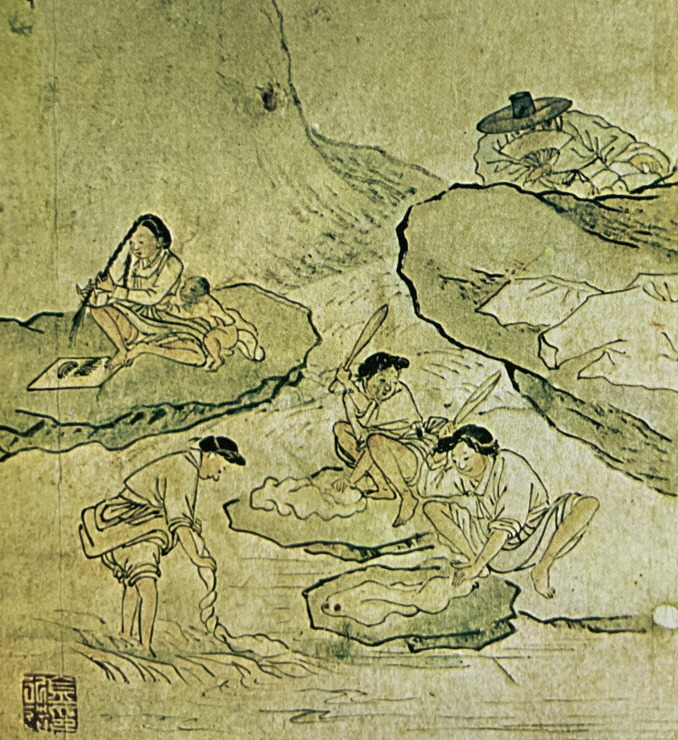
The most essential detergent at that time was ‘ash water’. Made by filtering the ashes from burning soybean pods or rice straw with hot water, ash water had strong alkalinity due to its main component, potassium carbonate (K₂CO₃).
This solution facilitated the saponification of grease, allowing it to wash away easily with water, making it very effective in removing stubborn stains from coarse cotton or hemp clothing. On days when ash water was made, neighbors would come together to boil laundry in a pumasi system, showcasing a facet of community culture.
Urine: The Aristocrat’s Secret for Silk
While powerful ash water was lethal to protein fibers like silk, the surprising solution for the upper class was ‘fermented urine’.
The urea in urine decomposes to produce ammonia (NH₃), a mildly alkaline substance. It had cleansing power but was gentle enough not to damage delicate fabrics like silk.
Just as modern enzyme detergents target specific protein stains, our ancestors had already practiced customized washing methods that adjusted alkalinity based on the type of fabric (plant-based vs. animal-based). This can be considered precision chemistry derived from experience.
Part 2: Natural Cleansers for the Body, Beauty Techniques of the Inner Quarters
Now, leaving the laundry place, we move to the inner quarters to examine the more delicate cleansing methods that realized the ideal of the ‘miller’s daughter’.
Jodu: The Secret of the Original ‘Powder Wash’
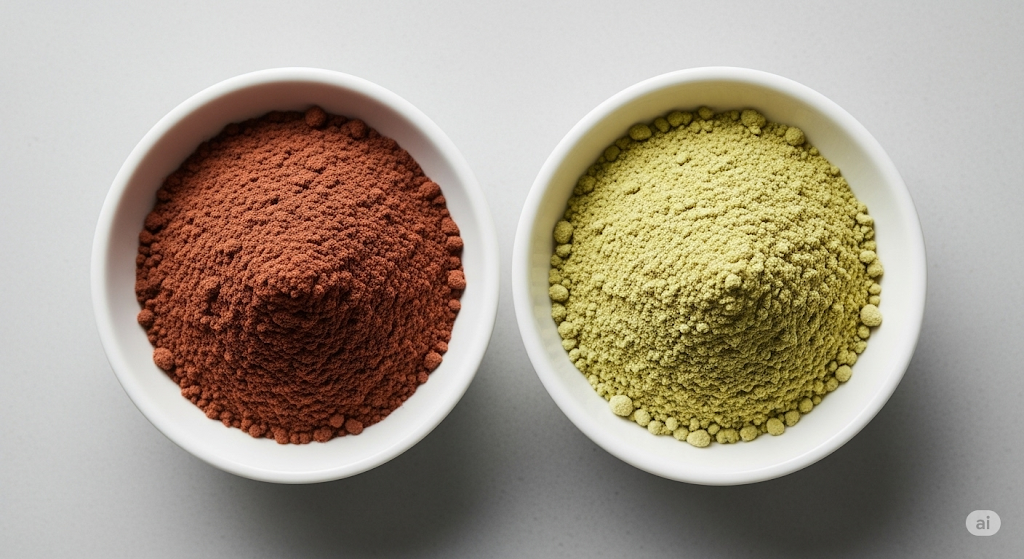
The best facial cleanser of the time was undoubtedly ‘jodu (澡豆)’. It was a powdered soap made by finely grinding red beans or mung beans, with the key component being ‘saponin’.
Saponin is a natural surfactant that is friendly to both water and oil, gently removing skin impurities. At the same time, the fine grain particles acted as a physical scrub to remove old dead skin. I recently tried washing my face with red bean powder and was surprised at how much gentler it was, with less tightness after washing. Additionally, vitamin-rich rice water was an excellent moisturizer.
Changpo: The Blessing of Dano for Hair
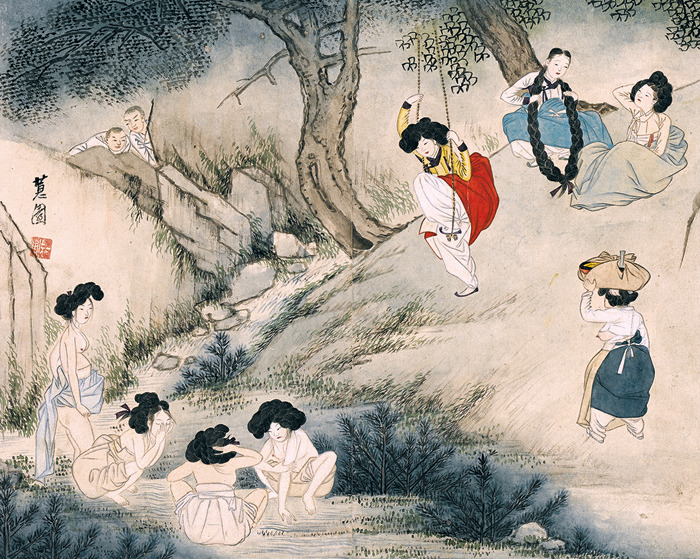
On the 5th day of the 5th lunar month, Dano, there was an important ceremony called ‘washing hair with changpo water’. The saponin contained in changpo had cleansing properties, while essential oil components like ‘asarone’ provided antibacterial effects and a subtle fragrance, preventing pests like lice. This was a spiritual ceremony that went beyond mere beauty, aiming to prevent disease and purify the body and mind.
| Category | Main Use | Scientific Principle |
|---|---|---|
| Ash Water | Powerful washing (cotton, hemp) | Strong alkalinity (potassium carbonate): fat saponification and protein stain breakdown |
| Urine | Delicate fabrics (silk) | Mild alkalinity (ammonia): gentle cleansing without damaging protein fibers |
| Jodu | Facial cleansing and bathing | Natural surfactant (saponin) and physical exfoliation |
| Rice Water | Facial cleansing, moisturizing | Nutrient supply (vitamins, starch) and gentle cleansing |
| Changpo | Hair washing and care | Cleansing (saponin) and antibacterial/insecticidal (essential oil components) |
Part 3: The Scent of Modernity, The Emergence of Soap
The natural traditions that lasted for centuries faced a dramatic transition with the advent of factory-produced soap.
The Strange Foreign Object, The First Arrival of Soap
During the late Joseon period, as Western hygiene concepts were introduced, bathing was regarded as a symbol of civilization. Just like the Portuguese word ‘sabão’ became ‘soap’ through Japan, soap was a product of global trade and cultural exchange.
Factory Production and the Great Cleanliness Transition
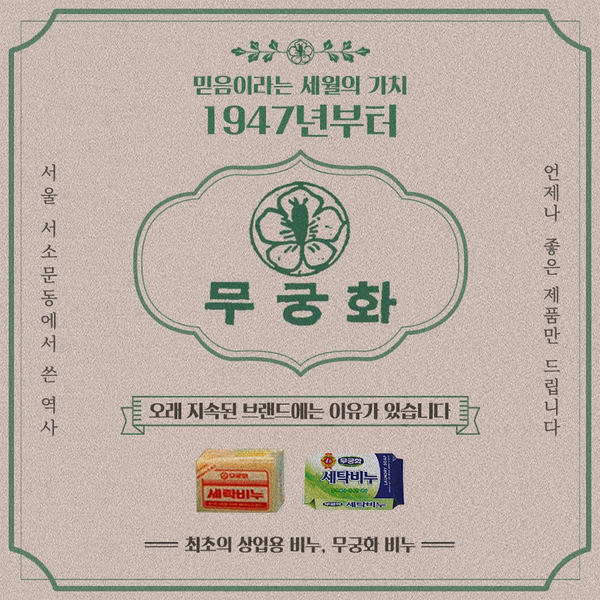
In 1947, Korea’s first mass-produced soap, ‘Mugunghwa Soap’, was launched, marking the beginning of the decline of traditional cleansing methods. The emergence of soap brought convenience but also severed the knowledge closely tied to local ecosystems. The wisdom of making ash water from burned soybean pods and harvesting changpo according to the seasons was replaced by a single ‘universal’ product. What values do you prioritize between convenience and traditional knowledge?
Traditional Natural Cleansers vs. Modern Synthetic Detergents
| Category | Traditional Natural Cleansers | Modern Synthetic Detergents |
|---|---|---|
| Ingredients | Natural origins like beans, red beans, ash, plants | Petroleum, chemically synthesized substances |
| Principle | Natural actions like saponification, adsorption | Powerful synthetic surfactants |
| Advantages | Biodegradable, less skin irritation | Strong cleansing power, mass production, inexpensive |
| Disadvantages | Complicated manufacturing process, weaker cleansing power | Environmental pollution, potential skin irritation |
Conclusion: Finding Future Clean Beauty in Past Wisdom
As concerns about powerful chemical ingredients grow, we are once again facing the wisdom of our ancestors.
- Customized Science: Our ancestors were amazing material scientists who used different natural cleansers based on fabric and skin type.
- The Cost of Convenience: The emergence of modern soap brought convenience but severed sustainable ecological knowledge that had been passed down for centuries.
- Modern Rediscovery: Today’s ‘clean beauty’ trend is shedding light on the value of our ancestors’ natural cleansing methods amidst concerns about chemical ingredients.
How about starting with a small practice of washing your face with rice water in your daily life? Reinterpret the wisdom of our ancestors to cultivate your own healthy beauty.
References
- Laundry (洗濯) - Korean Folk Encyclopedia Link
- Ash Water - Encyclopedia of Korean Ethnic Culture Link
- Gyuhap Chongseo (閨閤叢書) - Korean Folk Encyclopedia Link
- Soap - Encyclopedia of Korean Ethnic Culture Link
- [Modern Gyeongseong] ‘Terrible and Hellish Smell!’…Joseon People Who Bathed Only Once a Month - Chosun Ilbo Link
- Research Trends on Natural and Naturally Derived Surfactant Ingredients - Journal of the Korean Society of Cosmetic Science Link