
A few days ago, I took the KTX for a trip out of town. I overheard the gentleman next to me talking on the phone, saying, “Isn’t this being pulled by a locomotive?” For a moment, I realized I couldn’t answer that with any real confidence. Even for those who ride it every day, the actual mechanics of how these trains run remain a mystery.
So, I looked into it. The deeper I dug, the more fascinating it became: the things we lump together as “trains” actually operate on completely different principles. Subways, Mugunghwa-ho, and KTX all fall under the broad category of “multiple units” (MU). To understand the story, we have to start by defining what a multiple unit actually is.
What exactly is a ‘multiple unit’ and how is it different from a locomotive?
A multiple unit (MU) refers to a railway vehicle that operates as a fixed set, meaning the passenger or freight cars cannot be detached or reattached. More specifically, it is a system where the power for the entire train set is controlled simultaneously from the driver’s cabs at either end. This is fundamentally different from a locomotive-hauled system where a locomotive at the front pulls the passenger cars.
The advantage of a multiple unit is high efficiency, as the entire train space can be utilized for transport capacity. However, because individual cars are generally lighter, there is a downside: it can be somewhat unstable at high speeds. Interestingly, this concept splits into two paths in English. “Railcar” is a broad term that even includes single-unit railbuses, while sets of two or more are usually called “Multiple Units.” When you add the power source, you get familiar acronyms like EMU (Electric Multiple Unit) or DMU (Diesel Multiple Unit).
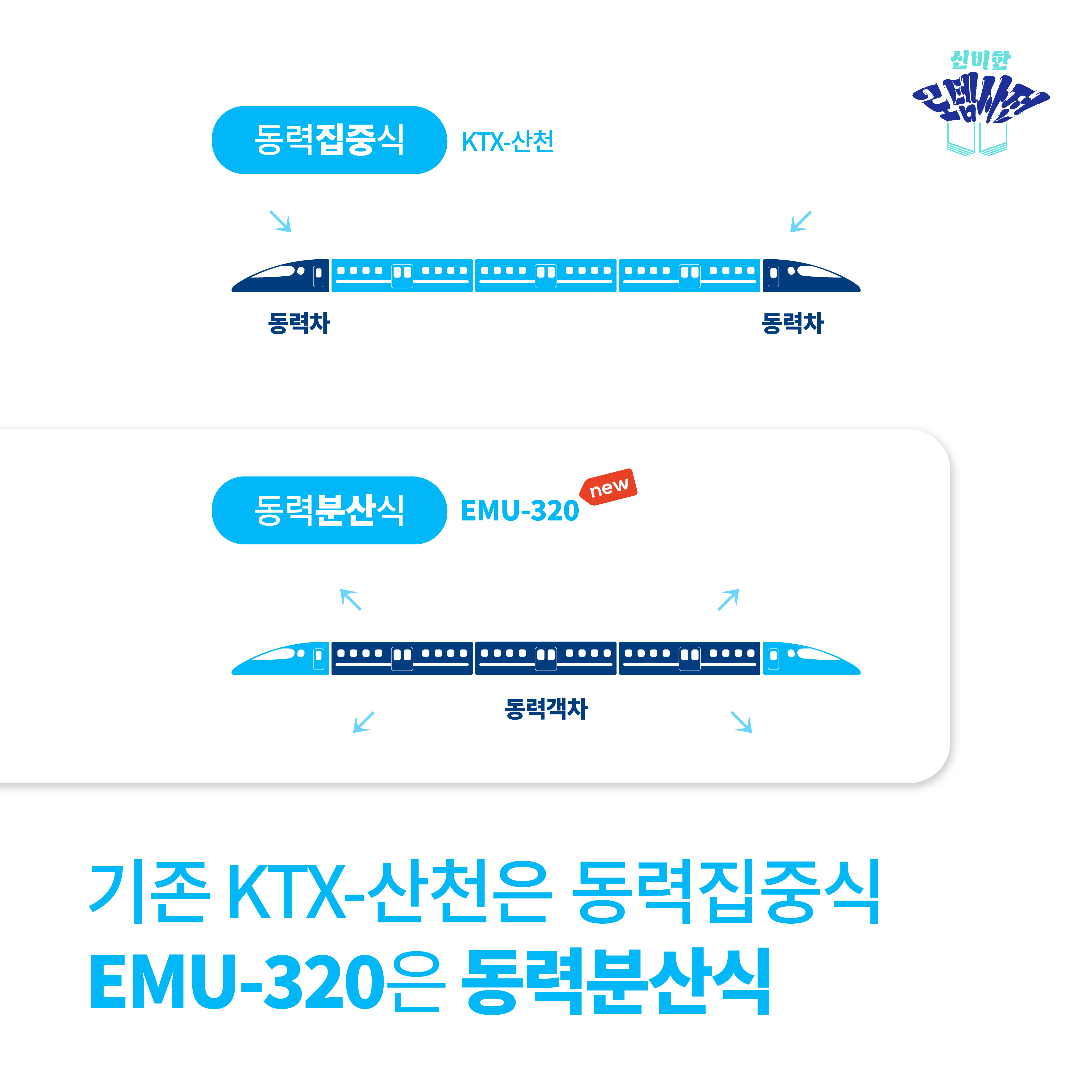
This is where the real story begins. There are two main criteria for classifying multiple units: “What is the fuel source?” and “Where is the power concentrated?” If you confuse these two criteria, the structure of the train will remain a mystery.
By Fuel Source: Steam → Gasoline → Diesel → Electric → Hydrogen
The chronological flow is quite clear. The oldest is the steam multiple unit; due to the nature of steam engines, miniaturization was difficult, so instead of putting the power system under the floor like today, they often mounted a boiler in one section of the car. There are records of Sig-type steam multiple units operating on the Suryeo and Suin lines in Korea, so this is quite an old story.
In the 1900s, gasoline and diesel multiple units were developed. Gasoline units had limitations in scaling up due to engine characteristics, so they were only used on routes with low transport demand. Up to this point, it feels like history book material, a bit distant from our daily lives.
What’s truly worth paying attention to is the diesel multiple unit (DMU). These are divided into two types: hydraulic-type, which uses a torque converter, and diesel-electric, which uses a diesel engine to power a generator that drives the motors in the bogies. This distinction, while seemingly minor, becomes quite important when we talk about locomotives later.
Digging into the genealogy of Korean diesel multiple units, there’s a long list of alphabetic combinations: NDC, DHC, CDC, RDC, DEC, EEC… At first, it’s confusing, but each has its own story. For example, DEC stands for “Diesel Excellent Car,” a diesel-electric multiple unit introduced in 1979 for the Saemaul-ho service on non-electrified sections. It was built with reference to Japan’s 485 series, alongside its sibling, the EEC electric train, and even featured a modified version of the Japanese express train livery. It gives you a sense of how technology transfer worked in that era.
CDC is more recent. It was one of the last to arrive and was later repurposed for tourist trains like the DMZ Train or the Sea Train, or promoted to Mugunghwa-ho status during the RDC pilot conversion project. Eventually, they were all retired when they reached their lifespan limit. It’s a bit bittersweet yet fascinating to see how each individual vehicle changed its shape over time, moving from tourist trains to commuter trains.
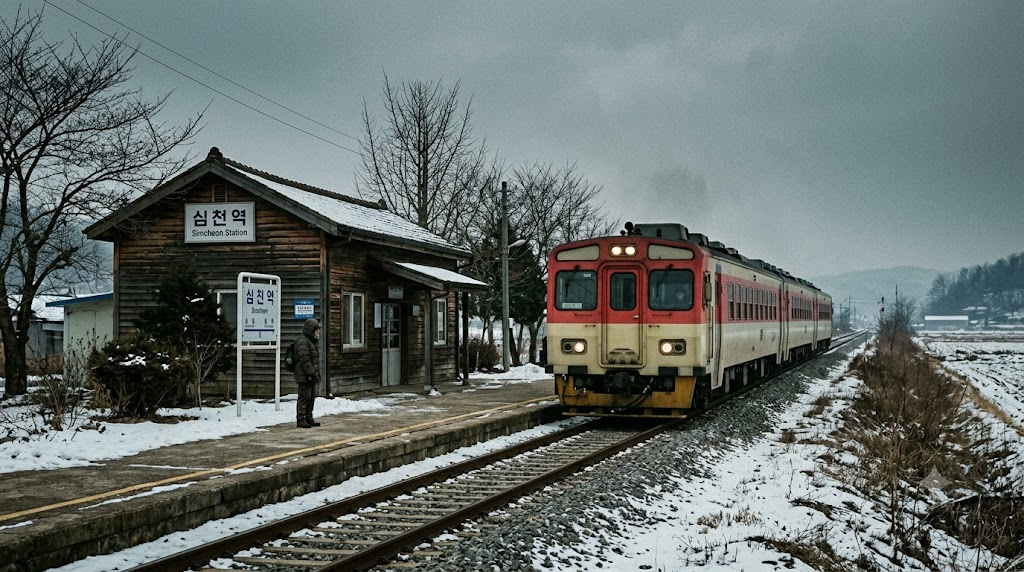
There is one point to clarify here: a diesel “multiple unit” and a diesel “locomotive” sound similar but are completely different things. Currently, all KORAIL diesel locomotives are diesel-electric, using a diesel engine to turn a generator to drive traction motors; pure diesel locomotives have all been scrapped. On the multiple unit side, the CDC and RDC are considered pure diesel types. If we broaden the scope to power-concentrated systems, the DHC, known as the Saemaul-ho PP (Push-Pull) vehicle, is said to have been the only pure mechanical diesel locomotive-style train to operate regularly in Korea. It’s impossible to distinguish by name alone; the key is “where and how the power is generated and where it is sent.”
So what is the KTX? — Power-Concentrated vs. Power-Distributed
Let’s return to that gentleman’s question: Is the KTX pulled by a locomotive, or not?
The answer is “it depends on the train model,” which is the interesting part. The original KTX and KTX-Sancheon are power-concentrated trains, relying entirely on the locomotives/power cars at the front or rear for the train’s power. It’s a pull-and-push system using power cars at both ends, making the structure essentially similar to a locomotive-hauled system.
However, things change with the KTX-Eum. A power-distributed train has traction motors generating power spread evenly throughout the entire train. This gives it significantly better acceleration and deceleration performance than power-concentrated systems and, because it doesn’t need a separate locomotive, it can carry more passengers. In fact, the EMU-320 (an 8-car set) offers 515 seats, which is 36% more than the 379 seats in the 10-car KTX-Sancheon. Since there’s no need for a separate engine room, that space can be used for passengers.
I looked into why Korea is specifically shifting toward power-distributed systems. The explanation is that the advantages of this system become clear on routes with many stops that require frequent acceleration and deceleration. Given Korea’s geographical characteristics—high population density in small areas resulting in frequent stops—power-distributed systems are the more appropriate choice. If it were a route with long distances between stations like in Europe, the story might be different, but for Korea’s railway environment, this is the pragmatic choice.
It’s easier to grasp when you look at the numbers. The names EMU-260 and EMU-320 already contain the specifications. The number after the EMU series name indicates the operating speed; the EMU-260 currently operating on the Gangneung Line runs at 260 km/h, and the newly introduced EMU-320 at 320 km/h. Compared to the KTX-Eum, the speed has increased from 260 km/h to 320 km/h. It is the world’s fourth successful case of a power-distributed high-speed train, following France, Germany, and Japan. This train was later commercialized under the name ‘KTX-Cheongryong.’
Honestly, I found this slightly surprising. I had seen news snippets about Korean railway technology being world-class, but I only realized now that this ranking specifically refers to the “power-distributed high-speed train” category.
Generational change is still underway
This isn’t just a matter of buying a few new trains. All 46 existing KTX sets are nearing the halfway point of their 30-year lifespan, and 6 out of 24 KTX-Sancheon sets have reached 15 years of operation and have entered mid-life maintenance. High-speed trains that reach their 30-year limit are scrapped without extension. A KORAIL official explained that EMU usage will gradually increase as existing power-concentrated trains reach the end of their lives.
In other words, whether you ride a power-concentrated or power-distributed KTX depends entirely on the route and the time of day, and this ratio is bound to tilt toward the distributed side over time. Personally, I think the landscape of Korean high-speed rail will look quite different once this generational shift is complete.
What’s next? — Hydrogen and Batteries
Up to this point, the topics are somewhat familiar, but while looking for recent data, I found something else interesting: the hydrogen multiple unit.
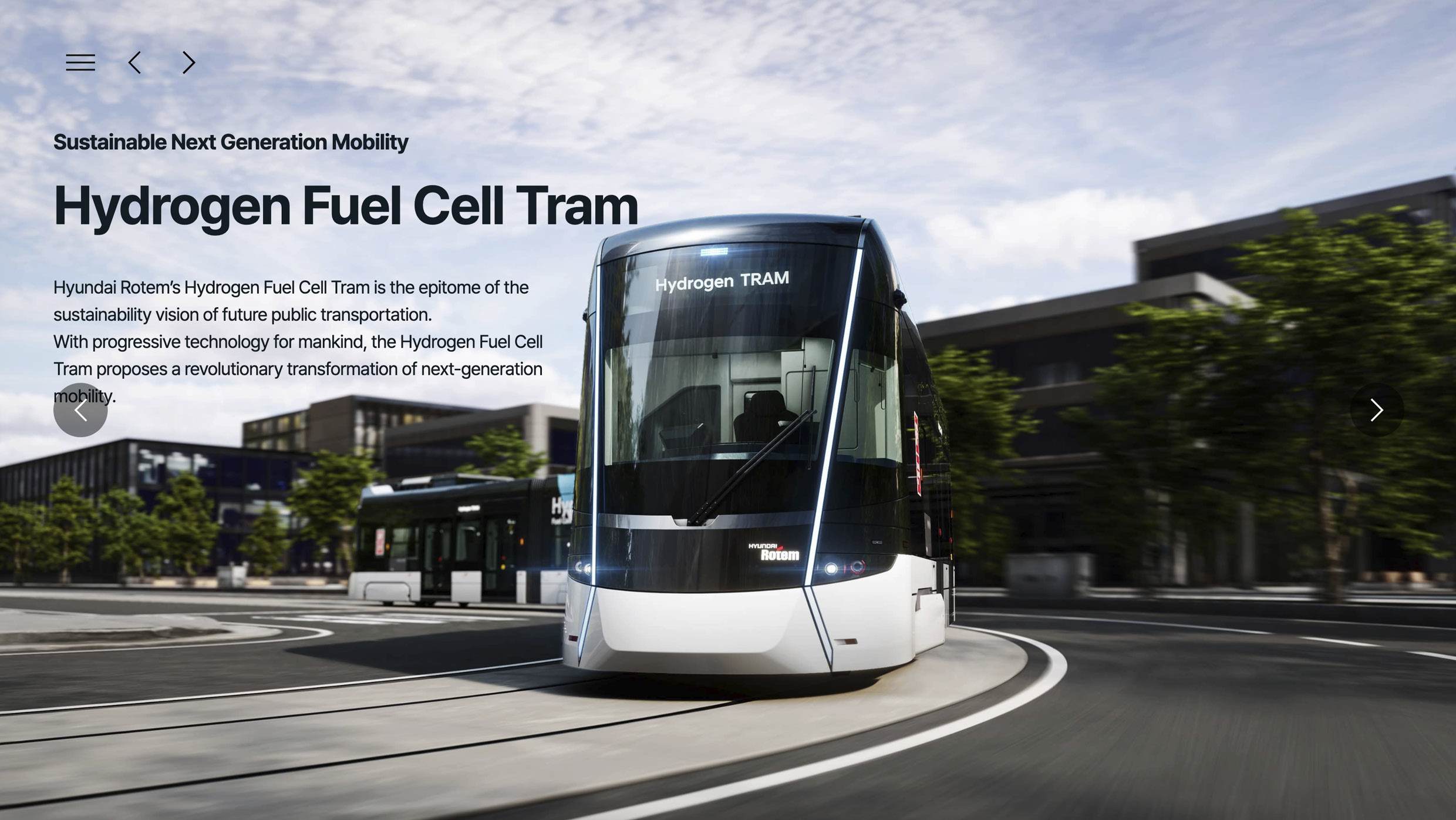
Hyundai Rotem is reviewing the feasibility of applying hydrogen multiple units and hydrogen-powered locomotives to the next-generation Busan-style express railway project. They are considering both power-distributed and power-concentrated methods for these hydrogen railway vehicles. Interestingly, the company explained the terminology: hydrogen multiple units distribute the power source across each car, while hydrogen-powered locomotives use a separate power car to pull passenger carriages. The EMU vs. locomotive-hauled dynamic has been transferred to the hydrogen version.
Each has its own advantages: the power-distributed hydrogen multiple unit is better for securing passenger space, while the power-concentrated hydrogen locomotive allows for the attachment of separate power generator cars and hydrogen tank cars, which is advantageous for increasing range. Ultimately, it’s a trade-off between “space versus range,” and which one is right will depend on the nature of the route—it’s probably too early to say for sure.
Hydrogen plans are more concrete than I thought. Hyundai Rotem has announced plans to commercialize hydrogen railway technology across all types of vehicles—hydrogen-electric multiple units, hydrogen-electric locomotives, and hydrogen high-speed trains—by 2030. They even unveiled designs for hydrogen-electric power cars and multiple units, introducing an ‘H’-shaped side graphic for the first time. At a recent land and transport technology exhibition, a futuristic locomotive model using hydrogen fuel cells as a power source and a next-generation high-speed train platform, ‘EMU-370’ (capable of 370 km/h), were also introduced.
Japan’s situation is also worth noting. According to the Ministry of Land, Infrastructure, Transport and Tourism’s 2025 eco-friendly train policy, they plan to sequentially phase out JR Group’s hydraulic diesel multiple units and replace them with hybrid diesel, hydrogen, or battery-powered electric trains. The US is in a different situation; when local governments lack the budget for electrification, they often replace existing commuter locomotive-carriage combinations with diesel multiple units, as their superior acceleration and deceleration compared to carriages make them suitable for improving services like reduced headways. It’s interesting to see that even within the same “de-dieselization” trend, the direction varies depending on each country’s infrastructure.
The subway we ride every day is also part of this genealogy
By now, this might sound like a grand topic, but the most familiar multiple unit is the subway we ride every day. An electric train refers to a vehicle that receives electricity from an overhead line via a pantograph and uses a control system to drive traction motors. Some are classified as electric trains even if they use high-capacity batteries or hydrogen fuel cells, like electric cars. This means the term “electric train” itself is a broad concept that already encompasses battery and hydrogen versions.
In fact, domestic orders for electric trains are ongoing. KORAIL has ordered 156 cars for metropolitan railways, a project that includes manufacturing and delivering 140 AC/DC compatible Line 1 cars, 12 AC-only Suin-Bundang Line cars, and 4 Seohae Line cars. These trains we ride without a second thought are part of an ongoing industry, constantly being replaced with new models.
Honestly, after summarizing this, I realize how simplistic the initial question of “Is KTX a locomotive or not?” really was. Between power-concentrated and distributed, diesel, electric, and hydrogen, and the fact that even within the same name, generations differ and different models run on different routes—the complexity is immense. If anything, I have more questions now—for instance, what kind of range will a hydrogen multiple unit actually have if deployed on the Busan express railway? I haven’t found that answer yet. I’ll have to look into it again once the actual order is placed.
References
- Wikipedia - Electric Multiple Unit
- Namuwiki - Electric Train
- Namuwiki - Diesel Multiple Unit
- Namuwiki - Diesel Locomotive
- Namuwiki - DEC Diesel Multiple Unit
- Namuwiki - CDC Diesel Multiple Unit
- Namuwiki - Multiple Unit
- Libre Wiki - Multiple Unit
- Hyundai Rotem Blog - EMU-320 Introduction
- Chosun Biz - EMU-320 Test Ride Review
- Wikipedia - KTX-Cheongryong
- Namuwiki - KTX-Eum
- Newdaily Economy - KTX 3rd Gen EMU Generational Change
- Traffic News - EMU-320 Delivery Ceremony
- Joongang Economy News - Land and Transport Technology Fair Hydrogen Railway
- Economy Talk News - Hydrogen Trains and EMU-370
- Electronic Times - Hyundai Rotem Hydrogen Railway Analysis
- Railway Economy Newspaper - KORAIL Electric Train 156 Car Bidding