
Was the geopolitical location of the Korean Peninsula a blessing or closer to a curse? This question may be the most fundamental inquiry running through our history.
Today, let’s unfold a map and embark on a story about the very special destiny held within the land of the Korean Peninsula. A small peninsula squeezed between great powers. However, with a slight shift in perspective, this place was a grand crossroads connecting the continent and the sea, a vibrant platform where civilizations and goods met and mingled.
This unique location gifted our ancestors a distinct survival method: ‘entrepot trade.’ Connecting precious goods from across East Asia and creating new value. It was like a burning artery that brought wealth and prosperity to this land. But perhaps the scent of its richness was too strong? The aroma of abundance often stirred the greed of neighbors, and the trade routes soon became battlegrounds.
Today, we will embark on a grand journey through time, following the arteries of that history. From the ambitious gamble of a kingdom that faced the most powerful empire of its time with nothing but ironware, to the tragic tale of a humble island boy who became the master of the East Asian seas only to fall, and the dazzling era when merchants, not the nation, became the protagonists of the economy. This is not just an economic story. It is the story of all of us who fiercely carved a path for a better life within our given destiny.
Chapter 1: The Iron Kingdom’s Gamble - Wiman Joseon and the Price of Monopoly 🏰
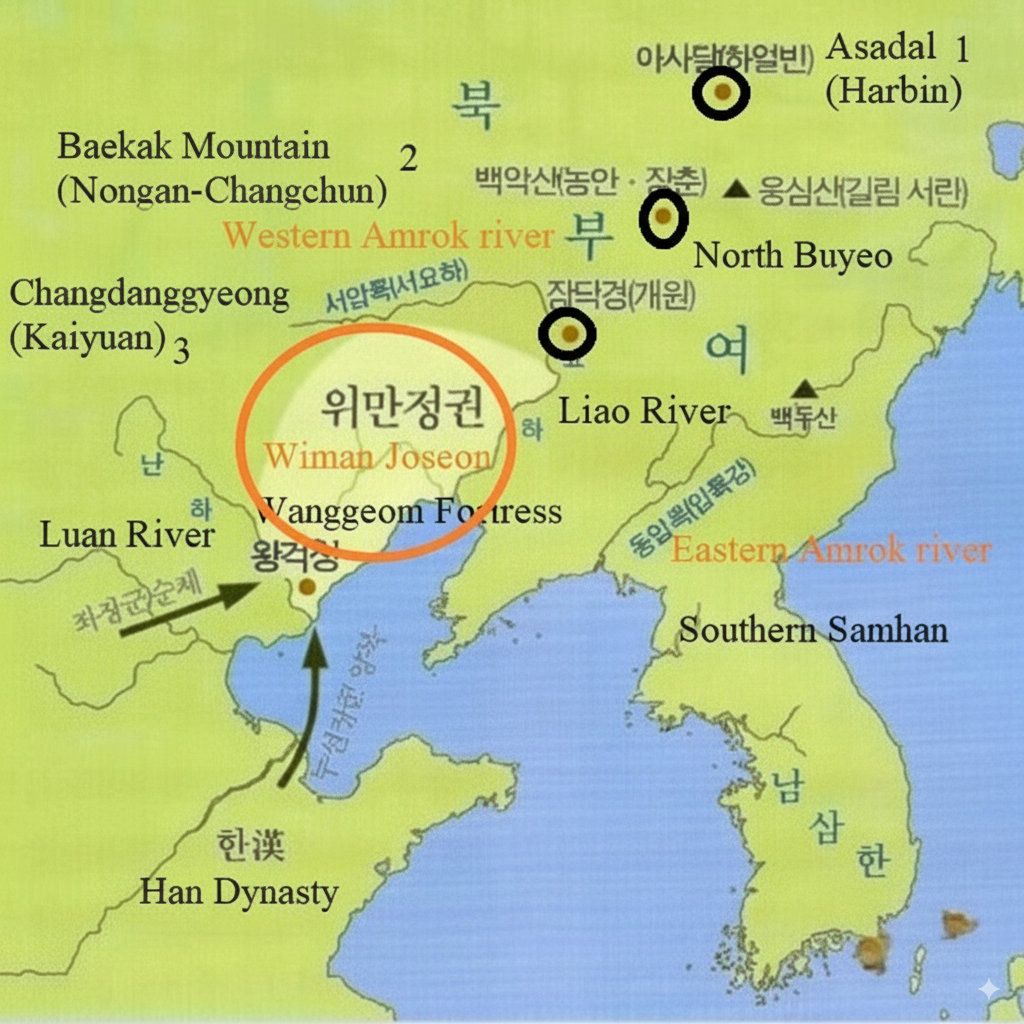
Once upon a time, in the 2nd century BC, a powerful iron kingdom called Wiman Joseon existed to the north of the Korean Peninsula. The story of this nation is like a breathless thriller surrounding the immense profits of entrepot trade.
King Ugeo Who Locked the Gate
Wiman Joseon accumulated wealth by mediating trade between the southern Korean states and the Han Dynasty of China, leveraging its superior iron technology. However, the third king, King Ugeo, was not content with merely being a ‘gatekeeper’ collecting tolls. He decided to become the grand ‘gate’ itself.
“From now on, all goods and envoys will only go to the Han Dynasty through me, Wiman Joseon!”
This bold declaration brought immense wealth to Wiman Joseon. But at the same time, it was a dangerous gamble that turned all surrounding nations into enemies. In particular, the emperor of the Han Dynasty, the most powerful nation in the world at the time, could never tolerate this small kingdom defying his order.
The Wall That Crumbled from Within
Eventually, the Han Dynasty marched in with a massive army. Wiman Joseon held out for over a year with its powerful iron weapons, but the real problem was not outside the walls, but within. As the trade routes were blocked by the war, the ruling class, who had grown accustomed to the sweet profits, began to waver.
“Are we all going to starve like this! Let’s surrender!” “The country is doomed because of the King’s stubbornness!”
In the end, King Ugeo, who wanted to fight to the last, was assassinated by his own ministers who wished to surrender. The strongest gate was opened by internal hands. It was a tragedy born from being intoxicated by the wealth of entrepot trade monopoly and unable to bear the weight of the diplomatic isolation it brought.
Chapter 2: The Sea King’s Dream and Frustration - Jang Bogo and Cheonghaejin 🌊
A thousand years later, the stage shifts to the southern seas. Here stands a hero who, transcending the walls of social status, commanded the East Asian seas: Jang Bogo.
Turning the Sea of Pirates into a Sea of Gold
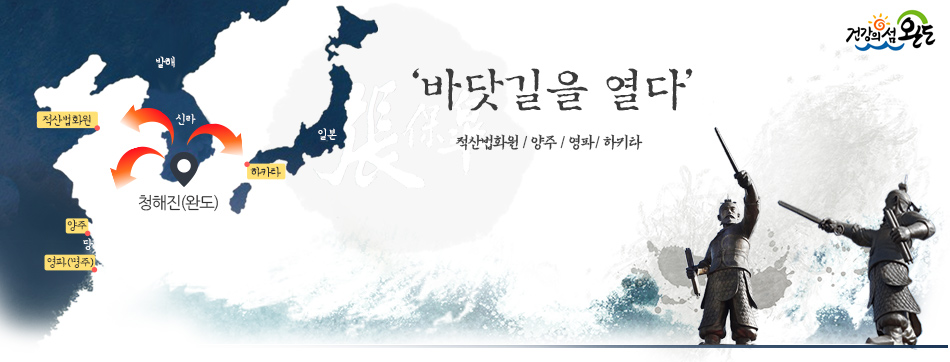
In the 9th century, the seas of Silla were filled with blood and tears due to terrible pirates. Jang Bogo, who had succeeded as a soldier in Tang China, returned to Silla, enraged by the sight of his countrymen being sold into slavery.
“Grant me just 10,000 soldiers. I will eradicate the roots of piracy from the sea.”
‘Cheonghaejin,’ a naval base established in Wando, transformed the terrifying sea into a sea of peace and golden trade. Leveraging this peace, Jang Bogo built a vast trade empire connecting Silla, Tang, and Japan. His ships even traded with distant Arab merchants, converging all the wealth of East Asia in Cheonghaejin.
Fallen by the Blades of an Old Era
With immense wealth and the strongest military power in his hands, Jang Bogo became the ‘kingmaker’ of Silla’s politics. He helped a royal family member, who had been marginalized in a succession dispute, ascend the throne, and in return, was promised his daughter would marry the new king. However, the nobles in the capital, Seorabeol, could not accept this.
“How can we accept a daughter of a humble islander as our queen!”
Their opposition was not simply a matter of social discrimination. It was a deep fear that this new power, Jang Bogo, would dismantle their old vested interests. Eventually, the promise was broken, and the court, fearing his power, sent assassins to kill him. The Sea King, who had embraced the East Asian seas, thus disappeared ignominiously into the annals of history. His death was a sad testament to how an old order could crush the possibilities of a new era.
Chapter 3: The Door Open to the World, and its Tragedy - Goryeo and Byeokranpo 🚢
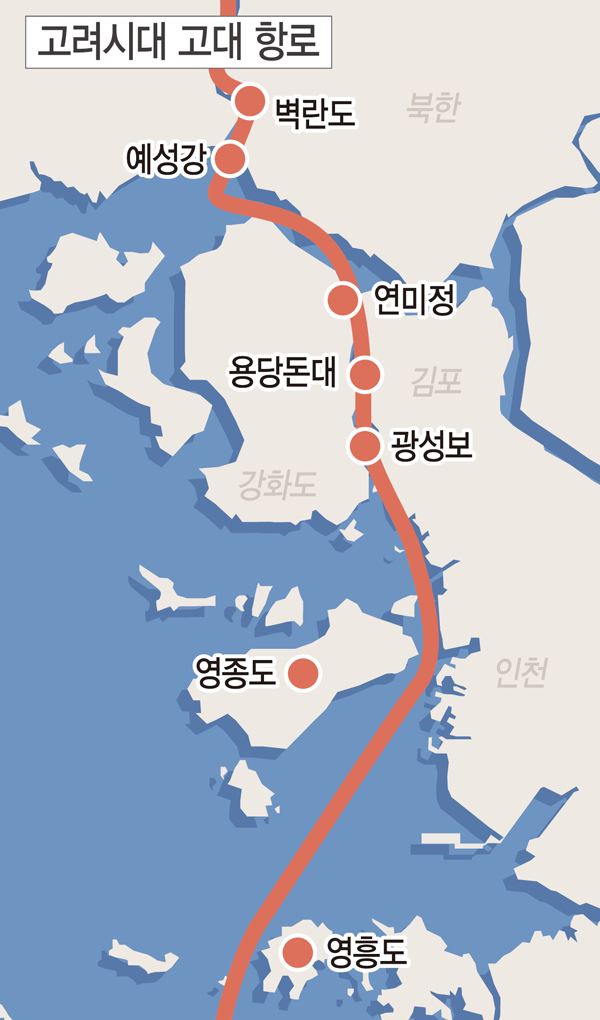
In the 10th century, Goryeo was a far more open international trading nation than Silla. At its heart was the gateway to the capital Gaegyeong, the international trading port of Byeokranpo. The harbor was always bustling with ships from merchants of Song China, Japan, and even distant Arab merchants. It was through these very merchants that the name ‘Goryeo’ became known to the West, eventually becoming ‘Korea’ today. Thus, Byeokranpo was truly a door open to the world.
But that peace did not last forever. In the 13th century, the hoofbeats of the Mongol Empire, which shook the Eurasian continent, brought a great disaster to Goryeo as well. After decades of resistance, Goryeo succumbed to the Yuan Dynasty, and the seas, which had been a channel of exchange, became tools of conquest—a tragedy.
The Yuan Dynasty forced Goryeo to build hundreds of ships in just a few months to conquer Japan. The seas, which once carried wealth, now had to flow with the blood, sweat, and resentment of the people. The sea, once a symbol of prosperity, thus turned into a space of humiliation and suffering.
Chapter 4: Taming the Sea with a System - Joseon’s Ingenious Plan 📜
In the late Goryeo period, as Japanese pirates turned the southern seas into hell, the new dynasty, Joseon, had to end this chaos. Joseon’s chosen method was not simply to wield swords. It was a sophisticated system that combined a strong ‘whip’ with a sweet ‘carrot.’
In 1419, Joseon directly attacked Tsushima, the stronghold of the Japanese pirates, and subdued it by force. But the truly surprising strategy came afterward. Joseon proposed a pact called the ‘Gyehae Treaty’ to the lord of Tsushima.
💡 Joseon’s Wise Proposal:
* Whip (Control): “Henceforth, only 50 trading ships are allowed to be sent to Joseon per year.” * Carrot (Profit): “In return, I will grant you exclusive rights to legal trade and give you 200 sok of rice and beans annually as a gift. You will also be responsible for apprehending other pirates.”
For Tsushima, a barren island, stable trade was far more profitable than plunder. The ‘Pirate King’ became a ‘pirate-catching maritime police’ himself. This exquisite diplomacy, which began with a sword and concluded with an abacus, brought peace to the southern seas for over 100 years.
Chapter 5: The Great Merchants Who Opened the Silver Road - The Protagonists of Late Joseon 💰
In the late Joseon period, new protagonists emerged on the historical stage. They were private merchants, ‘Sasang’ (private merchants), who accumulated wealth through their own efforts without the permission of the state. Like modern global corporations, they created sophisticated networks and controlled the arteries of Joseon’s economy.
Three Merchant Legions and the Flow of Silver
Trade in this era was led by three giants.
| Merchant Group | Base | Trade Focus | Role |
|---|---|---|---|
| Mansang (灣商) | Uiju (North) | Trade with Daeqing (China) | Final consumers importing Chinese silk |
| Naesang (萊商) | Dongnae (South) | Trade with Japan | Importers of Japanese silver, raw material suppliers |
| Songsang (松商) | Gaeseong (Central) | Domestic distribution oversight | Control tower (HQ) connecting the other two |
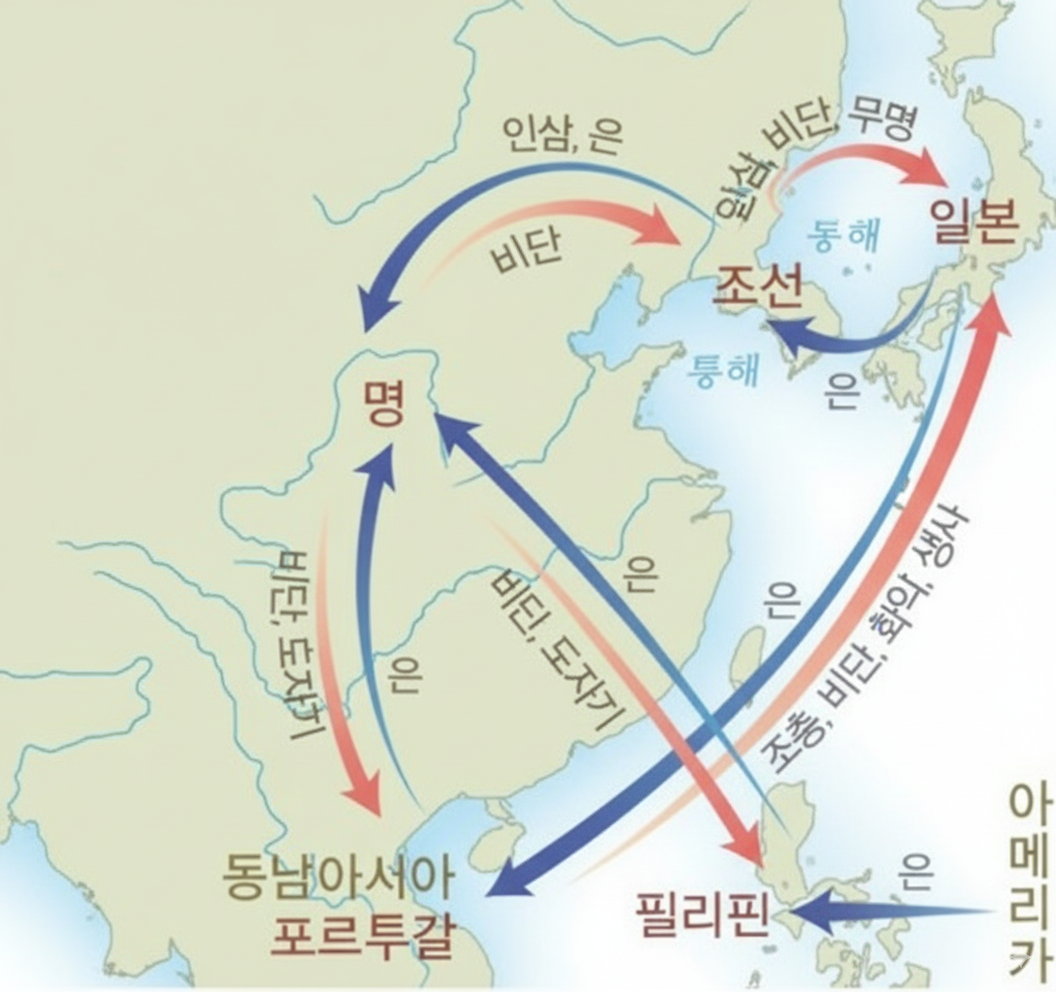
The fuel that ran this massive system was ‘silver.’ When silver from Japan, the world’s largest silver producer at the time, entered Joseon through Naesang, the silver was passed on to Mansang in the north by Song sang. Mansang then used that silver to purchase the finest silk from China and bring it back to Joseon. Within this golden loop, which followed the path ‘Japanese silver → Joseon ginseng → Chinese silk,’ Joseon merchants accumulated immense wealth.
Song sang, Victorious Through Systems
In particular, Song sang of Gaeseong were not mere traders. Their true weapon was not goods, but ‘systems.’
- Nationwide Branch Network (Songbang): They established branches throughout the country to sell goods and gather information.
- Innovative Product Development (Red Ginseng): They developed ‘red ginseng’ by steaming and drying ginseng, which became a huge hit in China.
- Scientific Accounting System (Sagaechibubeop): They managed all financial flows transparently with a sophisticated accounting system similar to modern double-entry bookkeeping.
They were forward-thinking entrepreneurs who managed their businesses based on rational data.
Key Summary of the Article 📝
- Geopolitical Destiny: Due to its location connecting the continent and the sea, entrepot trade flourished on the Korean Peninsula from ancient times, bringing both prosperity and crisis.
- The Price of Monopoly (Wiman Joseon): While trade monopoly brought great wealth in the short term, it led to international isolation and served as a lesson that such a system could collapse from within.
- Conflict Between Economy and Politics (Jang Bogo): This demonstrates how even immense economic power can be thwarted when it clashes with old political and social systems.
- The Power of Systems (Joseon): By combining military strength and diplomacy (guaranteeing benefits), Joseon established a stable trade order and resolved the pirate problem through a system.
- Growth of the Private Sector (Song sang): Beyond state-led trade, private merchants emerged as protagonists of international trade by developing innovative business systems.
Frequently Asked Questions ❓
Q: Why was ‘silver’ so important in ancient trade? A: At that time, China collected taxes in silver, so silver was the key means of payment in East Asian international trade, functioning like today’s ‘dollar.’ As Japan was a major silver producer, securing this silver was the key to dominating trade.
Q: Why was Jang Bogo assassinated so tragically? A: It was because Jang Bogo’s power was so immense that it threatened the Silla monarchy. The central aristocracy felt extreme crisis due to his military strength, financial power, and his ambition to gain political influence by becoming the king’s father-in-law, leading them to eliminate him. It was a tragedy of a clash between a new merit-based order and the old bloodline-centered order.
The Never-Ending Story of the Intermediary
From the iron kingdom of Gojoseon to the great merchants of Joseon, the history of entrepot trade on the Korean Peninsula shows that ‘opportunity’ and ‘crisis’ were always intertwined. Being a bridge connecting different civilizations brought immense wealth, but it also turned the peninsula into a battlefield for great powers vying to control that bridge.
This old story remarkably resembles our present situation. Today’s Republic of Korea, a global trading power, exporting semiconductors and K-culture from the crossroads of continental and maritime powers. What kind of voyage should we undertake amidst the great waves of the US-China hegemonic competition?
History offers us hints. We must not repeat the mistake of Wiman Joseon, which isolated itself through excessive greed, and we must remember the tragedy of Jang Bogo, who was extinguished by the conflict between politics and economics. Instead, we should learn from Joseon’s wisdom in turning crisis into opportunity through systems and the spirit of Song sang, who led the era with innovation.
Ultimately, the destiny of the Korean Peninsula depends on how we utilize our given location. Now, we must go beyond being mere ‘middlemen’ and become ‘innovative platforms’ that create new value and order by integrating technology, culture, and diplomacy. The challenge and opportunity of being an intermediary. This will be an eternal theme that determines our destiny, both in the past and in the future.
References
- 『The History of Korean Trade』, Ministry of Oceans and Fisheries.
- 『Development of Commerce in Late Joseon』, National Institute of Korean History, Our History Net.
- 『Jang Bogo, the Global Businessman Who Changed the World Through Maritime Trade』, Maeil Business Newspaper.
- 『17th Century Entrepot Trade Stimulated Commercial Economy』, Hankyung.
- 『Sagaechibubeop (Four-Leaf Accounting Method)』, Encyclopedia of Korean Culture.
- 『Wiman Joseon and the War with Han』, Our History Net.