
A New Perspective on Everything About Him
- The essence of ’neutral diplomacy’ that was ahead of its time and the reasons for its failure
- The coexistence of reforms for the people (Daedongbeop) and tyranny to maintain the throne (the act of deposing his mother and killing his brother)
- The impact of a leader’s inner deficiencies on the fate of the nation
Why Are We Talking About Gwanghaegun Again?
Today, Gwanghaegun (光海君, 1575-1641) is a name that is both familiar and confusing to us. Popular media, like films, portray him as an unfortunate reformist monarch who pursued practicality over principle, yet his official title in historical records is ’the deposed monarch (廢主)’ who was exiled by the coup. On one hand, he is praised as a master of diplomacy ahead of his time, while on the other, he is condemned as a parricide who deposed his mother and killed his brother. Which face is the real Gwanghae?
This article aims to clear the fog of these extreme evaluations and provide a multifaceted view of the man Gwanghaegun and his era. To conclude, the core of his life lies in a tragic paradox: his greatest strength was inextricably linked to his most fatal weakness.
In the reality of South Korea, which must seek a path to survival between great powers, his ‘practical diplomacy’ appears to be an attractive solution. However, this modern perspective may obscure the true reasons for his downfall. Therefore, a ’new illumination’ of Gwanghaegun must begin with facing both his light and shadow.
Part 1: The Prince Born in Shadows, Proving Himself in the Flames of War
Chapter 1: The Illegitimate Son and the Abandoned Child
The tragedy of Gwanghaegun was foretold from the moment he was born. He was the second son of King Seonjo and the concubine, Lady Kim, thus labeled as a ‘seoja (庶子)’. In the Joseon royal family, this was an insurmountable barrier.
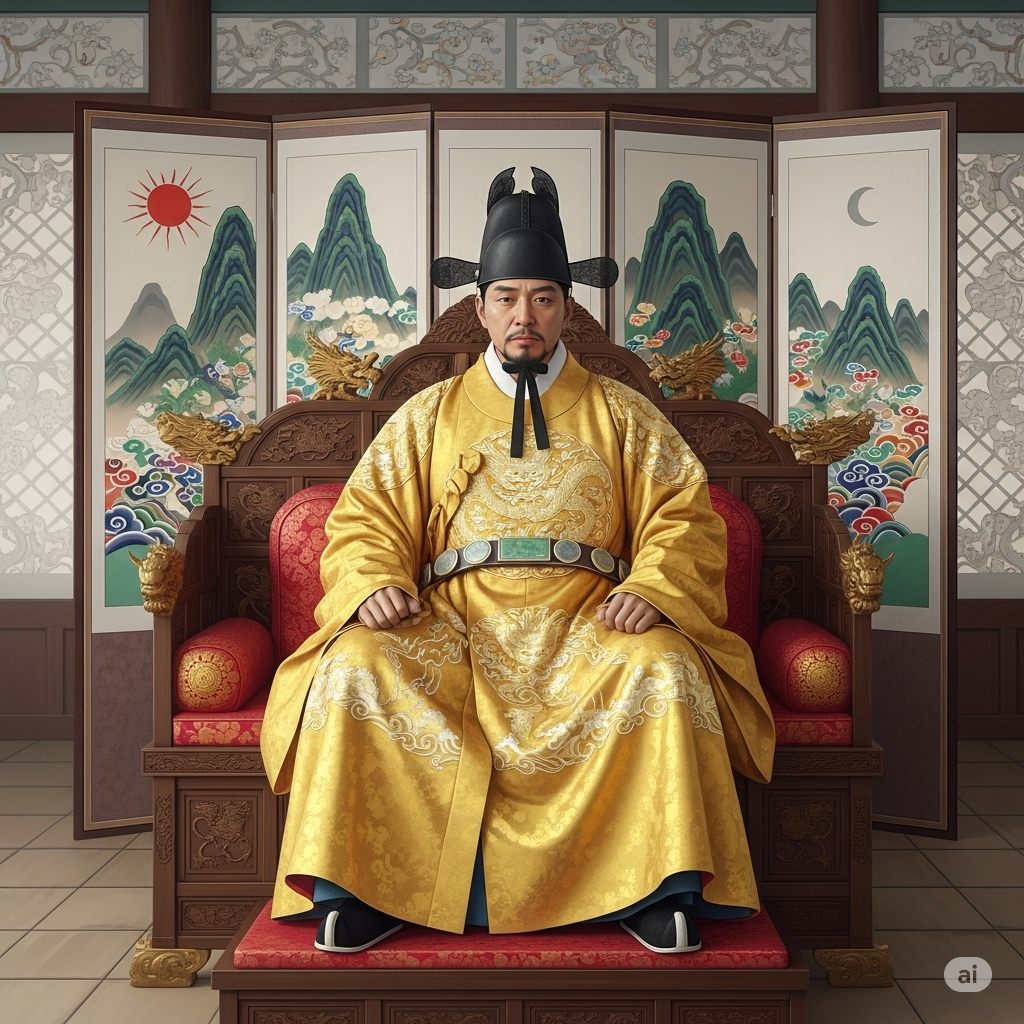
Adding to this, the legitimacy complex of his father, King Seonjo, who was the first monarch from a collateral line, deepened his misfortune. Instead of showing warm affection, Seonjo viewed Gwanghaegun as a potential threat and remained consistently cold.
The experiences during this formative period, marked by his father’s cold indifference, left deep scars within Gwanghaegun. He yearned for his father’s recognition throughout his life but ultimately received none, which later developed into a pathological obsession with the throne and paranoid anxiety. It is not an exaggeration to say that the bloody purges and massive construction projects that overshadowed his reign all began in the shadows of this childhood.
Chapter 2: The Crown Prince Who Saved the Nation, Abandoned by His Father
When the Imjin War broke out in 1592, Seonjo abandoned the people and the capital to flee. In this moment of crisis, the court hastily appointed Gwanghaegun as the Crown Prince.
While Seonjo waited for reinforcements from the Ming dynasty in Uiju, 18-year-old Gwanghaegun was thrown into the front lines of war, leading the ‘Bunjo (分朝)’, which divided the court. He traversed the treacherous battlefield, gathering scattered troops and encouraging local militias, effectively taking on the role of a military commander rebuilding a collapsed national system.
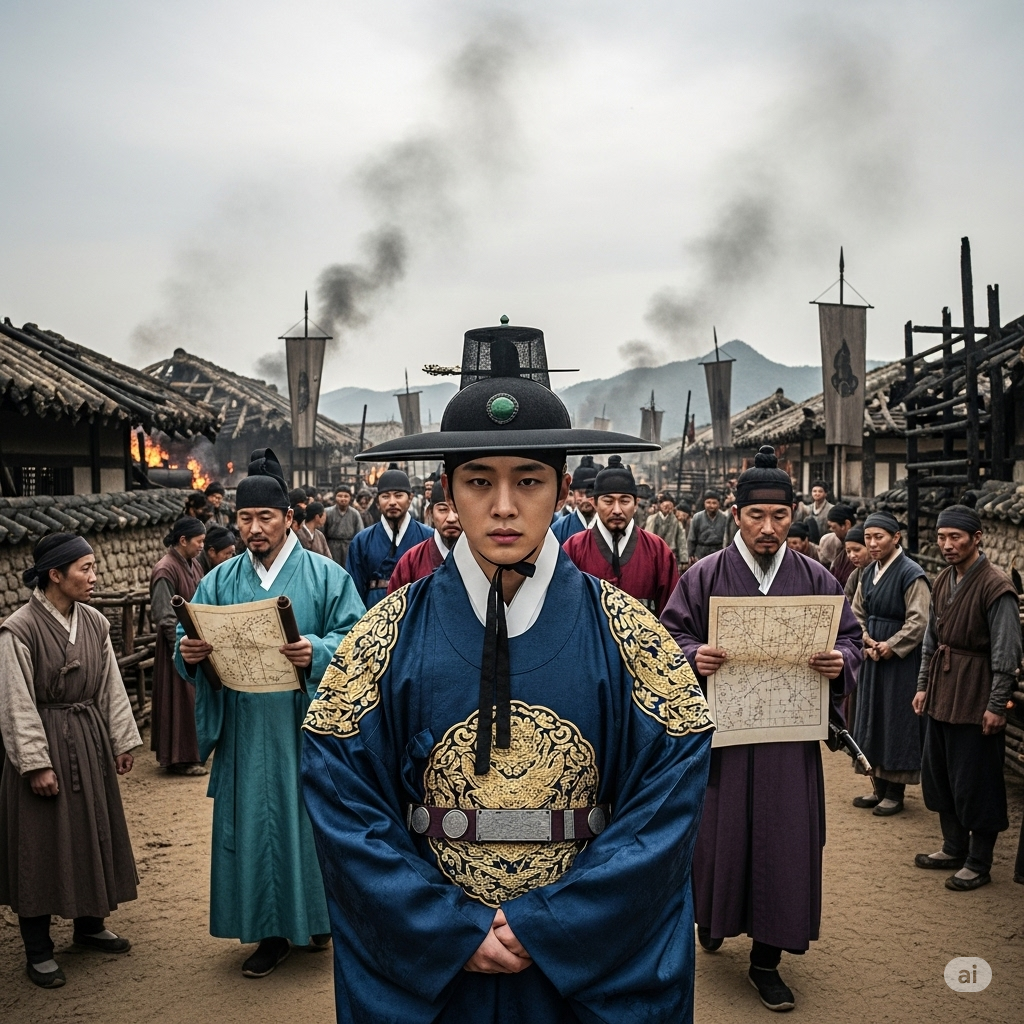
The sight of the young Crown Prince, who did not shy away from sleeping outdoors, became a new hope for the despairing people. His Bunjo symbolized the resistance that Joseon had not yet fallen.
However, what returned to the war hero was not praise but jealousy and obstruction from his father. The war made Gwanghaegun a national hero, but at the same time, it turned him into his father’s most dangerous enemy. During this period, he realized the vast gap between the scholars who merely shouted principles from a safe rear and the people fighting for survival on the battlefield, which later became the foundation of his governing philosophy.
Part 2: In an Era of Turmoil, Choosing Practical Diplomacy
Chapter 3: His Choice Between ‘Principle’ and ‘Survival’: ‘Neutral Diplomacy’
At the beginning of the 17th century, when Gwanghaegun ascended to the throne, East Asia was undergoing a massive shift of power between the declining Ming dynasty and the rising Later Jin (後金, later known as the Qing dynasty).
At that time, the Joseon scholars argued that they should repay the ‘grace of reconstruction (再造之恩)’ received during the Imjin War by fighting alongside the Ming against the Later Jin. However, having experienced the horrors of war, Gwanghaegun chose ‘survival’ over principle and pursued a precarious path of ’neutral diplomacy (中立外交)’ between the Ming and Later Jin.
Case Study: The Battle of Sarhu (1619)
In 1619, when the Ming demanded that Joseon send troops for the conquest of the Later Jin, Gwanghaegun’s diplomatic policy faced its greatest test. Reluctantly, he dispatched 13,000 troops under General Gang Hong-rip but issued a secret order: “Assess the situation carefully, and if the battle turns unfavorable, surrender to the Later Jin to preserve the troops and the nation.”
When the Ming allied forces were defeated at the Battle of Sarhu, Gang Hong-rip surrendered according to the secret order. He conveyed the message that “the dispatch of Joseon troops was unavoidable” as a prisoner, allowing Joseon to avoid immediate retaliation from the Later Jin.
Gwanghaegun’s diplomacy was not a passive ’neutrality’ but an active ‘double dealing’ strategy managing both sides. This aligns with the sophisticated diplomatic strategies of nations today that seek to maximize their interests between great powers and was a bold idea unimaginable at the time. However, to the scholars who held ‘respecting the great righteousness of the Ming (尊周大義)’ as their belief, this appeared as an unforgivable act of betrayal. Ultimately, this policy, which modern historians praise as his greatest achievement, became the first justification for the Injo Restoration, namely ’the crime of betraying the Ming.’
Part 3: The Coexistence of Light and Shadow, Reform and Tyranny
Chapter 4: Reforms for the People: The Light and Limitations of Daedongbeop
The early years of Gwanghaegun’s reign began with the implementation of ‘Daedongbeop (大同法),’ one of the most significant livelihood reforms in Joseon history.
The existing ‘gongnap (公納)’ system was a structure where corrupt middlemen, known as ‘bangnapin (방납인),’ extorted local specialties at prices hundreds of times higher than market value, draining the lifeblood of the people. Daedongbeop was an innovative reform that changed the tax basis from household assessments to ’land ownership area’ and unified the payment method from complex goods to ‘rice,’ ‘cloth,’ or ‘coins.’ This revolutionary idea shifted the tax burden from poor farmers to wealthy landowners.
Table: The Problems of the Gongnap System and the Reforms of Daedongbeop
| Category | Existing Gongnap System | Daedongbeop |
|---|---|---|
| Tax Basis | Households - Burden on landless farmers | Land Area - Burden on landowners |
| Payment Method | Local specialties (goods) | Rice, cloth, coins |
| Core Issues | Manipulation by middlemen and excessive commission exploitation | - |
| Main Beneficiaries | Yangban landowners, middlemen, colluding officials | Tenant farmers, landless farmers, small-scale farmers |
| Main Opponents | - | Wealthy landowners and vested interests |
However, Gwanghaegun’s will for this reform was lukewarm. Faced with fierce resistance from the vested interests, including his support base, he hesitated to expand Daedongbeop. Ultimately, this great reform that could have saved the people remained an experiment limited to Gyeonggi Province throughout his reign.
Chapter 5: The Bloody Purge Caused by Obsession with the Throne
Gwanghaegun’s domestic politics were shrouded in deep shadows. Tormented by a legitimacy complex, he was consumed by paranoid fears of those who threatened his throne.
The peak of his cruelty and paranoia was the act of deposing his mother and killing his brother (廢母殺弟). Using the ‘Gyechuk Incident’ as a pretext, he exiled his half-brother, the only legitimate heir of Seonjo, the 8-year-old Prince Yeongchang, to Ganghwa Island, where he effectively had him killed. Additionally, he stripped his legal mother, Queen Inmok, of her status and confined her to the rear palace.
In a Confucian state, this act was seen as patricide (悖倫), defying the natural order. This provided his political enemies with the strongest justification to frame the coup not as a ‘power grab’ but as a ‘restoration (反正)’ to restore the broken moral order. The brutal act to maintain his throne paradoxically destroyed the very moral foundation of that throne.
Chapter 6: The King Obsessed with the Palace, Burning State Finances
Another fatal mistake of Gwanghaegun was his pathological obsession with palace construction that bankrupted the state finances. Beyond restoring the palace burned during the Imjin War, he recklessly undertook large-scale construction projects to build several new palaces, including Gyeongdeokgung and Ingyeonggung.
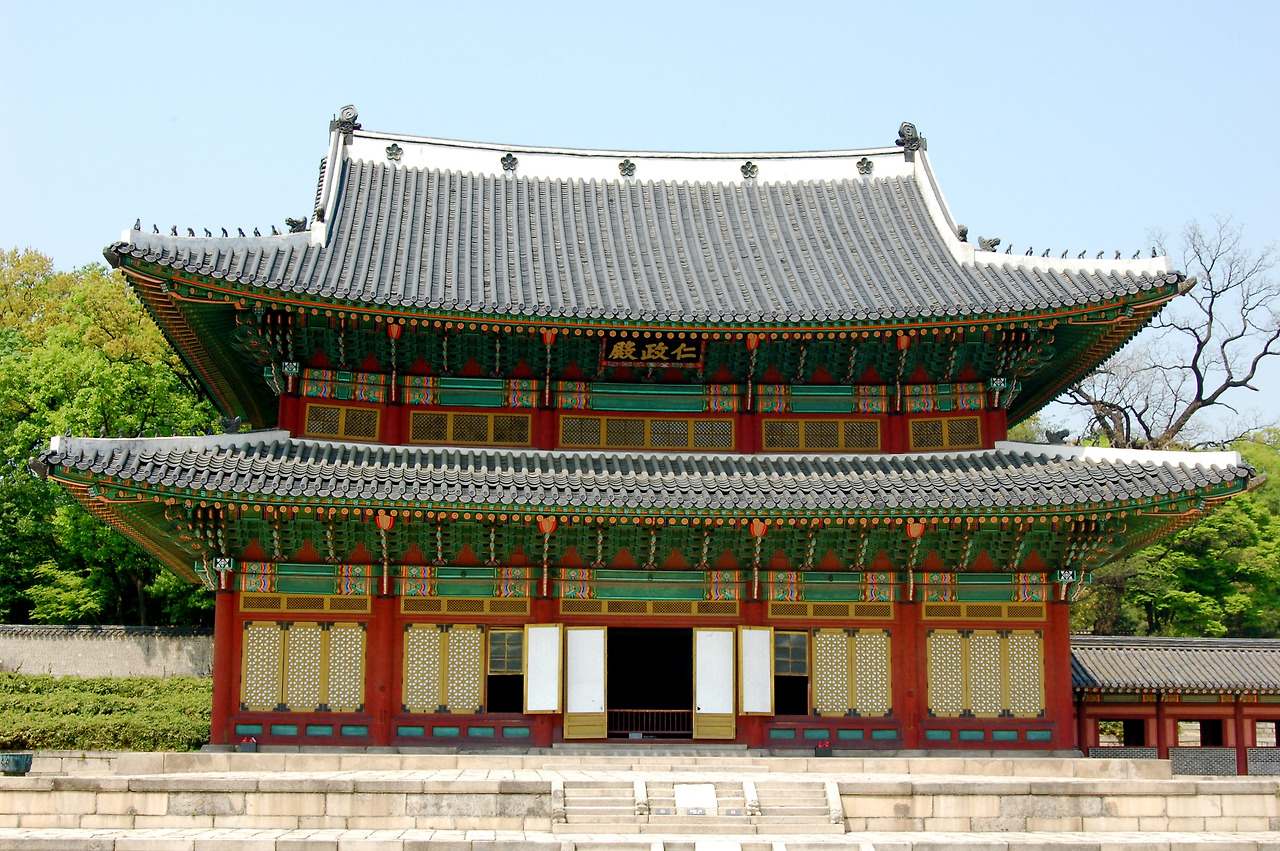
The background of this mad obsession lay in his blind faith in geomancy and royal energy (王氣). It was an expression of desperation to find legitimacy, which he could not find in his bloodline, even in supernatural forces. This is similar to what modern psychology calls ‘Imposter Syndrome,’ where one tries to cover deep insecurities about their qualifications with external grand symbols.
These constructions were black holes that drained state finances. As the treasury ran dry, all sorts of taxes were imposed, and even essential materials for national defense were diverted to bake palace tiles. The king, who sought to avoid war through diplomatic policies, paradoxically undermined the nation’s war preparedness through domestic policies.
Conclusion: What Lessons Does the Tragic Monarch Leave Us?
To confine Gwanghaegun to the binary framework of ‘unfortunate hero’ or ‘cruel tyrant’ does not fully capture his complex reality. His tragic life leaves us with the following lessons:
- The Coexistence of Light and Shadow: Gwanghaegun had diplomatic insights ahead of his time, but he fell due to tyranny and mistakes stemming from his inner wounds. This shows that exceptional ability alone cannot complete leadership.
- The Importance of the Inner Self: His reign was a tragedy of the collision between ’the needs of the state’ and ’the psychological deficiencies of the ruler.’ Unresolved inner conflicts of a leader can escalate into disasters for the entire nation.
- The Real Reasons for Downfall: He was deposed not because of flawed diplomatic policies, but because domestic politics, such as patricide and financial ruin, reached a point that the people and officials could no longer endure.
Once a hero who saved the nation, he remains in history as a tragic monarch who could not save himself. What do you think are the lessons today’s leaders can learn from Gwanghaegun’s life? His story continues to pose heavy and relevant questions for us.
References
- Gwanghaegun Wikipedia, The Free Encyclopedia
- The Shadow of Gwanghaegun Seoul Tech University Newspaper
- Gwanghaegun Namu Wiki
- Evaluation of Gwanghaegun KBS WORLD
- Gwanghaegun/Evaluation Namu Wiki
- Gwanghaegun (光海君) Encyclopedia of Korean Culture
- Lecture 1 - The ‘Light’ and ‘Shadow’ of Gwanghaegun Land and Housing Museum
- Gwanghaegun Our History Net
- Bunjo Our History Net
- Gwanghaegun/Life Namu Wiki
- Gwanghaegun 1575 ~ 1641 Our History Net
- [Today’s History] Gwanghaegun, Operating ‘Bunjo’ Instead of Seonjo Who Fled During the War Incheon Today
- Why Did Gwanghaegun Fail? | Leadership | DBR Dong-A Business Review
- Gwanghaegun’s Neutral Diplomacy Wikipedia
- Gang Hong-rip Wikipedia
- The Cowardly Gwanghaegun Who Ordered Surrender to Gang Hong-rip Atlas News
- Gang Hong-rip, Thinking of Joseon Alone Local N Culture
- The Tragedy of a Monarch Who Was Ahead of His Time but Could Not Convince His Officials JoongAng Ilbo
- Daedongbeop - Textbook Terminology Explanation Our History Net
- ‘It Was to Save the Common People, So Why Did Gwanghaegun Hesitate?’ OhmyNews
- The Main Figures Behind Gwanghaegun’s Downfall: Lee I-cheom and the Angry Public Brunch
- Gwanghaegun, Who Failed in Internal Governance, Wasted National Power Atlas News
- Ingeonggung Namu Wiki
- Gwanghaegun Judged by the Angry Public for His Obsession with Palace Sites Dong-A Ilbo
- [Spaces in History] The Complex King Gwanghaegun, Obsessed with Palace Construction Hankyoreh21