
Why Did the ‘Eosa-hwa’ Become ‘Geum-eun-hwa’?
- A vivid scene of the examination hall reminiscent of a battlefield
- The reality of corporate malpractices centered around ‘seonjeop’ and ‘sasu’
- The impact of the collapse of meritocracy on society at the time
Prelude: The Song of Seoul Echoing in an Era of Decline
In 1844 (the 10th year of Heonjong), the long poem ‘Hanyangga’ (漢陽歌) written by Hansan Gosa is like a documentary vividly capturing the scene of 19th-century Hanyang. This work sings of the vibrant cityscape and leads us to the most dramatic spectacle and contradiction of the time: the civil service examination of the Joseon Dynasty.
Rather than glorifying or criticizing the past, ‘Hanyangga’ depicts the chaos as it is. Following the perspective of ‘Hanyangga’, this article reconstructs the reality of the examination, which has transformed from a contest of skills to a proxy battle of wealth and power, the bizarre malpractices that emerged from it, and the desperate struggle of the state to prevent them.
Part 1: The March to War, The Path to the Examination
The first scene of the examination hall described in ‘Hanyangga’ was not a procession of scholars discussing learning. Rather, it was closer to a military march heading to the battlefield.
“At Jipchunmun (集春門), Wolgeunmun (月覲門), and Tonghwamun (通化門), / The strong ‘seonjeop’ troops are heading to the gate / With their cut robes lifted and umbrellas in hand, / Holding stakes and lanterns, they carry various signs to find their way.”
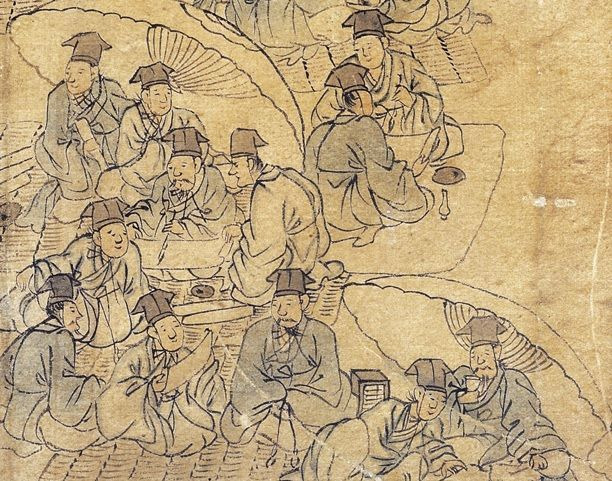
The song begins with the image of the ‘strong seonjeop troops’ rushing through the palace gates in the darkness of dawn. These were not candidates but hired ‘position takers’ who secured prime spots in the examination hall for money. They held stakes and lanterns, with the different characters on the lanterns indicating their respective ’teams’.
This single verse reveals the essence of the civil service examination in late Joseon. The first hurdle determining the success or failure of the examination was not literary talent but the physical power to occupy a spot that would catch the eye of the examiners (si-gwan). With tens of thousands of candidates, examiners would traditionally select passers from the hundreds of answer sheets submitted first. Thus, the struggle for good positions was inevitable.
Part 2: ‘Corporate Malpractice’ Under the Umbrella
The spot won through sweat and blood by the seonjeop was taken over by a well-organized ‘main force’. Did you think that malpractices in the Joseon Dynasty were limited to hiding expected answers in sleeves? ‘Hanyangga’ shows a picture of an organization operating like a modern task force.
“Under the hanging question board, at Seolpojang (雪圃場), they stake their positions, set up umbrellas, / Raise banners and lanterns, and the attendants line up / Guarding each section while the warnings are fierce / Each goes to their section, opens the answer books, / Thinking of the solutions, they create them like a storm / The great writers recite every line, / The writers can’t pause for a moment.”
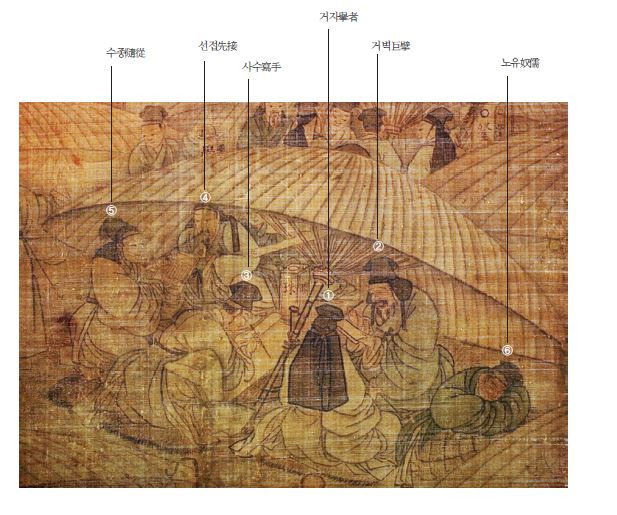
As the exam topic is announced, a ‘malpractice base’ is established under a huge umbrella and banners. Here, a perfect division of labor was in operation.
- Geobyeok (巨擘), the brain behind the writing: Poor yangban with outstanding knowledge, who were ‘ghostwriters’ creating excellent answers on the spot for money. The legendary geobyeok Yoo Gwang-eok tailored answers based on the money provided by clients, showing that the civil service examination had become a market for buying and selling talent.
- Sasu (寫手), the hand that writes: A ‘proxy scribe’ who transcribed the geobyeok’s writings into beautiful calligraphy that would catch the examiner’s eye.
- Seonjeop and Sujonggun, the guarding fists: The ‘guards’ who ensured that all processes went smoothly and protected against external threats.
Thus, the team called ‘jeop (接)’ was a corporate crime organization with a perfect division of labor: securing positions (seonjeop) → content creation (geobyeok) → writing style (sasu). When I first encountered this record, I couldn’t help but be astonished that a massive ‘malpractice industry’ already existed in late Joseon, far beyond simple cheating.
Part 3: “Eosa-hwa or Geum-eun-hwa?” The Dull Blade of the State
The state did not stand by and watch this chaos. The legal code had strict penalties for malpractices.
| Crime | Description | Penalty (from ‘Gyeongguk Daejeon’ etc.) |
|---|---|---|
| Chasul (借述) / Daesul (代述) | Hiring geobyeok or sasu for proxy examination | 100 lashes, 3 years imprisonment, permanent disqualification from examination |
| Hyupsseo (挾書) | Bringing in cheating papers | 2-time examination disqualification (6 years) |
| Ampyo (暗標) | Colluding with examiners to mark answer sheets with secret signs | Exile and other severe penalties |
| Gwajangsoran (科場騷亂) | Committing violence in the examination hall | Immediate arrest and punishment, disqualification from examination |
While proxy examinations were treated as the gravest crime, the blade of the law dulled in the face of corrupt realities.
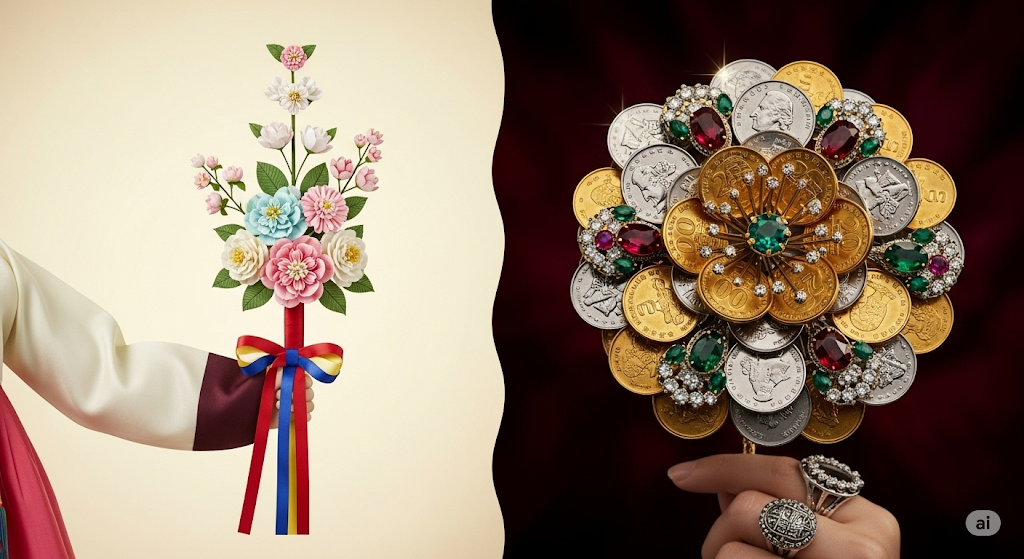
Eventually, a song spread throughout the capital: “Eosa-hwa or Geum-eun-hwa?” It was a mockery questioning whether the flower of honor bestowed by the king, ’eosa-hwa’, was actually a flower bought with money (geum-eun). This shows that even before the time of ‘Hanyangga’, during the reign of Sukjong, large-scale corruption involving examiners and candidates colluding to exchange answers had already been uncovered.
As malpractices became too widespread, the state resorted to the extreme measure of pabang (罷榜), nullifying the entire examination. This was a measure that harmed countless innocent candidates, acknowledging that the state’s control had reached its limits.
Conclusion
The civil service examination of the 19th century, sung in ‘Hanyangga’, was the most dramatic scene showing how meritocracy, the pillar of the state under the rule of powerful families, collapsed. In a reality where official positions were traded for money and connections, efforts to maintain the fairness of the examination became an empty cry.
-
Key Summary
- The Examination Hall Became a Battlefield: The civil service examination of the 19th century began not as a competition of skills but as a physical struggle for good positions.
- Industrialized Malpractice: The division of labor from ‘seonjeop (guard)’, ‘geobyeok (content)’, to ‘sasu (writing)’ formed a massive industry of malpractice.
- Collapsed Meritocracy: The collapse of the examination system led to the frustration of talented individuals and the rise of the wealthy and incompetent, accelerating the decline of Joseon society.
Ultimately, ‘Hanyangga’ was both a hymn to a bustling capital and a dirge for a dynasty that was rotting from within. In that place, ’eosa-hwa’ could no longer bloom, and only ‘geum-eun-hwa’ flourished in the name of desire.
If you are curious about another aspect of Joseon society, please refer to the next article.
Related Article: How Traveling Merchants Led the Market Economy in Late Joseon
References
- Hanyangga (漢陽歌) - Encyclopedia of Korean Culture
- Korean Traditional Music Dictionary - Hanyangga (漢陽歌) - National Gugak Center
- The ‘Hanyangga’ Singing the Customs and Systems of Hanyang - Euro Journal
- The Illegitimate Children of Corrupted Civil Service Exams - Seonjeop and Geobyeok, Sasu - Cultural Heritage Administration
- Proxy Examination Experts, Geobyeok - Local N Culture
- Civil Service Examination/Corruption - Namu Wiki
- Chapter 9: The Worst Civil Service Examination Scandal in Joseon - Brunch
- Special Article - <Let’s Go See Seoul, Hanyangga> - National Hangeul Museum