
“When are you going to feed me noodles?” This endearing question is not just a simple meal promise but a symbolic expression of our culture that inquires about marriage plans.
- Discover why Janchi Guksu became a symbol of marriage and longevity.
- Understand how the noodles, broth, and toppings have evolved from the Goryeo Dynasty to modern times.
- Gain interesting insights into how a single dish reflects Korea’s economic and social history.
The Meaning of the Question in a Bowl of Noodles
“When are you going to feed me noodles?” This question, familiar to any Korean, does not simply mean asking for a bowl of Janchi Guksu. It is a deeply ingrained idiomatic expression in our culture that subtly inquires about marriage plans.
Why has this humble bowl of noodles come to symbolize one of life’s most significant rites of passage? The answer lies in the grand journey through hundreds of years of Korean history encapsulated in a bowl of noodles. From a luxury item enjoyed only by kings and nobles to a warm comfort for common people who overcame war and poverty, the transformation of each ingredient reflects the monumental shifts in our society and economy. Let’s unravel the threads of history woven into the noodle strands from the banquet halls of Goryeo to the bustling markets after liberation.
Goryeo Dynasty: A Luxury Item for the Elite
The story dates back to the 12th century during the Goryeo Dynasty. The vivid travelogue left by the Song Dynasty envoy Xu Jing, titled Goryeo Dogyeong, serves as a precious record that adorns the first page of our noodle history.
According to Xu Jing’s account, noodles (麵) were extremely rare and expensive food at that time. He wrote, “Due to the scarcity of wheat in the country, we purchase noodles from Shandong, China, making the price of noodles very high, and they are not used unless for grand banquets.” In other words, noodles were a costly imported item brought from across the sea, only seen at lavish royal or noble banquets.
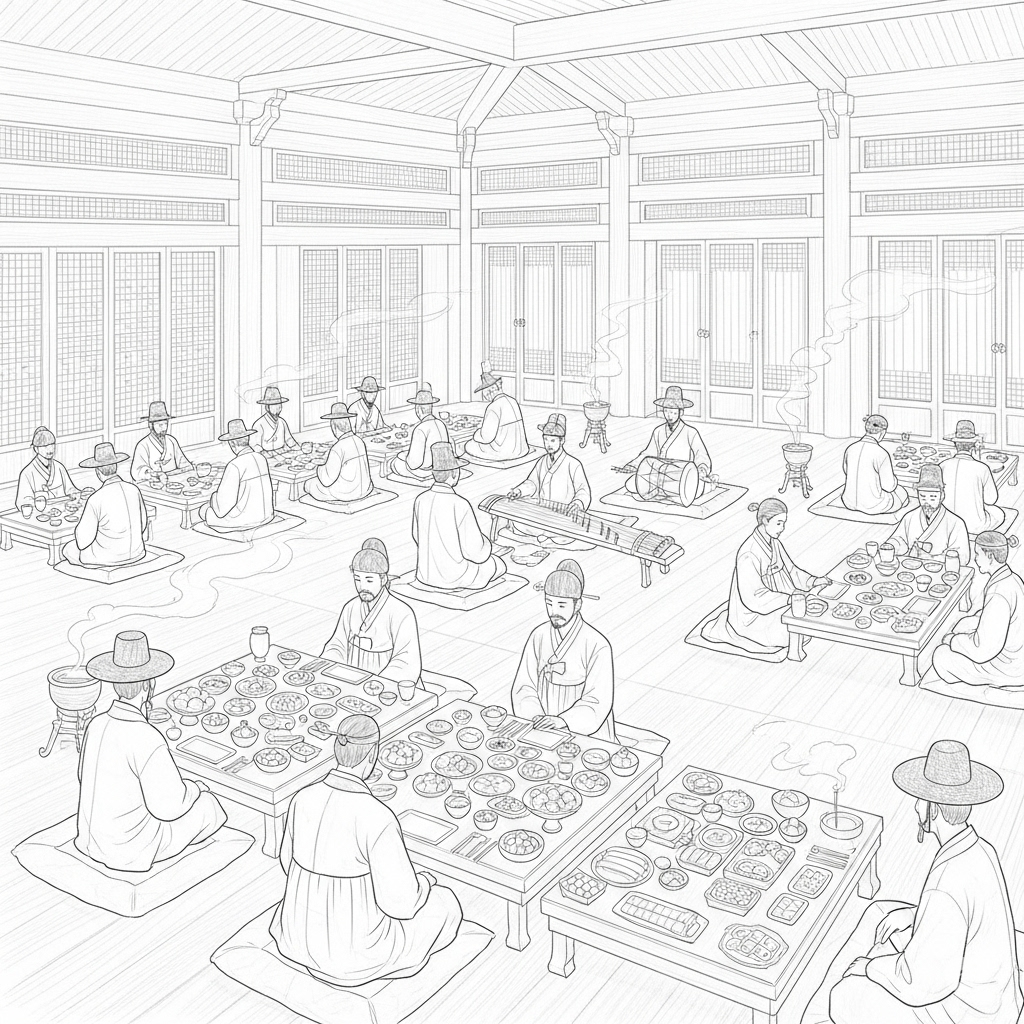
It was not merely rare. Xu Jing praised, “Among ten dishes, the taste of noodles is the best.” Additionally, records in the Goryeo History indicate that noodles were used in rituals and were made and sold in temples. This shows that noodles had already acquired a special and ceremonial status.
Ultimately, for the ruling class of Goryeo, noodles were not just food but a sophisticated tool to showcase wealth, power, and stable diplomatic relations, essentially a form of ‘soft power.’
Joseon Dynasty: Banquet Food for Kings and Nobles
The tradition of noodles as a ‘precious food for special days’ established in the Goryeo era continued into the Joseon Dynasty, evolving into a more refined and elaborate culinary art. Noodles became a staple menu item at royal banquets and an important measure of the culinary skills of noble families.
Documents like the Jinchan Uigwe record that various noodle dishes were served at important events. This court culture spread to the yangban families. By the late 19th century, the cookbook Siui Jeonseo detailed the cooking methods for ‘Onmyeon,’ a direct precursor to today’s Janchi Guksu.
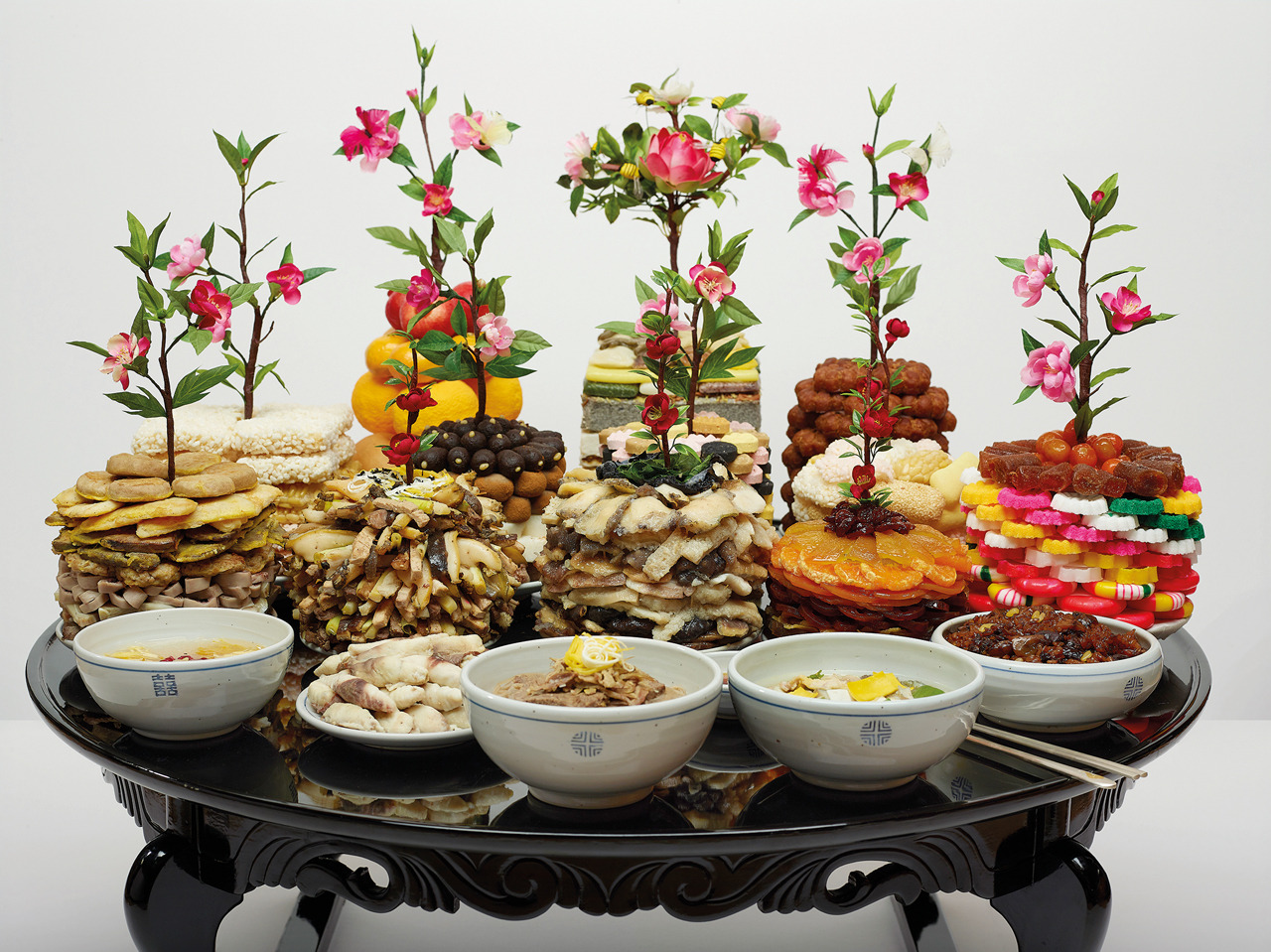
The key to Janchi Guksu in this era was the ‘garnish.’ Emphasizing the harmony of the five colors, ingredients like egg strips, beef, zucchini, and mushrooms were arranged in color coordination. The fact that so much labor could be mobilized for a single dish was itself a testament to wealth and power. Thus, Joseon’s Janchi Guksu represented a form of ‘conspicuous consumption’ that revealed the social status of the host through taste and appearance.
Turbulent Times: A Major Shift in Broth
During the late Joseon period and the Japanese colonial era, Janchi Guksu faced a significant turning point. The noodles, once the exclusive domain of the elite, gradually began to reach the masses.
At the center of this change were the popularization of wheat flour and the spread of a new noodle culture. As modern flour mills were established in port cities like Busan, wheat flour became easily accessible, and dishes like Japanese udon and Pyongyang cold noodles became familiar to the public.
However, the most decisive change occurred in the ‘broth.’ The expensive beef broth of the yangban class was replaced by the cheap anchovy broth of the common people. Interestingly, most of the high-quality dried anchovies produced during the Japanese colonial period were exported to Japan.
This backdrop created a dramatic situation after liberation in 1945. While the anchovy production base remained, the main export market was closed, and beef became an unimaginable luxury due to the war. At this point, the abundance of cheap anchovies in the country coincided perfectly with the needs of the public, who could not afford meat broth.
Thus, the savory anchovy broth, which symbolizes today’s Janchi Guksu, is a taste that embodies the pain and history of overcoming an era as the industrial base of the colonial period was restructured to fill the hungry stomachs of a liberated nation.
After Liberation: Survival and Comfort for the Common People
After the Korean War, Janchi Guksu finally became food for everyone. Amid extreme poverty, Janchi Guksu was a sturdy pillar supporting the tables of the common people.
The popularization of noodles during this period was driven by ‘American aid flour’ and ‘government policies promoting mixed meals.’ After the war, large quantities of flour arrived as American aid, and in the 1960s and 70s, the government strongly encouraged flour consumption to address rice shortages. I vaguely remember school inspections that prohibited bringing rice lunchboxes. During that time, noodles were a necessity, not a choice.
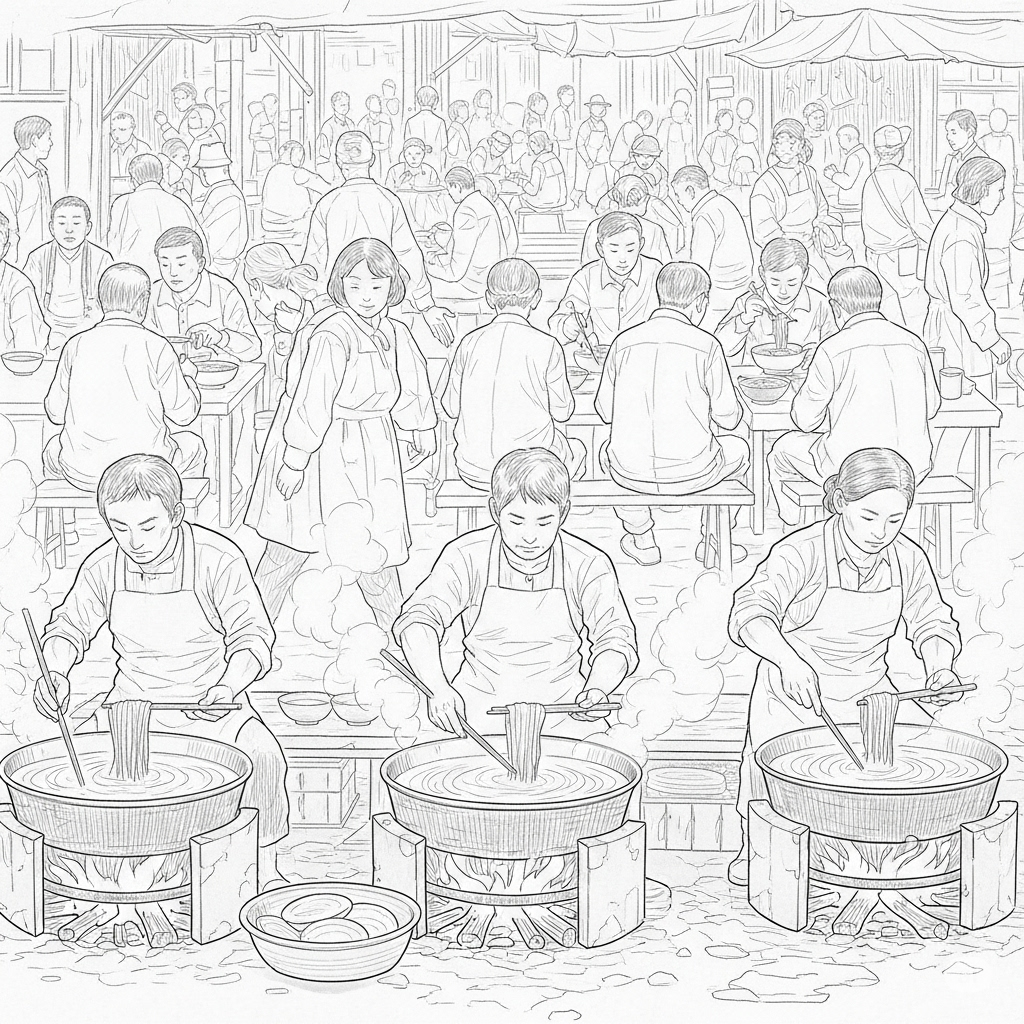
In this process, the once elaborate garnishes were replaced with humble ingredients like stir-fried zucchini, pickled radish, and seaweed flakes. Now, Janchi Guksu was no longer just a ‘banquet’ food but had become food of ‘survival’ and ‘comfort’ that endured alongside Korea’s most challenging times.
Thus, the comforting memories formed in hardship combined with the original celebratory meaning, allowing today’s Janchi Guksu to embody both ‘humble comfort in daily life’ and ‘special celebration in life.’
A Glimpse into the Evolution of Janchi Guksu
The journey of Janchi Guksu has been one of changes in ingredients, consumers, and meanings. The table below provides a snapshot of that history.
| Category | Goryeo / Early Joseon (Approx. 1100-1800) | Late Joseon / Japanese Colonial Period (Approx. 1800-1945) | Post-Liberation / Modern (Approx. 1950-Present) |
|---|---|---|---|
| Noodle Ingredients | Imported wheat, domestic buckwheat | Domestic flour from milling | American aid flour, mass-produced flour |
| Main Broth | Beef, pheasant broth | Transition from meat broth to anchovy broth | Anchovy, sometimes vegetable/kelp |
| Representative Garnish | Elaborate five-color garnishes: beef, egg strips, mushrooms | Simplification begins | Simple and easily obtainable ingredients: zucchini, kimchi, seaweed, egg |
| Main Consumers | Royalty, nobility | Emerging urban masses | General public |
| Cultural Meaning | Symbols of wealth, status, and ritual | Symbols of celebration and emerging popular food | Symbols of survival, comfort, community, and celebration |
Conclusion: What Story Does Your Noodle Hold?
Through the history of Janchi Guksu, we can discover three important facts.
- Janchi Guksu is a mirror of the times: Changes in ingredients reflect the economic situation and international relations of the era, while changes in garnishes show the dismantling of class structures.
- Meanings are not fixed but evolve: Starting as a luxury item, it has transitioned to survival food and today embodies complex symbols of celebration and comfort.
- Food is not just sustenance but culture: The question, “When are you going to feed me noodles?” is an act of affirming the bonds of a community sharing all this historical and cultural background.
Next time you face a bowl of Janchi Guksu, consider that the long and warm strands of noodles represent the long thread of our history that has persevered through all adversities.
If you have a special memory related to Janchi Guksu, please share it in the comments.