
How do the dances of these giants change the future of labor?
- Understanding the fundamental philosophical differences between Tesla and Boston Dynamics
- Comparing the technical designs and AI approaches of the two humanoid robots
- Analyzing commercialization strategies that will reshape the future robot market
H2. The Philosophies of Two Giants: The Showman and the Scientist
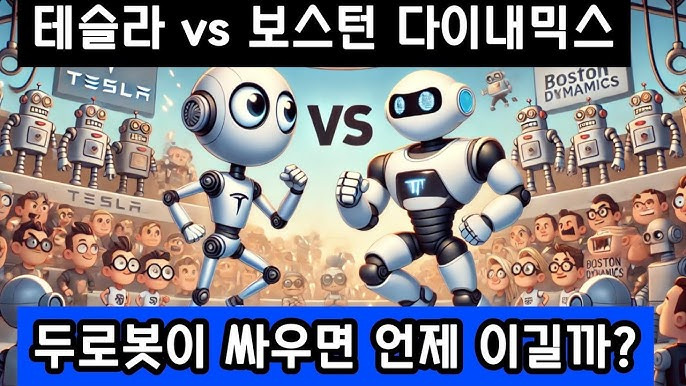
One robot performs a backflip, while the other folds laundry. The opening act of the 21st-century humanoid robot competition can be summarized in these two scenes. On one side is Boston Dynamics’ Atlas, which has tested the limits of robotics for decades, and on the other is Tesla’s Optimus, which has led the electric vehicle revolution. Their competition goes beyond merely determining technical superiority; it showcases a fundamental clash of philosophies that define ‘progress’.
Boston Dynamics follows the path of the ‘scientist’. Their approach is summarized by the pursuit of physical perfection. The impressive movements showcased by Atlas, such as parkour and backflips, are not intended for commercial application. Their goal is to first solve the ‘how’ of movement, focusing on fundamental issues in robotics like dynamic balance and full-body control. They believe that once a robot masters extreme physical challenges, it will have a ‘solid foundation’ to perform any practical task.
In contrast, Tesla has chosen the path of the ‘showman’. Elon Musk’s vision for Optimus is intertwined with eradicating human poverty and ushering in an era of ‘sustainable abundance’. Tesla’s approach focuses on scalable intelligence and economic viability. The mission of Optimus is to take over tasks that are ‘dangerous, repetitive, or boring’ for humans. Demonstrations like folding laundry or sorting blocks, even if remotely controlled, are meant to showcase the process towards the ultimate goal of a general-purpose assistant robot.
Ultimately, the dance of these two giants begins with different definitions of progress in robotics. Boston Dynamics sees the pinnacle of physical capability, while Tesla views the expansion of intelligence and scale as progress.
H2. Design Philosophy: The Body of Humanoid Robots Born from Purpose
The differing philosophies of the two companies are clearly reflected in the physical design of their robots. Every hardware choice illustrates the strategic trade-off between ‘ultimate performance’ and ‘mass accessibility’.
H3. The Evolution of Atlas: From Hydraulic to Electric
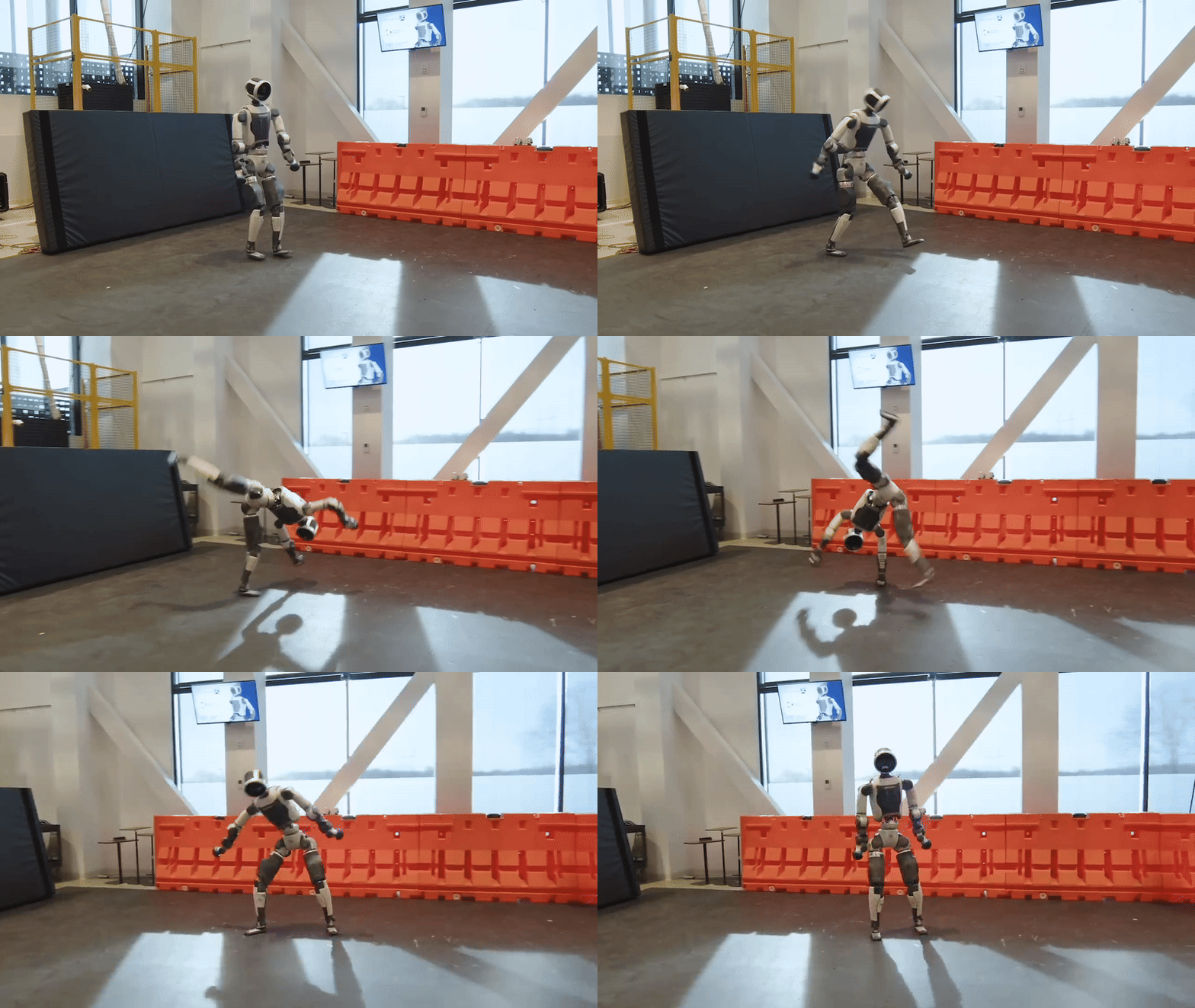
The previous Atlas was a heavyweight champion powered by hydraulic systems. It delivered explosive power but was heavy, inefficient, and difficult to maintain.
In April 2024, Boston Dynamics shocked the market by unveiling a fully electric model. This was not merely a technical change but a strategic shift from ‘research’ to ‘commercialization’. The new electric Atlas is lighter, stronger, and showcases movements that surpass human ranges of motion.
H3. Optimus: Designed for Mass Production
Optimus was designed from the outset based on electric actuators. It is significantly lighter than Atlas and was chosen to maximize safety and energy efficiency in environments where it works alongside humans.
Particularly noteworthy is its Degrees of Freedom (DoF). Degrees of Freedom refers to the number of directions a robot joint can move, and Optimus demonstrates its focus on sophisticated manipulation capabilities through the greater number of freedoms assigned to its hands. A demonstration of picking up an egg without breaking it symbolically highlights this.
H2. AI Approaches: The Ghost in the Machine
As important as the ‘body’ of the robot is its ‘mind’, or artificial intelligence (AI). The two companies are taking entirely different paths in creating the brains of their robots. This resembles a showdown between a highly optimized dedicated operating system (OS) and a general-purpose cloud AI that learns from vast data.
H3. Boston Dynamics’ Embodied Intelligence
The intelligence of Atlas is deeply rooted in sophisticated control systems and sensor fusion technologies. It generates precise 3D models of its surroundings in real-time using various sensors like LiDAR and depth cameras, planning movements accordingly. This is an ’embodied’ approach, where AI is inextricably linked to the robot’s physical capabilities and sensor data, learning to ’think while moving’.
H3. Tesla’s Massive Brain and the Truth of Remote Control
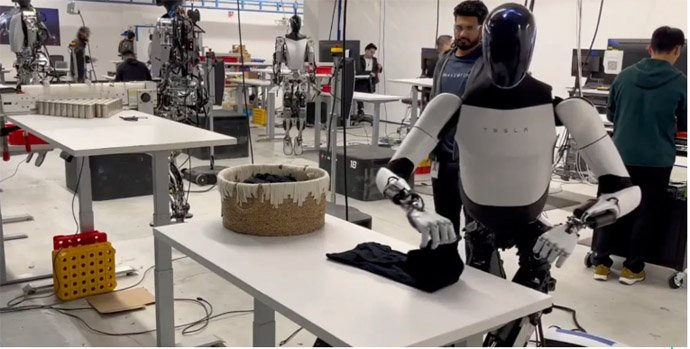
The intelligence of Optimus is derived from Tesla’s Full Self-Driving (FSD) technology. The goal is to build a single neural network capable of performing general tasks by learning from vast video data.
The remote control seen in the controversial ’laundry folding’ video is not a mere trick but functions as a core ‘data generation engine’. When a human operator performs a task, the AI records the entire process to create perfect training data. In other words, this demonstration was not a display of ‘autonomy’ but rather a showcase of ‘hardware capabilities’ and ‘data collection processes’.
H2. Commercialization Strategies: From Laboratory to Factory
The market entry strategies of the two humanoid robots are as different as their philosophies. This can be seen as a difference between entering the existing industrial automation market and attempting to create a new market for ‘robot labor’.
H3. Boston Dynamics’ Precision Strike
Boston Dynamics’ strategy is a cautious B2B approach. They are conducting ‘Proof of Concept’ by performing specific tasks like ‘part sequencing’ at their first partner, Hyundai’s Georgia plant. They sell ‘robot solutions’ that address clear problems for specific customers.
H3. Tesla’s Blitzkrieg
Tesla’s strategy is aggressive, vertically integrated, and aims for overwhelming scale. By 2025, they plan to deploy thousands of units in their own factories to become their first customers and validate the technology, with plans for general household distribution by 2027. This is an attempt to create a ’labor platform’ that can be deployed in numerous tasks.
Comparison/Alternatives
Atlas vs Optimus: A Direct Specification Comparison
The specifications of the two robots clearly illustrate their strategic orientations. Atlas is heavier but offers powerful performance, while Optimus aims for lightweight design, sophisticated hands, and overwhelming price competitiveness.
| Feature | Boston Dynamics Atlas (New Electric) | Tesla Optimus (Gen 2) |
|---|---|---|
| Height | Approximately 1.5m | 1.73m |
| Weight | 89kg | 56kg |
| Drive System | Fully Electric | Fully Electric |
| Degrees of Freedom (DoF) | 28 (Hydraulic Version) | Total 40, 11 per hand |
| Power Source | Custom Battery | 2.3 kWh Battery Pack |
| Target Price | Over $150,000 | $20,000 ~ $30,000 |
Conclusion
The journey of these two giants towards the future of humanoid robots resembles the story of ‘Ferrari’ and ‘Model T’. Atlas expands the boundaries of robotics like a ‘Ferrari’ showcasing the pinnacle of technology, while Optimus aims to democratize robotic technology like a ‘Model T’ born to change the world.
-
Key Summary:
- Philosophical Differences: Boston Dynamics prioritizes physical perfection (‘scientist’), while Tesla prioritizes the scalability of intelligence (‘showman’).
- Convergence of Technologies: Boston Dynamics’ choice of electrification has begun to intersect the technological paths of the two companies.
- Future Vision: The ultimate humanoid robot will combine the agility of Atlas with the scalable AI of Optimus.
This competition is not a zero-sum game. The dance of these two giants represents a creative tension that leads the entire industry towards a better future. Which humanoid robot do you think will change our lives first?
Related Articles: [How Far Has Autonomous Driving Technology Come? A Comprehensive Overview from Level 0 to 5]
References
- Leaps, Bounds, and Backflips link
- Inside Boston Dynamics’ project to create humanoid robots - TechTalks link
- Atlas | Boston Dynamics link
- Boston Dynamics’ Atlas vs Tesla’s Optimus: Comparing Modern Humanoid Robots link
- Optimus (robot) - Wikipedia link
- Tesla’s Optimus and Boston Dynamics’ Atlas: A Robotics … - Curam Ai link
- AI & Robotics | Tesla link
- Hydraulic humanoid retires and electric successor is revealed - Drives&Controls link
- Exclusive: Hyundai’s Georgia plant to use Boston Dynamics’ Atlas … link
- Busted: Elon Musk admits new Optimus video isn’t what it seems link
- The Hidden Tech Behind Tesla’s Optimus Demos - YouTube link
- Humanoid Robot Market Expected to Reach $5 Trillion by 2050 | Morgan Stanley link