
Analyzing whether the records of the locust plague in the Samguk Sagi truly prove the ‘continental location theory’ of the Three Kingdoms scientifically.
- Understand the core claims of the continental theory and the truth behind the Huangchung records that support it.
- Learn about the scientific conditions for the occurrence of locust plagues from the perspectives of meteorology and entomology.
- Obtain clear conclusions about the actual locations of the Three Kingdoms through archaeological evidence.
Challenge to the Continental Theory: The Mystery of the Huangchung Records
The continental theory, which posits that Silla, Baekje, and Goguryeo ruled the Chinese continent rather than the Korean Peninsula, presents an intriguing hypothesis that directly challenges mainstream historical academia. One of the key pieces of evidence for this claim is the numerous records of locust plagues, or Huangchung, found in the Samguk Sagi. The swarms of locusts that cover the sky are products of a dry continental climate, suggesting that the main stage of the Three Kingdoms was indeed the Chinese continent, thus serving as ‘irrefutable evidence.’
This hypothesis goes beyond mere historical debate and demands scientific verification. As a meteorologist and entomologist with 20 years of experience, I found this claim to be a fascinating research challenge. Historical records serve as valuable data repositories containing information about past climates and ecosystems. From now on, I will embark on a scientific investigation to reconstruct ancient climates, analyze insect ecologies, and cross-reference archaeological evidence to uncover the truth behind the ‘Huangchung.’
Profiling the Culprit: The Science of the Huangchung Plague
To analyze the ‘Huangchung’ fingerprint left at the crime scene, we must first identify the suspect. The likely culprit behind the destructive locust swarms in East Asian literature is the ‘migratory locust (Locusta migratoria manilensis).’ This insect is a two-faced entity that can transform into a destructive plague under certain conditions.
The Two Faces of the Locust: Phase Polyphenism
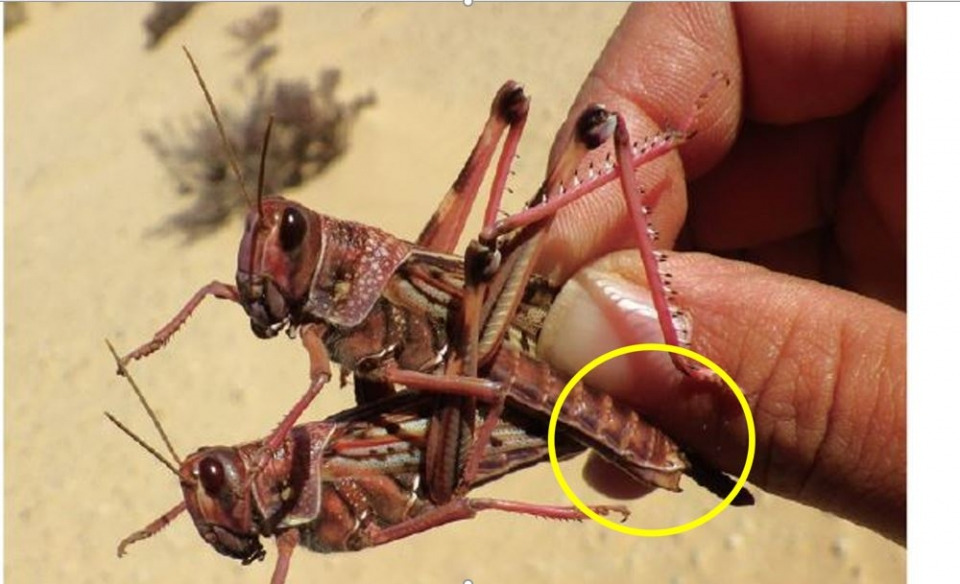
The most remarkable feature of the migratory locust is its ability to completely change its appearance and behavior depending on the environment, known as ‘phase polyphenism.’ Phase polyphenism refers to the phenomenon where insects exhibit different forms and behaviors based on population density.
- Solitary phase: When the population is low, the locusts blend in with the surrounding vegetation, exhibiting a protective coloration and living a docile life while avoiding each other.
- Gregarious phase: However, when the population density increases and their hind legs continuously bump into each other, there is a dramatic surge in the secretion of the neurotransmitter ‘serotonin’ in their brains. This causes their body color to change to conspicuous yellow and black, and they exhibit strong gregarious behavior. The billions of transformed locusts become the ‘Huangchung.’

Conditions for the Plague: Drought Followed by Heavy Rain
So, what triggers the transformation of locusts into swarms? The massive outbreaks of locusts are not random events; they are the result of a ‘perfect storm’ that occurs when specific weather patterns align. The key scenario is the ‘drought-and-deluge cycle.’
- Drought (Concentration): During prolonged droughts, as greenery diminishes, locusts gather in the remaining vegetation, naturally increasing their population density.
- Heavy Rain (Explosion): When heavy rain falls at the end of a drought, it creates moist and soft soil, providing optimal conditions for mass laying of eggs and hatching. Simultaneously, new vegetation grows explosively, becoming food for billions of larvae.
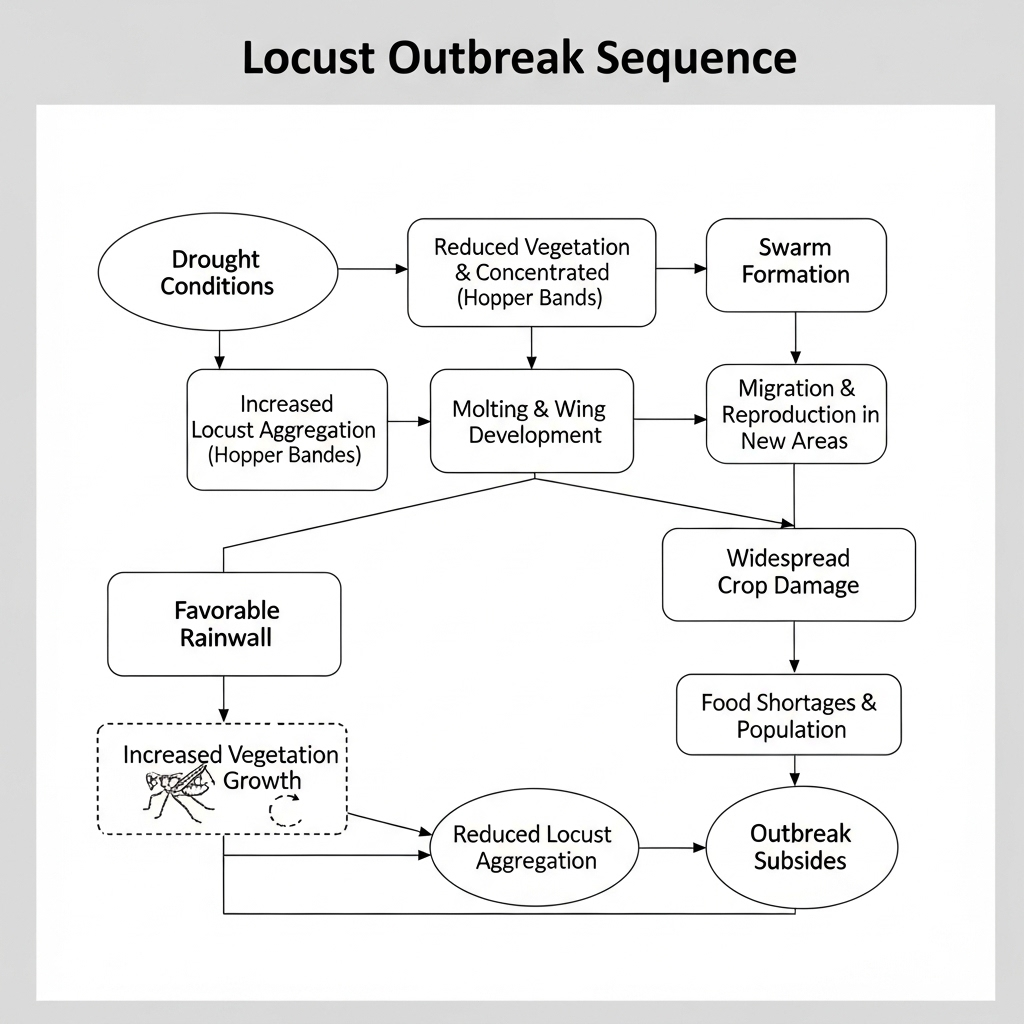
This scientific profile indicates that the Huangchung records are not merely reports of disasters but encrypted data about past climates and ecological environments.
Historical Testimonies: Samguk Sagi vs. Chinese Wuxingzhi
Armed with this scientific profile, let’s compare and analyze the Korean Samguk Sagi and the Chinese historical text ‘Wuxingzhi (五行志).’
The Samguk Sagi records various natural disasters, including 23 instances of Huangchung damage, 79 droughts, and 33 floods. People at that time perceived these disasters as warnings from heaven regarding the ruler’s incompetence, termed ‘jae-i (災異).’
Interestingly, the Wuxingzhi also connects natural phenomena with the emperor’s governance based on the ’tianren gan ying (天人感應)’ ideology. Particularly, the ‘Wuxingzhi’ in the history of the Southern Song Dynasty classifies Huangchung as a disaster of ‘water (水),’ alongside floods and hail. This strongly indicates that ancient Chinese people had already empirically recognized the close relationship between locust outbreaks and hydrological and climatic phenomena.
The similarity in records should be interpreted as strong ‘cultural evidence’ showing that the Three Kingdoms were advanced ancient states that adopted sophisticated governance ideologies and administrative systems from Chinese civilization, rather than geographical evidence of the Three Kingdoms being located on the Chinese continent. It is a product of cultural exchange, not geographical identity.
The Truth of Huangchung Revealed by Climate Data
So, do these records truly not match the climate of the Korean Peninsula? Paleoclimatic studies show that the Korean Peninsula during the Three Kingdoms period also frequently experienced alternating droughts and floods. For instance, between 371 and 410 AD, the Korean Peninsula faced significant droughts, and if local heavy rains followed, the occurrence of Huangchung would have been entirely possible.
The vast alluvial plains of the Han River, Geum River, and Nakdong River basins could provide sufficient conditions for locust breeding, experiencing periodic flooding and droughts. The fact that the primary outbreak areas of locusts in China are concentrated in the Yellow River basin indicates that, despite differences in scale, the ecological conditions of ‘riverine plains’ are key.
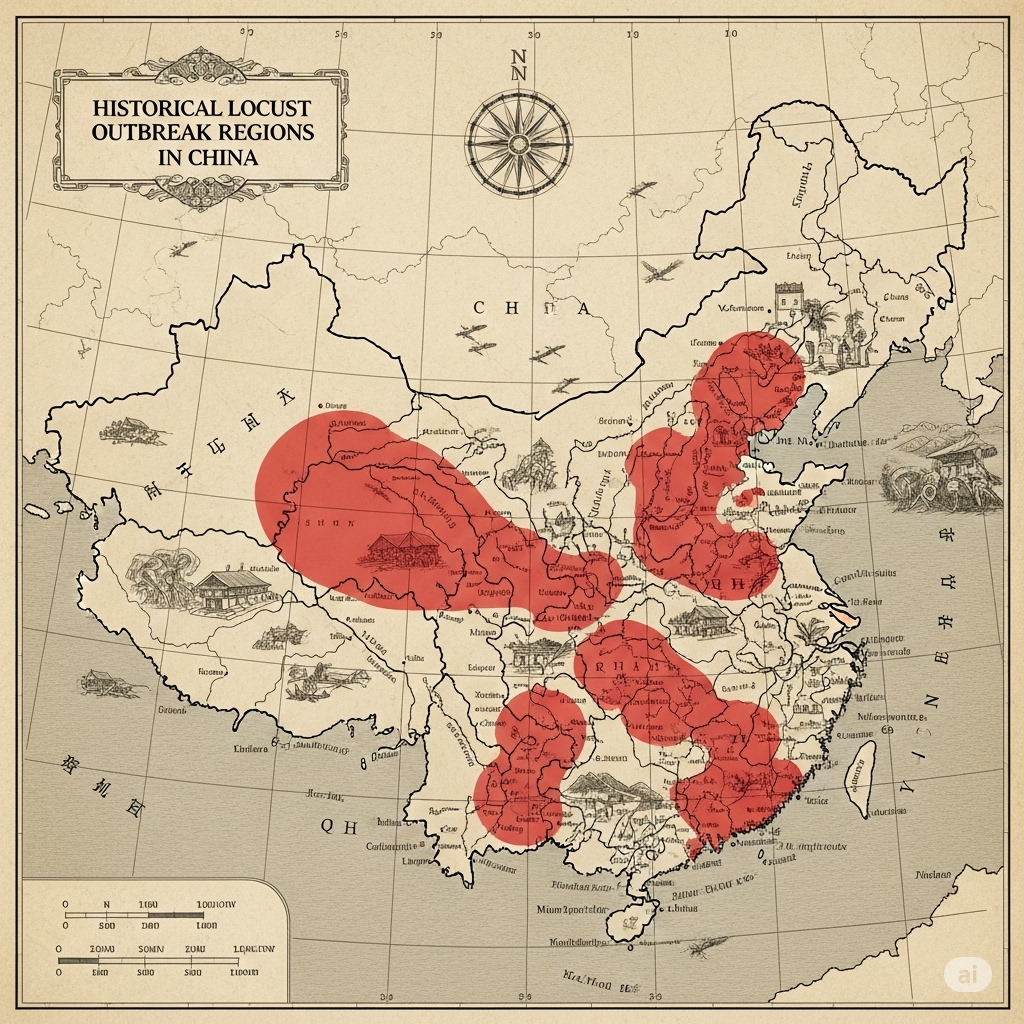
On the other hand, if the Three Kingdoms were indeed located in the core outbreak areas of locusts as claimed by the continental theory, the records of Huangchung in the Samguk Sagi would have numbered in the hundreds rather than just 23. The fact that the records are too few from a ‘continental perspective’ paradoxically serves as evidence that their location was not on the continent.
The Final Evidence Beneath the Ground: Archaeological Counterarguments
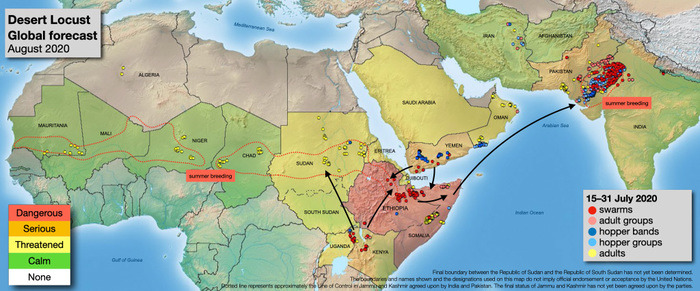
No literary interpretation can surpass the weight of tangible evidence unearthed from the ground. Archaeology is the science of uncovering the ‘fingerprints of civilization,’ and the continental theory must prove its validity in light of this final argument.
- Silla’s Signature, Dolmen Tombs: The massive tombs in Gyeongju are unique burial styles of Silla known as ‘dolmen tombs (적석목곽분).’ Such styles are not found in contemporary China, and they eloquently testify that Silla’s capital was indeed here.
- Baekje’s International Style, Stone Chamber Tombs: Tombs and unique pottery that show Baekje’s characteristics while adopting the Southern Chinese style, like the tomb of King Muryeong, prove that Baekje was located on the Korean Peninsula and engaged in active maritime trade.
- Silence of the Continent: In regions like Hebei and Shandong, where the continental theory claims the Three Kingdoms were located, no archaeological evidence corresponding to the Three Kingdoms period (such as royal tombs, urban ruins, or daily artifacts) has been found.
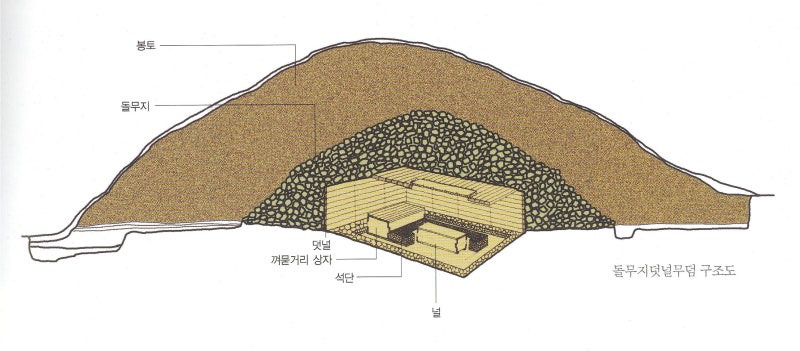
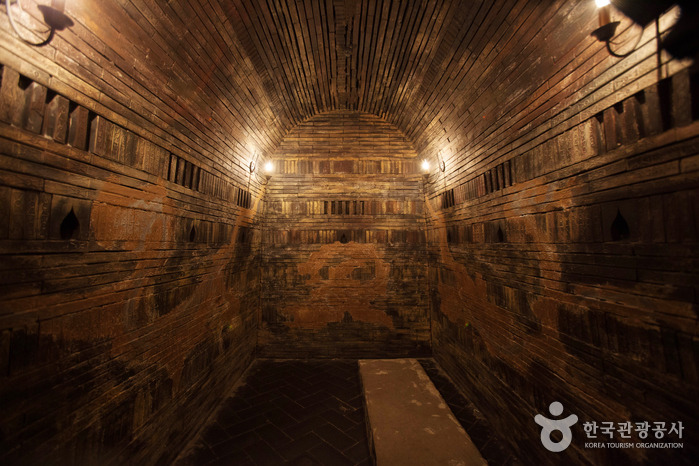
While literary records are open to interpretation, artifacts from the ground testify to clear facts. The ‘absence’ of archaeological evidence is the most fatal weakness of the continental theory.
Comparison/Alternatives
| Category | Hypothesis A (Mainstream History) | Hypothesis B (Continental Theory) |
|---|---|---|
| Core Claim | The Three Kingdoms were located on the Korean Peninsula. | The Three Kingdoms were located on the Chinese continent. |
| Interpretation of Huangchung Records | Records of local occurrences due to climate changes within the Korean Peninsula. | Key evidence proving the continental location of the Three Kingdoms. |
| Archaeological Evidence | Numerous independent artifacts and remains of Silla, Baekje, and Goguryeo exist throughout the Korean Peninsula. | No archaeological evidence of the Three Kingdoms in the claimed regions (Chinese continent). |
| Simplicity of Explanation | A few assumptions can explain all evidence (literature, climate, archaeology). | Requires complex additional assumptions, such as ignoring or manipulating numerous archaeological evidences. |
Conclusion
Final Verdict: The Huangchung records in the Samguk Sagi do not support the continental theory. Rather, they are valuable materials that testify to the dynamic climate of ancient Korea and the history of our ancestors who survived within it.
-
Key Summary
- Causes of the Huangchung Plague: The locust plague is a product of a specific climatic scenario of ‘drought followed by heavy rain,’ not a specific region like the ‘dry continent.’
- Meaning of Historical Records: The disaster records in the Samguk Sagi are cultural evidence of the Three Kingdoms establishing advanced state systems through exchanges with China, not geographical evidence of their location on the continent.
- Irrefutable Evidence: The vast archaeological evidence found throughout the Korean Peninsula clearly proves the location of the Three Kingdoms, while no related artifacts have been discovered on the continent.
By viewing history through the lens of science, we can encounter a richer and more accurate past. How about applying the magnifying glass of scientific inquiry to other mysteries in our history?