
How Do the Locust Swarms Recorded in Historical Texts Hint at the True Locations of Lost Ancient Kingdoms?
- The scientific reality and destructive power of the ‘Huangchong’ disaster recorded in the Samguk Sagi
- The contradictions between historical records and the ecological environment of the Korean Peninsula
- A new perspective on one of the greatest mysteries of ancient history: the locations of the Three Kingdoms
Huangchong: The Two Faces of Hero and Disaster
When you type ‘Huangchong’ into a search engine, you mostly encounter the legendary general Huang Zhong (黃忠). He is a symbol of valor, serving under Liu Bei as one of the Five Tiger Generals. I too initially thought of him. However, the intellectual shock of realizing that another entity sharing the same name, the Huangchong (蝗蟲), or locust swarm, could be the key to unraveling a massive mystery in ancient history was significant.
One symbolizes the glory of human society, while the other represents the chaos of nature that threatens civilization. We often focus on the stories of kings and generals, easily overlooking the immense natural forces that shaped humanity’s fate in the background. This article is a historical detective story that follows the faint traces of the ‘monster’ Huangchong hidden behind the hero’s narrative, casting a giant question mark over the map of history as we know it.

The Horror Recorded in Historical Texts: The Reality of the Huangchong Disaster
In Korea’s oldest historical text, the Samguk Sagi, this horrific disaster is inscribed like a code.
- Year 6 of King Bunseo of Baekje (AD 303): “In the autumn of July, locusts destroyed the crops, and the people starved (秋七月 蝗害穀 民饑).”
- Year 14 of King Chumhae of Silla (AD 240): “There was a severe drought in the summer, and a locust disaster occurred (夏大旱 蝗).”
- Year 24 of King Yuri of Goguryeo (AD 5): “In the autumn of August, there was a locust disaster (秋八月 蝗).”
The brief phrase ’the people starved (民饑)’ hides the horrific reality of famine and societal collapse. In ancient East Asia, such disasters were seen as a heavenly warning of the ruler’s incompetence, known as ‘Tianqian (天譴)’. Therefore, it was a significant event that required the king to personally seek forgiveness from heaven, making it difficult to omit from historical records. This enhances the credibility of these accounts.
So, what is the scientific reality of the Huangchong that terrified the ancients? They are ordinary locusts that explode in population under specific conditions (after drought followed by rain) and transform into an aggressive ‘gregarious phase.’ This phenomenon is known as ‘phase polyphenism.’
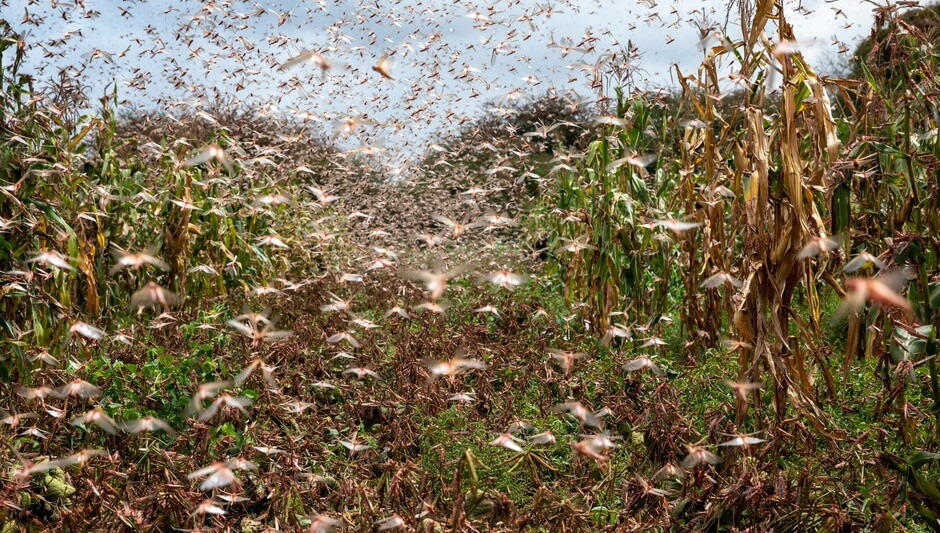
Billions of locusts can travel over 100 km in a day, with a medium-sized swarm (about 40 million) consuming food equivalent to 35,000 people in a single day. The sky darkens as if it were night, and the sound of “the steady roar created by billions of flapping wings” is reported. This chillingly matches the description in a Chinese historical text from AD 494, stating, “When the locusts flew by, the sound was like a storm.”
An Unsolvable Mystery: An Impossible Crime Scene
Here is where our mystery begins. A large-scale locust disaster requires a specific ‘origin.’ Scientists identify the conditions as ‘vast semi-arid climatic plains,’ particularly riverbank sediment areas with sandy soil. Representative locations include the Sahel region of Africa or the plains of the Yellow River and Huai River in China.
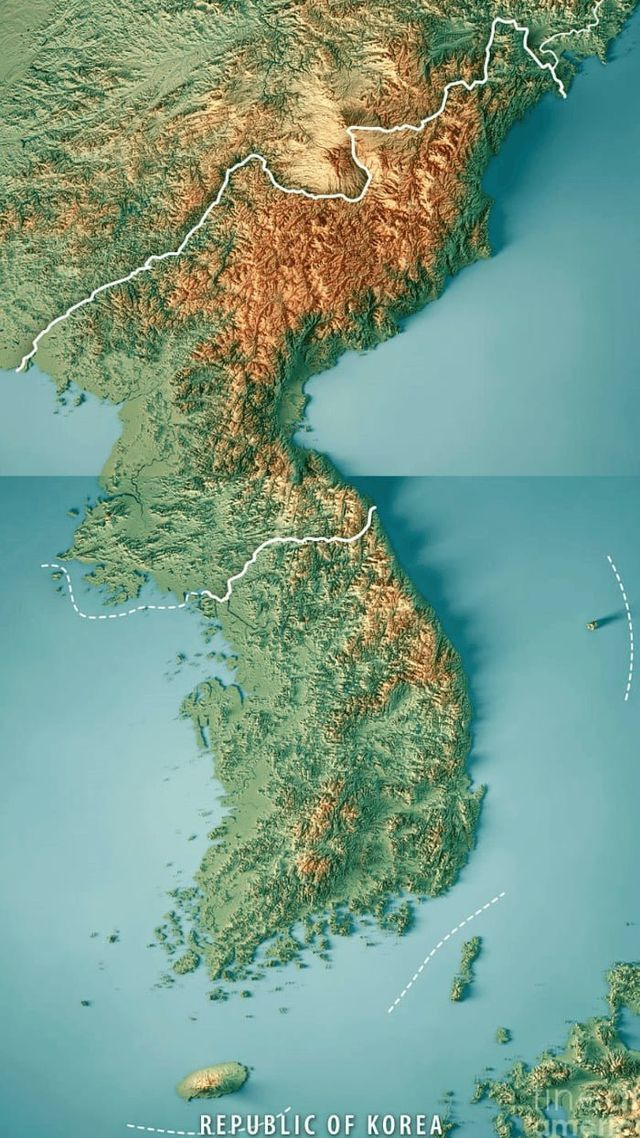
But what about the main stage of the Three Kingdoms, the Korean Peninsula? Seventy percent of the land is mountainous and belongs to a temperate humid climate. This is the exact opposite of the conditions required for locusts to thrive. It is like claiming that a crime that could only occur in a desert happened in the middle of a dense forest—an ‘impossible crime.’ Even the Chinese historical text, the Records of the Three Kingdoms, notes that Goguryeo had “no wide fields,” aligning with modern geographical observations, while directly contradicting the locust records in the Samguk Sagi.
A Crucial Clue? The Locust Records from Neighboring China
To unravel this labyrinthine investigation, let’s listen to the testimonies from neighbors. Surprisingly, Chinese historical texts detail that locust disasters frequently occurred in the Yellow River and Huai River plains. The most crucial part is the significant simultaneity revealed when these records are placed alongside the Samguk Sagi.
Comparison of Simultaneity of Locust Disaster Records between the Three Kingdoms and China
| Year (AD) | Kingdom / Dynasty | Records from Samguk Sagi and Chinese Historical Texts |
|---|---|---|
| 303 | Baekje / Western Jin | Baekje: “In the autumn of July, locusts destroyed the crops, and the people starved.” Western Jin: Frequent locust disasters during this period. |
| 306 | Western Jin | “Locusts consumed all the grass, trees, and even the fur of cattle and horses.” (Yongzhou, Jizhou) |
| 646 | Baekje / Tang | Baekje: “In the autumn of July, locusts destroyed the crops.” Tang: “There were locusts in the autumn.” (Hebei, Henan) |
Is it merely a coincidence that both Baekje and Tang recorded locust damage in the same autumn of AD 646? Modern science has revealed that large-scale locust events are not localized phenomena but could be widespread climatic disasters affecting all of East Asia. This discovery fundamentally alters our question. Instead of asking, “How did the locust disaster occur in Baekje?” we should be asking, “Where exactly was Baekje located within the region affected by this massive disaster?”
Hypothesis: What If the Map We Have Been Viewing Is Wrong?
If the eyewitness accounts (historical records) are true, what are we misunderstanding? Perhaps the real mystery lies not in the historical records themselves but in the ‘map’ we are using to read those records.
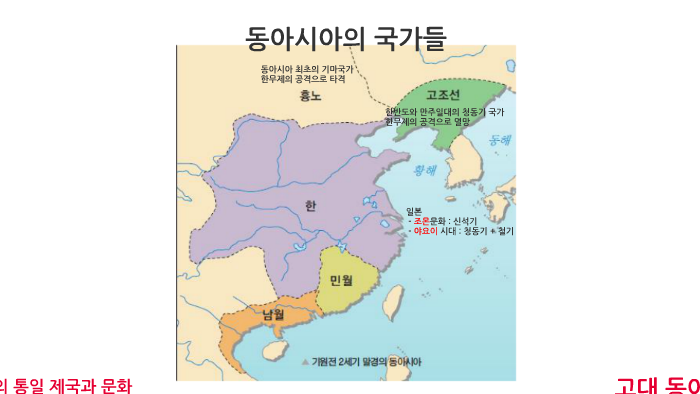
This is the essence of the bold hypothesis known as ‘Continental Historical Perspective (大陸史觀).’ It argues that the early centers or core areas of the Three Kingdoms included not only the Korean Peninsula but also parts of the Chinese mainland (such as Hebei and Shandong) that had perfect conditions for locust occurrences.
Applying this hypothesis remarkably resolves all contradictions.
- Solving the Ecological Mystery: If the territories of the Three Kingdoms included the Yellow River plains, the locust records become entirely normal natural phenomena.
- Resolving Conflicts between Historical Records: Goguryeo could have been a kingdom with diverse geographical characteristics, encompassing both the mountainous areas of the Korean Peninsula and the plains of the continent.
- Explaining the Simultaneity of Records: The records from Baekje and Tang in 646 become accounts of neighboring states documenting the same disaster.
The locust records challenge the fixed maps we have, whispering that perhaps the real mystery lies not in the past itself but in our perspectives and assumptions about how we view the past.
Conclusion
Through the mystery posed by the small insect, the locust, we have reached several important conclusions. It is crucial not to hastily judge this hypothesis as the established truth of history. However, these records represent a powerful ‘anomaly’ that cannot be explained by existing conventions. Just as a single experimental data point that does not fit a well-constructed scientific theory can trigger the emergence of a new theory (like Einstein’s theory of relativity), the locust records pose new questions for us.
-
Key Summary:
- Discovery of Contradictions: The frequent records of locust disasters in the Samguk Sagi directly contradict the ecological conditions of the warm, humid mountainous terrain of the Korean Peninsula.
- New Clue: Comparing records with contemporary Chinese historical texts reveals the possibility that these disasters were widespread climatic phenomena affecting East Asia.
- Shift in Perspective: As a key to resolving this contradiction, the ‘Continental Historical Perspective’ hypothesis gains credibility by expanding the location of the Three Kingdoms beyond the Korean Peninsula to the continent.
The whispers of this small insect remind us that history is not a set of facts preserved in a museum but a living discipline that is constantly reinterpreted based on new evidence and perspectives. Asking ‘why?’ about historical facts we take for granted may be the most intriguing challenge this mystery leaves us with.
References
- Kim Bu-sik, Samguk Sagi (三國史記)
- Chen Shou, Records of the Three Kingdoms (三國志)
- Food and Agriculture Organization (FAO), Locust Watch https://www.fao.org/ag/locusts/en/info/info/index.html