
The Dramatic Encounter of a Thief in History and a Hero in Fiction
- Explore the actual deeds of the historical figure Hong Gildong.
- Analyze how the novel ‘Hong Gildong Jeon’ became a timeless hero narrative.
- Understand how a single name came to represent two entirely different characters.
Once upon a time in the land of Joseon, there was a name: Hong Gildong. This name intriguingly holds two different stories. One story is recorded in a very rigid and objective historical book called ‘Annals of the Joseon Dynasty.’ There, Hong Gildong was the fearsome leader of bandits who threatened the peace of the nation.
However, the other story is that of a hero who lives and breathes in the novel ‘Hong Gildong Jeon,’ fighting against an unreasonable world. Let’s compare the lives of these two characters at a glance.
Comparing the Two Hong Gildongs in History and Fiction
| Category | Historical Hong Gildong (Real Person) | Fictional Hong Gildong (Imaginary Character) |
|---|---|---|
| Active Period | Reign of King Yeonsan (Late 15th Century) | Reign of King Sejong (Early 15th Century) |
| Status | Unclear (Leader of a bandit group) | Illegitimate child of a high-ranking official |
| Main Activities | Impersonating officials, local plundering, causing economic chaos | Organizing the ‘Hwalbindang,’ punishing corrupt officials, aiding the poor |
| Fate | Captured by government troops (no further records) | Established the ‘Yuldoguk’ and became king |
The historical Hong Gildong was active during the reign of King Yeonsan, while the fictional Hong Gildong was born in the era of the wise King Sejong. The status of the historical figure is unclear, but the fictional character has a clear background as the illegitimate child of a high-ranking official.
The biggest difference lies in their actions and fates. The historical Hong Gildong plundered the people and devastated the local economy, while the fictional Hong Gildong organized the ‘Hwalbindang’ to seize the wealth of corrupt officials and aid the poor. Their endings were also different. The historical Hong Gildong is only recorded as having been captured by government troops, with no further information, while the fictional Hong Gildong built the ideal state of ‘Yuldoguk’ he dreamed of and lived happily as a king.
Part 1. The Footsteps of a Thief Left in History
Now, let’s open the history book and meet the real story of Hong Gildong.
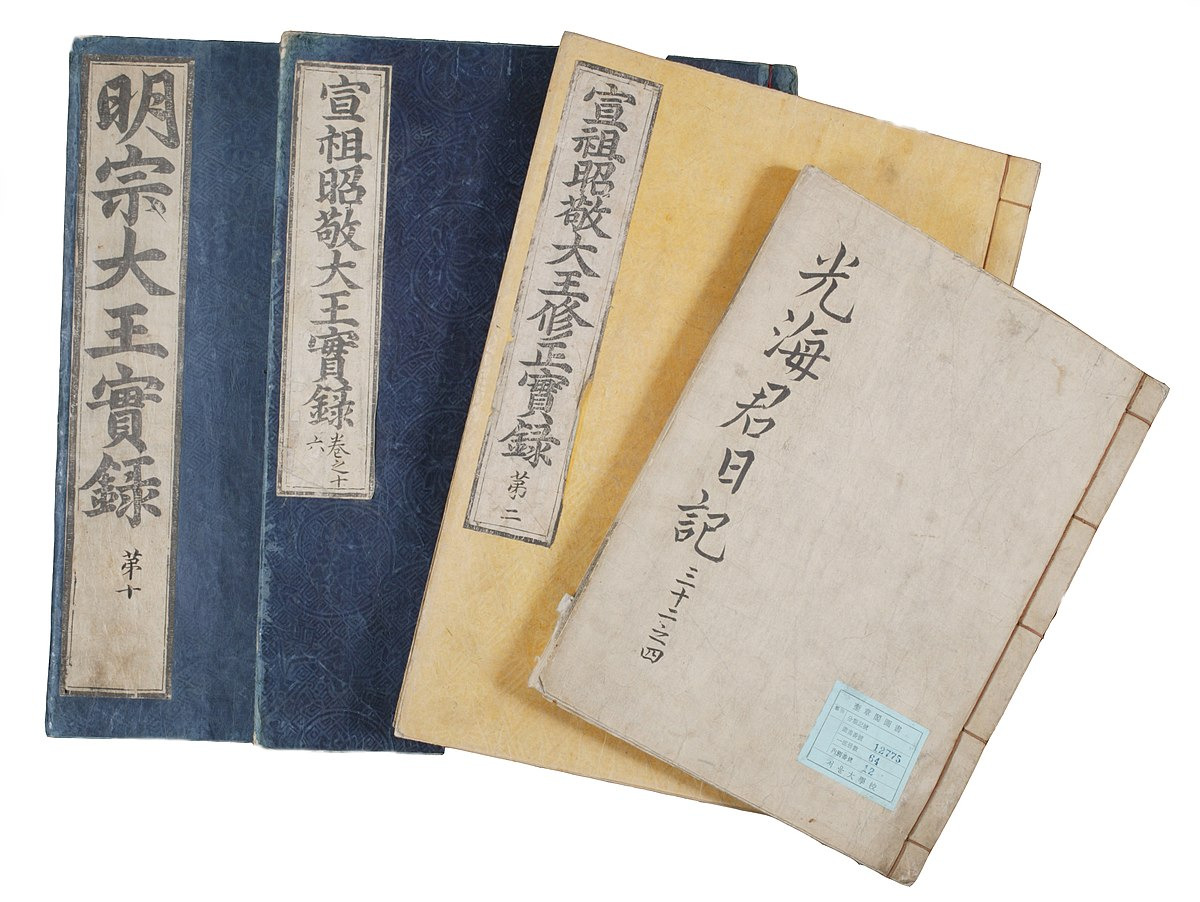
An Era of Chaos, the Reign of King Yeonsan
The time when Hong Gildong was active was during the reign of King Yeonsan. This era was marked by two major purges (士禍), namely the Muo Purge and the Gapja Purge, which led to the mass slaughter of intellectuals, plunging the entire country into severe chaos. The administrative power of local offices had collapsed, and the lives of the people were filled with suffering. This chaos provided the perfect backdrop for large bandit groups like Hong Gildong’s to emerge.
The Arrest Incident That Shook the Nation
In 1500, an unusual record appears in the ‘Diary of King Yeonsan.’ It depicts the scene where the three highest officials of the nation, namely the Prime Minister, Left Prime Minister, and Right Prime Minister, directly report to the king the joyful news of capturing Hong Gildong. They stated, “There is no greater joy than eliminating a harmful presence that torments the people.”
It was truly extraordinary for the highest-ranking officials to report the capture of a single bandit. This indicates that Hong Gildong was not just an ordinary thief but a significant threat to the state, leading a massive organization that opposed government troops.
The Great Mockery, Impersonating Officials
The annals also record Hong Gildong’s audacious criminal methods. He adorned himself with a hat decoration made of jade and a red belt, falsely claiming to be a ‘Cheomji’ (a third-rank official). Moreover, he led armed subordinates and brazenly entered government offices even in broad daylight, showcasing his formidable presence.
This was not merely a disguise. He wore the very symbols of state authority that he had rejected, mocking that authority and expressing extreme contempt for the class system of Joseon.
Dark Deals with Corrupt Power
Surprisingly, Hong Gildong’s story did not end with mere theft. During his interrogation after capture, it was revealed that a high-ranking military official named Eom Gwi-son was in collusion with him. Eom Gwi-son was suspected of having acted as a ‘Waju’ (a protector) by selling Hong Gildong’s stolen goods and providing him with support.
This incident illustrates the depth of corruption in society at the time. If the bandit group provided the muscle, internal powers like Eom Gwi-son sheltered Hong Gildong, leaked information, and assisted their activities.
A Thief Who Brought Suffering to the People
So, was Hong Gildong a hero to the people? Unfortunately, history books say otherwise. Records from 13 years after his capture in the ‘Annals of King Jungjong’ indicate that the region of Chungcheong-do, where he had roamed freely, had still not recovered from the chaos he left behind.
“Chungcheong-do has not recovered from the turmoil since Hong Gildong’s theft, making it difficult to fulfill the quota of tributes.”
This record shows that Hong Gildong’s theft devastated not only corrupt officials but also the lives of ordinary people. The people did not receive help from him; rather, they had to flee their hometowns to escape him.
Part 2. The Hero Born from Heo Gyun’s Pen
Now, let’s delve into the story of the brilliant writer Heo Gyun. He borrowed the name of the real-life thief Hong Gildong to create a revolutionary hero that embodied the world he dreamed of.
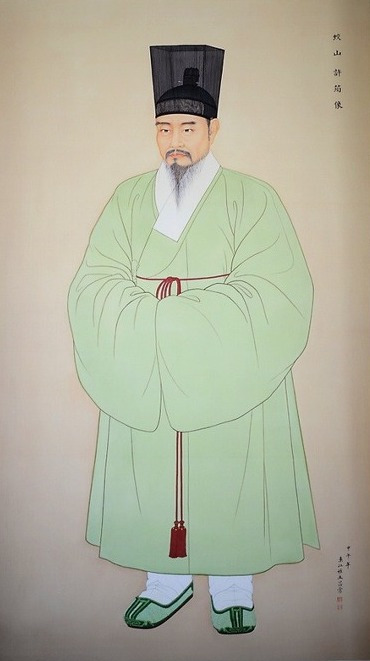
The Revolutionary with the Pain of the Era, Heo Gyun
Heo Gyun was an outstanding scholar and writer, but he also harbored radical ideas aimed at shaking the system. His thoughts solidified further as he witnessed the tragic life of his mentor, Son-gok Lee Dal. Lee Dal was a genius poet but could not enter government service due to his status as a ‘seongal’ (illegitimate child), living a life of frustration. Through his mentor’s suffering, Heo Gyun realized the fundamental contradictions of Joseon society and took up the pen to expose them.
Heo Gyun cleverly set the background of the novel not in the era of King Yeonsan, where the real Hong Gildong was active, but in the Sejong era, regarded as the most ideal period of Joseon. This was to show that the issue of discrimination against ‘seongal’ was not merely due to the tyranny of a specific king but a structural flaw inherent in the nation of Joseon itself.
“The Pain of Not Being Able to Call My Father ‘Father’”
The story of the novel ‘Hong Gildong Jeon’ begins with Hong Gildong’s pain of “not being able to call his father ‘father’ or his brother ‘brother’ (呼父呼兄).” This symbolizes the social discrimination and shackles that ‘seongal’ had to endure.
In Joseon, there was a law called ‘Seongal Geumgo Beop’ (庶孽禁錮法), which prohibited children born to concubines from taking the civil service exam or holding high-ranking positions. As a result, many talented individuals were excluded from society despite their abilities, and this was the part that struck me the hardest while reading ‘Hong Gildong Jeon.’
Creating the Hwalbindang and Establishing the Yuldoguk
In the novel, when Hong Gildong’s extraordinary talents are suppressed due to his status, he leaves home. There, he becomes the leader of the bandits but transforms the nature of the organization into ‘Hwalbindang’ (活貧黨), or ‘a group that saves the poor.’ The Hwalbindang seizes the wealth of corrupt officials and distributes it to the impoverished, thus becoming a true ‘righteous thief.’
However, Hong Gildong realizes that the world cannot change within Joseon and, along with his followers, crosses the sea to establish a new nation called ‘Yuldoguk’ (栗島國) and becomes king. This Yuldoguk was not merely a fantastical land. It was the political blueprint of the ideal society that Heo Gyun dreamed of, where an individual’s value is determined by ability rather than status or lineage.
Part 3. Becoming the Archetype of Korean Righteous Thieves
In the Joseon era, there were other famous thieves like Im Geokjeong and Jang Gil-san who were loved by the people. But why could the fictional Hong Gildong become the representative of righteous thieves?
- First, the justification for struggle. Hong Gildong’s struggle was not merely for poverty. He resisted the unreasonable class order that oppressed talented individuals, gaining empathy from a broader class.
- Second, the completeness of the story. His story was intricately crafted by Heo Gyun, the greatest intellectual of his time. Thanks to this, it possessed a clear political vision of Yuldoguk, elevating it to a great ideological parable rather than a simple tale of rebellion like other folk tales.
- Third, the heroic fantasy. The miraculous abilities that Hong Gildong possessed made him a superhuman hero. This provided immense vicarious satisfaction and fantasy to the people who were weary of realistic suffering.
Part 4. Heo Gyun’s Revolutionary Thoughts Hidden in the Novel
‘Hong Gildong Jeon’ was not merely a novel for entertainment. It was closer to a ‘political manifesto’ written by Heo Gyun to convey his revolutionary thoughts to the public.
Advocacy for Abandoned Talents, the Theory of Abandoned Talents (遺才論)
In the essay ‘Theory of Abandoned Talents,’ Heo Gyun sharply criticized, “When heaven produces talents, it does not discriminate by status; why does Joseon discard talents based solely on lineage?” The Hong Gildong in the novel was a character born from this ‘Theory of Abandoned Talents.’ He possessed extraordinary talents but was discarded due to his status as a ‘seongal,’ ultimately turning against the system that abandoned him and becoming a threat to it.
The Power to Overturn the World, the Theory of the Powerful People (豪民論)
In the ‘Theory of the Powerful People,’ Heo Gyun divided the people into ‘Hyangmin’ (submissive people), ‘Wonmin’ (resentful people), and ‘Hommin’ (powerful people with the ability to overturn the world when the opportunity arises). He argued that the state should fear ‘Hommin’ the most. Hong Gildong was the perfect embodiment of the ‘Hommin’ that Heo Gyun envisioned. He gathered the oppressed people, created organized strength, and challenged state authority with meticulous strategies.
Ultimately, Heo Gyun was executed for his subversive thoughts, but his ideas continue to live on in the immortal story of ‘Hong Gildong Jeon.’
Part 5. The Story of Hong Gildong Today
The Debate Over the Author and Creation Period
There is still much debate among scholars regarding the author and creation period of ‘Hong Gildong Jeon.’ The contemporary figure Lee Sik recorded that Heo Gyun wrote this novel, and the perfect alignment of the novel’s thematic consciousness with Heo Gyun’s thoughts is considered the strongest evidence. However, there are parts that do not match the era, such as the mention of Jang Gil-san, a 17th-century figure, leading to the theory that Heo Gyun wrote the original, and later, several people added content.
From Hero to Epitome: The Name Hong Gildong as a Sample Name
Interestingly, the story concludes with a peculiar irony. The name Hong Gildong, which once shook the national system, is now used as a ‘sample name’ in official documents in South Korea. Hong Gildong has now become the epitome of the most ordinary and common name, symbolizing ‘all citizens.’

This serves as the strongest evidence that the story of a historical criminal has been completely overshadowed by the narrative of a hero in fiction.
Conclusion
In the end, the name of a thief that was almost lost to history was reborn as an immortal hero transcending time, thanks to the power of the writer Heo Gyun and the story he crafted. And that name continues to resonate deeply in our society today.
- Historical Hong Gildong: A real person active during the reign of King Yeonsan, a leader of a massive bandit group who mocked state authority and plundered the people.
- Fictional Hong Gildong: A hero created by Heo Gyun, a revolutionary who resisted the unreasonable class system and established the ideal state of ‘Yuldoguk.’
- The Victory of the Story: Today, the name Hong Gildong is remembered as the image of a hero created by Heo Gyun rather than historical facts, becoming a name that represents all of us.
What does Hong Gildong mean to you? I hope this article provides an opportunity to reflect on the journey of Hong Gildong that traverses the realms of history and literature.