
The Two Worldviews of Joseon in Front of the Mirror of Disaster: The Story of Heaven’s Warnings and Earth’s Whispers.
- Understand the differences between the two core philosophies interpreting disasters in the Joseon era, the theory of heaven-human response and practical learning.
- Learn from historical examples how leadership and systems operated in crisis situations.
- Gain deep insights into crisis management and leadership in modern society.
Heaven’s Warning: The Theory of Heaven-Human Response and the Monarch’s Responsibility
In 1664, when a twin comet appeared in the night sky of Joseon, society was engulfed in great fear. This was not merely an astronomical phenomenon but indicated the operation of a vast worldview known as the theory of heaven-human response (天人感應說). This theory posits that heaven and humans respond to each other, and that natural disasters are severe warnings from heaven regarding the monarch’s moral failings and political failures.
At that time, King Hyeonjong lamented, “I have faults, so how can disasters befall the people?” This search for the responsibility of disasters in the personal morality of the monarch was central to Joseon’s national philosophy.

The King’s Self-Confession: The Request for Opinions
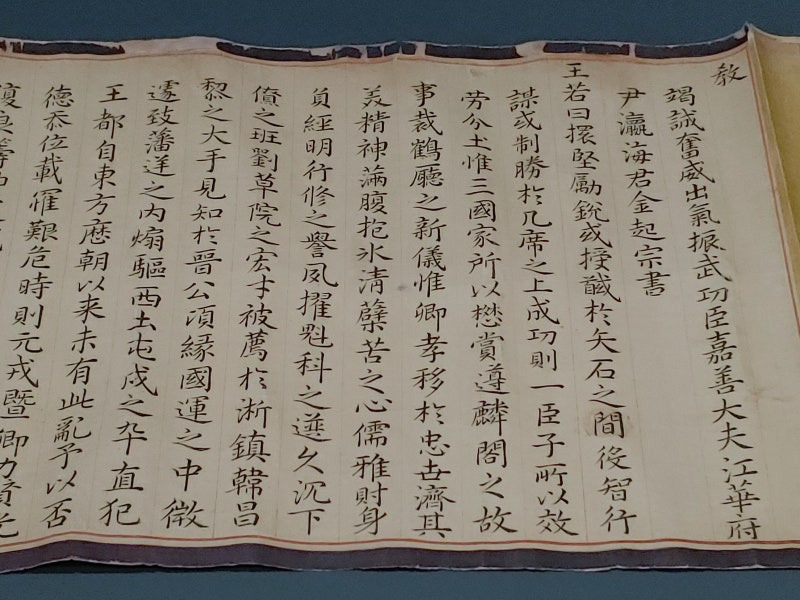
In the face of heaven’s warnings, the first action taken by the monarch was to issue a request for opinions (求言教書). This was a special edict publicly acknowledging one’s mistakes and widely soliciting opinions from officials and the people, representing a high-level act of governance.
In the request for opinions, King Taejong questioned, “Is it because my virtue is not cultivated, or is there a flaw in governance?” This self-criticism served as a political safety valve that absorbed the people’s discontent into the institutional framework, opening up important channels of communication.
The Scholar’s Life-Risking Advice: The Request with an Axe
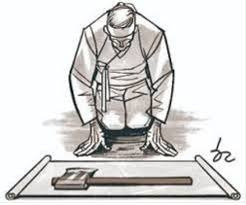
When the king opened the door to criticism with the request for opinions, officials responded with life-risking advice. The most dramatic form of this was the request with an axe (持斧上疏). By presenting an axe along with their petition, they expressed a resolute willingness to have their heads cut off if their claims were wrong.
During the Goryeo Dynasty, Woo Tak advised King Chungseon, who had engaged in immoral relationships, while holding an axe, and this spirit continued into Joseon, shining through Jo Heon’s petition just before the Imjin War. The request for opinions and the request with an axe illustrated the drama of self-correction at the core of Confucian politics, balancing the absolute power of the monarch with the moral obligations of the scholar-officials.
Earth’s Whispers: Practical Learning, Reexamining the Causes of Disasters
The immense national crises of the Imjin War and the Byeongjahoran led to a painful realization that the existing theory of heaven-human response alone could not protect the nation. In this context, a new philosophy, practical learning (實學), emerged, seeking the causes of disasters not in heaven but on earth.
Practical scholars began to separate the principles of human society, known as ‘doctrine (道理)’, from the laws of the natural world, known as ‘physics (物理)’, to view disasters. This represented an intellectual revolution fundamentally changing the paradigm of disaster response.
Seongho Lee Ik, Liberating Nature from Politics
The pioneer of practical learning, Seongho Lee Ik (李瀷), argued in his work Seongho Saseol that “earthquakes originate from empty spaces underground, unrelated to heaven.” This was a revolutionary thought that completely overturned the notion of earthquakes as heavenly punishments for the monarch’s misgovernance.
Lee Ik separated natural phenomena from political interpretations, making them subjects of rational inquiry. Thanks to his declaration of intellectual liberation, the responsibility for disasters began to shift from a moral evaluation of ‘whether one has virtue’ to a practical evaluation of ‘whether one is competent.’
Dasan Jeong Yak-yong, Designing a Disaster Management System
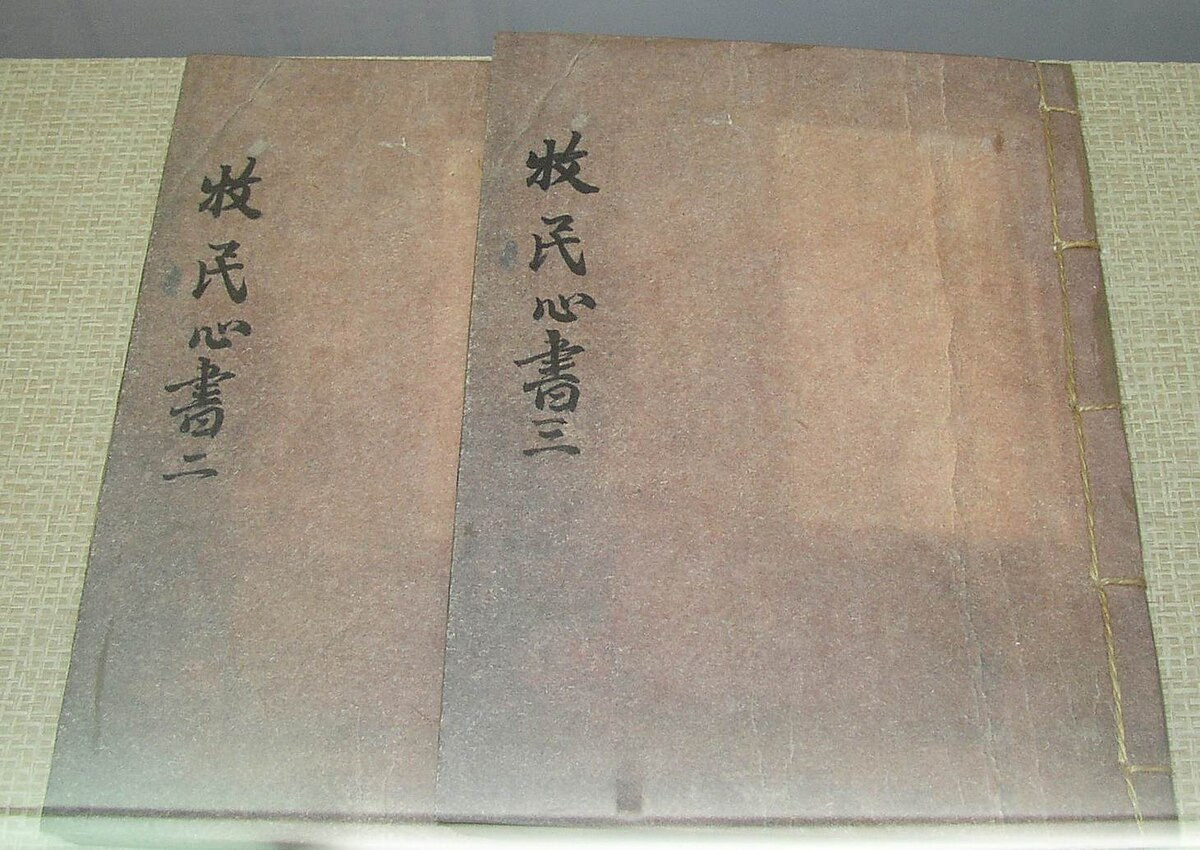
If Seongho Lee Ik opened a philosophical breakthrough, Dasan Jeong Yak-yong (丁若鏞) sketched a practical blueprint. His masterpiece, Mokmin Simseo, specifically outlined the role of local officials in responding to disasters, akin to today’s disaster management manual.
Dasan’s focus was not on ‘why’ disasters occur, but on ‘what needs to be done.’ He emphasized that disaster management lies in “preparation and inspection in normal times” by proposing the ‘Six Principles for Disaster Relief (賑荒六條)’ to stockpile grain and distribute it fairly in times of famine. This was an attempt to build an incorruptible administrative system rather than relying on the morality of a single monarch, marking the birth of modern public administration and crisis management theory. In my view, this represents a remarkable insight that shifts the subject of responsibility from the ‘king’ to the ‘system.’
Comparison/Alternatives
Theory of Heaven-Human Response vs Practical Learning: Two Perspectives on Disasters
| Feature | Theory of Heaven-Human Response (天人感應說) | Practical Learning (實學) |
|---|---|---|
| Core Philosophy | The universe and human affairs are interconnected, and heaven responds to the monarch’s morality with signs. | The natural world operates according to its own rational principles, independent of human morality. |
| Causes of Disasters | The monarch’s immorality, political corruption, social imbalance. | Natural processes (geological activity, climate conditions, pathogens, etc.). |
| Solutions | Moral reflection of the monarch, self-examination, issuance of requests for opinions. | Scientific inquiry, empirical observation, systematic solutions (disaster preparedness, technological improvements). |
| Key Quote | “I have faults, so how can disasters befall the people?” | “Earthquakes originate from empty spaces underground, unrelated to heaven.” |
Conclusion
The two responses of Joseon in the face of disasters, the theory of heaven-human response and practical learning, pose important questions for us today. What should we prioritize in the face of modern societal disasters?
- Moral Responsibility of Leaders: The theory of heaven-human response reminds us of the importance of accountability and empathy that leaders must demonstrate in crisis situations. This is an eternal demand that communities place on their leaders, transcending time.
- Building Scientific Systems: Practical learning emphasizes the need for rational and robust disaster response systems based on data and science, going beyond emotional appeals.
- The Need for an Integrated Approach: Ultimately, the wisest path is to listen to both voices. When leadership deeply empathizes with the suffering of the people and a competent system operates to protect them, a truly resilient society can be created.
In the face of today’s climate crises or social disasters, what responsibilities do we hold our leaders accountable for, and how should our societal systems operate? The wisdom of Joseon provides important clues in seeking those answers.
References
- Encyclopedia of Korean Culture Request for Opinions (求言敎書)
- Academy of Korean Studies Request with an Axe (持斧伏闕上疏)
- History Channel e How Did Joseon Overcome the Imjin War?
- Encyclopedia of Korean Culture Seongho Saseol (星湖僿說)
- Encyclopedia of Korean Culture Theory of the Earth’s Center (地心論)