
About 600 years ago, in the country of Joseon, the sky was not merely blue or overcast.
- The role and political significance of Gwangsanggam during the Joseon period
- Historical events triggered by failures in weather forecasting
- How these failures led to scientific advancements in Joseon
Gwangsanggam: Bearing the Weight of the Sky
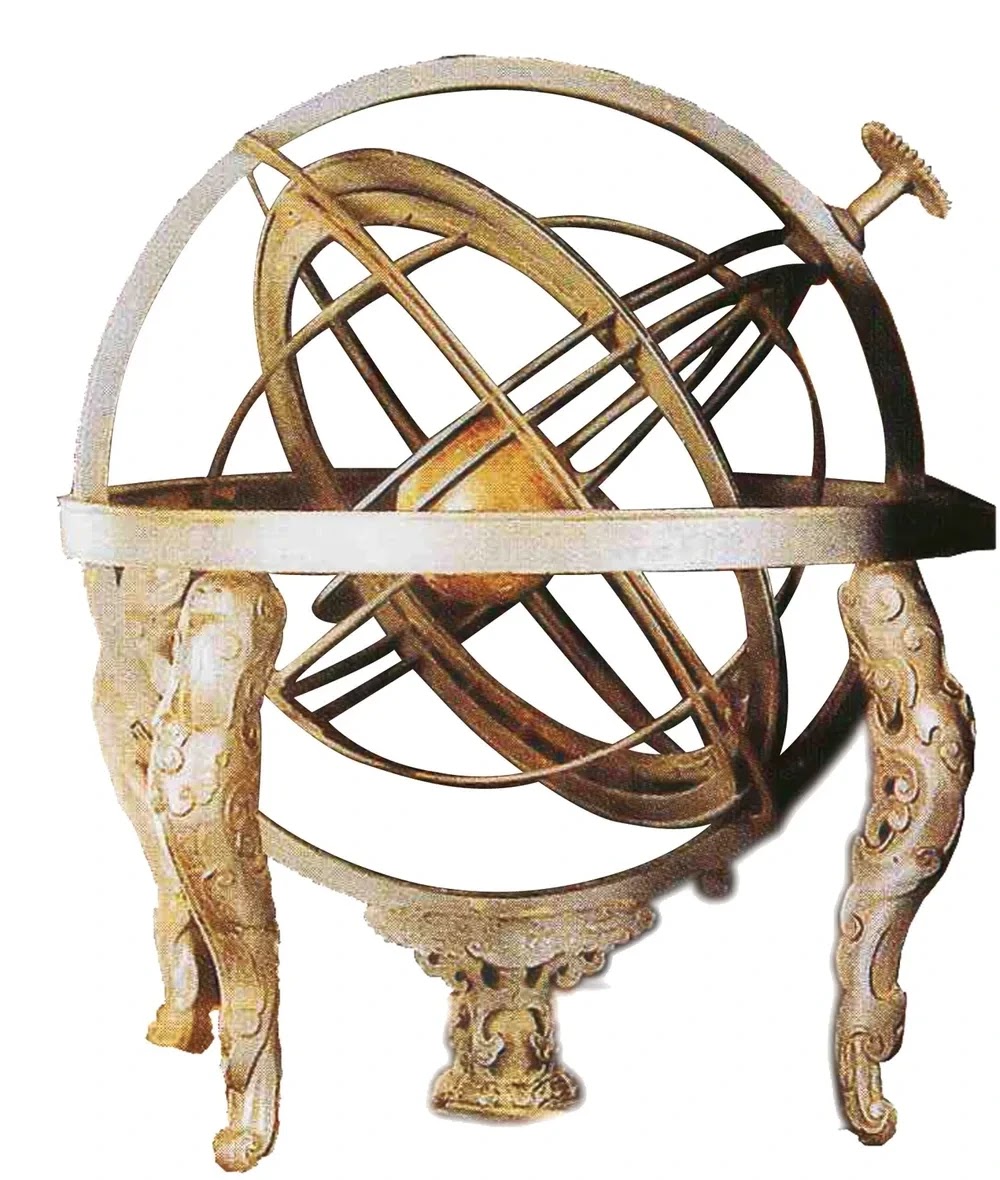
Gwangsanggam (觀象監) was a key institution in Joseon, akin to a combination of today’s meteorological agency and national observatory. Its primary duties included observing celestial bodies to create calendars and predict the weather. However, in Joseon, the sky was not just a natural phenomenon. The ideology of ‘Cheon-in-gam-eung-seol (天人感應說)’, which posited that if the king governed well, the heavens would bestow blessings, and if poorly, calamities would follow, dominated the state.
Due to this belief, natural phenomena such as droughts, floods, and eclipses were seen as evaluations of the king’s governance by the heavens. A failure in weather forecasting was not merely a mistake but was interpreted as a warning from the heavens about the king’s shortcomings.
The Dilemma of Prediction Failures and Bureaucrats
The officials of Gwangsanggam, tasked with this heavy responsibility, were mostly middle-class (中人) technical professionals. While they were essential experts for national governance, they were often politically marginalized in a society dominated by the yangban aristocracy.
Their dilemma was clear. Success in predictions was expected, but failure resulted in all blame and responsibility falling on them. Instead of being held accountable for the king’s lack of virtue, they were often punished for “insufficient skills,” effectively becoming political scapegoats. This situation resonates with the challenges faced by expert groups when scientific advice conflicts with political decisions in modern society.
Historical Events Reflecting the Wrath of the Heavens
Case 1: The 15-Minute Late Eclipse Forecast
In Joseon, a solar eclipse was considered a direct threat to royal authority. In the 4th year of King Sejong’s reign (1422), the Seowoon-gwan (the predecessor of Gwangsanggam) predicted the time of an eclipse, but it actually began 15 minutes later than forecasted. According to the Annals of King Sejong, the king and his officials had to stare blankly at the sky for 15 minutes in the palace courtyard, and the responsible official, Lee Cheon-bong, was ultimately punished with a caning.
Case 2: The Silent Rain Ritual
In an agricultural nation like Joseon, drought was a crisis for survival. When it did not rain, the king would hold a Giuje (祈雨祭), blaming his own shortcomings and reducing the number of side dishes in a show of humility known as Gamseon (減膳). In such situations, officials sometimes used drought as an opportunity to criticize the king’s policies or attack political rivals. Ultimately, weather phenomena transcended the realm of science and became a subject of fierce political contention.
The Paradox of Failure: The Spark of Scientific Revolution
Did you know that all these failures became a catalyst for scientific advancement?
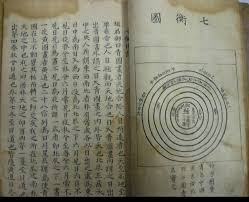
The continuous failures in predictions, particularly the discrepancies with the Chinese calendar regarding eclipses, placed a significant political burden on King Sejong. To address this, he commissioned the compilation of an independent astronomical calendar, Chiljeongsan (七政算), based on precise calculations of celestial movements from the capital, Hanyang.
Incorporating the latest Islamic astronomy, Chiljeongsan was a remarkable achievement of Joseon science born from the political crisis of prediction failures. The attempt to read the will of the heavens evolved into a scientific inquiry to understand the ’laws’ of the heavens.
This innovation did not stop there. In the later Joseon period, the introduction of the Sihyeon-ryeok (時憲曆), brought by Western missionaries, further improved accuracy. It is fascinating to note that political necessity led to continuous investment in scientific technology. When I first learned this, I was reminded of how the pressure of failure can lead to significant innovations.
Conclusion
The story of Gwangsanggam in the Joseon Dynasty teaches us three important lessons:
- The Intersection of Science and Politics: In Joseon, astronomy was not merely a discipline but a crucial political tool for legitimizing royal authority and state governance.
- The Weight of Responsibility: The responsibility for prediction failures fell heavily on Gwangsanggam officials, determined more by political repercussions than by the magnitude of scientific errors.
- Innovation Through Failure: Repeated failures in predictions paradoxically served as a powerful motivation for the development of independent scientific technologies like Chiljeongsan.
Ultimately, Joseon’s efforts to read the will of the heavens led to a scientific inquiry into the laws of the heavens. This historical lesson illustrates that failure is not merely an end but can serve as a catalyst for great advancements.
References
- Dong Jung-soo’s theory of Cheon-in-gam-eung and its political implications - Oriental Culture Research KISS
- A study on the patterns of natural disasters and responses in early Joseon Jeju University
- Giuje (祈雨祭) Encyclopedia of Korean Culture
- Old-style rituals Namu Wiki
- Calculating eclipses in the early Joseon Chiljeongsan SciSpace
- Gwangsanggam Wikipedia
- Astronomy in the Joseon Dynasty - Gwangsanggam and Joseon’s Astronomical Calculators YouTube
- The status and characteristics of the miscellaneous examinations in late Joseon S-Space
- [Science in the News] King Sejong’s Mistake? Chosun Biz
- The legal code that became the standard for Joseon governance, Gyeongguk Daejeon YouTube
- [Thesis] Calculating eclipses in the early Joseon Chiljeongsan Korea Institute of Science and Technology Information
- The introduction of Western science to Joseon by Jesuit missionaries Sogang University