
A piece of our historical map that has long been empty, rewriting the 600-year chronicle of Gaya.
- Understand why the history we know should be called the ‘Era of Four Kingdoms’ rather than the ‘Three Kingdoms Era.’
- Confirm Gaya’s status as evidenced by the UNESCO World Heritage Site ‘Gaya Tumuli.’
- Discover how powerful and independent Gaya was through iron, diplomacy, and culture.
Do You Know the Lost Kingdom of Gaya?
In our history, Gaya (伽倻) was a small nation caught between Goguryeo, Baekje, and Silla. Like many, I learned about Gaya only as a fleeting presence within the framework of the ‘Three Kingdoms Era’ during my school years. However, did you know that this forgotten fourth kingdom, which flourished for nearly 600 years, was a key player in the historical puzzle?
In 2023, UNESCO listed the ‘Gaya Tumuli’ as a World Heritage Site, acknowledging its value to the world. This event recognized Gaya as “an important evidence showing the diversity of ancient civilizations in East Asia.” It is now time for us to redraw the map of our history. Let’s delve into the heart of the lost kingdom, Gaya.
Evidence Beneath the Ground: The Gaya Tumuli Recognized by UNESCO
Most records were lost due to the victors, Silla, but the land does not lie. The seven Gaya Tumuli, distributed across Gyeongsang-do and Jeolla-do, are monumental evidence of a powerful political entity that lasted for centuries.
The Heart of the Alliance: A Time Travel Through Tumuli
- Gimhae Daeseong-dong Tumuli (Geumgwan Gaya): This was the starting point of the Gaya alliance and a hub for maritime trade. The numerous iron armors and 2,473 bead necklaces found here showcase the wealth, international exchange, and top-level craftsmanship of Geumgwan Gaya.
- Haman Malisan Tumuli (Aragaya): The tomb of Aragaya, which led diplomacy, yielded ‘Roman Glass’ that proves exchanges with the West. Notably, the 134 constellations engraved on the cover stone demonstrate remarkable astronomical knowledge comparable to Goguryeo.
- Goryeong Jisandong Tumuli (Daegaya): The grandeur of the late Gaya alliance is revealed in the massive tombs and the ‘sacrifice’ culture. The practice of burying over 40 retainers with the king is a political declaration showing strong royal authority and a highly stratified social structure, proving that Gaya was not a loose confederation of tribes.
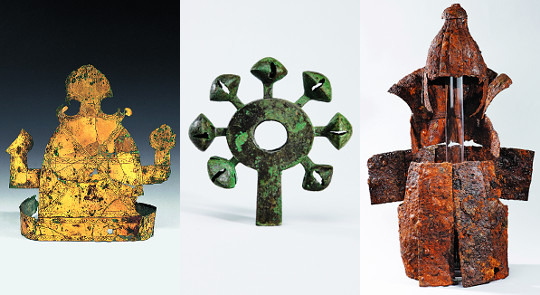
The Kingdom’s Signature: What Artifacts Tell Us
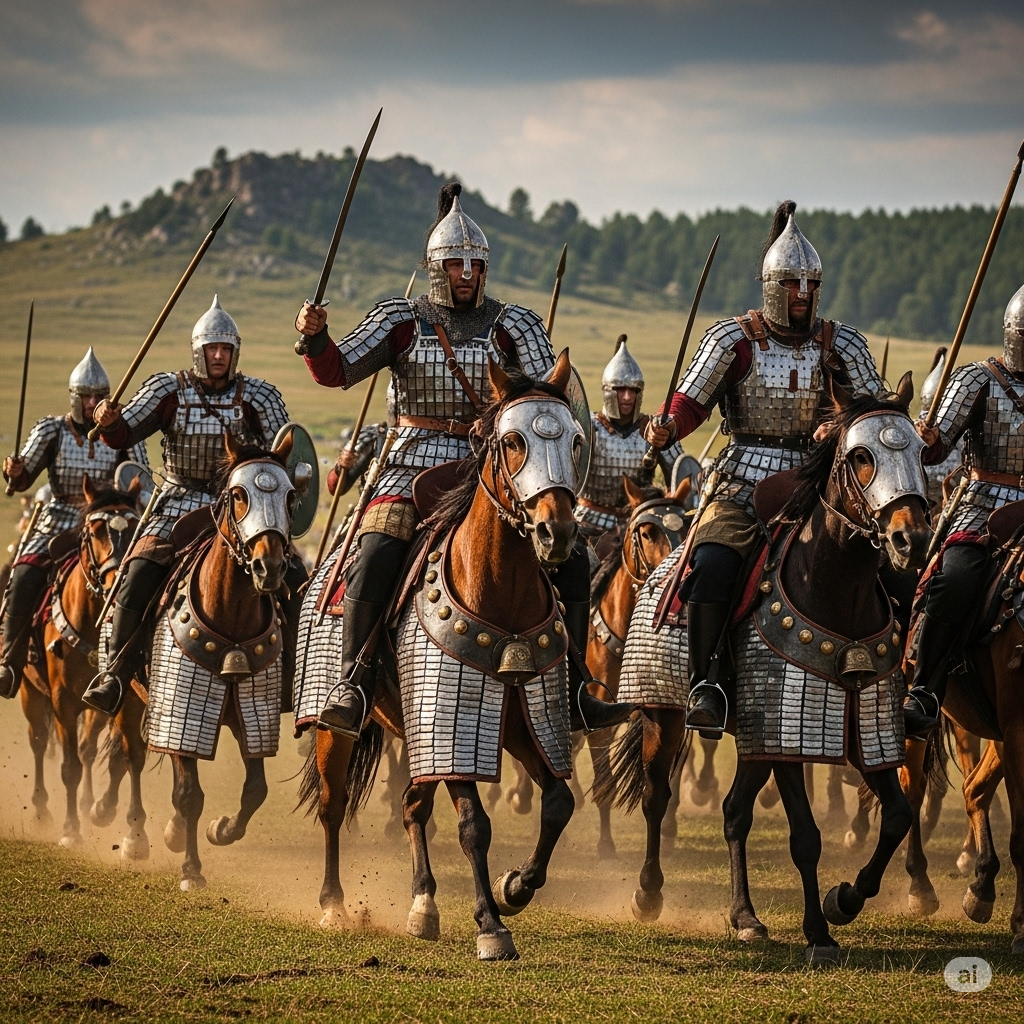
- Warrior’s Armor: Over 60% of the armor from the Three Kingdoms Era in the Korean Peninsula belongs to Gaya. This indicates that Gaya’s industrial production capacity in iron was unparalleled, and its heavily armed cavalry was likely one of the strongest military forces in East Asia at the time.
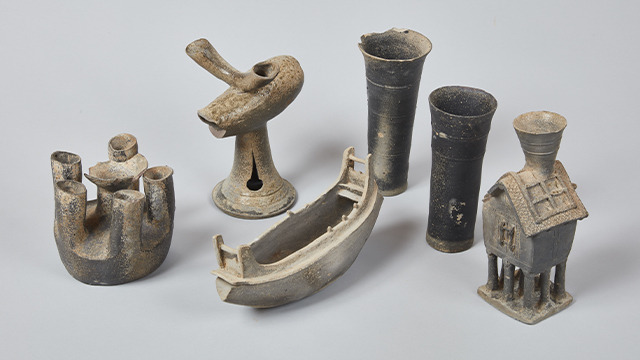
- Cultural Artifacts: The figurative pottery (象形土器) that depicts life, such as houses, boats, and warriors, showcases Gaya’s originality and artistry. This advanced technology was transmitted to Japan, becoming the origin of ‘Sueki (須惠器) pottery,’ indicating that Gaya was a country that exported culture.
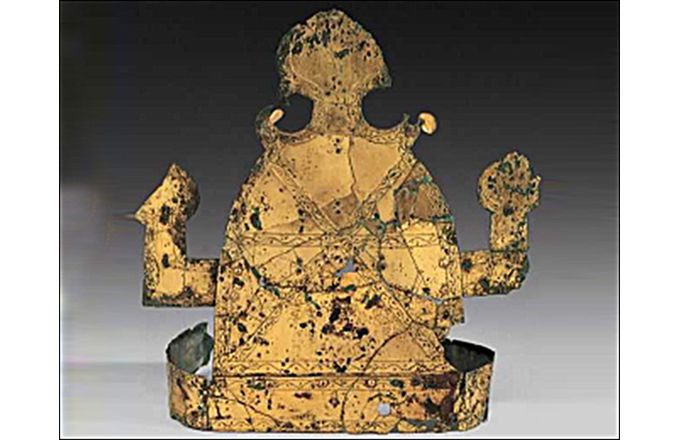
- Another King’s Crown: Gaya’s tumuli have yielded gold crowns with a unique style that appears to be ablaze, different from those of Silla. This is decisive evidence that Gaya was not merely imitating Silla culture but was an independent state with its own symbols of royal authority.
What Kind of Country Was Gaya?: The Power of Iron, Diplomacy, and Culture
Economy: The ‘Iron Kingdom’ of East Asia
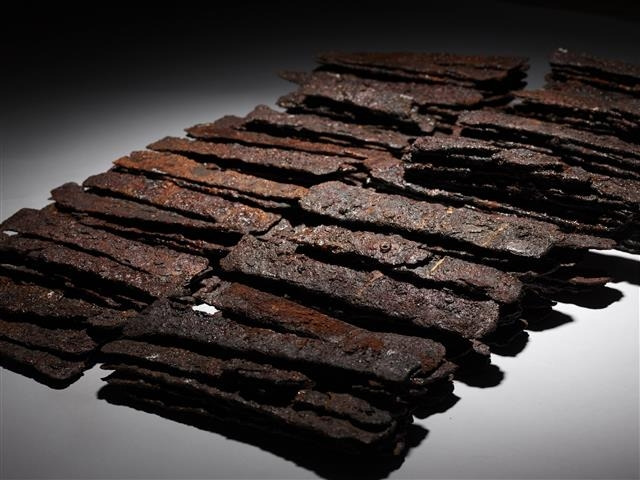
All of Gaya’s strength came from ‘iron (鐵).’ By monopolizing the rich iron resources in the Nakdong River basin, Gaya exported to China and Wa (Japan). Notably, standardized iron ingots called ‘deongi-soe (鐵鋌)’ were used like currency, indicating that Gaya had a highly developed international trade system.
Diplomacy: Sovereignty Proven by the Title ‘King of the Home Country’
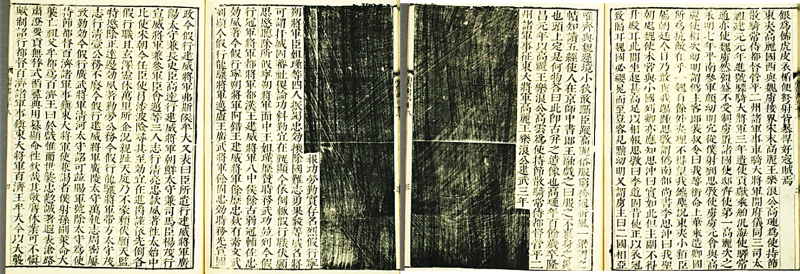
In 479 AD, ‘Hajihwang (荷知王)’ of Daegaya independently sent envoys to the Southern Qi of China. The Chinese emperor conferred upon him the title ‘General of the Home Country (輔國將軍本國王).’ The title ‘King of the Home Country,’ meaning ’the king of his own country,’ is irrefutable evidence that China, the center of the world at that time, officially recognized Gaya as an independent state with its own sovereignty.
Culture: Gayageum and Unique Crowns
The status of a nation is completed by its culture. King Gasil of Daegaya created the ‘Gayageum (伽倻琴),’ a musical instrument that embodies the sentiments of our people based on Chinese instruments. This was both a high-level act of governance and an expression of cultural pride. Additionally, the founding myth of King Suro, born from six golden eggs that fell from the sky, indicates that Gaya was a clear ’nation’ that established its foundations.
Three Kingdoms Era vs. Four Kingdoms Era: The Truth Revealed by Numbers
Why is the term ‘Three Kingdoms Era’ a distortion of historical fact? Let’s prove it with numbers.
- Five Kingdoms Era (452 years): From the founding of Gaya (42 AD) to the fall of Buyeo (494 AD), five nations coexisted.
- Four Kingdoms Era (63 years): From the fall of Buyeo to the fall of Gaya (562 AD), four nations coexisted.
- True Three Kingdoms Era (98 years): From the fall of Gaya to the fall of Baekje (660 AD), three nations coexisted.
The conclusion is clear. For over 500 years, the Korean Peninsula had four or more nations coexisting. Referring to the entire era as the ‘Three Kingdoms Era’ based on the last 98 years is a serious distortion that views history solely from the victor’s perspective.
Comparison: The System of Four Kingdoms
How was Gaya different from the other three kingdoms? Gaya’s confederation system was not an immature system but an ‘alternative’ system optimized for an economic model based on iron and trade. This led to cultural diversity and economic dynamism, but it showed limitations against the centralized military power of Silla, which gathered all national strength into one. It was merely a result of competition between systems, not superiority.
| Category | Goguryeo | Baekje | Silla | Gaya |
|---|---|---|---|---|
| Political System | Centralized Monarchy | Aristocratic-centered Monarchy | Centralized Monarchy | Confederation of Small States (Alliance Kingdom) |
| Economic Base | Conquest Activities, Agriculture | Maritime Trade, Agriculture | Agriculture, State Control | Iron Production and International Trade |
| Representative Culture | Tomb Murals, Military Power | Gold Incense Burner, Art | Golden Crown, Hwarang | Iron Armor, Pottery, Gayageum |
| Evidence of Sovereignty | Independent Emperor Title | Equal Diplomacy | Unique Bone Rank System | Hajihwang’s Independent Envoy Dispatch |
Conclusion: It Is Time to Reclaim the Lost Voice of Gaya
Gaya has disappeared into history but has not been obliterated. The people, technology, and culture of Gaya were absorbed into Silla, laying the groundwork for the unification of the Three Kingdoms.
-
Key Summary
- Gaya was an independent kingdom that lasted for 600 years: The UNESCO World Heritage Site ‘Gaya Tumuli’ and numerous artifacts are proof.
- A powerhouse of iron and international trade: Gaya thrived on its independent economic and diplomatic strength on the East Asian stage.
- The ‘Three Kingdoms Era’ is a record of the victors: Most of history was marked by the coexistence of four or more nations in the ‘Four Kingdoms Era’ or ‘Multinational Era.’
The evidence is overwhelming. We must correct the outdated map of the past ourselves and restore the rightful voice of the lost kingdom Gaya to our history as the Era of Four Kingdoms. Why not visit a nearby museum or the Gaya Tumuli to feel their breath? It could be the first step in fully confronting this great era.
References
- National Heritage Knowledge Connection Gaya Culture (伽耶文化)
- Encyclopedia of Korean Ethnic Culture Gaya (加耶)
- Yonhap News Characteristics and Major Artifacts of the Seven Gaya Tumuli Listed as World Heritage
- YTN Science [The Mystery of Gaya] Part 1: The Unfinished Empire, The Riddle of Gaya
- Ohmynews Why Did Kim Bu-sik Deceive ‘Five Kingdoms Era’ as ‘Three Kingdoms Era’?