
Exploring the unique experience of Koreans feeling anxiety and emptiness without garlic, traversing through myth, history, and science.
- The true identity of ‘garlic’ in the Dangun myth, the origin of our people.
- The scientific reason why the combination of pork and garlic is an optimized fatigue remedy.
- The overwhelming garlic consumption of Koreans compared to the world and its cultural significance.
Have you ever had such an experience? In a lovely restaurant in Europe, tasting a plate of aglio e olio on a pristine white plate, the only thought that crosses your mind is, “Hmm, it smells like garlic, but… is this it?” Or perhaps during a long overseas trip, exhausted from greasy food for days, you secretly squeeze a tube of gochujang hidden deep in your bag onto bread, shedding tears over the taste you miss?
If you are nodding along, congratulations. You are very likely suffering from ‘Garlic Separation Anxiety’ syndrome. While it is not an officially recognized medical term, it perfectly describes the unique collective experience of Koreans feeling anxiety and emptiness without garlic in their meals.
Why are we so obsessed with garlic? Is it merely a matter of taste, or is it an inevitable attraction deeply engraved in our DNA, stemming from our birth myth, history, and scientifically proven benefits? Let us embark on a journey to uncover the secrets of this great ingredient that has shaped the identity of the Korean people, following the rich aroma of garlic.
1. The Amazing Twist of Garlic in the Dangun Myth
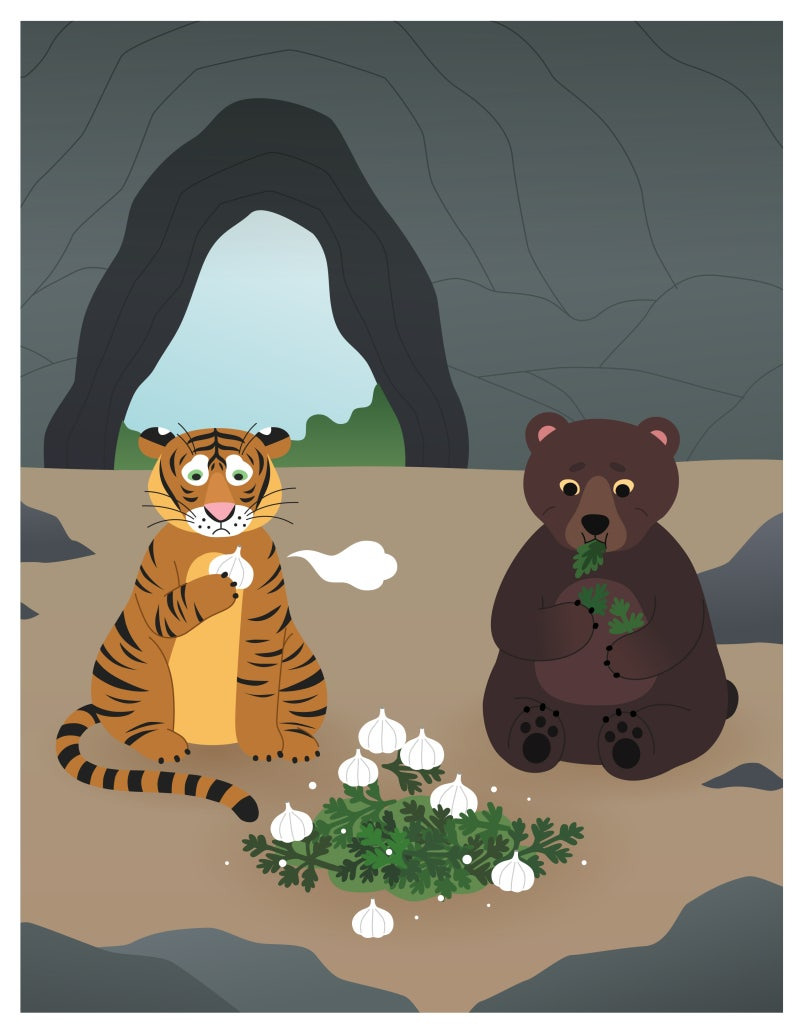
The story begins in the distant past, at the origin of our people. When Hwanung, the son of the heavenly god Hwanin, descended to rule the human world under the sacred tree of Taebaeksan, a bear and a tiger earnestly prayed to be transformed into humans. Hwanung set a divine test: “Eat this sacred mugwort and twenty cloves of garlic, and if you do not see the sunlight for a hundred days, you will become human.”
The impatient tiger ran away, but the bear endured the bitter and pungent taste of mugwort and garlic in a dark cave. Finally, after ’three sevens’ or 21 days, the bear transformed into a beautiful woman named ‘Ungnyeo’ and married Hwanung, giving birth to Dangun Wanggeom, who founded Gojoseon, the first nation of our people.
However, there is an interesting twist here. Was the ‘garlic (蒜, san)’ that Ungnyeo ate the same garlic (scientific name: Allium sativum L.) that we know today?
To conclude, it is highly likely that it was not. Modern garlic, or ‘daesan (大蒜)’, originates from Central Asia and was first brought to China by Zhang Qian, a diplomat of the Han Dynasty, from the Western Regions in the 2nd century BC. It is impossible that this garlic existed in the caves of the Korean Peninsula in 2333 BC when Dangun founded the nation.
So, what was the identity of ‘san (蒜)’ in the myth? Scholars speculate that it was likely ‘wild garlic (小蒜, sosan)’ or ‘mountain garlic (명이나물)’ that grew wild in the mountains and fields of the Korean Peninsula at that time. In fact, historical texts from the Joseon Dynasty, such as the ‘Hunmong Jahoe (訓蒙字會)’ and Heo Jun’s ‘Donguibogam (東醫寶鑑)’, clearly distinguish between what we know as garlic as ‘daesan (大蒜)’ or ‘ho (葫)’ and wild garlic as ‘sosan (小蒜)’.
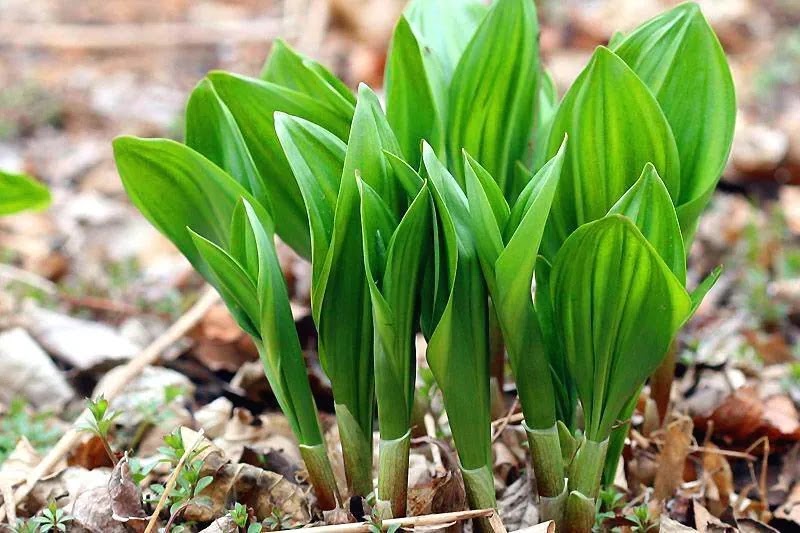
This historical fact became confused in modern times when the first national translation of the ‘Samguk Yusa’ was published in the magazine ‘Yadam (野談)’ in 1935. The translator translated ‘san (蒜)’ as ‘garlic’ without botanical verification, and this became established as the standard.
However, regardless of what the botanical truth is, what is more important is the archetype that this myth has implanted in the collective unconscious of our people. The story of Ungnyeo created a powerful symbol that ‘plants with strong and unique aromas possess a divine power to transform the insignificant into the spiritual being of humans’. In other words, our people were culturally prepared to believe in the purifying and life-giving powers of plants like garlic long before modern garlic entered the Korean Peninsula.
2. The Journey of Garlic Becoming a Core of Korean Cuisine
When did garlic, which was a symbolic element in the myth, actually appear in our history? The exact timing is unclear, but records of ‘garlic fields (蒜田)’ in the ‘Samguk Sagi (三國史記)’ suggest that garlic cultivation was already taking place by the Three Kingdoms period or the Unified Silla period.
The etymology of the Korean word ‘garlic’ itself accurately captures the core characteristics of this plant. The Chinese character word ‘myeongnal (猛辣)’, meaning ‘very spicy and fierce’, is believed to have evolved into ‘marl’ and then ‘garlic’. From the beginning, Koreans were captivated not by the mild sweetness of garlic, but by its intense and aggressive flavor that awakens the senses. This ‘fierce’ appeal soon became a core element that underpins Korean cuisine.
- Guardian of Kimchi: In the days before refrigeration, preserving vegetables throughout the winter was a matter of survival. The introduction of garlic was revolutionary. The powerful antibacterial action of allicin produced when garlic is crushed acted as a natural preservative, preventing kimchi from spoiling.
- Master of Odors: Nothing is as effective as garlic in eliminating the gamey and fishy smells of meat and fish. From bulgogi marinade to various stews and braises, garlic enhances the natural flavors of ingredients while magically erasing unpleasant odors.
- Foundation of Flavor: Almost every Korean recipe, from doenjang jjigae to namul and stir-fried dishes, begins with a spoonful of ‘minced garlic’. Garlic is not just a spice that adds aroma; it is the foundation and canvas that helps all other seasonings blend harmoniously.
Thus, garlic has risen to the status of an irreplaceable ‘soul food’, satisfying the Korean palate, stomach, and spirit by solving practical preservation issues, providing sensory satisfaction with its intense flavor, and embodying the belief in ’the source of power’ that has been passed down from the Ungnyeo myth.
3. The Scientific Reasons Why Our Bodies Love Garlic
The affection Koreans have for garlic goes beyond mere cultural habits; it is backed by scientific evidence that our bodies instinctively respond to. At the center of this secret is the powerful sulfur compound ‘allicin’.
Whole garlic is quiet in itself. However, the moment garlic is cut or crushed, the cell walls are broken, and an explosive chemical reaction occurs when the enzyme ‘alliinase’ meets the stable substance ‘alliin’. In this process, ‘allicin’, which has a strong aroma and efficacy, is generated.
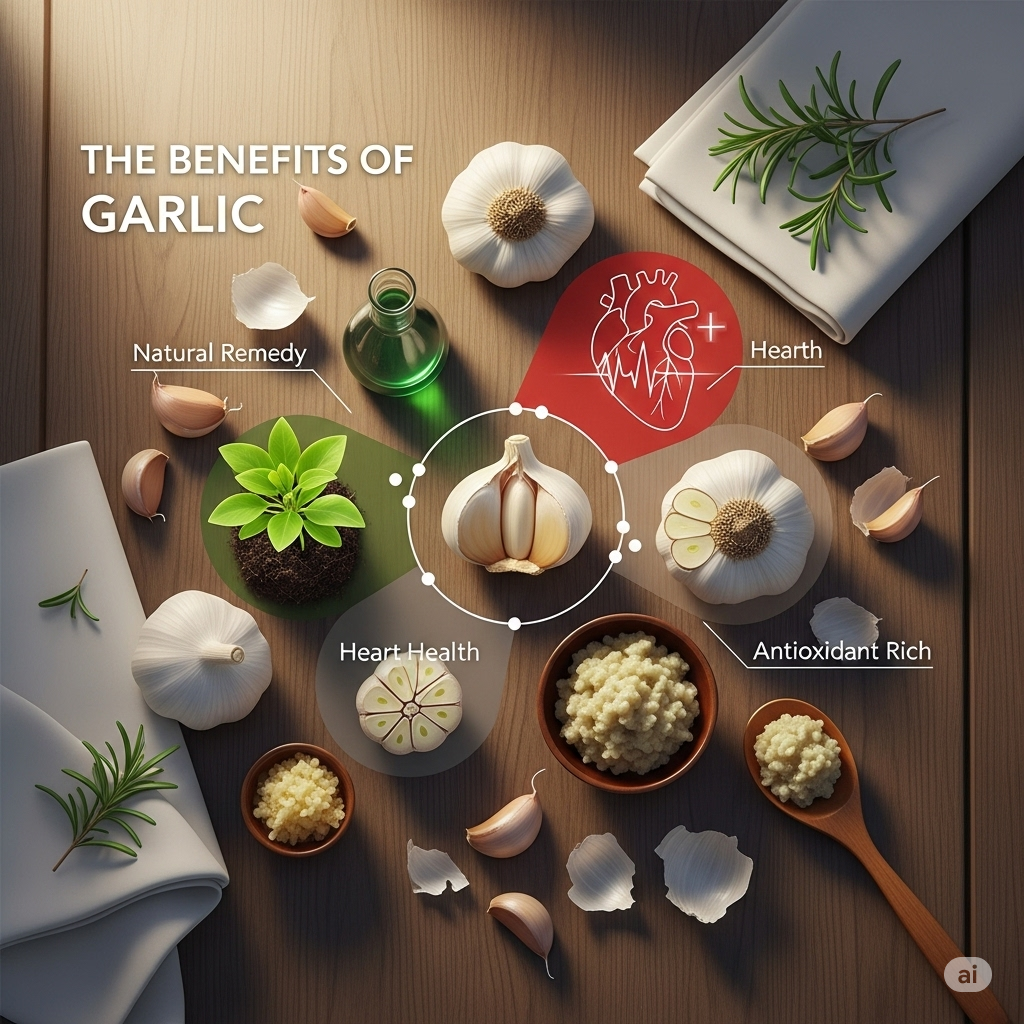
Allicin is the beginning of magic that provides a hundred benefits aside from the one drawback of its strong smell.
- Natural Antibiotic: Allicin has powerful antibacterial and antiviral effects, inhibiting E. coli and Salmonella, which cause food poisoning, as well as Helicobacter pylori, which is identified as a cause of stomach cancer.
- Vascular Cleaner: Various studies have shown that garlic helps lower blood pressure and bad LDL cholesterol levels, earning it the nickname ‘vascular cleaner’.
- Immune Boosting and Anti-Cancer Effects: Garlic promotes the activity of white blood cells, enhancing resistance to infectious diseases like colds. Research has also shown that consuming about one clove of garlic daily can lower the risk of certain cancers.
And at the pinnacle of all these benefits lies the greatest synergy born from Korean food culture, the meeting of ‘pork and garlic’.
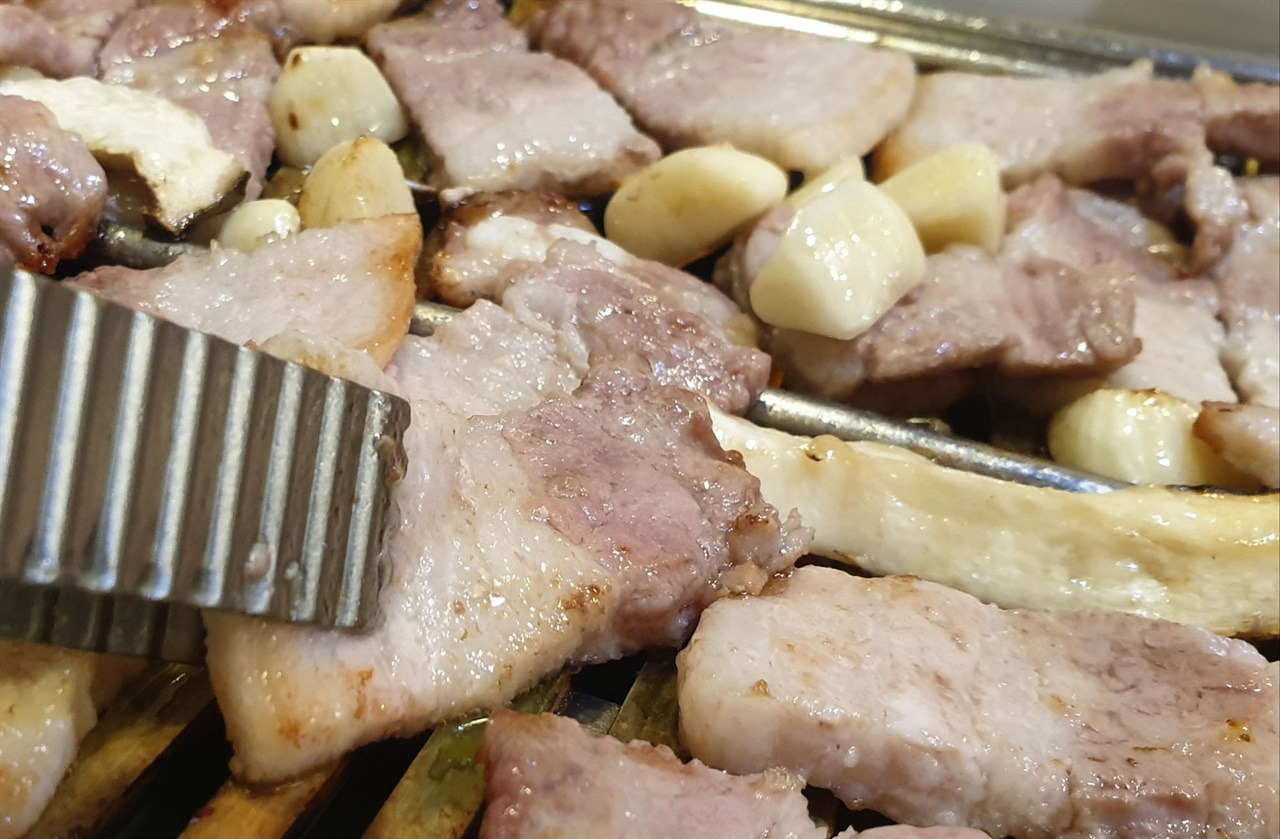
Pork is rich in vitamin B1 (thiamine), which is essential for energy metabolism, but it is water-soluble, making it difficult for the body to absorb and easily excreted. This is where garlic’s alchemy begins. When allicin from garlic combines with vitamin B1 from pork, it transforms into a new substance called ‘allithiamine’.
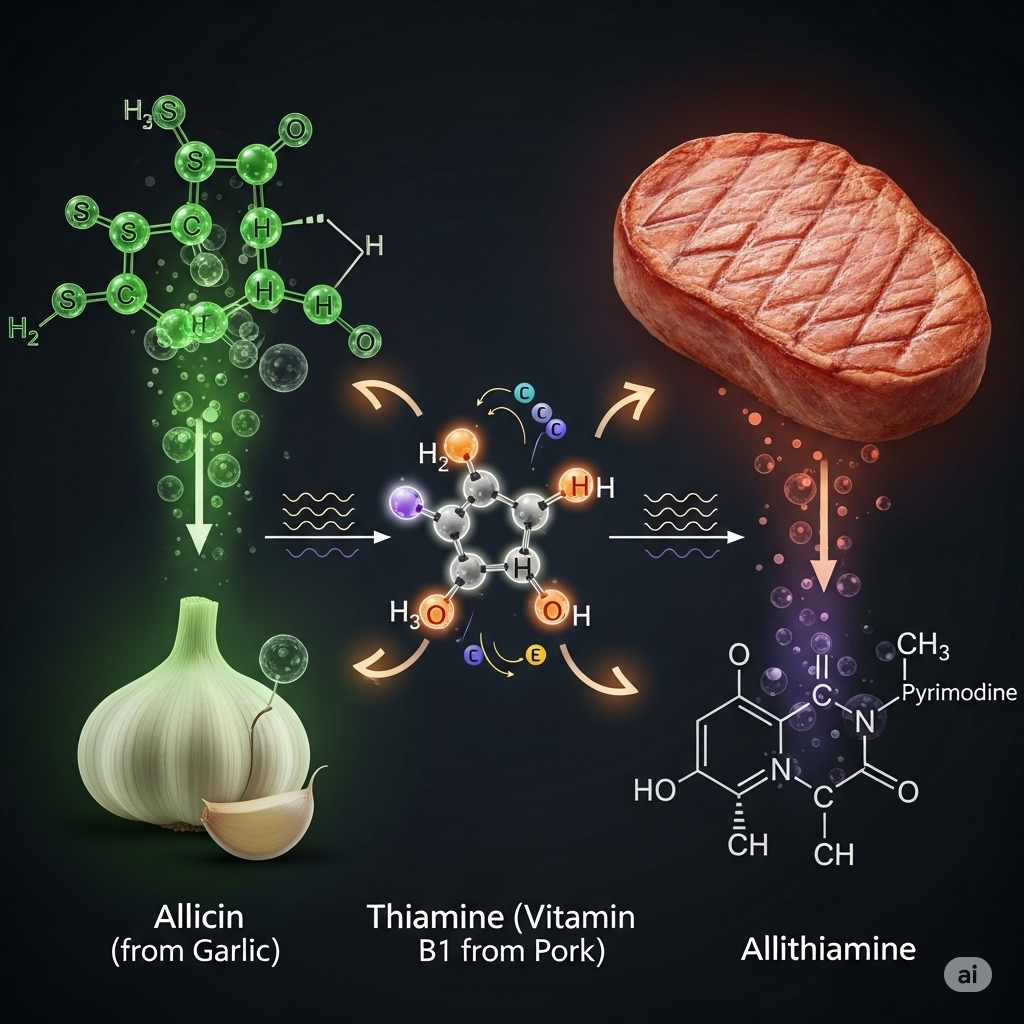
Allithiamine is a ‘super vitamin’ with an absorption rate that is 10 to 20 times higher than regular vitamin B1. It breaks down fatigue substances and boosts metabolism, revitalizing our bodies. This is the key ingredient in the ‘garlic injection’ we receive in hospitals for fatigue recovery.
This amazing fact proves that the act of placing raw garlic on a piece of pork belly goes beyond a simple flavor combination; it is a ‘scientifically optimized fatigue remedy’ that our ancestors learned through experience.
4. Data-Proven ‘Garlic Separation Anxiety’
Koreans’ extraordinary love for garlic is clearly evidenced by objective data.
Annual Per Capita Garlic Consumption by Country
| Country | Annual Per Capita Garlic Consumption (kg) |
|---|---|
| China | 14.3 |
| South Korea | 6.2 |
| Bangladesh | 2.6 |
| Russia | 2.2 |
| Indonesia | 1.8 |
| USA | About 1.0 |
While China ranks first in absolute consumption, the figure for Korea is even more surprising as it reflects the amount consumed through everyday meals. This table serves as clear evidence statistically proving ‘garlic separation anxiety’.
This anxiety symptom dramatically manifests the moment Koreans go abroad. In their travel bags, alongside instant noodles and fried kimchi, frozen minced garlic or whole garlic occupies a place. This is not merely to soothe nostalgia but rather a survival strategy to calm their upset stomachs from greasy Western food and restore the balance of their taste buds.
Furthermore, we become captivated by the desire to actively ‘improve’ local foods. A typical example is requesting extra garlic in aglio e olio in Italy. This goes beyond a mere preference for garlic flavor; it demonstrates the cultural differences in the use of garlic. While Italian cuisine prefers the ‘indirect’ method of infusing flavor by adding whole garlic, Koreans enjoy the ‘direct’ experience of its presence by adding minced garlic generously. Ultimately, the absence of garlic for us leads to a tangible sensory imbalance, indicating that our diet is out of balance.
Conclusion
From the handful of plants that Ungnyeo endured in the cave to the alchemical secrets that create the utmost vitality when meeting pork belly, and to the traveler’s bag abroad, garlic has accompanied the journey of our people. Garlic is like the ‘bass guitar’ of Korean cuisine. Even when it does not take center stage, if its deep and pungent resonance is missing, the overall sound feels incomplete; similarly, Korean cuisine without garlic feels somehow lacking by 2%.
Key Summary
- Mythical Symbol: The ‘garlic (蒜)’ in the Dangun myth differs from modern garlic, but it formed a cultural archetype believing in the ‘purifying and life-giving’ powers of plants with strong aromas.
- Scientific Efficacy: The allicin in garlic is excellent for antibacterial effects and odor removal, and it boasts the best compatibility by generating ‘allithiamine’, which has an absorption rate 20 times higher when combined with vitamin B1 from pork.
- Taste Identity: The ‘garlic separation anxiety’ evidenced by the world’s second-highest garlic consumption shows that garlic is not just a spice for Koreans but a standard that constitutes a ‘complete meal’.
The ‘anxiety’ we feel when separated from garlic is not a flaw. It is a healthy resonance created by our deep and long-standing relationship with our land, history, and collective memory. Perhaps ‘garlic separation anxiety’ is the most delicious and definitive proof that we will always be a ‘garlic nation’.
How about savoring our identity with a Korean meal rich in garlic tonight?