
A Joint Achievement of Korean and American Research Solving Long-standing Issues in Fusion Commercialization
- Understand why fusion energy is called the ‘dream energy.’
- Identify the core of the ’tungsten impurity’ problem, the biggest obstacle to fusion commercialization.
- Learn about the principles and significance of the innovative real-time control technology developed by the Korean-American research team.
The Great Promise of the Artificial Sun
Humanity is knocking on the door of the ultimate flame, known as ‘artificial sun’ or fusion energy, following innovations in fire, steam, and nuclear power. Fusion is the principle by which the sun emits light, where light atoms combine to release enormous amounts of energy.
The reason this energy is called a ‘dream’ is clear: it produces almost no high-level radioactive waste, and the primary fuel, deuterium, can be obtained infinitely from seawater, making it virtually infinite and clean energy.
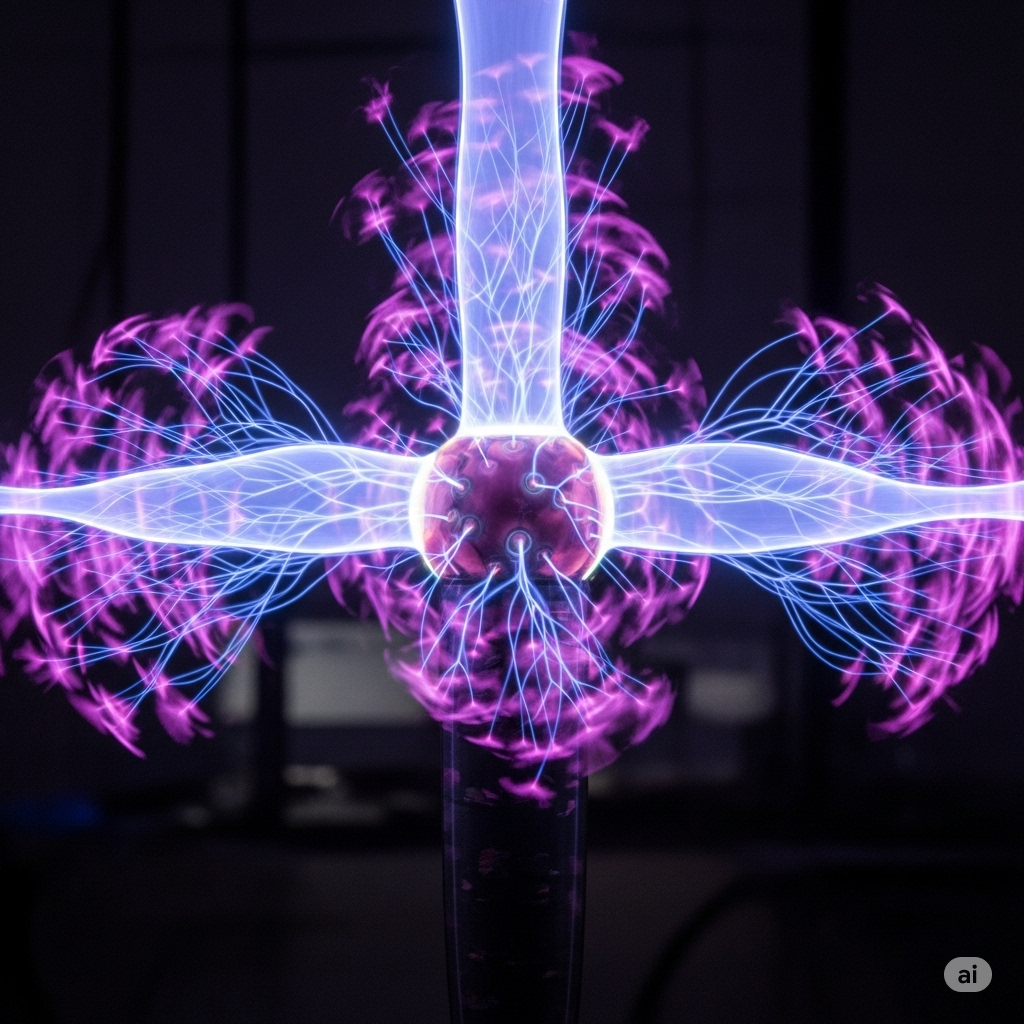
However, replicating the sun’s environment on Earth is not easy. Scientists had to heat the fuel gas to over 100 million degrees Celsius, hotter than the sun’s core, to create a ‘plasma’ state. Plasma is the fourth state of matter where atomic nuclei and electrons are separated.
The Paradox of the Tokamak and Tungsten
How can we contain this fireball exceeding 100 million degrees? The machine born to solve this dilemma is the donut-shaped ‘Tokamak.’ The Tokamak is a type of ‘magnetic prison’ that uses powerful magnetic fields to suspend hot plasma in mid-air. South Korea’s ‘KSTAR’ boasts world-class technology in this field.
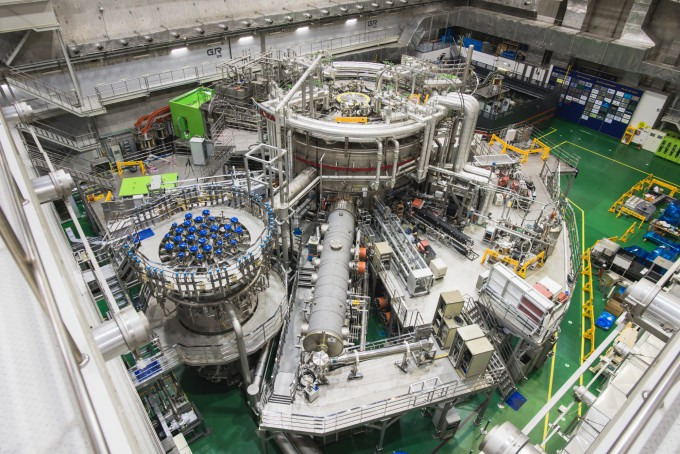
The key to fusion research is not just creating 100 million degrees but how long that state can be stably ‘maintained.’ To achieve this ‘continuous operation,’ scientists constructed the inner walls of the Tokamak with ’tungsten,’ one of the metals with the highest melting points.
However, this seemingly perfect shield harbored a deadly poison. High-energy plasma particles collide with the tungsten walls, eroding fine tungsten atoms, which mix into the plasma and become ‘impurities.’ Tungsten is a heavy element that rapidly cools the plasma by releasing heat in the form of light. This phenomenon is called ‘radiative cooling.’
If the tungsten concentration in the plasma reaches just 0.003%, the efficiency of fusion drastically decreases, and in severe cases, the reaction can stop altogether. Thus, the tungsten impurity problem was a matter of survival for the success of fusion power.
Limitations of Existing Solutions: The Shackles of ‘Boronization’
For decades, the technology of ‘boronization’ has been used to address this issue. It involves coating the inside of the Tokamak with a thin layer of boron to protect the tungsten walls, akin to a vaccination.
However, traditional boronization required completely halting fusion experiments, cooling the device, and injecting toxic gas overnight, making it a cumbersome process. The coating was not permanent, necessitating periodic repetition of this process. This meant significant ‘downtime’ for commercial power plants. A new solution was urgently needed for the industrialization of fusion.
Innovative Breakthrough: A ‘Salt Shaker’ for the Artificial Sun
To solve this long-standing problem, two giants in global fusion research, Korea Institute of Fusion Energy (KFE) and Princeton Plasma Physics Laboratory (PPPL) in the United States, joined forces.
The solution from the Korean-American research team was surprisingly simple and elegant.
“What if we sprinkle the necessary powder during operation instead of stopping the machine?”
The research team equipped KSTAR with the ‘impurity powder dropper’ developed by PPPL. This device, resembling a sophisticated ‘salt shaker,’ sprays very fine boron powder in real-time onto the edge of the 100 million-degree plasma. The boron powder instantly vaporizes, forming a new protective layer on the inner wall in real-time.
Thanks to this technology, operators can maintain the inner wall in optimal condition without stopping the fusion reaction. The reason I pay particular attention to this technology is that it has shifted the operational paradigm of fusion reactors from ‘static repairs’ to ‘dynamic management.’
Even more remarkably, this technology has unexpectedly enhanced the performance of plasma by improving the ability to contain heat and alleviating ’edge localized modes (ELM)’ that could damage the inner wall.
Comparison/Alternatives
Traditional Boronization vs Real-time Powder Injection Technology
| Feature | Traditional Glow Discharge Boronization | Real-time Boron Powder Injection (New Technology) |
|---|---|---|
| Method | Injection of diborane gas into a stopped, low-temperature device | Injection of boron powder into operating high-temperature plasma |
| Operational Impact | Complete suspension of fusion operation required (long downtime) |
Performed during plasma operation (no downtime) |
| Control Level | Periodic, batch ‘process’ | Active, real-time control possible |
| Safety | Use of toxic/explosive gases | Use of relatively safe solid powder |
| Additional Effects | Only performs wall conditioning | Wall conditioning + alleviation of ELM and enhancement of plasma performance |
| Future Scalability | Unsuitable for continuous operation commercial power plants | Core implementation technology for steady-state fusion reactors |
Conclusion
The results of this Korean-American joint research mark an important milestone in the future of fusion energy.
-
Key Summary:
- Problem Solved: Successfully controlled the impurity problem arising from the tungsten inner wall in real-time without stopping operations.
- Paradigm Shift: Changed the maintenance method of fusion reactors from ‘periodic repairs’ to ‘active real-time management,’ paving the way for commercialization.
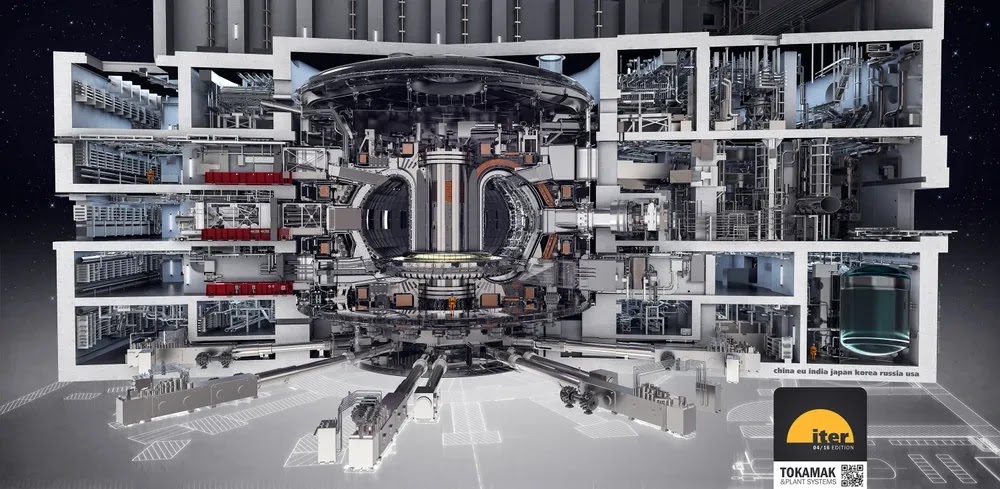
- Future Value: Increased the likelihood of success for the International Thermonuclear Experimental Reactor (ITER) and laid the groundwork for future ‘intelligent reactors’ in combination with artificial intelligence (AI) control systems.
This small spark caused by a handful of boron powder will be the prelude to a great light that will illuminate the world through fusion. Why not continue to take an interest in this amazing journey?