
Let’s delve into everything about batteries, our small energy storage devices in our pockets.
- Learn about the strange scientific experiments that marked the beginning of batteries.
- Understand how lithium-ion batteries, the backbone of modern society, work.
- Explore the possibilities and challenges of future battery technologies like all-solid-state and sodium-ion batteries.
Prologue: Can You Imagine a World Without Wires?
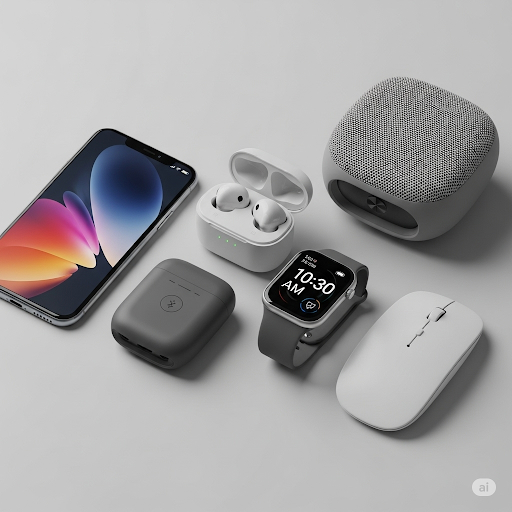
Waking up to a smartphone alarm, brushing teeth with an electric toothbrush, and listening to music through wireless earbuds—our mornings begin with countless ‘wireless’ devices. At the heart of all this convenience lies a small energy storage device quietly powering the world from our pockets and bags: the battery.
We often take batteries for granted, but this small box contains over 200 years of dedication from scientists, fierce competition, and world-changing innovations. From the hind leg of a dead frog to the ‘dream battery’ that will shape humanity’s future, let’s follow the great chronicle of batteries through the ages.
Chapter 1: The Prelude to Batteries – The Dead Frog and the Debate Between Two Scientists
1.1 Luigi Galvani’s Accidental Discovery and ‘Animal Electricity’
The history of batteries begins in 18th century Italy, in the laboratory of anatomist Luigi Galvani. One day in 1786, he discovered that a frog’s leg, placed on a metal plate by his wife for cooking, twitched in response to sparks from a nearby electrostatic generator.
Fascinated by this strange phenomenon, Galvani concluded through further experiments that a special electricity, termed ‘Animal Electricity,’ existed within living organisms to move muscles. This theory of ‘galvanism’ caused a significant stir in European society and even inspired Mary Shelley’s novel Frankenstein.

1.2 Alessandro Volta’s Counterattack and the First Battery ‘Voltaic Pile’
Galvani’s friend and fellow scientist, Alessandro Volta, questioned his theory. Through experiments, he discovered that the twitching of the frog’s leg was not due to life but occurred when two different types of metals contacted the moist frog leg (acting as an electrolyte). This was a Copernican shift, revealing that electricity came from metals, not living organisms.
To prove this principle, Volta stacked copper and zinc plates separated by cloth soaked in saltwater, creating the first device to produce a continuous electric current, the ‘Voltaic Pile.’ This invention earned Volta high praise from Napoleon, and today, the unit of voltage, ‘volt,’ is named in his honor.
The Voltaic Pile became the key to opening a new era of science, leading to explosive growth in the field of electrochemistry, including the discovery of new elements through electrolysis. Interestingly, Galvani’s theory of ‘Animal Electricity’ was later reassessed as a precursor to bioelectricity, revealing that nerves and muscles operate through tiny electrical signals. The debate between these two giants opened two great paths in the history of science.
Chapter 2: The Dawn of the Charging Era – Secondary Batteries Taming Electricity
2.1 Fundamental Differences Between Primary and Secondary Batteries
The Voltaic Pile was a ‘Primary Battery,’ which could only be used once. Once the internal chemical reaction was complete, it could not be reversed. However, humanity dreamed of a ‘Secondary Battery,’ which could ‘store’ electricity and be reused. Secondary batteries can reverse the chemical reaction using external electricity, allowing for repeated use.
2.2 The Unsung Hero of the Automotive Age: Lead-Acid Battery
The first practical secondary battery was the ‘Lead-Acid Battery,’ invented in 1860 by France’s Gaston Planté. This battery played a crucial role in the development of the electric starter, replacing the dangerous manual crank start developed by inventor Charles Kettering.
Thanks to the lead-acid battery’s ability to provide a strong initial current, anyone could safely start a car, which became a catalyst for the popularization of automobiles. Remarkably, even 160 years later, most internal combustion vehicles still start with lead-acid batteries. Despite being heavy and having low energy density, it remains a perfect example of a ‘good enough’ technology due to its instant high output, reliability, and overwhelmingly low cost.
2.3 The Beginning of Portable Devices and ‘Memory Effect’: Nickel-Cadmium Battery
The era of carrying electricity in our pockets began with the ‘Nickel-Cadmium (Ni-Cd) Battery,’ invented by Sweden’s Waldemar Jungner in 1899. Much smaller and lighter than lead-acid batteries, it gave rise to numerous portable devices like electric shavers and portable radios.
However, the nickel-cadmium battery had a fatal ‘Memory Effect.’ If the battery was charged before being fully discharged, it would remember that point as the new 0%, reducing actual usage time. I vividly remember having to fully discharge my old cordless phone or electric drill before recharging it when the power weakened. This inconvenience, along with the toxic heavy metal cadmium issue, led to the gradual disappearance of nickel-cadmium batteries.
Chapter 3: The Heart of Modern Technology, The Lithium-Ion Battery Revolution
3.1 A 20-Year Relay Race Towards the Nobel Prize
The 2019 Nobel Prize in Chemistry was awarded to three scientists who opened up a ‘rechargeable world.’ Their research resembled a great relay race.
- Runner 1: Stanley Whittingham – In the 1970s, he established the concept of the first rechargeable battery using lithium but left safety concerns due to the explosive nature of metallic lithium.
- Runner 2: John Goodenough – In the 1980s, he developed the innovative cathode material ‘Lithium Cobalt Oxide (LiCoO₂), doubling the voltage and paving the way for small, powerful batteries.
- Runner 3: Akira Yoshino – In 1985, he replaced the hazardous metallic lithium anode with a carbon material (petroleum coke) that safely stores lithium ions, finally completing a lightweight, powerful, and safe lithium-ion battery.
3.2 The ‘Rocking-Chair’ Principle: How Do Lithium-Ion Batteries Work?
The operation of lithium-ion batteries is likened to a ‘Rocking-Chair.’
- During charging: Lithium ions (Li+) leave the anode (+) and move to the cathode (-) for storage, similar to pushing one side of a rocking chair up to store energy.
- During discharging: The lithium ions return to the anode, and the electrons (e-) that were separated move through the external circuit (smartphone, etc.), generating current. This is akin to the rocking chair coming down and releasing energy.
In this process, lithium ions physically move back and forth without destroying the electrodes, allowing for hundreds of recharges.
3.3 Energy Density Driving the Mobile and Electric Vehicle Revolutions
The key to lithium-ion batteries is their high ‘energy density.’ They can store much more energy for the same weight, enabling the creation of thin and light smartphones and laptops, thus facilitating the ‘mobile revolution.’ Now, this technology is making electric vehicles with performance comparable to internal combustion vehicles a reality, leading the ‘electric revolution.’
3.4 Shadows Behind the Shining Success: Resource Dilemmas and Recycling Challenges
However, the explosive demand for lithium-ion batteries has created new problems. Key minerals like cobalt and lithium are concentrated in specific countries, leading to resource weaponization and geopolitical risks and connecting to human rights issues such as child labor exploitation.
Global Supply Chain of Key Raw Materials for Lithium-Ion Batteries
| Raw Material | Key Role | Major Producing Countries |
|---|---|---|
| Lithium | Energy Storage (Ion) | Australia, Chile, China |
| Cobalt | Enhances Cathode Stability | Democratic Republic of the Congo (DRC) |
| Nickel | Enhances Cathode Energy Density | Indonesia, Philippines, Russia |
| Graphite | Anode Material (Stores Lithium Ions) | China |
Additionally, the disposal of expired batteries poses a massive challenge. Recycling technologies (dry/wet smelting) for extracting key minerals from waste batteries are emerging as crucial for future industries.
Chapter 4: The Race Towards the Future – In Search of the ‘Dream Battery’
Lithium-ion batteries are nearing their theoretical performance limits and face fire risks due to liquid electrolytes and resource issues. The world is now focused on developing a ‘dream battery’ that can surpass lithium-ion technology. Which future battery are you most hopeful for?
4.1 The Ultimate Battery Candidate: All-Solid-State Battery
The most promising technology among next-generation batteries is the ‘All-Solid-State Battery.’ By replacing flammable liquid electrolytes with non-flammable solid electrolytes, it maximizes safety and allows for the use of lithium metal anodes with large energy storage capacity, potentially dramatically increasing energy density. It is considered a ‘game changer’ that could enable electric vehicles to travel 800 km on a single charge.
However, there are still many hurdles to overcome, including the slow ion movement problem (low ionic conductivity), contact resistance between solids, and high manufacturing costs.
4.2 Realistic Alternatives: The Counterattack of Sodium and Sulfur
If all-solid-state batteries are the ultimate goal, more realistic alternatives are also rapidly advancing.
- Sodium-Ion (Na-ion) Batteries: Using sodium, which is over 1,000 times more abundant and cheaper than lithium, offers overwhelming price competitiveness. While energy density is lower, it is optimized for large-scale energy storage systems (ESS) or low-cost electric vehicles.
- Lithium-Sulfur (Li-S) Batteries: With a theoretical energy density 3 to 5 times that of lithium-ion, they are promising candidates for urban air mobility (UAM) and drones, where ultra-lightweight high energy is needed. However, they must solve the critical drawback of short lifespan due to byproducts generated during charging and discharging.
A Snapshot Comparison of Next-Generation Battery Technologies
The future battery market will not be dominated by a single universal technology but will feature a coexistence of various technologies that leverage their respective advantages. This is akin to choosing a car based on various factors like fuel efficiency, performance, price, and purpose. Each technology will provide optimized solutions for specific purposes and target different markets.
| Technology Type | Key Advantages | Key Challenges | Major Target Markets |
|---|---|---|---|
| Lithium-Ion (Current) | Proven technology, balanced performance | Fire risks, raw material supply issues | Smartphones, laptops, electric vehicles |
| All-Solid-State Battery | High safety, high energy density | Low ionic conductivity, high manufacturing costs | Premium electric vehicles, aerospace |
| Sodium-Ion Battery | Overwhelming price competitiveness, abundant raw materials | Low energy density | Energy storage systems (ESS), low-cost electric vehicles |
| Lithium-Sulfur Battery | Ultra-high energy density, lightweight | Short lifespan (polysulfide shuttle problem) | Drones, urban air mobility (UAM) |
Conclusion: The Great Journey That Has Not Ended
What began as a slight tremor from a dead frog’s leg has become a massive force that moves the world over 200 years. Through the history of batteries, we can reaffirm three key points.
- Key Summary 1: The history of batteries has evolved through accidental discoveries and fierce scientific debates, as seen in the cases of Galvani and Volta.
- Key Summary 2: The lithium-ion battery, born from the relay research of three scientists, is a core technology that has ushered in the modern mobile and electric vehicle era.
- Key Summary 3: The future will see a coexistence of various batteries optimized for specific purposes, such as all-solid-state and sodium-ion, leading to a sustainable energy era.
Humanity’s journey towards batteries goes beyond mere technological development; it is our collective story of responding to climate change and creating a better future. Next time you charge your smartphone, why not reflect on the 200 years of scientific history contained within it?