
Exploring East Asian Number Superstitions Starting from the Elevator ‘F’ Button.
- The linguistic origins of the phenomenon of avoiding the number 4 (tetraphobia)
- How tetraphobia manifests differently in Korea, China, and Japan
- The positive and symbolic meanings associated with the number 4
The Ghost Among Us, Number 4
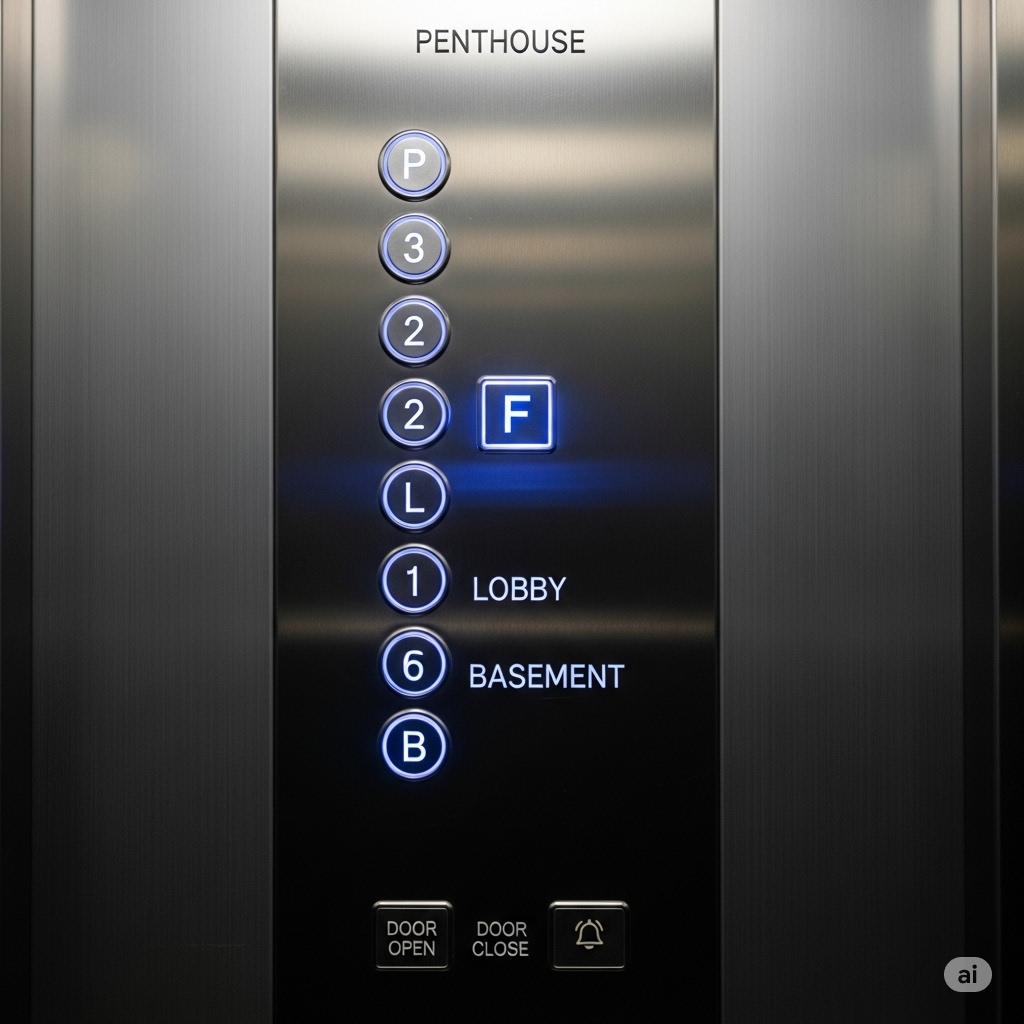
Have you ever experienced getting into an elevator only to find the ‘F’ button instead of the 4th floor button? Tetraphobia is a cultural phenomenon deeply embedded in our lives. Also known as ‘Tetraphobia,’ this phenomenon systematically influences building designs, military formations, and even product pricing, transcending mere superstition.
This article follows a small curiosity sparked by the elevator ‘F’ button, journeying through Korea, China, and Japan to uncover the exciting secrets surrounding the number 4. At the end of this journey, we will discover that numbers reflect the history and psychology of a society.
The Beginning of Tetraphobia: Everything Started with One Character
Every mystery has a crucial clue at its beginning. The culprit behind tetraphobia is none other than ‘sound.’ More precisely, it stems from the coincidence of two Chinese characters with the same pronunciation: ‘sì (四)’ for four and ‘sǐ (死)’ for death.
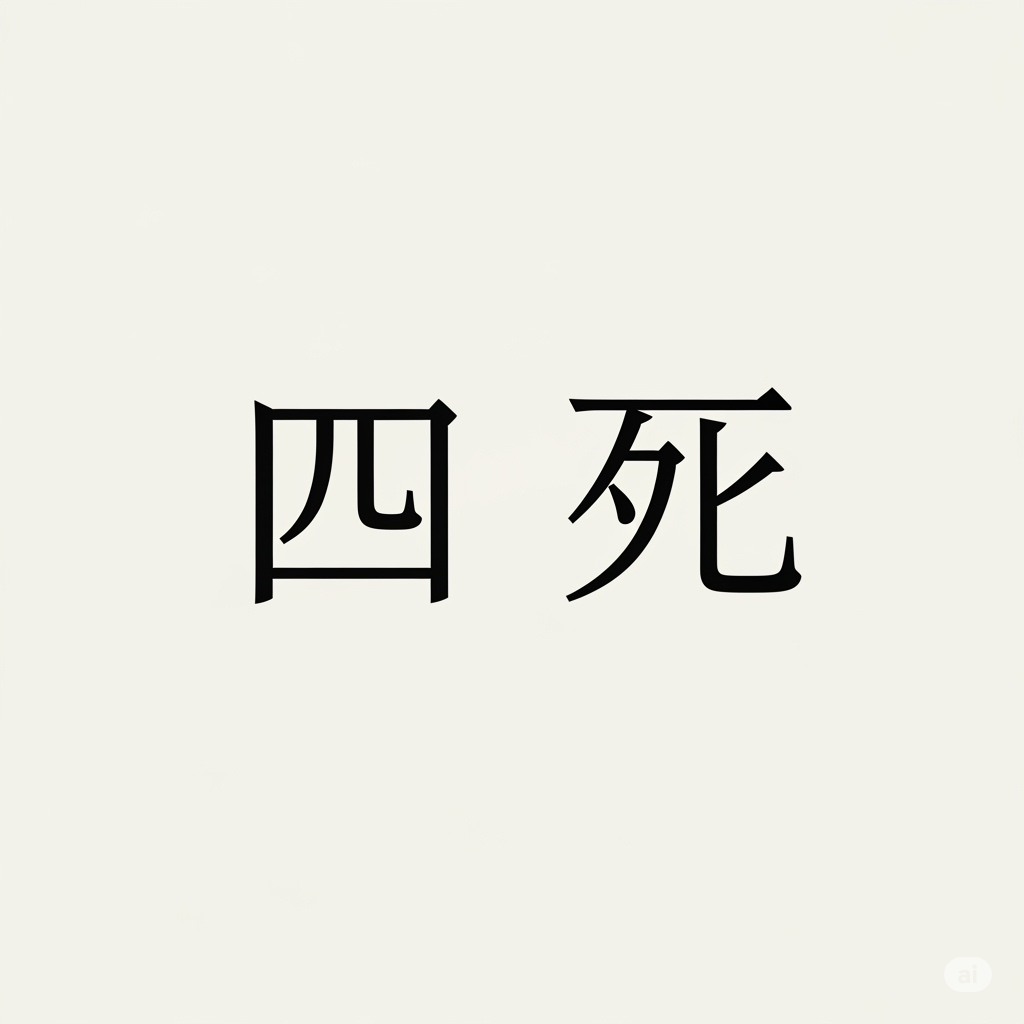
In ancient Chinese, the pronunciations of these two words were very similar, and today they are pronounced as ‘sì’ in standard Mandarin, ‘sa’ in Korean, and ‘shi (し)’ in Japanese, inheriting the image of ‘death.’ This created a powerful ‘cognitive shortcut’ that evokes death every time the number is mentioned.
This ’linguistic thought’ spread throughout East Asia as Korea and Japan adopted the Chinese character system, importing not only the characters but also the superstitions contained within as a single ‘cultural package.’ Since it was disseminated through ‘characters,’ which symbolized knowledge and power at the time, tetraphobia could root itself much deeper and more persistently in the cultural DNA of the three countries than other superstitions.
Korea, China, and Japan: Different Approaches to the Number 4
Starting from the common root of ‘4=death,’ this superstition has taken on different forms as it rooted itself in the distinct cultural soils of Korea, China, and Japan.
Korea: A Subtle Taboo Embedded in Daily Life
In Korea, tetraphobia is not loud. Instead, it operates subtly, permeating daily life like air and creating a sense of ‘unease.’ A representative example is the ‘F’ button in elevators. This is a clever linguistic compromise, acknowledging the number while refusing to utter the ominous ‘sound.’
Such ‘quiet avoidance’ can be found throughout society. The Republic of Korea Army does not have a 4th Infantry Division. Due to past unfortunate events, it was stigmatized as an ‘unlucky unit’ and ultimately became permanently disbanded. This demonstrates that tetraphobia exerts a powerful influence on the collective psychology beyond individual fears.

Ultimately, Korea’s tetraphobia is more of a ‘social risk management strategy’ for community harmony and smooth relationships than individual fear.
China: A War Against 4, Where Numbers Become Prices
In China, tetraphobia is intense, overt, and thoroughly tied to ‘money.’ The number 8 (八, bā), which sounds similar to ’to make money (发财, fācái),’ has become a symbol of fortune, creating an extreme dichotomy between the ‘death’ of 4 and the ‘wealth’ of 8.
This dichotomy has direct implications for the real economy. License plates containing the number 4 are sold for a pittance, while those with many 8s fetch astronomical prices. In the real estate market, it is common to entirely eliminate floors such as 4, 14, 24, and 40-49 that contain the number 4.

This is the result of ancient folk beliefs merging with modern capitalism. In China, tetraphobia serves as a mirror reflecting the desires of modern capitalism that buys and sells even fate.
Japan: The Duet of Misfortune with 4 and 9
In Japan, 4 is not alone. The number 9 (九, く), which sounds like ‘pain (苦, く),’ forms a powerful partnership with 4, creating a ‘duet of misfortune.’ Both ‘death (死, し)’ represented by 4 and ‘pain (苦, く)’ represented by 9 become objects of avoidance.

This taboo is especially strong in hospitals. Rooms numbered 4 and 9, as well as room 42, which sounds like ’to die (死に),’ and room 43, which evokes ‘stillbirth (死産)’ (in obstetrics), are never used.
Interestingly, the Japanese read 4 not as ‘shi’ but as ‘yon (よん),’ a pronunciation unrelated to death, to avoid the ominous connotation. This reflects their sophisticated crisis management system that strictly controls anxiety where it is most needed.
Comparison: A Glance at Tetraphobia in Korea, China, and Japan
| Category | Korea | China | Japan |
|---|---|---|---|
| Avoidance Intensity | Medium (中) | Strong (强) | Strong (强, specific situations) |
| Core Characteristics | Social consideration, implicit avoidance | Economic value (opposition to 8) | Specific situations (hospitals) and combination with 9 |
| Coping Methods | Indirect alternatives like ‘F’ | Removal of floors/rooms containing 4, price reflection | Use of other pronunciations like ‘yon’ |
The Other Face of 4: A Symbol of Stability and Completeness
However, it is unfair to label 4 solely as ‘death.’ For a long time, 4 has symbolized ‘stability,’ ‘completeness,’ and ‘balance’ in both Eastern and Western cultures.
- Order of Nature: The four seasons (四季) of spring, summer, autumn, and winter, and the four directions (四方) of east, west, south, and north symbolize the cycles and completeness of the world.
- Symbol of Fortune: The Western four-leaf clover is also regarded as a symbol of luck in East Asia.
- Philosophy and Art: The Four Gentlemen (四君子) symbolizing the virtues of a gentleman and the Four Heavenly Kings (四天王) protecting the Buddhist law reveal perfection and majesty through the number 4.

Recently, among younger generations, there has been a movement to break this taboo and use 4 as a symbol of confidence, attempting to redefine its cultural meaning. This may be a glimpse of a significant cultural evolution that cracks the long-standing formula of ‘4=death.’
Conclusion: Reading Our Culture Through Numbers
Our journey, which began with the small ‘F’ button in the elevator, has shown that the superstition surrounding the number 4 is far from a simple phenomenon.
-
Key Summary:
- Linguistic Origin: Tetraphobia began with the coincidental phonetic similarity between ‘sì (四)’ and ‘sǐ (死).’
- Cultural Transformation: This superstition has transformed into different cultural codes: ‘consideration’ in Korea, ’transaction’ in China, and ‘situation’ in Japan.
- Duality of Meaning: The number 4 possesses a duality, embodying both the shadow of death and the positive meanings of stability and completeness.
Ultimately, the story of the number 4 is a story about ourselves. Next time you step into an elevator or glance at a calendar, why not view that number as an intriguing mirror reflecting thousands of years of history and the cultural psychology of three countries?