
Experience a world where every moment we walk, talk, and breathe generates electricity.
- Understand the principles of various energy harvesting technologies that exist around us.
- Learn how energy harvesting is utilized in automotive, industrial, and medical fields.
- Check the market trends and future development potential of energy harvesting technologies.
Have you ever imagined this? A world where your footsteps on the way to work charge your smartphone, and the heat from factory machines powers self-monitoring sensors. This is precisely what Energy Harvesting technology is turning into reality. This technology is leading a massive paradigm shift from merely ‘mining’ energy to ‘harvesting’ energy scattered around us like crops.
Automotive: Energy Power Plants on the Road
Did you know that the car you drive every morning is actually a ‘moving power plant’ that generates energy on its own?
Hyundai’s Ioniq 5 collects sunlight through its solar roof system even while parked, generating electricity. If sunny weather continues, this roof can provide enough electricity to drive an additional 1,500 km per year for free.
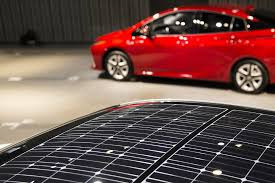
But that’s not all. The kinetic energy wasted when you press the brake is returned to the battery through the regenerative braking system. Even the hot waste heat generated by the motor and battery of electric vehicles is collected by heat pumps for winter heating. Thus, cars are the most realistic model of ‘hybrid harvesting’ that collects various energies such as solar (photovoltaic), movement (mechanical), and heat (thermoelectric) in one place.
Innovations in Smart Homes and Industrial Sites: Piezoelectric Effect
Now, let’s head to our living room. What if there was a switch without wires or batteries? Germany’s EnOcean has made that imagination a reality.
EnOcean’s wireless switch utilizes the mechanical force we exert when we press it with our fingers. A small piezoelectric element inside the switch generates a tiny amount of electricity from the momentary pressure and sends a wireless signal to turn on the lights. Maintenance costs are nearly ‘0’ as there is no need for wiring or battery replacement.

This is the magic of the piezoelectric effect. This technology also shines in industrial settings. The domestic company Cochips has developed a wireless sensor that harvests vibrational energy emitted by factory machines. Thanks to this, even old machines can become part of a smart factory without complex wiring, and equipment in hazardous areas can be monitored remotely.
Energy Harvesting Inside the Human Body: Medical Devices That Never Run Out
Now, technology is preparing to enter our bodies. Imagine a future where you no longer need risky surgeries to replace pacemaker batteries.
To make this dream a reality, scientists are developing ‘biocompatible’ energy harvesters. Traditional piezoelectric materials (PZT) contained harmful lead, but the DGIST research team has developed a lead-free perovskite (CTO) structure that opens up possibilities for human application.
Furthermore, the KAIST research team has discovered a new method to extract more energy from slow and smooth movements, similar to human motion. The era where the movements and body temperature of our bodies become the power source for medical devices is rapidly approaching.
The Unsung Heroes of Energy Harvesting Systems
It’s not enough for innovative materials to generate energy. Most harvested energy is tiny and erratic. The unsung heroes that tame this ‘wild horse’ of electricity are the Power Management Integrated Circuits (PMIC) and Energy Storage Systems (ESS).

- PMIC (Power Management IC): The ‘brain’ of the system. It elevates the harvested low voltage to usable levels (boosts), safely charges the energy, and manages the entire process of supplying stable power to devices. I like to compare PMIC to a ‘dam manager’ that regulates the water level of a dam. Even if the incoming water (energy) is irregular, it plays a key role in ensuring a consistent amount of water is released.
- ESS (Energy Storage System): The ‘container’ that holds the harvested energy. It acts like a ‘reservoir’ for when the sun sets or the wind stops. Finding the optimal combination between large-capacity rechargeable batteries and long-life supercapacitors is crucial.
Ultimately, the winners in the energy harvesting market will be companies that fully understand the entire system from materials to PMIC and ESS and provide optimal solutions.
Competition Towards the Future: Outlook for the Energy Harvesting Market
How quickly is this market with enormous potential growing? Various market research firms predict that the global energy harvesting market will grow steadily at an annual rate of 9-13%, reaching approximately $3 billion (about 4 trillion won) by 2032.
The key drivers of growth are building/home automation and industrial IoT (IIoT). In both fields, energy harvesting can most effectively solve the problem of ’the difficulty of battery replacement’.
- Regional Trends: Currently, North America and Europe lead the market, but the Asia-Pacific region has the most explosive growth potential.
- Domestic Status: Although South Korea has a small domestic market, it is a ‘R&D powerhouse’ with world-class research institutions and technologically advanced companies. An ’export-oriented’ strategy targeting larger global markets based on technological prowess is essential.
Comparison/Alternatives
Energy harvesting technologies are diverse, but which technology is most effective in which environment? This depends on whether energy is obtained from ‘momentary shocks’ or from ‘continuous state differences’.
| Technology Classification | Key Principles and Advantages | Major Disadvantages and Application Areas |
|---|---|---|
| Piezoelectric | Generates electricity from vibrations/pressure. High energy density, favorable for miniaturization. | Useless in non-vibrating environments. Industrial sensors, wearables, TPMS. |
| Thermoelectric | Generates electricity from temperature differences (Seebeck effect). High durability and stability. | Low efficiency, high cost. Industrial waste heat recovery, automotive. |
| Photovoltaic | Generates electricity from light (photoelectric effect). High power density, mature technology. | Cannot generate power in the absence of light. Solar power generation, IoT sensors. |
| RF (Radio Frequency) | Receives broadcast/communication waves. Always present in the environment. | Very low power density. Low-power IoT sensors, smart cards. |
Conclusion
Energy harvesting technology is the key to ushering in the true Internet of Things era. The footsteps we take, the noise from factories, and the Wi-Fi signals floating in the air will no longer be wasted energy in the world.
-
Key Summary:
- ‘Harvesting’ Energy: Energy harvesting is a technology that converts wasted energy from solar, heat, vibrations, etc., into useful electricity.
- Diverse Application Areas: It is accelerating a battery-free world in various aspects of our lives, including automotive, smart homes, industry, and healthcare.
- Importance of Systems: Not only innovative materials but also PMIC and ESS technologies that efficiently manage and store harvested energy are key competitive advantages.
How about keeping an eye on the development of this fascinating technology? Find out what energy you can ‘harvest’ around you right now.