

The US dollar? It’s more than just one country’s currency. It’s practically the operating system (OS) that runs the global financial system. When you think about it, the current financial system, established after World War II, is dollar-denominated at its core. The US economy, which accounts for a quarter of global GDP, is a given, but with 40% of world trade settled in dollars and nearly 60% of foreign exchange reserves held by countries as rainy-day funds also in dollars, it’s essentially a massive ‘financial infrastructure.’
Of course, this has played a positive role in supplying liquidity and stabilizing the global economy. But frankly, it has given the US an incredible weapon: a powerful lever to move the world economy for its own benefit.
Charles de Gaulle, the former French Minister of Finance, used a striking phrase to describe this status: ’exorbitant privilege.’ A truly accurate observation. When the US needs money, it can simply print more dollars. The whole world accepts them. It’s essentially borrowing money from the entire world at a very low interest rate.
However, there’s a fundamental contradiction hidden here. The monetary policy of one nation (e.g., controlling inflation domestically) clashes with the role of a reserve currency issuer that must supply money to the entire world. Economist Robert Triffin recognized this in the 1960s and named it the ‘Triffin dilemma.’ If ’exorbitant privilege’ is the light, then the ‘Triffin dilemma’ is the shadow that inevitably follows. This article aims to explore everything about the dollar through the lens of these two keywords.

As the 21st century began, questions started to emerge: “Will the era of the dollar last forever?” On the surface, it still appears strong, but looking beneath the surface, the situation is complicated. In fact, it’s quite serious. The US’s massive debt problem, the rapid rise of China, and the geopolitical tensions heightened by the recent Russia-Ukraine war, coupled with technological innovations like CBDCs, present a confluence of challenges.
This article will therefore delve into how these challenges might impact the future of the dollar. We will first examine the ‘historical path dependency’ and the power of the intricate ’network effect’ that propelled the dollar to its current position. Simultaneously, we will diagnose the ‘cracks’ that are shaking the system from within and without to outline future scenarios. Through this journey, we will gain a three-dimensional understanding of the sustainability and limitations of the colossal dollar empire.
Part 1: Blueprint of an Empire (Past)
This section will trace how the US dollar ascended to the throne of global finance. It can be described as a result of a precise strategic calculation and historical coincidence aligning perfectly. Rather than a natural market choice, it’s closer to a structure built by the confluence of American design and reality at a specific moment. And once a path is created, it’s rarely changed. The formidable inertia of ‘path dependency’ begins to operate.
The Bretton Woods Blueprint: Let All Roads Lead to the Dollar
The official inauguration of the dollar empire was marked by the agreement reached in Bretton Woods, New Hampshire, in July 1944. The key question at the time was how to rebuild the global economy, which had been devastated by the Great Depression and two World Wars. What was the state of the US then? With minimal war damage, it was an overwhelming player, holding half of the world’s manufacturing output and more than two-thirds of the world’s gold reserves (a staggering 20,000 tons!).
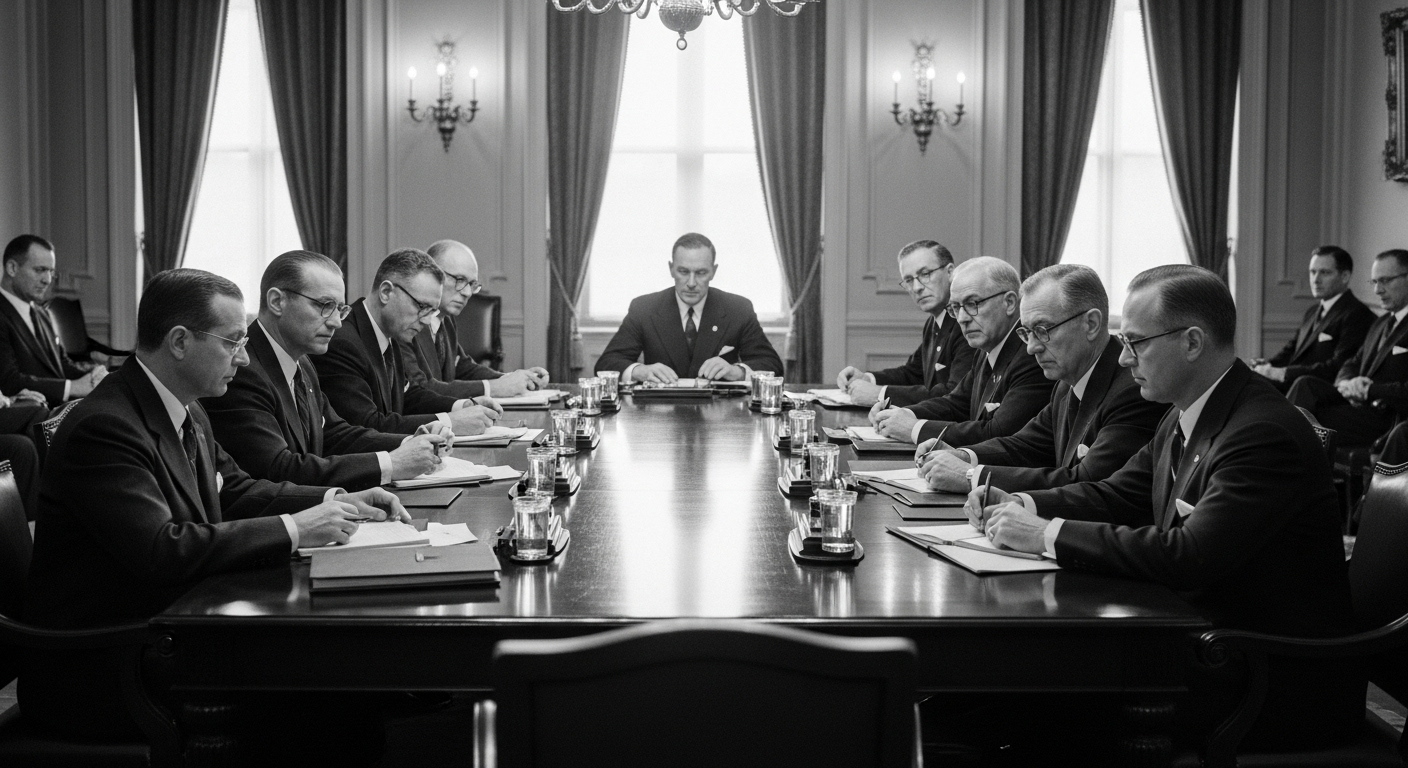
Two brilliant minds sat across the table at this historic negotiation: British representative John Maynard Keynes and American representative Harry Dexter White. Their debate transcended mere technicalities, representing a grand clash of philosophies on how to operate the global economy.
- Keynes’s Dream, ‘Bancor’: Keynes proposed a truly revolutionary idea: creating a new international currency called ‘Bancor.’ The core of this system was ‘symmetrical adjustment,’ which would equally burden countries with trade deficits (debtors) and countries with surpluses (creditors) with the responsibility of resolving trade imbalances. This, he believed, would prevent the deflationary spiral of ruin that had plagued the gold standard.
- White’s Reality, ‘Dollar-Centric Order’: White’s plan, on the other hand, was far more realistic, or more accurately, American-centric. He argued against a new currency, proposing instead that the US dollar, fixed at $35 per ounce of gold, be placed at the center. The burden of adjustment was largely to be placed on the debtor nations.
The result? As everyone knows, White won. It wasn’t just due to America’s superior power. While Keynes’s proposal seemed to harbor a desire to preserve the former glory of the British Empire, White’s plan appeared to be a system centered around the US but open to all.
However, this choice embedded asymmetry and cracks in the system from the outset. The ’exorbitant privilege’ was not an accidental byproduct but was inherently designed into the blueprint from the beginning. Once this intentionally designed system was in place, it created a powerful ‘path dependency’ where everyone followed only that path. Even after the system collapsed, the dollar’s influence retained a structural strength that refused to fade.
| Category | Keynes’s Plan (International Clearing Union) | White’s Plan (International Stabilization Fund) |
|---|---|---|
| Central Reserve Asset | Bancor - Supranational Currency | US Dollar (Pegged to Gold) |
| Role of the Institution | Global Central Bank (Credit Creation) | Stabilization Fund (Limited Lending) |
| Adjustment Mechanism | Symmetrical (Pressure on both Creditors/Debtors) | Asymmetrical (Primarily pressure on Debtors) |
| Underlying Philosophy | Managed Globalism | US-Led Multilateralism |
The Phoenix Rises: Gold is Dead, but Oil Inherits the Throne
The Bretton Woods system, which seemed eternal, faced a crisis after about 25 years. The US, having overspent on the Vietnam War and welfare programs, suffered from chronic deficits. Finally, on August 15, 1971, President Nixon made a bombshell announcement: “The United States will no longer convert dollars to gold at fixed values!” This was the famous ‘Nixon Shock.’ It was the death knell for the Bretton Woods system.
Logically, this should have been a fatal blow to confidence in the dollar. However, the US brilliantly leveraged this crisis. Freed from the shackles of gold, the dollar was tied to a new real asset: ‘oil.’ When oil prices quadrupled in the 1973 oil crisis, the US secretly negotiated with Saudi Arabia, the world’s largest oil exporter. The agreement stipulated that all future oil transactions would be settled exclusively in dollars. This marked the birth of the ‘Petrodollar’ system.

This event fundamentally altered the nature of dollar hegemony. During the Bretton Woods era, the dollar’s value was tied to the limited ‘stock’ of America’s gold reserves. However, the Petrodollar system replaced this with a guarantee based on the daily ‘flow’ of the world’s most crucial commodity: oil. Now, every country in the world needed to buy oil to run its factories, and to buy oil, they first had to acquire dollars. Permanent dollar demand was created.
It didn’t end there. Oil-producing nations, earning vast amounts of dollars, used that money to buy US Treasury bonds. Thanks to the ‘Petrodollar recycling’ mechanism, the US could easily borrow money at low interest rates to cover its deficits, further solidifying the dollar empire’s financial strength.
The Power of the System Manager: The Plaza Accord and the Demise of Competitors
In the early 1980s, the dollar’s value became too high, creating a problem. Consequently, in 1985, the G5 nations met at the Plaza Hotel in New York and agreed to artificially lower the dollar’s value. This was the ‘Plaza Accord.’
While the agreement was successful, it was a disaster for Japan. The yen’s value doubled, severely impacting its export-driven economy and leading to an asset bubble collapse, plunging it into the notorious ’lost decade’ of prolonged recession. The Plaza Accord demonstrated that the US could readily shift the costs of managing the system to other countries, and it served as a crucial lesson for nations like China in the future.

And in 1991, the Soviet Union collapsed. With the demise of the Ruble bloc, which had competed with the dollar during the Cold War, the dollar lost its last geopolitical rival. This ushered in the era of the dollar as the undisputed ‘Unipolar Currency.’
Part 2: The Pressure on the Solitary Ruler (Present)
Let’s move to the present. This section will examine how recent crises, while appearing to shake the dollar system, paradoxically strengthened its position, while simultaneously creating future cracks.
The Paradox of Power: In Times of Crisis, Everyone Seeks the Dollar
The core of the dollar’s power today lies in the ’network effect’: a situation where it’s most convenient and beneficial for everyone to use it because everyone else is using it. This power of the dollar shines even brighter during crises.
There’s the ‘Dollar Smile Theory,’ which suggests that the dollar’s value rises during two extremes: when the US economy is performing exceptionally well, and when the global economy is in crisis. The 2008 global financial crisis was a prime example. While the crisis originated clearly in the US, investors dumped all other assets and flocked to the US Treasury market, which they believed to be the only safe haven. This phenomenon of ‘flight to safety’ caused the dollar’s value to skyrocket.

The 2008 crisis proved that the dollar is not just a ‘safe haven’ but is akin to the ‘plumbing’ of the system from which it’s impossible to escape. The structural reliance on the US market as the only place to turn to during a crisis is the dollar’s power.
| Currency | 2000 | 2008 | 2015 | 2023 |
|---|---|---|---|---|
| US Dollar (USD) | 71.0% | 64.1% | 65.7% | 58.9% |
| Euro (EUR) | 18.3% | 26.2% | 19.1% | 20.1% |
| Japanese Yen (JPY) | 6.1% | 3.3% | 4.0% | 5.4% |
| British Pound (GBP) | 2.8% | 4.2% | 4.7% | 4.8% |
| Chinese Yuan (CNY) | - | - | 1.1% | 2.6% |
| Others | 1.8% | 2.2% | 5.4% | 8.2% |
The System’s Contradiction: ‘Currency Wars’ Driven by Savings Glut
Following the 1997 Asian Financial Crisis, Asian countries desperately began accumulating dollars as a form of ‘self-insurance.’ Their dollar earnings were used to buy US Treasury bonds, keeping US interest rates historically low. Then Federal Reserve Chairman Ben Bernanke called this the ‘Global Saving Glut.’
However, this cheap money, seeking higher returns in the US, eventually flowed into risky assets like subprime mortgages, igniting the 2008 financial crisis. The survival strategy of Asian countries paradoxically installed a financial time bomb in the US.
To manage the crisis, the Fed launched ‘Quantitative Easing (QE),’ flooding emerging markets with cheap dollars. The Brazilian Finance Minister, struggling with soaring currency values and asset bubbles, declared in 2010, “This is an international currency war!” This was the moment the Triffin Dilemma became a reality. It showed that actions taken by the US for its own economy could be disastrous for other countries, and that an era of ’every nation for itself’ had begun.
The Empire’s Achilles’ Heel: Ever-Increasing Debt
In fact, the dollar’s greatest threat comes not from external forces but from within: the US’s ’twin deficits’ (fiscal deficit + trade deficit). Thanks to its ’exorbitant privilege,’ the US has lived beyond its means, spending more than it earns, but the cost has been a snowballing national debt. As of 2024, the US federal debt has surpassed $34 trillion, an immense figure exceeding 120% of GDP.
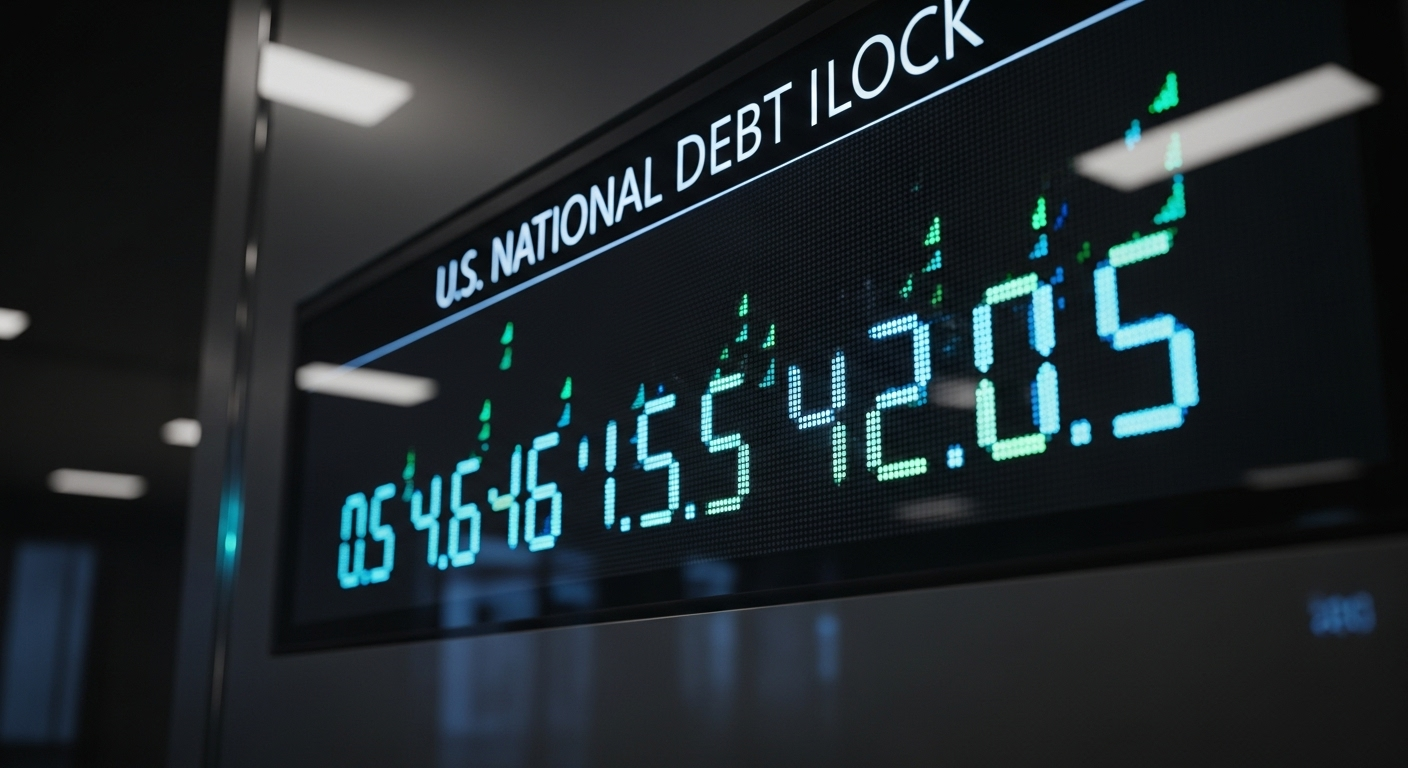
This is a magnified manifestation of the Triffin Dilemma. A reserve currency issuer must run deficits to supply liquidity to the world, but if that debt becomes too large, confidence in the currency can crumble. If global investors begin to doubt whether the US can repay that debt, a runaway dollar sell-off could occur.
Crossing the Rubicon: The Dollar Becomes a Weapon
In February 2022, when Russia invaded Ukraine, the US and its allies froze approximately $300 billion of Russia’s foreign exchange reserves. Seizing the assets of a major power in this manner was unprecedented.
This action sent shockwaves worldwide. Everyone realized that US Treasury bonds, considered the safest asset, were in fact exposed to geopolitical risks. This event poured fuel on the discussions about ‘de-dollarization.’ For countries like China, which have difficult relations with the US, it became a stark reality that their accumulated dollar assets could turn into worthless paper overnight. It became evident that the dollar system was not a neutral infrastructure but a tool of Western power, making the search for alternatives not just an option but a necessity for survival.
Part 3: Outlines of a New Order (Future)
So, what does the future hold? This section will examine the forces challenging the dollar’s dominance and how new technologies are reshaping the landscape.
The Yuan and BRICS: Will Their Dreams Be Realized?
The recently expanded BRICS nations are prominent forces opposing the dollar. However, their true goal is less about replacing the dollar and more about ‘sanction-proofing.’ They are creating a ‘financial lifeboat’ to survive financial sanctions, as seen with Russia.
The reality is a high hurdle. While China’s Cross-Border Interbank Payment System (CIPS) has grown, it still largely relies on the SWIFT network, and the yuan itself faces limitations due to capital controls and low financial market confidence. Becoming a reserve currency requires more than just economic power.
| Indicator | United States (USD) | Eurozone (EUR) | China (CNY) |
|---|---|---|---|
| Global GDP Share (PPP basis) | 15.5% | 11.2% | 18.5% |
| Global Trade Share | 10.4% | 14.7% (Offshore) | 15.0% |
| Foreign Exchange Reserves Share | 58.9% | 20.1% | 2.6% |
| Foreign Exchange Market Share | 88% | 31% | 7% |
| Government Bond Market Size | ~ $27 Trillion | ~ $15 Trillion | ~ $21 Trillion |
| Capital Account Openness | Fully Open | Fully Open | Partially Controlled |
| Rule of Law / Investor Protection | Very High | High | Medium-Low |
Technological Counterattack: CBDCs and the ‘Digital Eurodollar’

The biggest topic among central banks worldwide is undoubtedly Central Bank Digital Currencies (CBDCs). In particular, ‘Project mBridge,’ involving countries like China, has demonstrated the possibility of cross-border remittances without going through the dollar.
Meanwhile, private sector stablecoins (USDT, USDC), pegged to the dollar, are growing rapidly. Interestingly, the US is actively bringing these into its regulatory framework, encouraging issuers to hold US Treasury bonds as collateral. As the stablecoin market grows, so does the demand for US Treasury bonds – a shrewd strategy that leverages a potential threat into a support for dollar dominance. Just as there was the ‘Eurodollar’ in the past, perhaps a ‘digital Eurodollar’ on the blockchain will become a pillar supporting the 21st-century dollar empire.
The Biggest Enemy Within: The Shadow of Protectionism
Perhaps the most significant short-term threat to the dollar comes from the US itself. What would happen if the US adopted extreme protectionist policies? The foundation of the dollar system is free trade and capital mobility, so it would be undermining its own bedrock. Such moves could lead to the erosion of the dollar’s status.
The Eternal Haven: The Return of Gold

| Year | Net Central Bank Purchases (Tons) | Major Buyers |
|---|---|---|
| 2022 | 1,082 | Turkey, China, Egypt, Qatar, Iraq |
| 2023 | 1,037 | China, Poland, Singapore, Libya, Czech Republic |
| Q1 2024 | 290 | Turkey, China, India, Kazakhstan |
Conclusion: The End of the Unipolar Era, and What Comes After
In conclusion, it’s unlikely that a single currency will replace the dollar in the near future, due to the overwhelming size and liquidity of the US Treasury market and the power of the ’network effect.’
However, the era of the dollar’s unquestioned ‘unipolar hegemony’ is now over. Its ’exorbitant privilege’ is gradually being eroded. Internally, there are insurmountable debt issues; externally, there are challenges from China and geopolitical confrontations, coupled with technological innovation. Systemic fatigue is accumulating everywhere.
The future is likely to be a ‘multipolar currency environment,’ not one without dollars, but one with multiple powers competing. In the long term, it will follow a path of ‘Gradual Multipolarity.’ Instead of a sudden collapse of the dollar, it will transform into a ‘hybrid system’ where it shares roles with other currencies like the Euro and Yuan, in line with the global economy splitting into multiple axes.
Of course, the dollar will remain the most important currency, the ‘first among equals.’ But it is no longer alone. It will have to coexist and compete with regional blocs led by the Yuan and Euro, new digital currencies, and traditional safe-haven assets like gold. This new system will be far more complex, and perhaps less stable. An era is dawning that demands a fundamental revision of economic strategies for all of us. The era of the dollar empire, which seemed eternal, is drawing to a close, and a new era of uncertainty and opportunity is opening its doors.
References
- Eichengreen, Barry. Exorbitant Privilege: The Rise and Fall of the Dollar and the Future of the International Monetary System. Oxford University Press, 2011.
- Prasad, Eswar S. The Dollar Trap: How the U.S. Dollar Tightened Its Grip on Global Finance. Princeton University Press, 2014.
- International Monetary Fund (IMF). Currency Composition of Official Foreign Exchange Reserves (COFR).
- Bank for International Settlements (BIS). Triennial Central Bank Survey of Foreign Exchange and Over-the-counter (OTC) Derivatives Markets.
- World Gold Council. Gold Demand Trends Reports.
- Penn Wharton Budget Model (PWBM). The Economic Effects of President Trump’s Tariffs. 2024.
- “Why White, Not Keynes? Inventing the Postwar International Monetary System” - IMF Working Paper
- “Project mBridge: experimenting with a multi-CBDC platform for cross-border payments” - BIS