

Do you think what we are seeing now is a simple economic crisis or geopolitical conflict? In my opinion, this is a different story altogether. This is a truly civilizational transition, where the very foundation of ’trust’ that has barely supported the world for the past 80 years is collapsing.
Introduction: The Illusion of a Single Order and the ‘Crisis of Trust’
Friends, the world we have lived in since 1945 seemed like a single, stable system led by the overwhelming hegemonic power of the United States. But was this truly the ‘standard’ of human history? As a prominent thinker observed, this order was essentially just a temporary ‘patch’ overlaid on a chaotic world. Or, to be more precise, it was a ‘patchwork’ barely stitched together by the twin threads of American military might and dollar hegemony. And now, this is revealing its limitations and causing problems everywhere. What we are witnessing today is a fundamental crisis of trust in centralized institutions like governments, central banks, and international organizations. As the foundation of ‘delegated trust’ that has guaranteed global order for the past 80 years crumbles, the decisive conditions are being laid for the emergence of a new trust system based on distributed code, rather than human promises. This article is divided into three parts to help you understand. Part 1 will examine why the current single hegemony is an exceptional phenomenon and how the historical default has been ‘balance without hegemony.’ Part 2 will dissect the structure of how the United States designed the current hegemony on the two pillars of economy and security. Part 3 will diagnose how this system is collapsing due to internal contradictions (like MAGA) and external challenges (like US-China conflict). Finally, in the Conclusion, we will deeply explore why this geopolitical fragmentation and crisis of trust inevitably lead to the emergence of Bitcoin as a new value system, and how Bitcoin signifies a civilizational transition where ’the system itself becomes trust.’
Part 1: The Historical Default - An Era of ‘Patchwork’ Without Hegemony
Modern people take for granted a world where a single superpower leads the order. But is this truly the case? Historically, a multipolar ‘patchwork’ state where multiple powers maintain a delicate balance has been the norm. This was the historical default.
1.1 The Immutable Geopolitics of Balance of Power
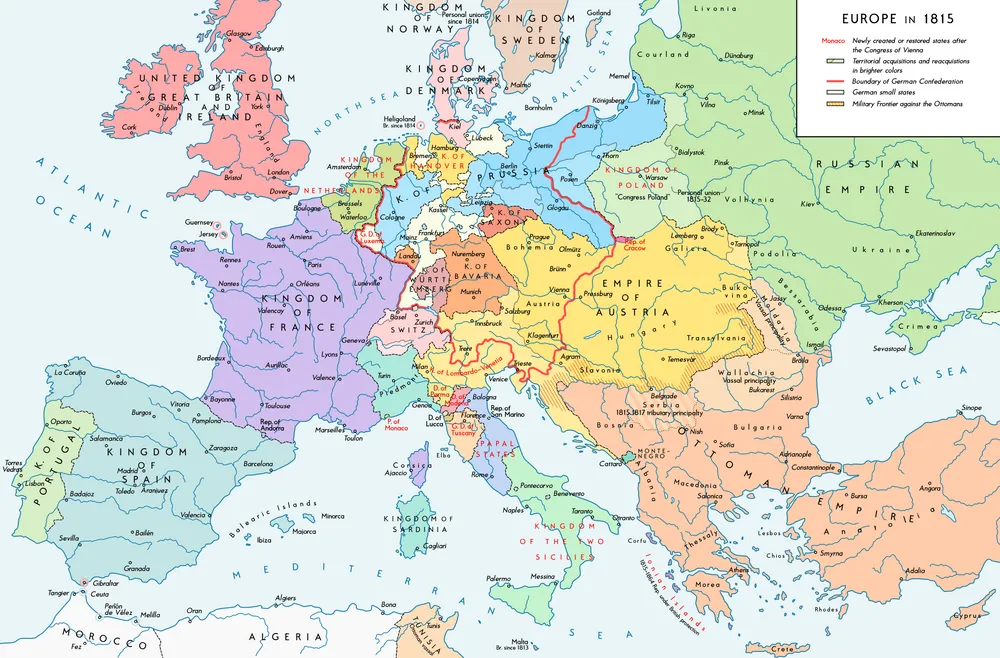
In an anarchic state without a world government, international order has fundamentally been determined by the ‘balance of power’ among great powers. When no single nation’s power is overwhelming, the world naturally reverts to a state where multiple power blocs check and negotiate with each other. The ‘patchwork’ concept mentioned earlier is a modern interpretation of these classic geopolitical theories, offering the insight that the world is inherently closer to a patchwork of unstable pieces.
1.2 A Historical Experiment: The Concert of Europe
Ah, this is a truly fascinating case. The ‘Concert of Europe,’ established after the Napoleonic Wars, also known as the Congress of Vienna system, is the most representative historical example of a multipolar balance of power system. This was an ’experiment in order without hegemony,’ and its successes and failures offer crucial hints for understanding today’s order shift. Secret to Success (Hardware): This system succeeded in preventing a destructive war involving the entire European continent for about 100 years. This was because crises were managed through powerful ‘hardware’ such as diplomatic conferences and collective intervention. Great powers collectively intervened to resolve conflicts when disputes arose. Cause of Failure (Software): However. This seemingly robust hardware of order was ultimately destroyed by a new ‘software’ that swept through the 19th century: the powerful ideology of ’nationalism.’ The Concert of Europe was designed to coordinate the power relations between states, but it lacked the capacity to manage the identity and aspirations of individual nations. The unification of Italy and Germany clearly demonstrated how new software, nationalism, could destroy old hardware of order. This history has significant implications for us today. America’s ‘hardware’ (global military bases, dollar payment systems, SWIFT) remains formidable. However, it is now facing fundamental challenges from a new kind of software: the collapse of trust in existing institutions, the ideology of decentralization, and technological innovation like Bitcoin.

Part 2: The Grand Design of ‘Pax Americana’ and Its Contradictions
So, how exactly was the US-centric world order that emerged after 1945 created? This order was a truly grand design project that institutionalized hegemony on the two pillars of economic dominance and security guarantees, creating a ‘patch’ of ‘stability.’
2.1 Redesigning the Global Economy: The Bretton Woods Blueprint
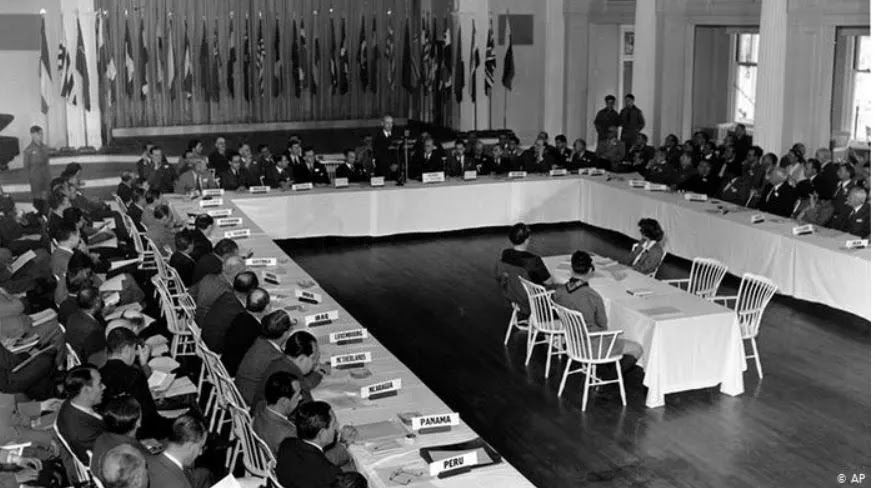
The Bretton Woods Conference in 1944 was the moment the constitution of the modern world economy was drafted. It was the product of a meticulous design aimed at serving US national interests while also providing public goods like stability and liquidity to induce voluntary participation from other nations. The core of this system was the gold-exchange standard. Only the US dollar was exchangeable at a fixed rate of $35 per ounce of gold, and all other countries’ currencies were pegged to the dollar. This made the dollar the center of the global currency system. The International Monetary Fund (IMF) and the World Bank (IBRD) were established as the ’enforcement agencies’ of this new order.
2.2 How the Dollar Became a ‘Security Product’
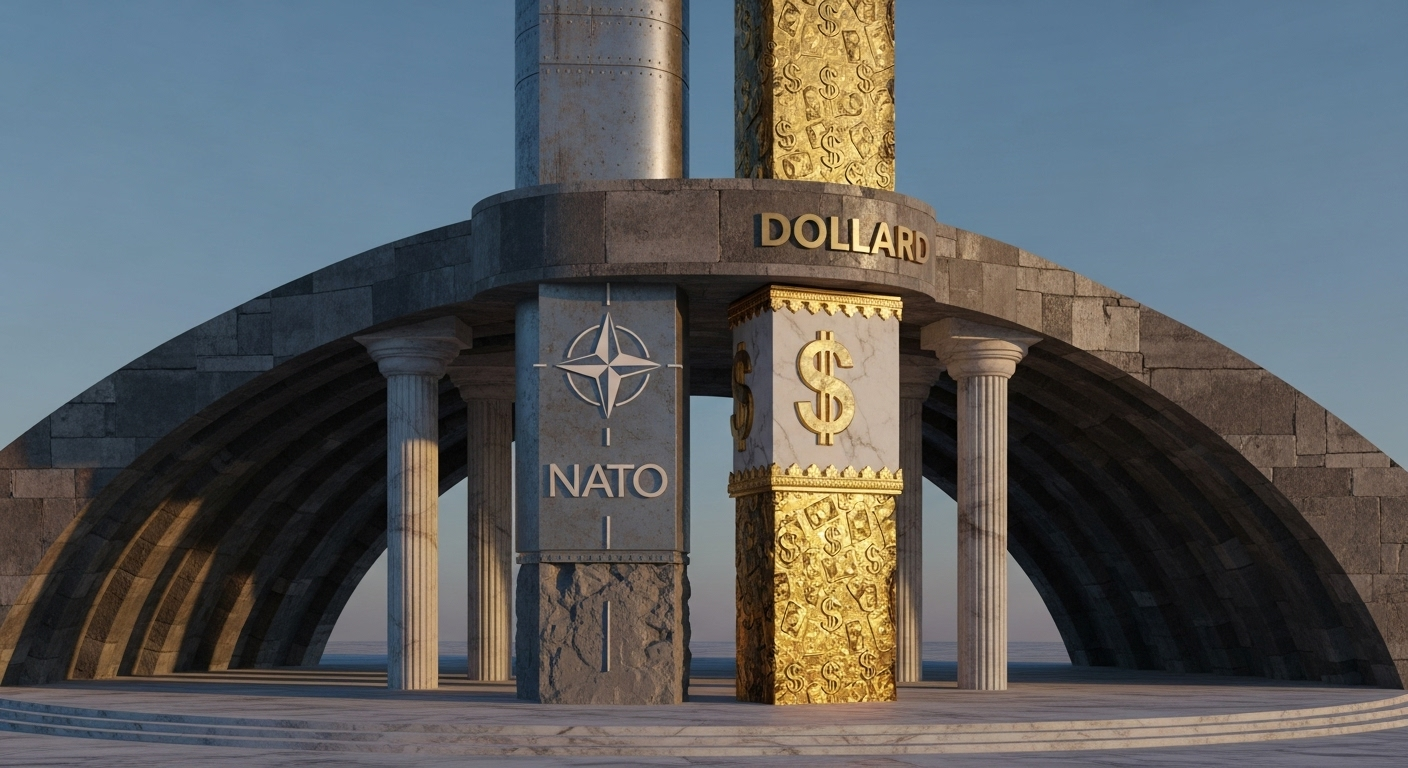
This is truly, truly important. The post-war order designed by the US was built on two powerful pillars: economy and security. The Security Pillar (NATO and the Nuclear Umbrella): NATO (North Atlantic Treaty Organization) was more than just a military alliance to counter the Soviet Union; it was a political institution. As Lord Ismay, the first Secretary General of NATO, famously put it, NATO’s function was to “keep the Soviets out, the Americans in, and the Germans down.” Allies accepted the dollar’s dominance in return for protection under America’s nuclear umbrella. The Economic Pillar (Dollar Standard): This security guarantee was precisely the decisive factor supporting the dollar-centric economic order. In other words, the global dominance of the dollar is essentially a ‘security product.’ In return for receiving security services, allies would recycle dollars earned from trade surpluses back into the US system by purchasing US Treasury bonds. Holding dollars was essentially an implicit cost payment for receiving security services.
2.3 The Built-in Time Bomb: The Triffin Dilemma and the Nixon Shock
However, friends, this system carried a fatal internal contradiction from its inception. This is the Triffin Dilemma. To supply sufficient liquidity (dollars) to the global economy, the US had to continuously run trade deficits. But as these deficits accumulated, trust in the dollar’s value and its convertibility into gold would inevitably decline. It was like a time bomb embedded within the system. Alas, this time bomb exploded on August 15, 1971. Facing enormous war expenditures and inflation due to the Vietnam War, and a flood of gold redemption requests from various countries, led by French President de Gaulle, President Richard Nixon unilaterally announced the suspension of dollar convertibility into gold.
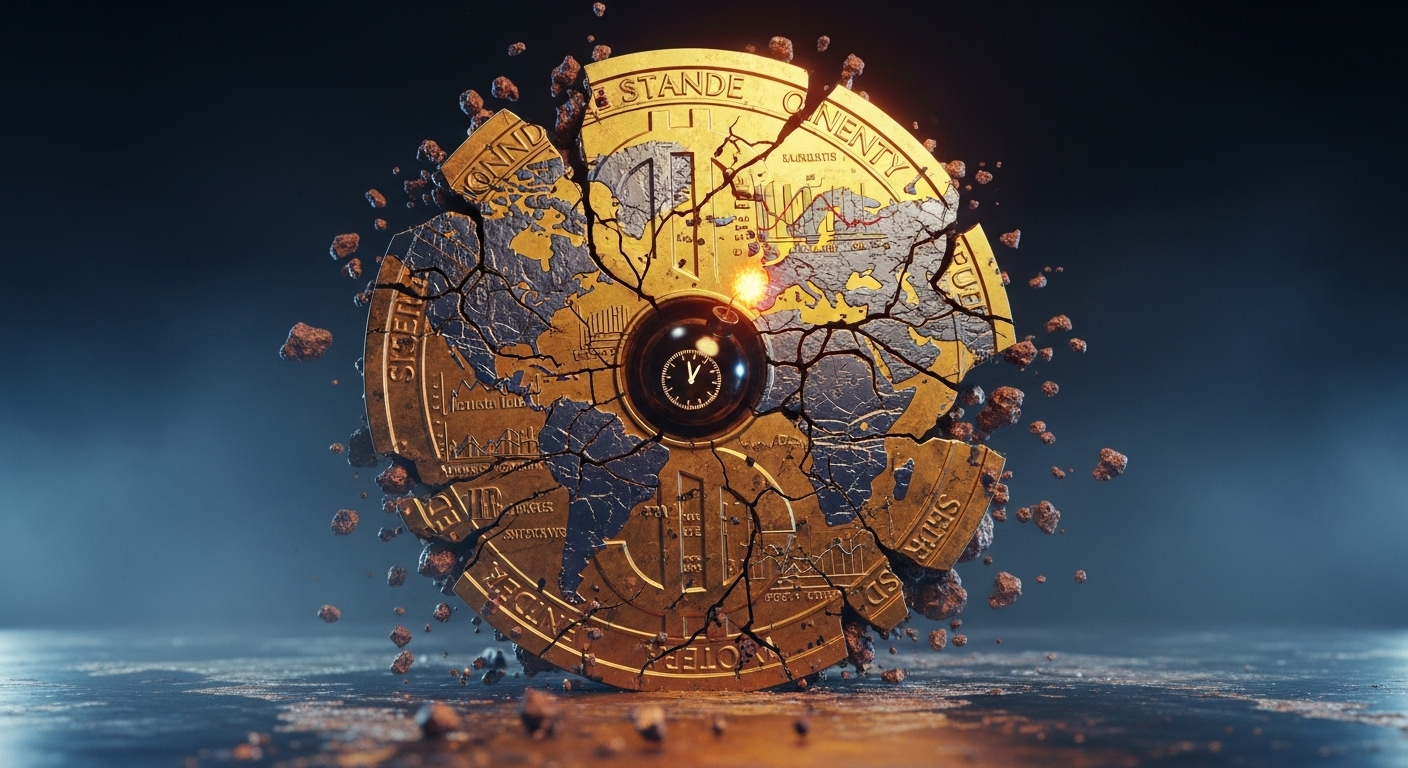
This ‘Nixon Shock’ was a historic moment when the dollar shifted from being backed by a real asset like gold to relying solely on the US’s ‘credit’ and ‘promise,’ becoming a complete fiat currency. I believe this was a truly decisive moment where the foundation of trust moved from the tangible to the ‘promise.’
Part 3: Imperial Fatigue - The Collapse of the Old Order
For over 50 years since the Nixon Shock, the world has precariously teetered on the single thread of American ‘credit.’ But now, that thread is about to snap. As internal contradictions within the system and the rise of external challengers converge, ‘fatigue’ that a hegemonic power can no longer bear is becoming apparent.

3.1 Collapse from Within: The Cost of Empire and MAGA
The biggest cracks began within the United States itself. It’s the political fatigue over the ‘cost of maintaining an empire.’ “Why should we be the world’s police and spend vast sums of money?” “Why are our allies ‘free-riding’ on our security guarantees?” This collective discontent exploded politically in phenomena like ‘MAGA (Make America Great Again)’ and American First policies. Former President Donald Trump pressured NATO allies to fulfill their commitment to spend 2% of their GDP on defense.
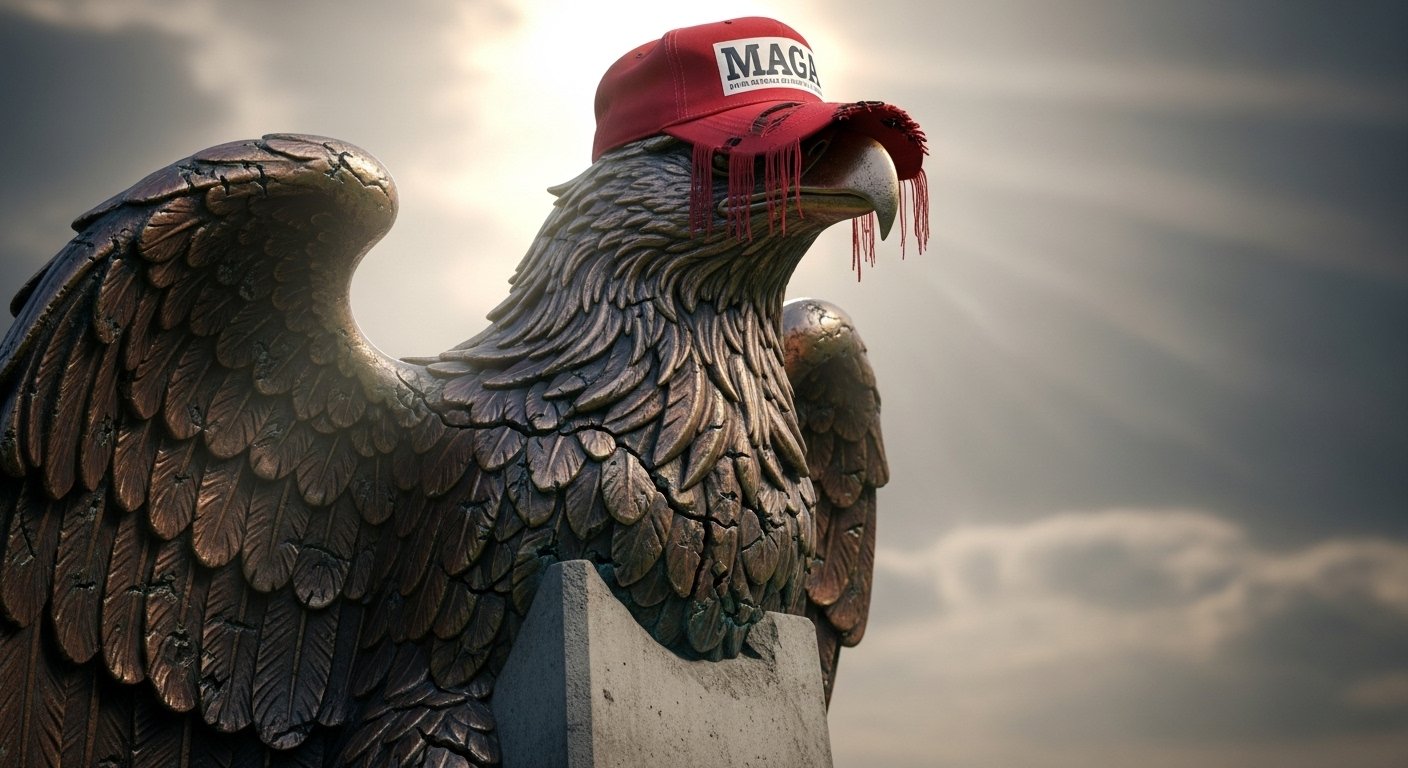
What does this signify? In my view, it means the explicit invoice has finally begun to be issued for the ‘security product’ that the past ‘benevolent’ hegemonic power provided. When the reliability of security services declines and their cost is perceived as too high, customers (allies) will naturally seek other alternatives. The recent observed decrease in the proportion of dollars in foreign exchange reserves is a clear indicator reflecting this geopolitical trust fissure.
3.2 External Challenges: US-China Conflict and the Weaponization of Finance
China’s rise and the ensuing all-out tech and trade war with the United States are decisive factors in ending the unipolar order. The core of the competition is a war for advanced technology. The US is sanctioning Chinese tech companies like Huawei, citing national security, and is reorganizing semiconductor supply chains. More terrifying is ‘weaponized interdependence.’ While economic interdependence was once considered the foundation of peace, it has now transformed into a tool to pressure adversaries, such as excluding certain countries from the dollar payment system (SWIFT). Frankly, this is quite frightening.

The more the US weaponizes the dollar system, the more other countries will ‘Is the dollar truly safe?’ ask this fundamental question, and desperately seek alternatives to the dollar.
3.3 The Hegemon’s Trilemma
Come to think of it, the US is currently caught in a trilemma between three conflicting policy objectives:
- Maintaining global military supremacy (resulting in massive fiscal deficits)
- Rectifying massive trade deficits (protectionism, trade wars)
- Preserving the dollar’s status as a reserve currency (supplying dollar liquidity to the world) These three cannot be achieved simultaneously. Printing money to maintain military supremacy (①) erodes the dollar’s value (③). Protectionist measures to reduce trade deficits (②) reduce dollars in the market (③), weakening its role as a reserve currency. Weaponizing the dollar system (①) leads competitors to abandon the dollar and seek alternatives (weakening ③).
‘Imperial fatigue’ is precisely the process of confronting the strategic reality that one can no longer have everything within this trilemma.
Conclusion: Why Bitcoin is the ‘Inevitable Alternative’?
So far, our analysis has shown that the old order faces a common problem: the collapse of ‘delegated trust.’ Then, what should we trust in this fragmented world?
4.1 The Failure of National Currencies: The Paradox of Dollarization
Dollarization is an extreme outcome that occurs when people’s trust in their own government and central bank’s currency management ability completely collapses. Argentina, due to decades of repeated hyperinflation, has reached the peak of despair in its domestic currency system. In 2000, Ecuador completely abolished its own currency and adopted the US dollar as its official currency. The result was immediate stabilization of inflation, but this came at the cost of completely handing over its currency sovereignty to the US Federal Reserve. While dollarization demonstrates the power of dollar hegemony, it paradoxically proves the existence of a desperate demand for new currency alternatives that are not subject to the subordination of other national sovereignties.
4.2 Rediscovering Trust: “The System Is Trust”
All existing currency systems are inherently built upon an invisible order of ’trust.’ We use banknotes, which are merely paper, as currency because we trust the ‘promises’ of central banks and governments.
But do you remember the 2008 global financial crisis? This event etched into the minds of people worldwide how fragile this ‘delegated trust’ can be. Banks went bankrupt, and governments printed vast sums of money under the guise of bailouts, shifting the crisis.
It was precisely at this moment of trust collapse that Satoshi Nakamoto posed a fundamental question:
“Why do I have to trust someone to make a transaction?”
Bitcoin is the technical answer to this question. It is more than a speculative asset whose price fluctuates on exchanges; it is a new value system that, for the first time in human civilization, has replaced the ‘subject of trust’ from humans or institutions to mathematical cryptography and code.

- Source of Value (Energy and Computation): While the value of fiat currency is based on government promises, Bitcoin’s value is based on the vast amount of energy and computational power invested in the ‘Proof-of-Work’ process. No one can obtain Bitcoin without paying a cost, and its scarcity is guaranteed by code, with a total supply capped at 21 million.
- Method of Trust (Distributed Consensus): The Bitcoin network, without a central server or administrator, allows countless participants (nodes) worldwide to share and verify the same transaction records (blockchain). Once recorded, it is virtually impossible to forge or alter. This makes value transfer between individuals possible without a third-party trust institution like a bank. In other words, Bitcoin represents a paradigm shift where ’the system itself becomes trust.’ It’s a transformation…
4.3 The Only Neutral Asset in a Fragmented World
In conclusion, the ‘fragmented world’ we face today is defined by the following characteristics:
- Absence of Trust: An era where trust between great powers has collapsed and financial systems are weaponized.
- Hegemonic Self-Interest: An era where the issuer of the reserve currency prioritizes its own interests (MAGA) over the entire system.
- Failure of Sovereignty: An era where citizens of countless nations have lost faith in their governments’ ability to manage their currency.
In such times, Bitcoin, which is not controlled by any specific country or institution, whose rules are transparently disclosed, and which no one can arbitrarily change, emerges as a logical and inevitable alternative. Bitcoin is a ‘savings technology’ that protects individuals’ wealth from the collapsing nation-state-based order, and a ‘Neutral Settlement Layer’ between competing great powers. It is a new kind of ‘patch’ for this fragmented world, where for the first time in human history, a network, not a nation, creates its own rules and guarantees trust. Is your wealth prepared for this grand transition?
References
- Summary of the lecture ‘Patchwork of World Systems’ | YouTube
- Cases of Dollarization Introduction and Economic Changes | KDI
- The Future Without Bitcoin Is Impossible: Chapter 5 Detailed Analysis Review | YES24
- The Future Without Bitcoin Is Impossible: Chapter 5 Detailed Analysis Review | YouTube
- Historical Case of the Balance of Power System: Concert of Europe | Namuwiki
- The Collapse of Dollar Hegemony and Bitcoin | YouTube
- Trump’s Demand for Increased Defense Burden Sharing and Allies’ Reactions | VOA Korea
- The Future Without Bitcoin Is Impossible: Chapter 5 Detailed Analysis Review | YES24
- The Future Without Bitcoin Is Impossible: Chapter 5 ‘Patchwork of World Systems’ Book Review Summary | YouTube
- The Future Without Bitcoin Is Impossible: Chapter 5 Detailed Analysis Review | Kakao Gift
- The Future Without Bitcoin Is Impossible: Chapter 5 Detailed Analysis Review | Aladin
- The Future Without Bitcoin Is Impossible: Chapter 5 Detailed Analysis Review | Kyobo Bookstore
- The Future Without Bitcoin Is Impossible: Chapter 5 ‘Patchwork of World Systems’ Book Review Summary | Aladin
- The Future Without Bitcoin Is Impossible: Chapter 5 ‘Patchwork of World Systems’ Book Review Summary | YES24
- France’s de Gaulle and US Gold Redemption Demands | Hankyung
- Cases of Dollarization Introduction and Economic Changes | Yonhap Infomax
- The Future Without Bitcoin Is Impossible: Chapter 5 Detailed Analysis Review | YES24
- Cases of Dollarization Introduction and Economic Changes | Hankyung
- The Collapse of Dollar Hegemony and Bitcoin | YouTube
- The Collapse of Dollar Hegemony and Bitcoin | Kyobo Bookstore
- Process of Establishment and Key Contents of the Bretton Woods System | reportworld
- Trump’s Demand for Increased Defense Burden Sharing and Allies’ Reactions | YouTube
- Trump’s Demand for Increased Defense Burden Sharing and Allies’ Reactions | YouTube
- Trump’s Demand for Increased Defense Burden Sharing and Allies’ Reactions | JoongAng Ilbo
- Causes and Progress of US-China Trade Disputes | Institute of National Security Strategy
- Causes and Progress of US-China Trade Disputes | KISTI
- Professor’s Summary of Chapter 5 ‘Patchwork of World Systems’ from the Book ‘The Future Without Bitcoin Is Impossible’ | YES24
- Causes and Progress of US-China Trade Disputes | Korea International Trade Association
- Process of Establishment and Key Contents of the Bretton Woods System | EBC
- Background and Purpose of NATO’s Founding | NATO
- Professor’s Summary of Chapter 5 ‘Patchwork of World Systems’ from ‘The Future Without Bitcoin Is Impossible’ | Kyobo Bookstore
- The US trade deficit with China, considered a major cause of US-China trade disputes… | Institute of National Security Strategy
- Process of Establishment and Key Contents of the Bretton Woods System | Minplus
- The Collapse of Dollar Hegemony and Bitcoin | YES24
- The Collapse of Dollar Hegemony and Bitcoin | Aladin
- France’s de Gaulle and US Gold Redemption Demands | Strait News
- Causes and Progress of US-China Trade Disputes | Korea Institute for International Economic Policy
- Trump’s Demand for Increased Defense Burden Sharing and Allies’ Reactions | Institute of Unification
- France’s de Gaulle and US Gold Redemption Demands | Wikipedia
- France’s de Gaulle and US Gold Redemption Demands | Namuwiki
- Cases of Dollarization Introduction and Economic Changes | KISTI
- Cases of Dollarization Introduction and Economic Changes | Taijai Future Strategy Research Institute
- Process of Establishment and Key Contents of the Bretton Woods System | Hallym University Department of Chinese Studies
- What are the fundamental causes of the sovereign debt crisis in PIGS countries in the Eurozone and… | Korea Institute of Finance
- Background and Purpose of NATO’s Founding | NATO
- Causes and Resolution Process of the Eurozone PIGS Economic Crisis | Korea Institute of Finance
- Background and Purpose of NATO’s Founding | Sejong Institute
- Background and Purpose of NATO’s Founding | Wikipedia
- Background and Purpose of NATO’s Founding | Namuwiki
- Specific Military Intervention Cases and the Changing Role of NATO After the End of the Cold War… | Britannica
- Process of Establishment and Key Contents of the Bretton Woods System | Wikipedia
- Causes and Progress of US-China Trade Disputes | Institute of National Security Strategy
- Causes and Resolution Process of the Eurozone PIGS Economic Crisis | Korea Discussion
- Causes and Resolution Process of the Eurozone PIGS Economic Crisis | YouTube
- Causes and Resolution Process of the Eurozone PIGS Economic Crisis | Hankyung
- Trump’s Demand for Increased Defense Burden Sharing and Allies’ Reactions | PIIE
- What are the core logic and grounds for President Trump’s demand for increased defense cost sharing from allies… | kinu.or.kr
- Causes and Resolution Process of the Eurozone PIGS Economic Crisis | Daishin Securities
- What are the geopolitical implications and limitations of dollar hegemony argued by the author… | aladin.co.kr
- Background and Purpose of NATO’s Founding | VOA Korea
- Professor’s Summary of Chapter 5 ‘The Illusion of a Single Order’ from ‘The Future Without Bitcoin Is Impossible’ | worldbank.org
- What are the advantages and disadvantages of ‘dollarization,’ where countries abandon their own currency and adopt the US dollar as their official currency… | Hankyung
- Success Factors of the ‘Concert of Europe’ (European Cooperation System) Established After the Napoleonic Wars… | Medium
- In the author’s lecture ‘Bitcoin in the Trump Era, the World Economic Order Is Changing ‘Like This’’… | YouTube
- How did the gold-exchange standard, the core content of the Bretton Woods system, operate… | wikipedia.org
- Timeline of Major Events in the US-China Technology Competition | Brookings Institution
- Background of the surge in US dollar gold redemption demands, the direct cause of the 1971 Nixon Shock… | history.state.gov
- What are the specific causes of the Greek debt crisis, particularly the statistical manipulation during Eurozone membership and… | currencytransfer.com
- What are the specific causes of the Greek debt crisis, particularly the statistical manipulation during Eurozone membership and… | currencytransfer.com
- Timeline of Major Events in the US-China Technology Competition | Wikipedia
- Economic background for Ecuador’s adoption of dollarization in 2000… | worldbank.org
- Economic background for Ecuador’s adoption of dollarization in 2000… | worldbank.org
- Greece economic data unemployment GDP debt to GDP ratio 2008-2025 world bank IMF eurostat | IMF
- Causes and consequences of the Greek debt crisis | CurrencyTransfer
- Greece economic data unemployment GDP debt to GDP ratio 2008-2025 world bank IMF eurostat | Wikipedia
- IMF COFER data global reserve currency composition | DB.nomics
- NATO member states defense spending as percentage of GDP 2024 2025 SIPRI | Wikipedia
- Greece economic data unemployment GDP debt to GDP ratio 2008-2025 world bank IMF eurostat | Bank of Greece
- IMF COFER data global reserve currency composition | IMF
- Greece economic data unemployment GDP debt to GDP ratio 2008-2025 world bank IMF eurostat | Wikipedia
- NATO’s role transformation after Cold War | Univagora
- Nixon Shock and the collapse of Bretton Woods system explained | Wikipedia
- Greece economic data unemployment GDP debt to GDP ratio 2008-2025 world bank IMF eurostat | European Commission
- NATO’s role transformation after Cold War | Brookings Institution
- Trump’s justification for increasing NATO defense spending | NATO
- US-China technology competition timeline | Brookings Institution
- IMF COFER data global reserve currency composition | IMF
- Ecuador economic data inflation GDP growth 1998-2010 world bank IMF | University of Chicago
- US-China technology competition timeline | Wikipedia
- Trump’s justification for increasing NATO defense spending | The White House
- IMF COFER data global reserve currency composition | IMF
- Trump’s justification for increasing NATO defense spending | PIIE
- NATO’s role transformation after Cold War | Britannica
- NATO’s role transformation after Cold War | Wikipedia
- Nixon Shock and the collapse of Bretton Woods system explained | history.state.gov
- NATO member states defense spending as percentage of GDP 2024 2025 SIPRI | SIPRI
- US-China technology competition timeline | USSC
- NATO member states defense spending as percentage of GDP 2024 2025 SIPRI | SIPRI
- Concert of Europe successes and failures | Medium
- Ecuador economic data inflation GDP growth 1998-2010 world bank IMF | University of Chicago
- IMF COFER data global reserve currency composition | IMF
- Nixon Shock: Definition, Causes, and Economic Impact | Investopedia
- NATO’s role transformation after Cold War | history.state.gov
- NATO member states defense spending as percentage of GDP 2024 2025 SIPRI | SIPRI
- Concert of Europe successes and failures | defenceindepth.co
- Trump’s justification for increasing NATO defense spending | war.gov
- Greece economic data unemployment GDP debt to GDP ratio 2008-2025 world bank IMF eurostat | economy.com
- Ecuador economic data inflation GDP growth 1998-2010 world bank IMF | St. Louis Fed
- Concert of Europe successes and failures | historywriterblog.wordpress.com
- US-China technology competition timeline | CSIS
- NATO member states defense spending as percentage of GDP 2024 2025 SIPRI | Statista
- Trump’s justification for increasing NATO defense spending | YouTube
- US-China technology competition timeline | Wilson Center
- Concert of Europe successes and failures | Fiveable
- NATO member states defense spending as percentage of GDP 2024 2025 SIPRI | SIPRI
- Economic impact of dollarization in Ecuador | World Bank
- Concert of Europe successes and failures | fiatlux-day.org
- Ecuador economic data inflation GDP growth 1998-2010 world bank IMF | IMF
- Ecuador economic data inflation GDP growth 1998-2010 world bank IMF | IMF
- Nixon Shock and the collapse of Bretton Woods system explained | Riksbank
- Ecuador economic data inflation GDP growth 1998-2010 world bank IMF | World Bank
- Nixon Shock and the collapse of Bretton Woods system explained | Wikipedia
- The Future Without Bitcoin | (Giant’s Garden)
- Bretton Woods System | Wikipedia
- Congress of Vienna and Concert of Europe | fiatlux-day.org
- End of the Concert of Europe | Fiveable
- The Concert of Europe: The Rise and Fall of the First United Nations | Defence-In-Depth
- [YES24] The Future Without Bitcoin Is Impossible | Kakao Gift
- The Concert of Europe: Context, Features, Achievements, Failures … | Medium
- Balance of Power | Namuwiki
- The Congress of Vienna: Success or Failure? | historywriterblog.wordpress.com
- Currency Composition of Official Foreign Exchange Reserves | IMF Data Brief
- Dollar’s Share of Reserves Held Steady in Second Quarter When Adjusted for FX Moves | IMF
- Bitcoin and the Geopolitics of the Dollar | (Aladin)
- Nixon Shock: Definition, Causes, and Economic Impact | Investopedia
- EXPORT CONTROLS AND US-CHINA TECHNOLOGY … | Brookings Institution
- Impact of the Eurozone Fiscal Crisis on the Global Economy | klca.or.kr
- Economic Indicators Greece | Moody’s Analytics
- PIGS Crisis and the Possibility of Eurozone Collapse | Daishin Securities
- PIGS: Southern European Sovereign Debt Crisis Countries | YouTube
- Bretton Woods goes to the grave | Sveriges Riksbank
- The Evolution of NATO, 1988–2001 | Office of the Historian
- Bretton Woods System | ko.wikipedia.org
- US-China Hegemonic Competition and Our Response Strategies | Institute of National Security Strategy
- IMF/COFER | DBnomics
- South Korea’s Public Opinion on US-ROK Defense Cost Sharing Negotiations | Institute of Unification
- Nixon Shock | en.wikipedia.org
- What caused the Greek financial crisis? | CurrencyTransfer
- Greek government-debt crisis | Wikipedia
- South Korea’s Public Opinion on US-ROK Defense Cost Sharing Negotiations | repo.kinu.or.kr
- Trump’s Five Percent Doctrine and NATO Defense Spending | PIIE
- Defense Costs of 10 Billion Dollars, an Outrageous Demand, a Determined Statement… “There is no courtesy to allies” | YouTube
- Trump: “US has been ripped off trillions of dollars for decades… Defense costs and tariffs are justified.” | JoongAng Ilbo
- Audio Brief: The History of U.S.-China Technology Competition with James A. Lewis | CSIS
- The Innovation Race: US-China Science and Technology Competition and the Quantum Revolution | Wilson Center
- The Future Without Bitcoin Is Impossible | (Kyobo Bookstore)
- Nixon Shock | Namuwiki
- [ST Series - Invisible Economics] Chapter 25: The Dollar Becomes Equivalent to Gold | Strait News
- Germany Withdraws Gold, No Longer Trusting the US | Hankyung
- Data Home | International Monetary Fund (IMF)
- North Atlantic Treaty Organization | Namuwiki
- What is NATO? | NATO
- Nixon and the End of the Bretton Woods System, 1971–1973 | history.state.gov
- Nixon Shock | Wikipedia
- NATO Leaders Pledge to Increase Defense Spending | war.gov
- Bitcoin in the Trump Era: The World Economic Order Is Changing ‘Like This’ | (YouTube)
- Debt-Ridden PIGS… Eurozone Collapse Crisis Re-emerges | Hankyung
- Background and Future Outlook of the Eurozone Fiscal Crisis | Korea Institute of Finance
- [E-book] Bitcoin and the Geopolitics of the Dollar | Yes24
- [Full Version] The End of Dollar Hegemony, Bitcoin Becomes America’s Geopolitical Weapon | (YouTube)
- The Future Without Bitcoin Is Impossible | (YouTube)
- Bitcoin and the Geopolitics of the Dollar | aladin.co.kr