
Tracing the Mystery of the Cross Found at Bulguksa Along the Silk Road
- We examine archaeological and circumstantial evidence supporting the theory of Christianity’s introduction during the Unified Silla period.
- We compare and analyze opposing hypotheses regarding the discovered artifacts and various interpretations in the academic community.
- We gain a new perspective on history through the mysteries left by cultural exchanges in the ancient world.
Did the Thousand-Year Kingdom of Silla Encounter Christianity?
In 1956, a significant artifact was discovered at Bulguksa in Gyeongju, the heart of Silla’s Buddhist culture. It was a granite cross. How could a symbol of Christianity appear in the devoutly Buddhist kingdom of Silla more than a thousand years before Western missionaries arrived on the Korean Peninsula? This question marked the beginning of the intriguing historical mystery known as the introduction of Christianity in Silla.
This article aims to follow this riddle from the perspective of a historical detective, piecing together scattered clues rather than proving a specific hypothesis.
Silla: An International City at the Eastern End of the Silk Road
To understand the possibility of Christianity’s introduction during the Unified Silla period, we must first recognize that Silla was not an isolated kingdom. Although located at the eastern edge of the Eurasian continent, Silla was an important participant in a vibrant international exchange network.
Ulsan Port: A Gateway to the World
Ulsan Port, the international trade port of Silla at the time, was a place frequented by merchants from the Tang Dynasty, Japan, and even distant Arabia. Silla imported gems, spices, and other goods from the West via sea routes, and in this process, the name Silla became known even in the Arabian world.
Close Exchanges with the Tang Dynasty
Silla dispatched numerous envoys, students, and monks to the Tang Dynasty. They had many opportunities to experience the contemporary global culture while staying in the Tang capital, Chang’an. Such human exchanges were a direct channel for new ideas and religions to flow into Silla.
Treasures from the West Found in Royal Tombs
In the tombs of the highest ruling class, such as the Hwangnamdaechong in Gyeongju, numerous glass vessels made in Rome and Persia have been discovered. This provides archaeological evidence that material and cultural connections existed between Silla and Southwest Asia and Europe.
Whispers from the West: Circumstantial Evidence of Christianity in Silla
In the Tang Dynasty, Silla’s most important trading partner, there exists decisive circumstantial evidence supporting the theory of Christianity’s introduction in Silla.
The Nestorian Stele Erected in the Tang Capital
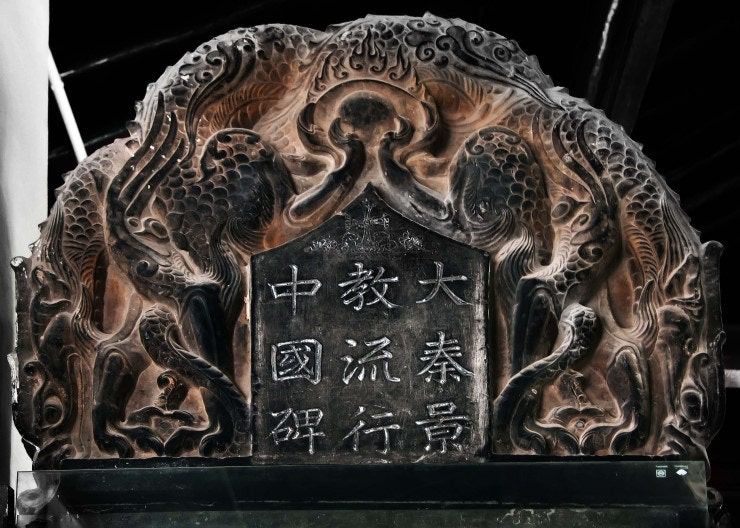
The ‘Daejin Gyeonggyo Yuhang Junggukbi (大秦景敎流行中國碑)’ erected in 781 in the Tang capital Chang’an is the most important clue. ‘Gyeonggyo (景敎)’ means ’the religion of light’ and refers to Nestorian Christianity (Eastern Church) as it was known in China. This stele clearly proves that during the peak of exchanges between Silla and Tang, a Christian community officially recognized existed in the heart of the Tang Dynasty.
Foreign Statues Guarding Royal Tombs
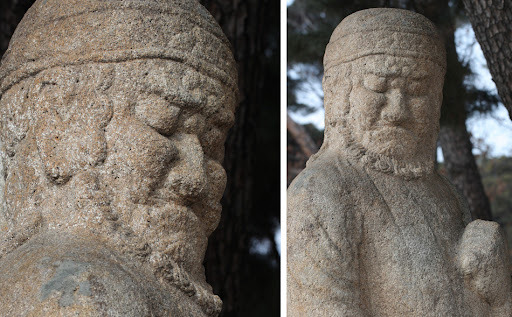
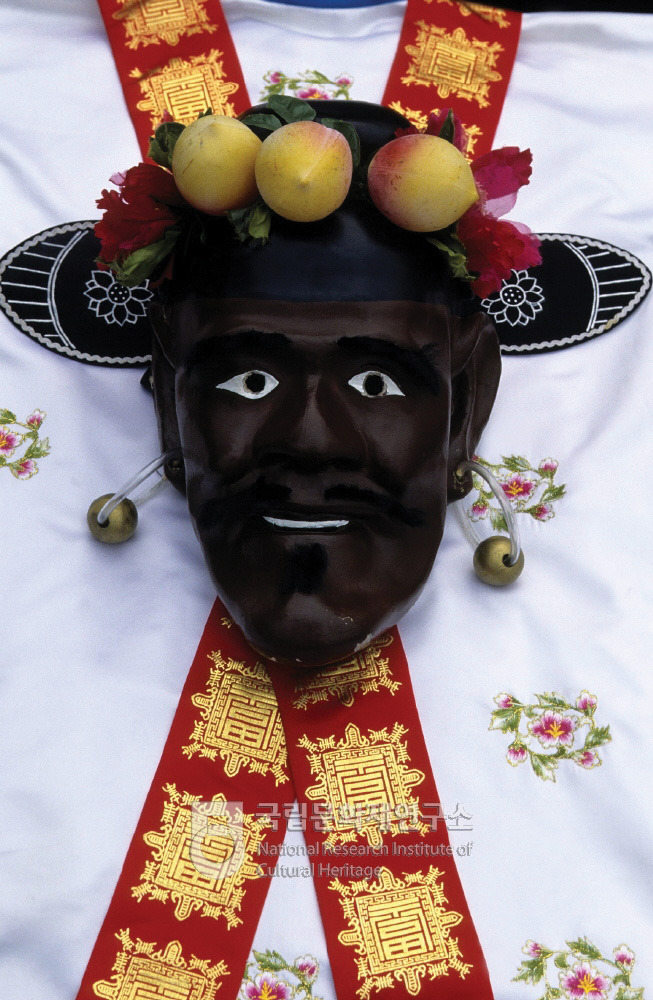
At Gyeongju Gwaereung (the tomb of King Wonseong), there stands a stone guardian with deep-set eyes, a high nose, and curly hair, typical of a ‘Western person.’ This suggests the presence of Arabs or Persians who integrated into Silla society and exerted influence, connecting to the ‘Cheoyong’ legend in the Samguk Yusa.
These circumstances suggest that if Christianity were introduced to Silla, it was likely known only to a limited elite class familiar with foreign cultures, rather than the general populace.
The Center of Controversy: Artifacts Discovered in Gyeongju
Now, let’s examine the core evidence for the theory of Christianity’s introduction in Silla one by one.
Evidence 1: The Stone Cross from Bulguksa
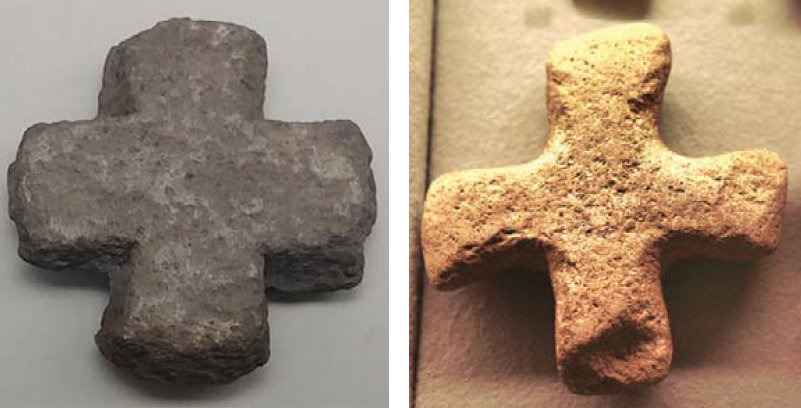
The granite stone cross discovered at Bulguksa in 1956 is in the form of a Greek cross with equal lengths, matching the style predominantly used by the Eastern Church to which the Nestorians belonged. Additionally, bronze cross-shaped ornaments have also been found in Gyeongju.
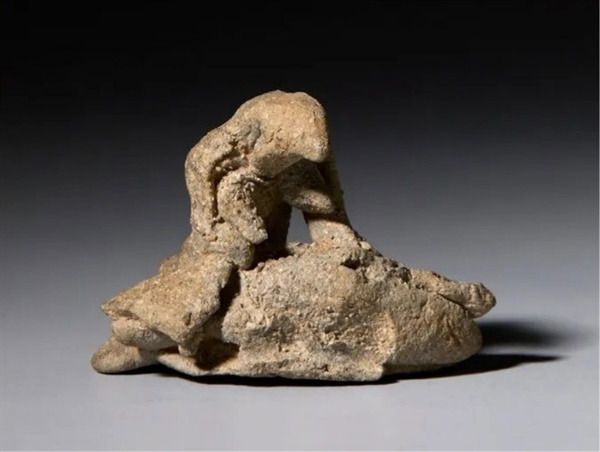
Evidence 2: The ‘Silla Virgin Mary’ Terracotta
A small terracotta depicting a woman holding a baby is interpreted as a ‘Virgin and Child’ representation. Considering that the Nestorian Church in China at the time borrowed Buddhist and Taoist terminology, there are claims that it could be a ‘Mary-Kannon statue’ combined with the Buddhist belief in Kannon. This religious fusion is also reflected in the cross atop the lotus pedestal on the Gyeonggyo stele.
| Evidence Type | Specific Artifact/Phenomenon | Claim of Christian Connection |
|---|---|---|
| Direct Archaeological Artifact (Gyeongju) | Bulguksa stone cross and other cross-shaped ornaments | Direct evidence found in the Silla capital from the 8th to 9th century, preferred Greek cross form of the Nestorians. |
| ‘Silla Virgin Mary’ / ‘Mary-Kannon’ terracotta | Similar to Virgin and Child, interpreted as a product of the syncretism of Christianity and Buddhism in Asia (Virgin Mary + Kannon). | |
| Circumstantial Archaeological Artifact | Gwaereung stone guardian | Distinct ‘Western’ features prove human exchanges or artistic awareness with the Western world. |
| Roman/Persian glass vessels excavated from royal tombs | Confirms connections through the Silk Road trade network, aligning with the routes of Nestorian missionaries. | |
| External Literature/Epigraphic Evidence | Chinese Xi’an Gyeonggyo stele | Proves the existence of a contemporary large-scale Gyeonggyo community in the capital of Silla’s main diplomatic partner, the Tang Dynasty. |
| Folklore/Literary Evidence | Cheoyong legend | Cheoyong, who warded off evil spirits while interacting with the king, is interpreted as a folkloric memory of foreigners from Persia or Arabia. |
Counterarguments and Alternative Interpretations of Artifacts
While the theory of Christianity’s introduction in Silla is intriguing, it is not the consensus in the academic community. The strongest counterargument is the ‘silence testimony’ that there is not a single line of Christian-related records in historical texts such as the Samguk Sagi or Samguk Yusa. Additionally, alternative interpretations of the artifacts are also quite persuasive.
| Artifact | Claim of Christian Introduction | Alternative Hypothesis |
|---|---|---|
| Stone Cross | Greek cross of the Nestorians | Design of the Buddhist ‘Vajra’ or temple railing decoration. |
| ‘Virgin Mary’ Terracotta | Virgin and Child, Mary-Kannon statue | Buddhist ‘Hariti (Goddess of Children)’ or Silla’s indigenous Earth Mother belief. |
| Gwaereung Stone Guardian | Actual model of a Western person | Exotic representation of the Buddhist guardian deity, the Four Heavenly Kings. |
Ultimately, the artifacts from Bulguksa have limitations as they were not recovered through controlled excavations, making it difficult to scientifically verify their exact excavation locations or dates.
When I first encountered this story, it felt like a historical mystery novel. What possibilities do you see among these conflicting pieces of evidence?
Conclusion
In tracing the mystery of the introduction of Christianity in Silla, it is challenging to reach a clear ‘guilty’ or ’not guilty’ verdict. However, we can arrive at the following reasonable conclusions:
- Key Point 1: There is no evidence of an independent Christian community. No decisive evidence has been found to suggest that churches or organized denominations existed in Silla.
- Key Point 2: Limited contact among the elite is quite possible. It is highly likely that diplomats or students from Silla encountered Gyeonggyo through active exchanges with the Tang Dynasty.
- Key Point 3: It may have been introduced as a cultural motif rather than a religion. Symbols like the cross or Virgin Mary may have entered Silla not as part of a religious system but as exotic artistic forms or cultural artifacts, assimilating into existing culture.
Ultimately, the artifacts discovered in Gyeongju remain whispers of mystery from the past. This mystery shows us how closely connected the ancient world was and invites us to imagine possibilities beyond known history.
Next Action Suggestion (CTA): If you have the opportunity to visit Gyeongju, be sure to stop by the National Gyeongju Museum to see the controversial ‘Virgin Mary’ terracotta and cross artifacts up close. It will be a unique experience to confront the mysteries that came along the Silk Road a thousand years ago.
References
- Christian (Gyeonggyo) related artifacts discovered in Silla - Religious Thought link
- [Did this happen in our history?] A stone cross discovered in Gyeongju… Did Silla people believe in Christianity? link
- Did the Unified Silla encounter ‘Gyeonggyo’? - Korean Christian Newspaper link
-
- Relationship with the Tang - Our History Net link
- Daejin Gyeonggyo Yuhang Junggukbi - Wikipedia link
- The model of the ‘rugged face’ of the exotic statue at Gyeongju Gwaereung | Yonhap News link
- Is the stone cross pattern from Bulguksa evidence of ancient Christianity? - Beopbo Newspaper link