
In part 3, I briefly mentioned that DeepSeek founder Liang Wenfeng is a graduate of Zhejiang University.
However, following this series to the end, I realized that single line was part of a much larger story.
China didn’t just stumble upon AI talent by accident; for decades, the state has been designing a pipeline that makes the emergence of such talent inevitable.
In this installment, I will trace that blueprint from start to finish.
Having examined policies, factories, AI models, and finance, the final piece of the puzzle was understanding how the people who drive all of this are cultivated.
College at 15, PhD in their 20s: USTC’s ‘Teenager Class’
The symbol of China’s genius cultivation system is the ‘Teenager Class’ (Shaonianban).
It is an undergraduate program for prodigies around the age of 15, operated by six prestigious universities across Beijing, Zhejiang, Jiangsu, Shaanxi, and Anhui.
By Korean standards, this is a system where middle school or high school freshmen sit in university lecture halls—a concept that is hard to imagine.
Most famous is the program at the University of Science and Technology of China (USTC) in Anhui, often called the ‘KAIST of China.’ It was the first of its kind, established in 1978 at the suggestion of Nobel laureate Dr. Tsung-Dao Lee. The average age of the first cohort was 14, with the youngest being just 11.
USTC itself is no ordinary university.
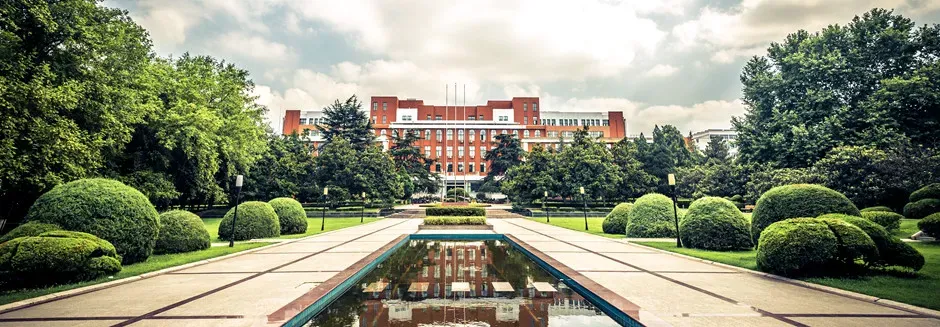
Founded in Beijing in 1958 to foster scientific talent, it was relocated to Hefei, Anhui in 1970 due to the Cultural Revolution. Despite limiting enrollment to about 1,860 students per year to maintain elite standards, it is highly dense: for every 1,000 bachelor’s graduates, it produces one academician (yuan-shi) and about 700 master’s or doctoral degree holders.
Professor Pan Jianwei, who led the research on the quantum computer ‘Zuchongzhi’—discussed in part 4—is also from this school. While the campus is spread across six locations, the Teenager Class students take courses alongside those in science, humanities, and medicine at the main campus. The quantum security from part 4 and the talent cultivation in this part are rooted in the same institution.
For the first two years, students do not declare a major, instead focusing on foundational subjects like mathematics and physics to build ‘research stamina.’
Afterward, they choose a specific field and often complete their PhD within 3–4 years. Finishing their studies in their early 20s means that while their Korean peers are stressing over high school entrance exams, these students are already immersed in research, and by the time their peers enter college, they are already founding tech companies or diving into national strategic research.
Why the Eightfold Increase in Enrollment?
It is worth noting that the scale of the Teenager Class has expanded eightfold over the last decade.
From its inception in 1978 until 2009, enrollment hovered between 40–50 students. This spiked to around 200 starting in 2010, and in 2024, it reached a record high of 380. With last year’s quota also at 375, it is clear that government interest remains high.
I don’t believe this expansion is a coincidence.
Analysts suggest that as China accelerated its efforts to foster AI and semiconductor talent, the Teenager Class was re-evaluated as a strategic national resource.
The early 2010s overlapped with China preparing industrial advancement strategies like ‘Made in China 2025,’ and the recent re-expansion aligns with the timing of intensified U.S. semiconductor and AI export controls.
It is logical to conclude that the desperation to produce top-tier talent domestically led to the expansion of these early-selection programs. As it becomes harder to source talent from abroad, the focus has shifted toward cultivating more people from a younger age internally.
However, as the number of universities operating these classes has recently shrunk from six to three and the enrollment size is being capped again, some argue that its function is narrowing from a mass-talent-cultivation tool to an elite track for identifying and managing the absolute top tier.
It seems to be a continuous balancing act between quantitative expansion and qualitative management.
The ‘Strong Foundation Plan’: Early Selection on a National Scale
If the Teenager Class is for the tiny minority, the device that filters top-tier students from a much wider base is the ‘Strong Foundation Plan’ (Qiangji Jihua). Originally a system where universities autonomously recruited excellent students, it was replaced in 2020 by the stricter ‘Strong Foundation Plan’ following concerns about fairness.
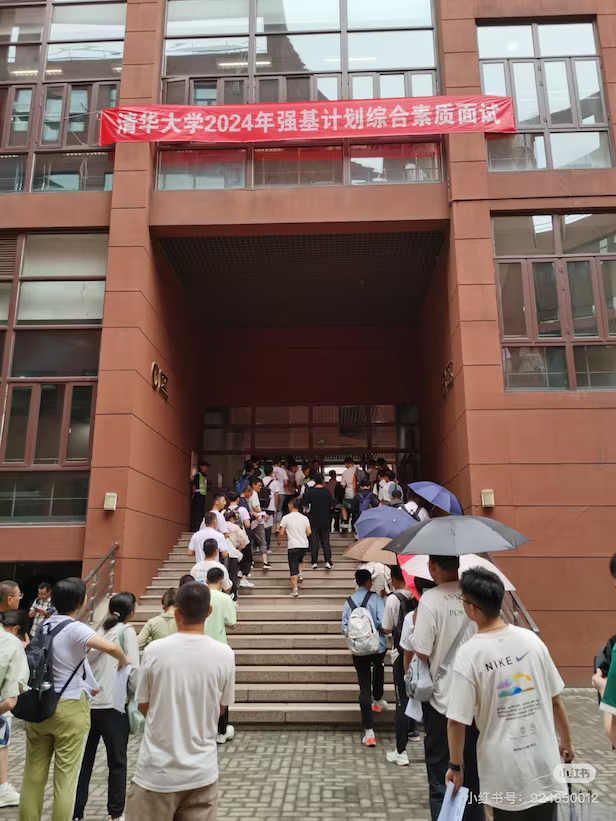
This is a system where top-tier universities like Tsinghua and Peking University recruit top talent early in basic sciences, humanities, AI, computer science, and electronic information.
The scale is significant. As of 2023, 26% of Tsinghua’s freshmen and a staggering 29% of Peking University’s freshmen were admitted through this plan. Since one out of every three or four freshmen is evaluated not just on their standard Gaokao score but on their specialized aptitude in basic disciplines, the impact is substantial.
Students admitted through this plan are restricted in their ability to change majors or switch to non-basic science/humanities fields, reflecting a design intent to narrow their career paths early and focus them intensely on those domains.
Combined with the ‘New Gaokao’ (the Chinese college entrance exam, using a 3+1+2 format) that structures entry into STEM, and the Teenager Class track, some students are effectively experiencing university-level lab projects as early as late high school.
One research institute analyzed that while the Ministry of Education manages the total undergraduate enrollment, this system provides institutional autonomy for universities to design their own curricula and programs based on industrial demand. This structure—where the central government sets the framework and universities handle execution—bears a resemblance to the resource allocation method of the 15th Five-Year Plan examined in part 1.
Yao Class and Turing Class: Elite Tracks for AI
Once they enter university, even narrower special tracks await. The most representative is Tsinghua’s ‘Yao Class’.
Created by Professor Andrew Yao, who won the Turing Award (the ‘Nobel Prize of Computer Science’) in 2004, it is known as a gathering of the world’s most brilliant undergraduates. Peking University has a corresponding ‘Turing Class’. A professor interviewed for the Turing Class once said, “We are simple people. We just want to be really good at AI, and we want to teach our students to be the same.” It is a method of pouring the best education into the best talent, unconstrained by equity concerns with other departments.
Since the Turing Class was established, there has been an effort to spread its success elsewhere. After its internal education system proved successful, Peking University reportedly expanded it beyond computer science to humanities and social sciences, aiming to boost AI education across the entire university. It serves as a laboratory and a standard model, spreading verified methods from an elite track to the entire campus. This diffusion strategy mirrors the logic of the Strong Foundation Plan: conduct experiments for a tiny minority, and once success is verified, gradually expand the model. I get the impression that this pattern is being repeated throughout the entire education system.
The results are evident in the numbers.
Looking at the number of authors of papers published at top-tier international AI conferences (ICML, NeurIPS, ICLR) by institution, Chinese institutions account for 31 of the top 100, second only to the U.S. (37). Among them, Tsinghua ranked 2nd, and Peking University and Zhejiang University tied for 6th. This means universities are at the heart of China’s AI ecosystem.
Tsinghua had already laid this foundation even before the Chinese government officially designated AI as a core national future technology in 2018. Recently, there was news that Tsinghua had released the first comprehensive university-level guidelines on how to utilize AI in education, which can be interpreted as an attempt to redesign the very way talent is cultivated using AI.
The Brain Supply Chain: Designing the Entire Life Cycle
The concept that ties all these tracks together is the ‘Brain Supply Chain.’
It means the state directly designs talent specialized for every stage of the AI value chain, from algorithm design to data preprocessing, model training, and industrial application. One research institute summarized this as a ‘Life Cycle × Value Chain’ model.
From early selection in primary and secondary education to university special classes and subsequent collaboration with big tech firms, a person’s entire growth process is structured like a supply chain.
This concept is easy to understand if you compare it to a parts supply chain.
Just as the ‘Dark Factory’ examined in part 2 procures parts to assemble finished products,
this brain supply chain identifies raw talent in primary and secondary education,
refines them in the Strong Foundation Plan and Teenager Class,
processes them into near-finished products in the Yao and Turing Classes,
and finally connects them to big tech firms, the final point of demand.
They have designed the process of raising a person step-by-step, just like an industrial supply chain.
While using the term ‘supply chain’ for humans might sound cold, it is an accurate metaphor given that each stage acts as a feeder for the next.
The results of this strategy are clearly visible in patent and paper statistics.
Analysts note that China accounts for over 23% of global AI papers and around 70% of AI patents, and this full-cycle talent strategy is cited as the driving force.
With a structure where big tech firms like Tencent collaborate with universities to cultivate talent specialized for the entire AI value chain, the career path after graduation is already mapped out.
Whether it’s algorithm designers for research labs, data preprocessing experts for industrial sites, or model training specialists for big tech research teams, the system provides a sense of direction based on the ‘grain’ of each individual’s talent.
The Proof: Liang Wenfeng
The most concrete example that this system actually works is DeepSeek founder Liang Wenfeng.
As seen in part 3, he pursued a bachelor’s in electronics and a master’s in information and communication engineering at Zhejiang University in Hangzhou.
While Liang did not go through elite tracks like the Teenager Class or the Strong Foundation Plan, it is noteworthy that Zhejiang University itself grew within this national-level STEM cultivation current. Considering he spent his graduate years experimenting with applying AI to quantitative investing before founding DeepSeek, his path can be read as one where he applied the foundational skills learned at school to the industrial field on his own.
In the industry, Liang’s emergence is not seen as a fluke of one eccentric genius, but as a result aligned with the government’s AI talent strategy. It is a result of a special class system that gathers prodigies from across the country to raise them like an elite force, simultaneously running with a strategy to broaden the base by establishing AI departments in over 580 universities nationwide.
This two-pronged strategy of ’elite force’ and ‘broadening the base’ is the key.
If tracks like the Teenager Class, Yao Class, and Turing Class cultivate the top 1% with extreme precision, the general AI departments at 580+ universities create a much larger labor pool underneath.
The fact that talent like Liang Wenfeng can stand out without going through an elite track is proof that this base is sufficiently thick.
Both Wang Xinxing, the founder of Unitree from part 2, and Liang Wenfeng from part 3 are figures born from this national-level educational design.
The Shadow of the System: Teenager Class and Strong Foundation Plan
However, this system is not without its shadows.
This is where it stands in direct contrast to the youth unemployment discussed in part 5. While a small elite who enter college at 15 and become PhDs in their early 20s receive full-scale state support, one in seven young people on the other side of the spectrum cannot find a job, leading to the creation of self-deprecating slang.
The fact that the pre-Strong Foundation Plan autonomous recruitment system was abolished due to fairness controversies shows the equity issues that these early-selection systems inevitably carry.
While a strategy of concentrating resources on the top tier may help national competitiveness, it can represent another form of inequality for the majority left outside.
One expert offered an interesting critique of this elite education.
He argued that if talent is scarce, simply creating more graduate schools to graduate them faster or forcing AI pre-learning from a younger age is not the answer. The key, he points out, is to cultivate foundational learning capabilities to peer through phenomena and a spirit of challenge to create new changes that others haven’t. It seems that USTC’s practice of not declaring a major for the first two years to focus on basic studies aligns with this concern. It is a design that prioritizes foundational strength over speed.
This is also a suggestion for Korea’s talent policy; it is a message that as competition in cutting-edge strategic technologies like AI, bio, and quantum is ultimately a competition of talent, we must break free from old habits.
Another side effect of this early-selection system is the lowering of the age for entrance exam competition.
Students and parents in the top tier feel the pressure to start preparing for the Teenager Class or Strong Foundation Plan as early as middle school. Just as the competition for specialized high schools and gifted schools in Korea has shifted to a younger age, the more these early-selection tracks in China expand, the more likely it is that competition at earlier stages will intensify. The fact that the Teenager Class quota has increased eightfold likely means the number of students and parents preparing for it has also grown; it is worth noting that the burden borne by the remaining students who fall out of that competition is not well captured in statistics.
From part 1 to part 6, this series has traced the pieces of China’s great transformation—policy, factories, AI models, quantum security, the shadows of the economy, and the flow of money.
Part 7 told the story of the people who create all those pieces—how the brains themselves are cultivated.
Policies set the direction, and factories, AI models, and financial infrastructure materialize that direction, but it is ultimately people who design and operate it all.
Thinking that a 15-year-old selected for the Teenager Class could, in 20 years, become a bureaucrat designing the next version of ‘New Productive Forces’ policy, an engineer operating a Dark Factory, or a founder creating the next DeepSeek, helps one understand why this talent pipeline is so meticulously designed.
Comparing this to the situation in Korea brings many thoughts to mind.
While Korea has systems like science gifted schools and early admission to KAIST, there is a large gap in scale and national resource commitment compared to the pipeline connecting China’s Teenager Class, Strong Foundation Plan, Yao Class, and Turing Class.
Korea’s gifted schools and early KAIST admissions are closer to individual school-level programs, and there is no structure where the state meticulously designs the subsequent career path.
In contrast, China is different in that it connects a person’s entire growth path—from primary/secondary selection to university special classes and post-graduation industrial placement—with national strategic industries. Most importantly, China has prepared clear points of demand at the end of this pipeline: national strategic industries (semiconductors, AI, robots).
The task of raising talent and the task of growing the industries that will use that talent are progressing simultaneously within the same policy design.
In the next part, I plan to conclude this series by examining the strategies Korea can choose when facing all these trends—such as the ‘hinge theory’ and early warning systems for supply chains.
The final question will likely be: what position can Korea take when facing all these pieces—policy, factories, AI, quantum, economy, finance, and talent?
What I’ve confirmed while coming this far is the fact that none of these pieces were accidental.
References
- Why China Increased the Quota for its 'Genius Factory' Eightfold... How China Raises Geniuses
- Is the Era of 'Studying Abroad in China' to Learn AI Coming? Chinese Prestigious Universities Emerging as Forward Bases for Tech War
- 40,000 AI Talents Pouring Out Every Year in China... Gathering Geniuses Separately to Train an Elite Force
- Learning AI from Elementary School to University... China Reflects it in Teacher Qualification Exams
- China's Scientific and Technological High-Level Talent Policy Directions and Implications