
Beyond Simple Racing: The Eternal Laboratory
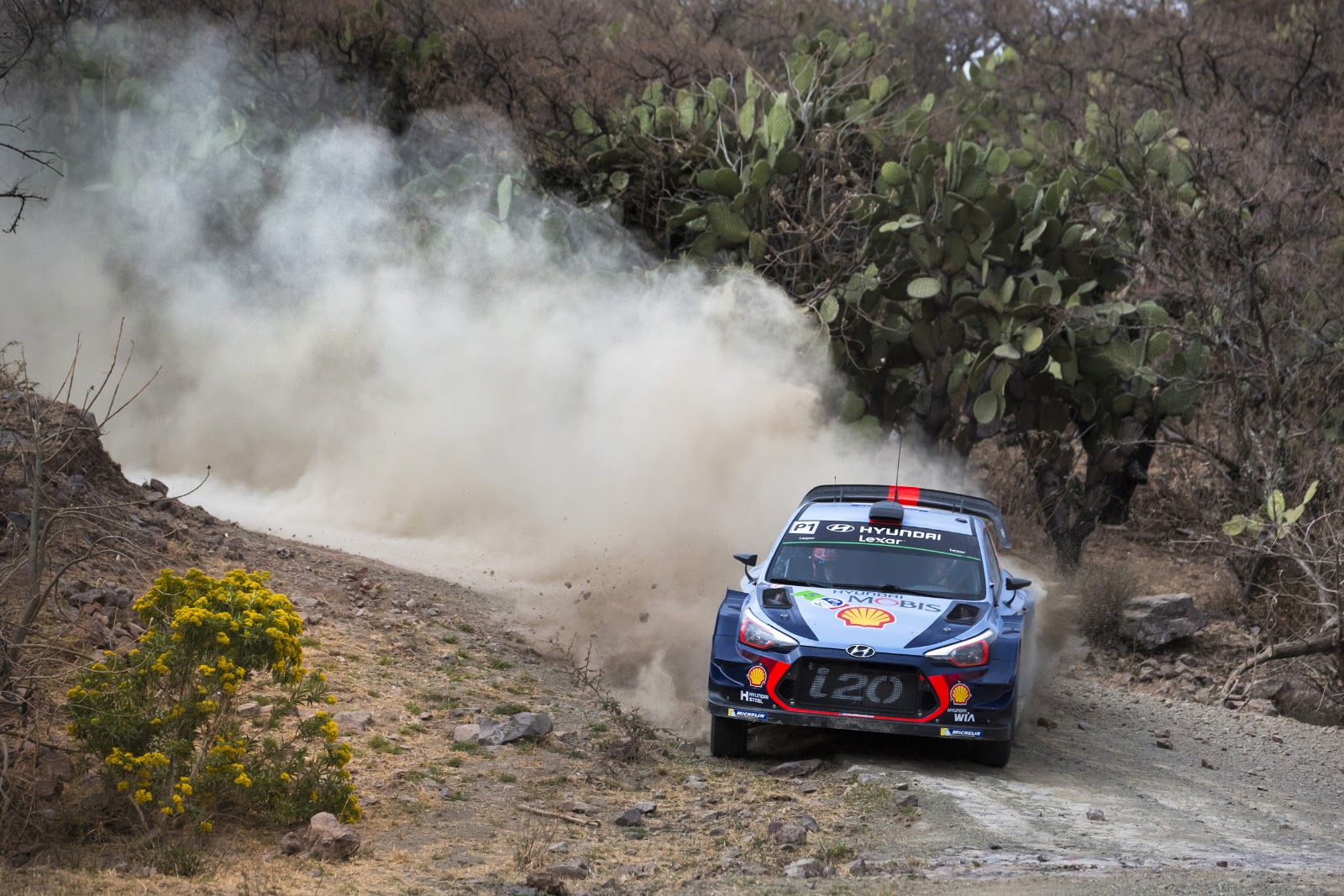
Close your eyes for a moment and embark on an imaginative journey with me. In the dense birch forests of Finland, hundreds of gravel pieces rain down like a torrential downpour on a narrow dirt road. A car racing at nearly 180 km/h begins a fantastic drift, seemingly mocking the laws of physics as it shifts its center of gravity in an instant. Amidst the thunderous roar that feels like it could burst your heart, the engine screams, and the turbocharger emits a breathless sound as if it is sucking in all the air in the world. Tires that look like they could tear apart desperately grip the asphalt and dust.
This is the world of motorsports, the loudest, most dangerous, and most expensive laboratory on asphalt and dirt.
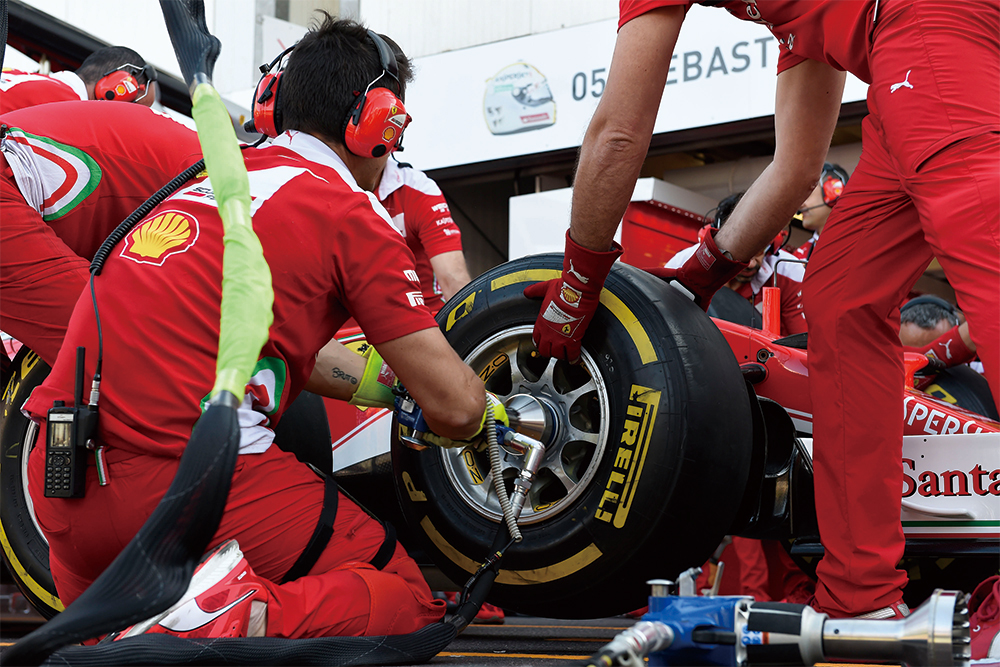
In the split second of a pit stop where everything is decided in just 2 seconds, the heartbeat of an engine that never sleeps for 24 hours, and the sharp screams of tires gliding through snow-covered forest roads—none of this is merely a primal game of ‘who is the fastest.’ It is a sacred ritual where a brand engraves its soul into steel and carbon fiber, a modern alchemy where the limits of technology and human ambition collide head-on to create new myths.
Why do car manufacturers willingly dive into this brutal competition, pouring astronomical costs and manpower into it? It is not just for the shiny trophy or a few seconds of screen time in a TV commercial. Behind that glamour lies a much more fundamental and urgent reason.
This article is a deep exploration beyond mere records of wins and losses. It tells the story of how invisible data and the sweat of engineers are honed into tangible technology amidst the ashes of fierce competition, how the narratives of victory and defeat are firmly etched into the heart of a brand, and how all of this ultimately gives birth to the car we aspire to today. From Porsche’s solid philosophy of ’endurance’ forged in the endless darkness of Le Mans, to the fiery heart of hypercars born from extreme competition on F1 tracks, and the inspiring miracle of a South Korean brand that astonished the world from the dust.
At the end of all these stories, we will arrive at one question: How does a car become a legend? The answer lies right on the track where everything is at stake.
Chapter 1: The Legacy Born on the Battlefield of Giants
Every legend needs a stage of trials to prove itself. In the world of automobiles, that stage has always existed in the harshest and cruelest forms. It is not just a racetrack but a cold battlefield where brands must stake their philosophy, technology, and pride.
1.1. The Crucible of 24 Hours: Le Mans
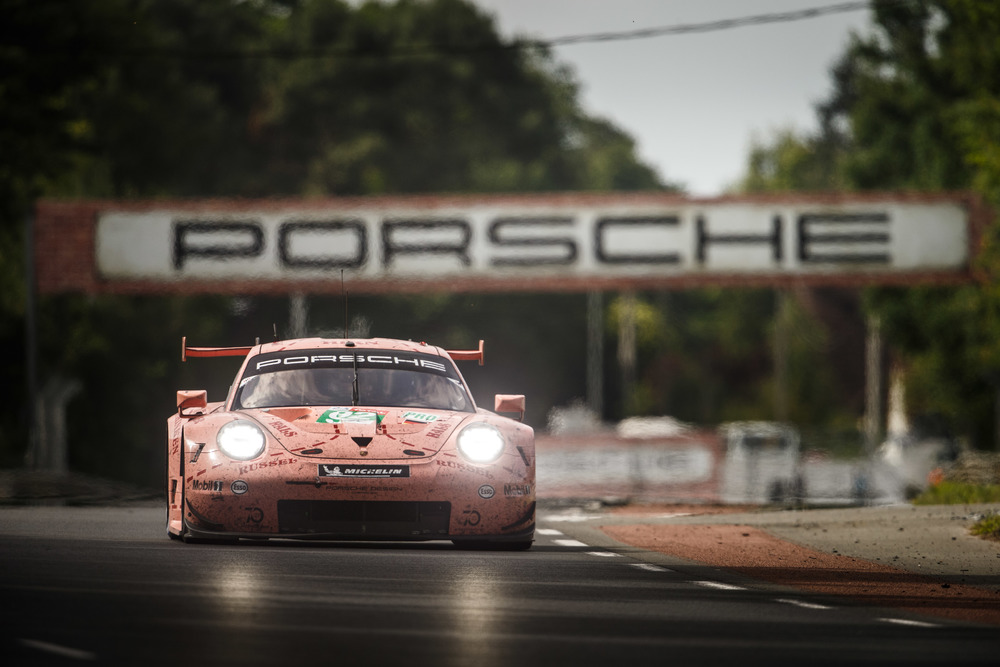
Every June in the small French city of Le Mans, the world’s most grueling test begins. This is the 24 Hours of Le Mans endurance race. It is not simply a place where the fastest car wins. It is the ultimate testing ground where the word ‘survival’ is more fitting than speed alone. For 24 hours, drivers and machines must push themselves to the limits of what humans and machines can endure. The values of ‘reliability’ and ‘durability’ earned through blood and sweat are etched into the brand’s DNA more powerfully than any flashy advertising slogan.
Porsche is a living legend of Le Mans. Their myth began with the overwhelming power of the Porsche 917, sometimes referred to as the ‘widowmaker.’ However, Porsche’s true greatness blossomed in the 1980s with the legendary machines 956 and 962. Can you imagine the innovative ‘Ground Effect’ technology that was revolutionary at the time? It involved designing the underside of the car like a massive wing, using the airflow to suck the car down onto the track like a vacuum cleaner. This allowed Porsche to corner at unbelievable speeds.
What’s more astonishing is that Porsche chose to sell this overwhelming racing car to external teams (private teams) instead of keeping it for themselves. This strategy built a powerful racing ecosystem centered around Porsche, and in 1985, a customer team, ‘Joest Racing,’ even defeated Porsche’s official factory team to win. This was not just a technical victory but a great strategic win that created a ‘winning platform.’ The PDK dual-clutch transmission, now a symbol of Porsche’s production cars, also emerged from the harsh tests of Le Mans, having to endure tens of thousands of shifts over 24 hours.
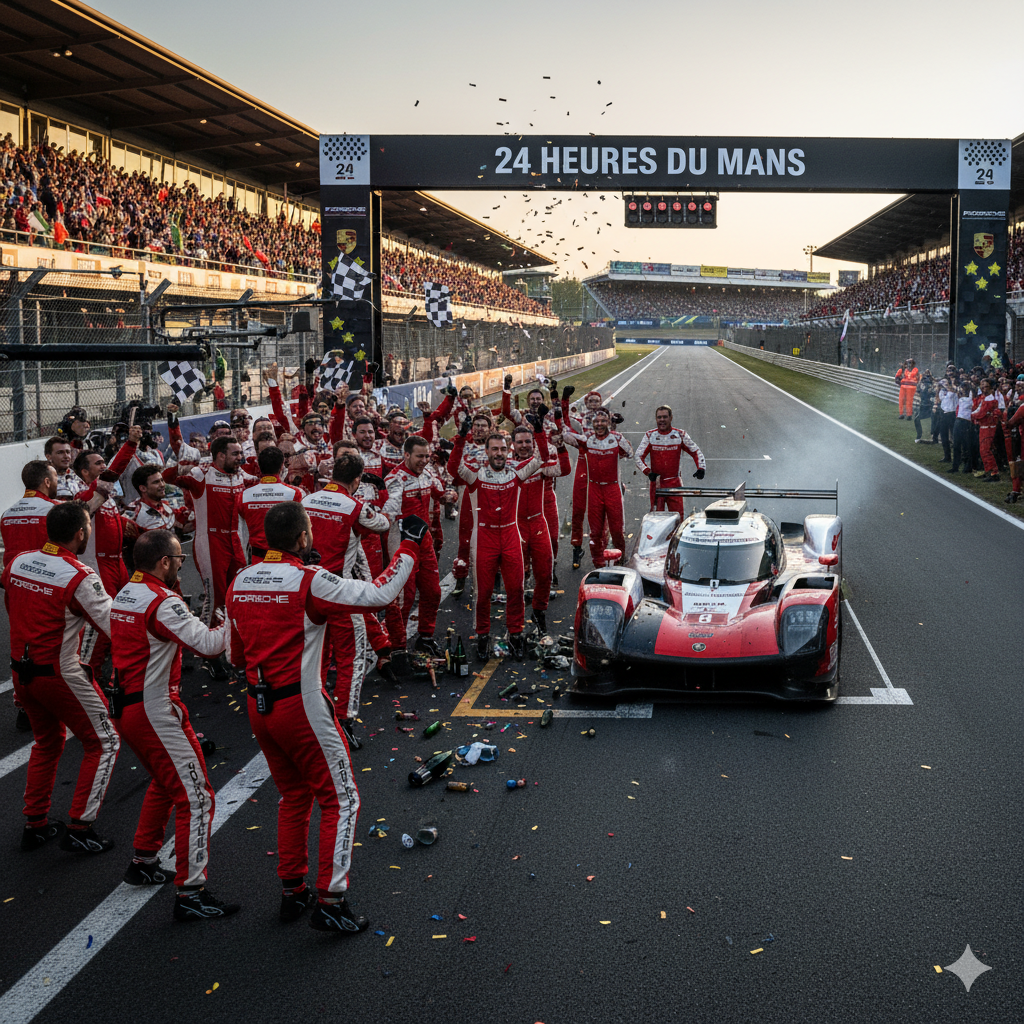
On the other hand, Toyota’s journey in Le Mans was an epic saga filled with tenacity and tragedy. For decades, they faced repeated failures at the threshold of victory, bearing the infamous ‘curse of Le Mans.’ The 2016 race marked the peak of that tragedy. With just 3 minutes left in the long 24-hour race, when everyone believed Toyota was on the verge of their historic first win, the leading Toyota TS050 Hybrid racing car inexplicably lost power and came to a stop on the main straight.
“I have no power!”
Driver Kazuki Nakajima’s cry was broadcast live around the world. The Toyota pit fell into shock and silence, while the Porsche pit erupted in cheers for an unexpected victory. A tiny component, no bigger than a finger, connecting the turbocharger and intercooler turned decades of effort and hundreds of billions of won into dust. However, this brutal and public failure paradoxically evoked deep empathy and sympathy from fans worldwide. People saw human anguish in the failure of a perfect corporation, and Toyota’s challenge became the narrative of a tragic hero. Thus, when they finally secured their first victory two years later, it transcended a mere corporate achievement and became an emotional catharsis for all motorsport fans.
1.2. The Science of 0.001 Seconds: Formula 1
If Le Mans is a test of endurance, then Formula 1 (F1) is the battlefield of cutting-edge science that pushes the sharpness of technology to the atomic level. The technologies used here often border on science fiction.
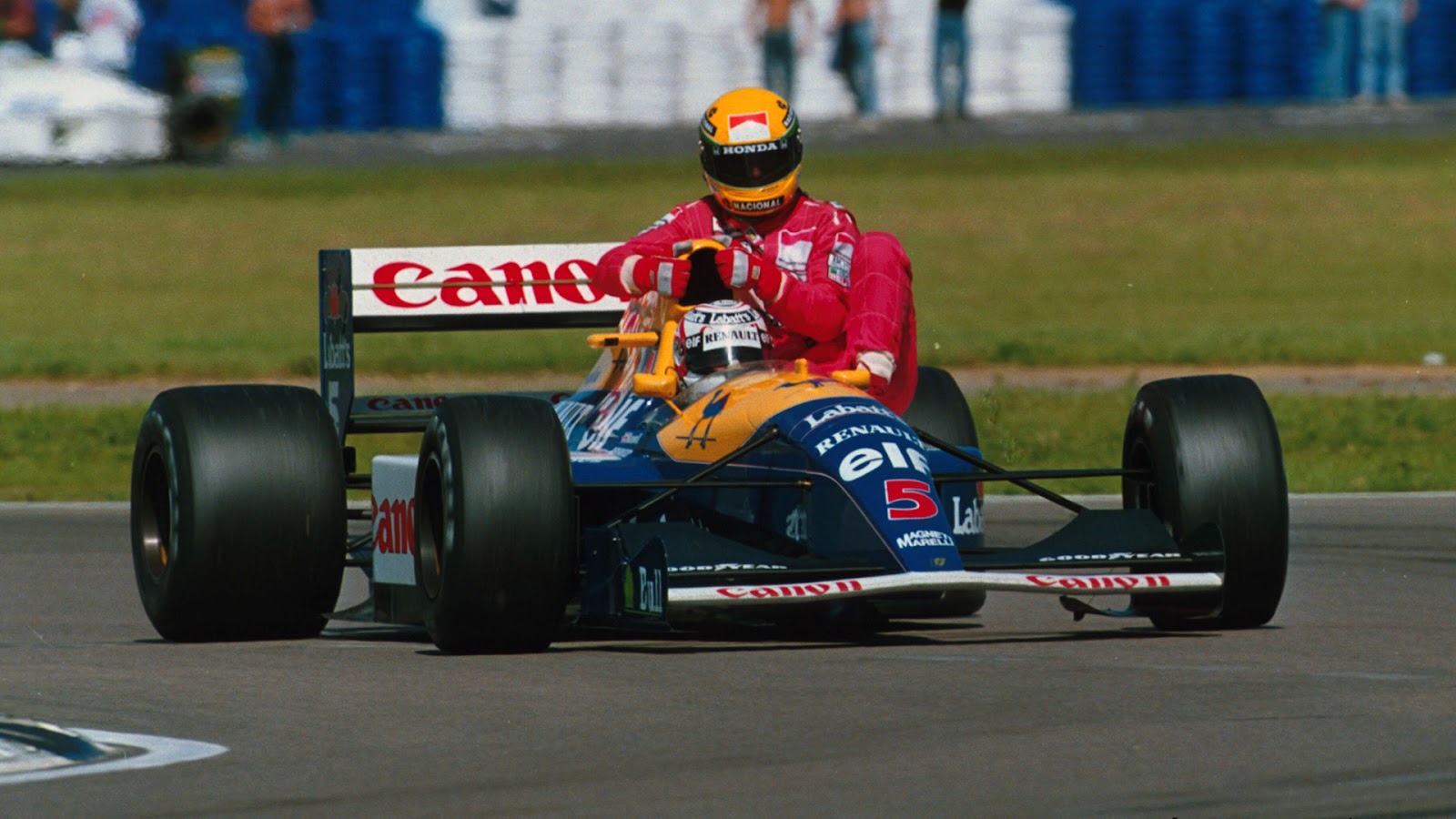
The Williams FW14B of 1992 is a prime example. This machine, crafted by the era’s top designer Adrian Newey, wielded the magic of ‘active suspension.’ This technology allowed computers to control the suspension’s movements hundreds of times per second, keeping the car’s height perfectly level in any situation—acceleration, braking, or cornering. It was as if the car could anticipate every bump and change in the road. As a result, it showcased overwhelming performance, being more than 2 seconds faster per lap than competitors, a true ‘cheat code.’ This technology was so powerful that it was eventually banned, but it clearly demonstrated how far F1 was ahead in automotive technology.
The most dramatic example of how F1 technology translates into our reality is the Mercedes-AMG ONE. Mercedes turned a challenge that everyone said was impossible into reality. They successfully brought almost the entire 1.6-liter V6 hybrid turbo power unit from the 2016 season champion F1 machine into a road car. This included a terrifying engine speed of 11,000 rpm, monstrous output exceeding 1,000 horsepower, and an incredibly complex energy recovery system (MGU-K, MGU-H). Getting an F1 engine to run on public roads was as difficult as keeping a wild tiger in your living room. But Mercedes succeeded, providing living proof that modern F1 technology can be directly transplanted into production cars, demonstrating that motorsports are at the forefront of automotive technology.
F1 is not just about technology; it is also a stage where human drama unfolds most intensely. In 1988, the rivalry between Ayrton Senna and Alain Prost of the McLaren-Honda team transcended sports into a war. Senna, an instinctive genius with god-like speed, and Prost, known as ’the professor’ for his chess-master-like coolness in managing races, were teammates yet raced to destroy each other. Their collision at the 1989 Japanese Grand Prix symbolized their relationship. In the final race, with the championship on the line, Prost blocked Senna as he attempted to overtake, and both machines became entangled in the chicane. This incident sparked numerous debates and is recorded as the pinnacle of the most dramatic rivalry in F1 history. Such human narratives add a warm emotion to the coldness of technology, transforming F1 from a mere car race into a global sports drama.
Chapter 2: The Icon in the Dust: The Marketing Myth Written by WRC
Well-paved circuits are not the reality we face every day. The reality is filled with sudden icy roads, bumpy unpaved paths, and unpredictable weather. The World Rally Championship (WRC) stage gathers all the harsh conditions a car can encounter. Therefore, success in WRC serves as the most reliable and honest guarantee of a production car’s performance and durability.
In the 1990s, this rugged stage became the fateful battleground for two Japanese samurais: the Subaru Impreza with its blue body and yellow star logo, and the Mitsubishi Lancer Evolution clad in red armor. Their war was not just a contest of car performance; it was a clash of two different philosophies perfectly personified through two heroic drivers.
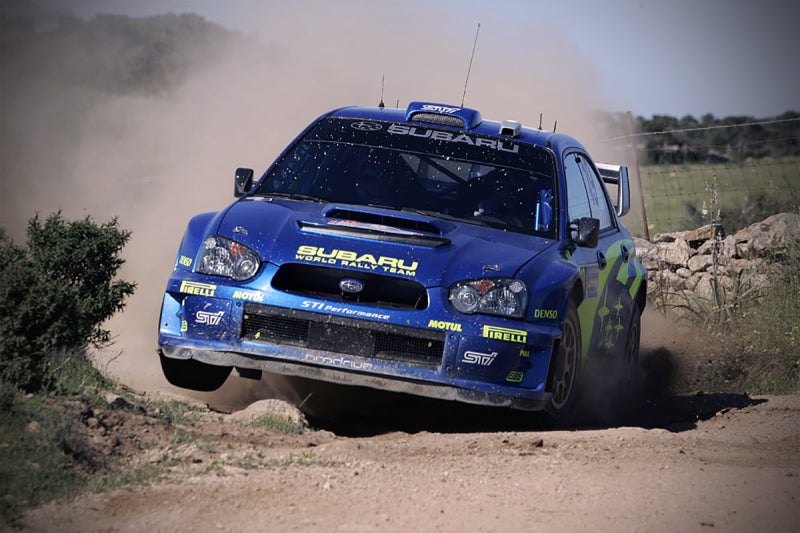
Colin McRae, hailing from Scotland, was the living soul of Subaru. His motto was clear: “If in doubt, flat out.” His driving was closer to wild instinct than meticulous calculation, always teetering on the edge of disaster. Fans were thrilled by his flashy and aggressive style, and the blue Subaru became a symbol of rebellious and thrilling youth.
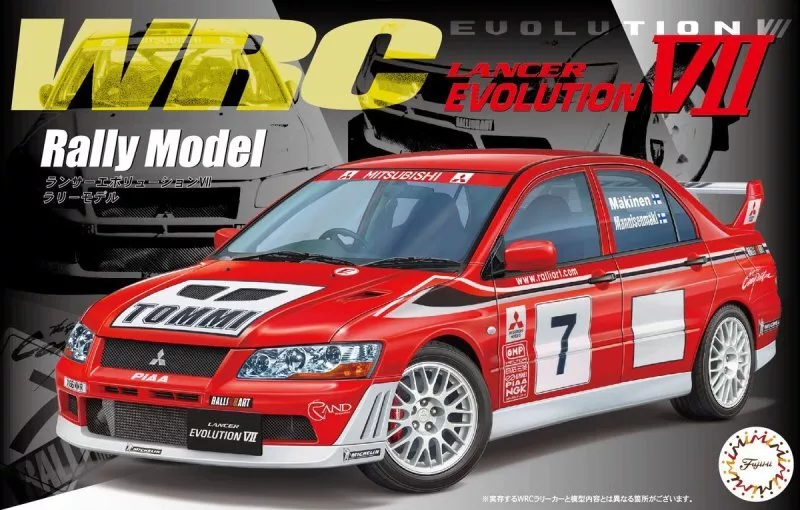
In contrast, Tommi Mäkinen from Finland represented Mitsubishi’s cold rationality. He was not as flashy as McRae but dominated stages with ice-cold, steady speed. His driving was quiet yet frighteningly fast, and based on this flawless consistency, he set an unprecedented record of four consecutive driver championships from 1996 to 1999. His success perfectly represented the technical perfection and mechanical reliability of the Mitsubishi Lancer Evolution.
The rivalry between these two legends remains the greatest success story of the legendary marketing adage, “Win on Sunday, Sell on Monday.” Victories in WRC directly led to explosive increases in production car sales. Fans were not merely purchasing a four-wheel-drive turbo sedan; they were buying the thrill of cornering like Colin McRae and the pride of dominating the peak like Tommi Mäkinen. Subaru and Mitsubishi transcended selling cars through WRC, creating heroic archetypes that customers could aspire to and identify with, turning both brands into cultural icons that symbolize an era.
Chapter 3: The Challenger from Seoul, Writing a New Formula
In a motorsport arena long dominated by legendary brands from Europe and Japan, a challenger cautiously yet resolutely emerged in 2014: Hyundai Motor Company. When a company known for making ‘value-for-money family cars’ boldly entered the world’s most challenging and complex WRC, many raised their eyebrows. Memories of a brief challenge with the Accent, which ended in bitter failure, were still fresh. What were they hoping to gain from this seemingly reckless challenge?
Hyundai’s plan was not merely to add a few trophies to their showroom. Their goal was much more fundamental: a massive ‘innovation’ that would change the very DNA of the brand from the roots.
3.1. “Sir, can I borrow a beer?” - The Prelude to Drama
Hyundai’s full-fledged WRC challenge began like a movie. In 2014, during only their third race, the Mexican Rally, something absurd and desperate happened.
Thierry Neuville, the ace driver of the Hyundai World Rally Team, faced a truly outrageous and urgent situation. While racing through the final power stage, the radiator of his i20 WRC rally car was damaged by a stone, causing coolant to leak. In rallying, engine overheating means abandoning the race, or retiring. With his first-ever podium (3rd place) in sight, he was in a dire situation where he had to give up everything.
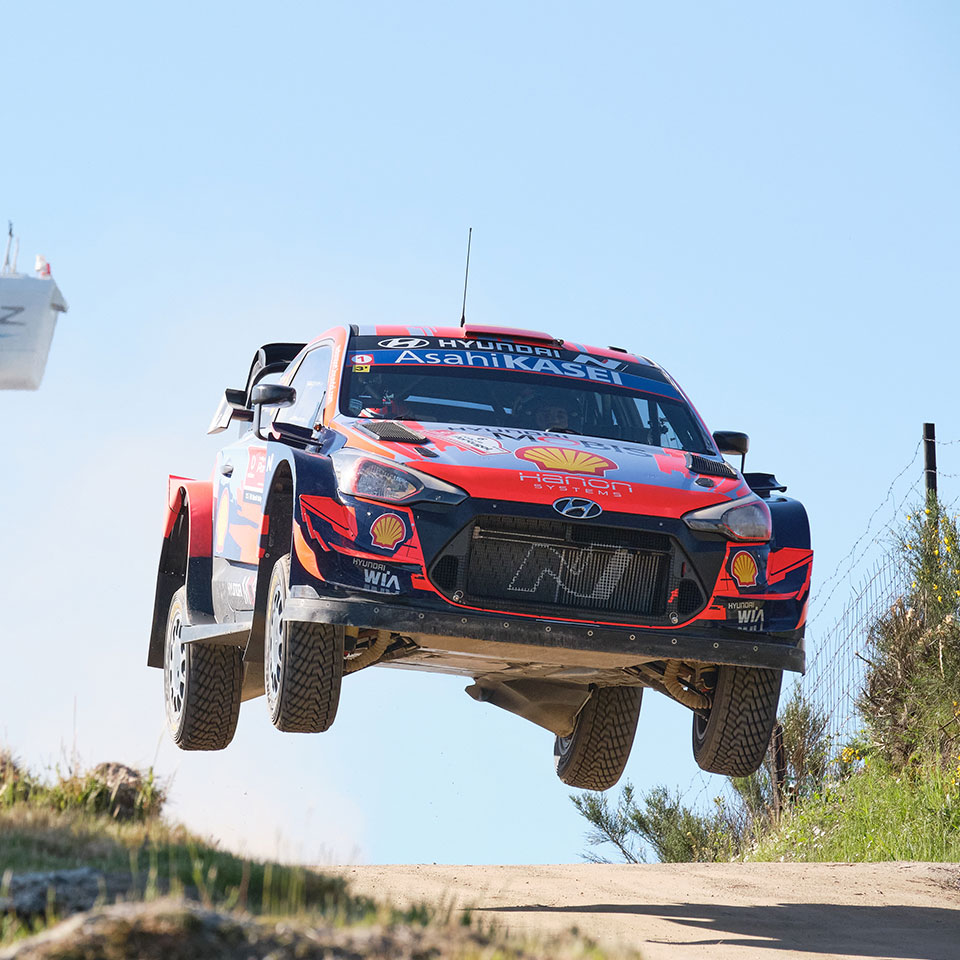
After finishing the stage, they had to travel dozens of kilometers of regular road to reach the service park. It was nearly impossible to cover that distance with a car that had no coolant at all. At that moment, Neuville’s eyes caught sight of something: a large Corona beer bottle held by a spectator watching the race by the roadside.
Neuville stopped the car and ran to the spectator. He urgently said, “Please, I need that beer! I have to put it in my car!” The spectator was bewildered but quickly understood the situation and willingly handed over his beer bottle. Neuville and his co-driver opened the hot engine hood and poured the cold beer into the radiator. While beer, filled with alcohol and carbonation, was hardly a suitable coolant, it was better than nothing. Amazingly, they managed to return to the service park with the help of the beer and secured 3rd place, giving the Hyundai World Rally Team their historic first podium.
This ‘beer bottle incident’ is not just a simple anecdote. It symbolizes the essence of motorsports and everything Hyundai aimed to learn through WRC. It embodies the quick thinking to find solutions in unpredictable crises, the perseverance and adaptability to never give up. This is living data that cannot be learned in the neat laboratory simulations of the Namyang Research Center but can only be acquired in the harshest realities.
3.2. Albert Biermann’s ‘Translator’ - A Bridge Between Namyang and Alzenau
At the center of Hyundai’s innovation was a giant from Germany. Albert Biermann, who led BMW’s legendary high-performance division ‘M’ for 30 years. When he joined Hyundai as the Vice President of High-Performance Vehicle Development in 2015, the global automotive industry was shocked. He became the figure who would put the finishing touch on Hyundai’s challenge.
Biermann defined WRC not just as a marketing stage but as a ‘moving R&D center’ to test and refine everything about Hyundai. His most important role was to serve as a ’translator’ bridging the gap between the rally team in Alzenau, Germany, and the Namyang Research Center in Korea.
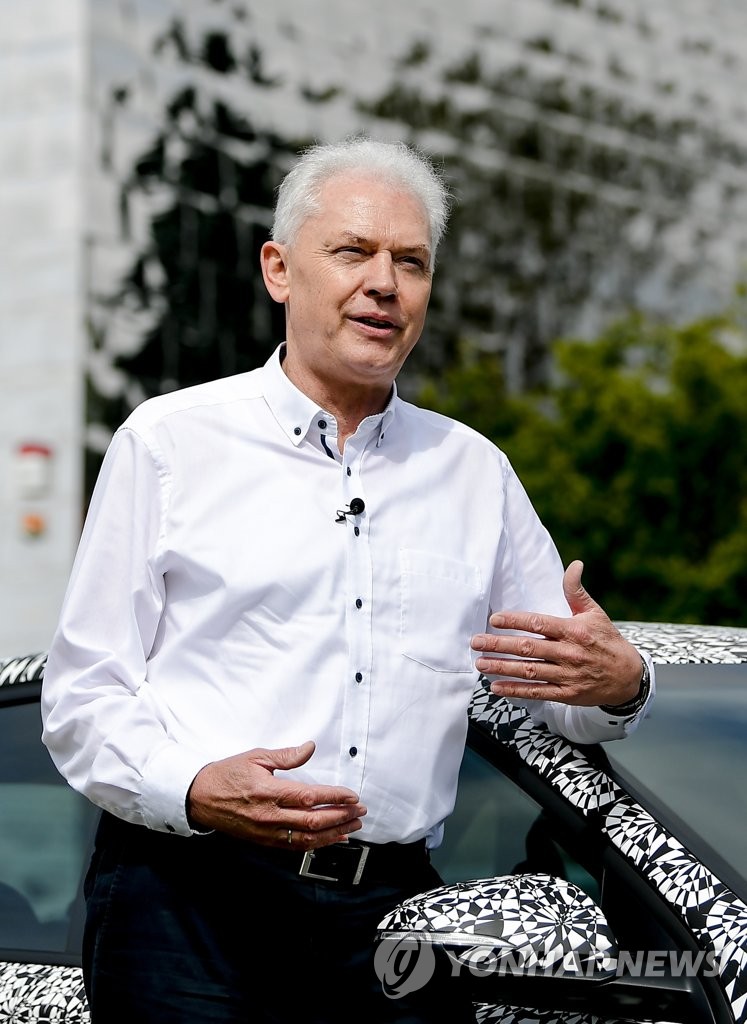
Imagine this: rally drivers do not speak like engineers. Instead of saying, “There is an understeer tendency when entering the corner, and the rear stability is lacking,” they say, “This car doesn’t listen in the corner! The back keeps trying to fly away!” Biermann’s role was to perfectly translate this ’language of sensation’ into ’engineering language.’ He accurately understood the feedback from rally drivers and transformed it into specific design data, such as adjusting suspension damping values, reinforcing body rigidity, and changing the logic of the electronic limited-slip differential (e-LSD), which he then conveyed to the Namyang Research Center.
The thousands of data points gathered while racing through Finland’s snowy forests and Mexico’s scorching deserts were not mere lap time records. They provided the most honest and valuable answers about how the chassis twists, how the suspension absorbs thousands of impacts, and in what situations drivers feel ’enjoyment’ and ‘stability.’ Without this entire process, Hyundai’s high-performance brand ‘N’ could never have been born.
3.3. Becoming a Champion - The Invisible Wars and Strategies
Getting on the podium and occasionally winning is a completely different story from becoming a ‘champion’ that dominates an entire season. Hyundai had to endure countless trials, strategic decisions, and sometimes heartbreaking sacrifices from team members to achieve the feat of becoming the WRC Manufacturers’ World Champion in 2019.
In particular, an anecdote from the Spanish Rally, which determined the fate of the 2019 season championship title, vividly illustrates how fierce their journey was. At that time, Hyundai was locked in a nail-biting battle with their rival Toyota. In rallying, the order of the race is crucial; usually, the higher-ranked driver starts first and has to play the unfavorable role of ‘sweeper,’ cleaning the slippery dirt for others.
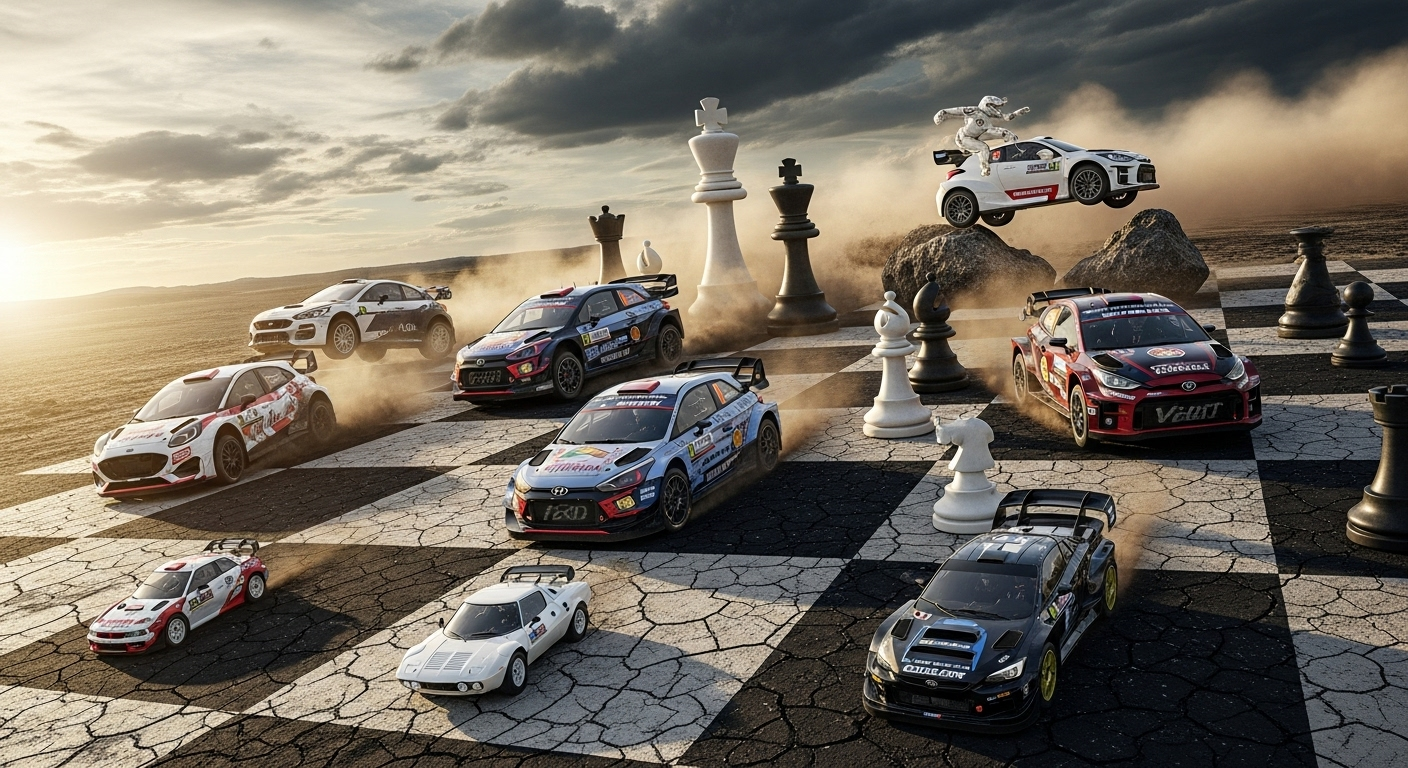
To create a more favorable starting order for their ace driver Thierry Neuville, the Hyundai team secretly instructed his teammate Dani Sordo to deliberately delay and arrive 1 minute late for time control. This would incur a 10-second penalty according to regulations. It was a decision that required Sordo to sacrifice his own ranking, but he willingly followed the instruction for the greater goal of becoming the ‘Manufacturers’ Champion.’
Thus, victories in motorsports are not achieved solely by the fastest driver and the best car. Sometimes, it requires the noble teamwork of willingly sacrificing individual glory, cold strategies that foresee multiple moves like chess, and the perfect organization of hundreds of team members moving in unison toward a single goal. Hyundai deeply learned and internalized all of this through the vast battlefield of WRC.
3.4. The Birth of N and the Race Toward the Future
The culmination of all the experiences, data, and philosophies gained from WRC is the high-performance brand ‘N.’ Hyundai poured the technology and know-how acquired from rally cars into production cars like the i30 N and Veloster N with astonishing honesty. Like the nickname ‘Corner Rascal,’ N models began to threaten Europe’s formidable competitors with decades of history on tracks and winding roads.
This was fundamentally different from the traditional ’trickle-down effect’ where past F1 technology led to hypercars worth hundreds of millions. Based on the technology obtained in the most realistic and harshest ways, they made it possible for more people to enjoy pure ‘driving pleasure’ at reasonable prices. This is Hyundai’s most successful ‘reverse-engineered’ success myth written through WRC.
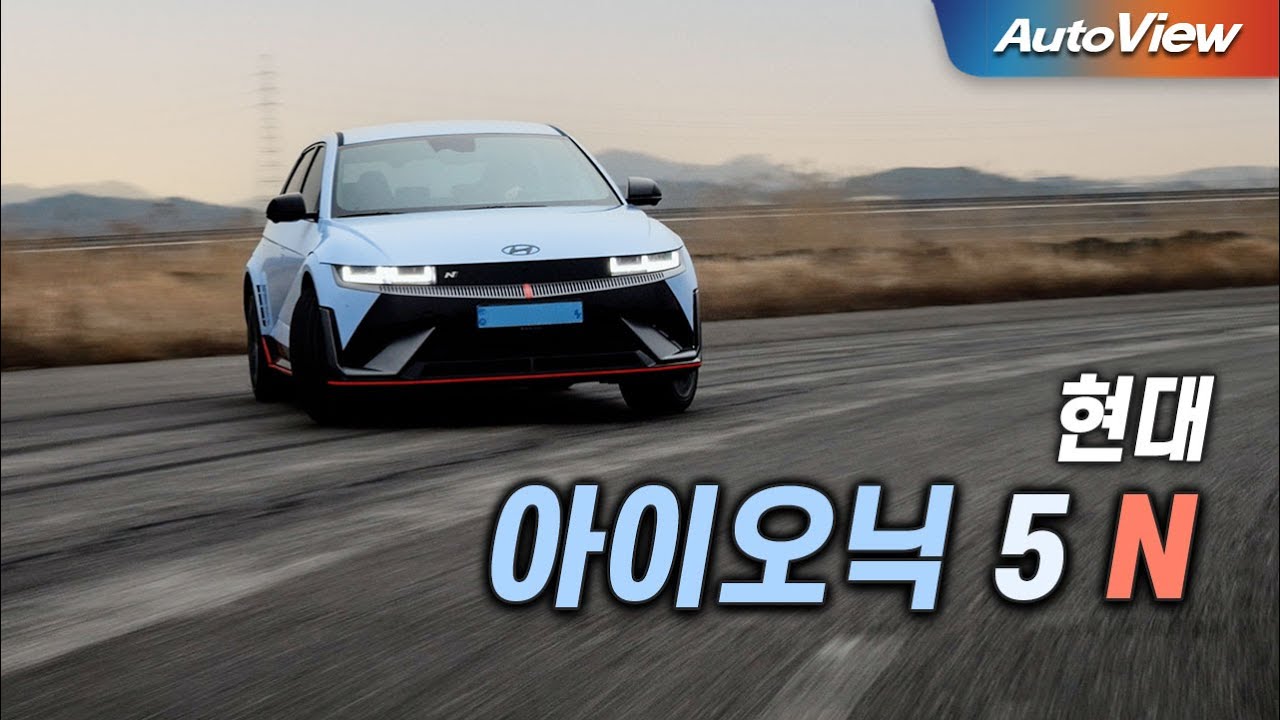
And now, Hyundai’s alchemy aims for the next era. The ‘know-how’ of handling cars and the ‘philosophy of enjoyment’ accumulated from WRC have given birth to the world’s first high-performance electric vehicle, the Ioniq 5 N. While many say electric cars are fast but lack soul and fun, Hyundai challenges that prejudice head-on through N. The virtual shifting system (N e-Shift) and drift mode (N Drift Optimizer), which transplant the emotions of internal combustion rally cars into electric vehicles, prove that ‘N’ is not just a collection of technologies but a philosophy of ’thrilling enjoyment.’ The very emotions and DNA that saw rally cars kicking up dust as they exited corners still live and breathe in our hearts in the electric vehicle era.
Legends Are Made, Along with Stories
We have witnessed Porsche’s obsession, Toyota’s tears, F1’s science, Subaru’s passion, and Hyundai’s ambition. All these stories ultimately point to one clear and powerful truth: the vast crucible of motorsports is a great alchemical stage that melts steel, oil, and data to shape simple ‘vehicles’ into iconic ‘symbols’ of the era and ordinary brands into immortal ’legends.’
Especially for those of us interested in cars and brand stories, their histories offer very important lessons. Technology is only completed when it meets a story. The greatness of Porsche’s PDK technology lies not just in its speed of shifting but in the ‘story’ of overcoming the harsh 24 hours of Le Mans. The reason Hyundai’s N is special is not merely because of its cornering speed but because it embodies the ‘story’ of Thierry Neuville desperately preserving the podium by filling his radiator with a spectator’s beer.
Technology (Product) creates the framework of a brand, but narrative (Story) adds warm flesh to that framework and makes the heart beat. The sweat of engineers who stayed up all night in Le Mans, the driver’s cry as he smashed his helmet against the glass upon seeing his car stop just 500 meters from the finish line, and Hyundai’s bold challenge that staked the brand’s fate on the two letters ‘N’ in the dust—all these narratives breathe life into technology and turn us consumers into passionate fans of that brand.
The sparks on the track will never extinguish. They may simply transform into a new form of quiet noise from electric motors and data analysis. In this grand narrative, which brand will stake everything to write a new legend? One thing is certain: the ultimate beneficiaries of that great challenge will be us tomorrow and the cars we will drive.