
The Ghost Empire of the Archives
We are now on board a Baekje ship. Its sturdy hull cleaves the rough waves, its magnificent sails filled with the winds of the West Sea. Amidst the creaking song of the mast and the strong shouts of the sailors, we travel back in time, venturing into the archives of East Asian history to seek the traces of a phantom empire that roams there: the story of Baekje’s lost maritime network, ‘Damro’ (檐魯).
Modern historians reconstruct the past by piecing together scattered fragments of records. A single sentence left in a Chinese chronicle, a mysterious inscription carved on a sword of peculiar shape, a strange birth legend of a prince recorded in ancient Japanese annals. These fragments, viewed individually, might seem like mere interesting historical footnotes. However, when threaded together with the single string of ‘Damro,’ we finally encounter the outline of a grand, forgotten picture.

Baekje’s power was not an territorial empire with clear borders like Rome. It was a fluid, multi-layered maritime network empire, organically connected by the sea as its highway. The key to understanding this network is the concept of ‘Damro.’ Damro was more than just an administrative district; it was Baekje’s unique method of governance, flexibly adapted to different geopolitical situations. Within the Korean peninsula, it served as an ‘administrative Damro’ to strengthen royal authority and control local powers. On the Chinese continent, it was a ‘colonial Damro’ to check Goguryeo and secure trade. And across the sea in Wa (倭), it functioned as a ‘hegemonic Damro’, woven together through kinship and culture.
This article is a grand voyage that reconstructs the reality of the Damro system, focusing on four pivotal anecdotes that occurred in Baekje’s western and eastern spheres of influence. We will first follow the faint records left in Chinese historical texts to Baekje’s frontline bases established on the continent. Next, we will unravel the secret held within a single sword that defined the relationship between Baekje and Wa, and gauge the depth of the two countries’ connection through the legend of a prince born on a small Japanese island. Finally, we will witness the scene of a massive cultural coup that completely changed Japan’s history through the new ideology of Buddhism.
At the end of this journey, we will realize what Baekje’s forgotten maritime hegemony looked like and how their empire operated. This is a task of drawing a map of a lost empire and a journey to restore their great names, etched on the sea yet washed away by indifferent waves. Now, it is time to raise the sails.
Part 1: The Western Border - A Foothold in the Central Plains
Chapter 1: The Conquest of Liaoxi, An Anecdote of Ambition
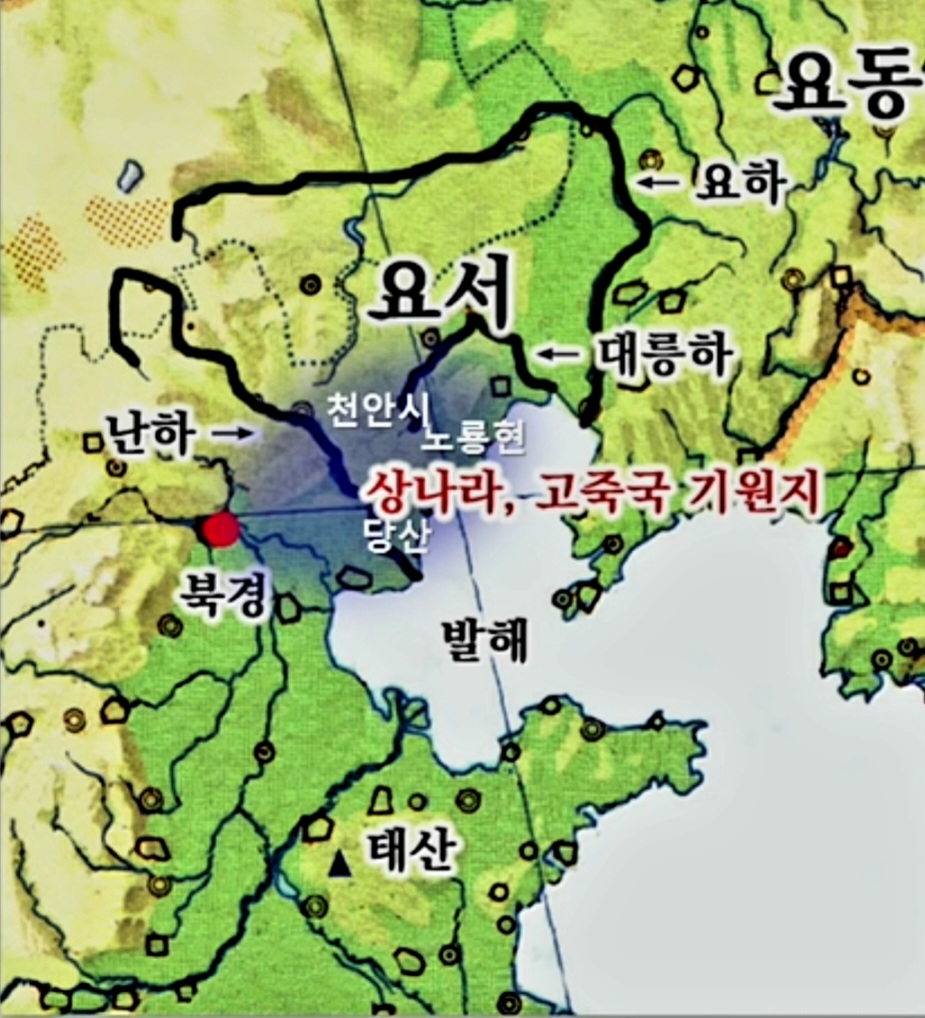
The story begins on a summer morning in the capital, Hanseong (漢城), during the late 4th century, the reign of King Geunchogo (近肖古王), who led Baekje to its zenith. In the royal palace’s main hall, an envoy who had just crossed the Yellow Sea was delivering a report with great excitement.
“Your Majesty! Following your royal command, I crossed the Yellow Sea and reached the land of Liaoxi (遼西). That land, in the chaos of the Sixteen Kingdoms of the Five Barbarians, had lost its owner. As our Baekje navy controlled the coast and advanced inland, the local powers dared not resist and begged for subjugation. We have now established a commandery of Baekje there and named it ‘Jinpyeong’ (晉平). This will announce to the world that the majesty of our Baekje has finally reached the continent!”
King Geunchogo nodded with a satisfied smile. This was more than just expanding territory; it was acquiring a sharp dagger that could strike at the back of Goguryeo, which constantly pressed south, threatening Baekje’s survival. At the same time, it was a moment to prove to Dong Jin (東晉), their ally across the sea, that Baekje was no longer a small border country but a powerful partner capable of influencing the continental landscape. This scene, reconstructed based on fragmented records left in later Chinese historical texts, captures the moment of Baekje’s bold ambition unfolding.
Evidence in Texts: An Empire Carved in Faded Ink
The most crucial evidence for Baekje’s continental expansion, the so-called ‘Liaoxi Conquest Theory’ (遼西經略說), is surprisingly found not in our records, but in the Chinese Southern Dynasties (南朝) historical texts. It’s like finding our grandfather’s lost diary in a neighbor’s attic.
The first clue comes from the Book of Song (宋書), compiled in the late 5th century. This book presents us with a short but shocking sentence.
“Thereafter, Goryeo (Goguryeo) conquered and occupied Liaodong, and Baekje conquered and occupied Liaoxi. The place ruled by Baekje is called Jinpyeong Commandery, Jinpyeong Prefecture.”
This record describes Goguryeo’s occupation of Liaodong and Baekje’s occupation of Liaoxi as if they were natural events that occurred in the same era, treating them equally. It even specifies the concrete administrative name ‘Jinpyeong Commandery,’ adding to its credibility.
This surprising record was not a solitary claim. As if by agreement, subsequent Southern Dynasties historical texts continued to repeat and confirm this fact. The Book of Liang (梁書) and History of the Southern Dynasties (南史), compiled in the 7th century, recorded almost identically: “In the Jin dynasty, when Guryeo (Goguryeo) conquered and occupied Liaodong, Baekje also occupied and took possession of the lands of Jinpyeong Commandery and Jinpyeong Prefecture, and established the Baekje Commandery.” The administrative geography text Tongdian (通典), compiled in the early 9th century, went a step further, specifically pinpointing its location as “between present-day Liucheng (柳城) and Beiping (北平),” a region in eastern Hebei province.
The Endless Debate: Searching for the Reality of the Ghost Commandery
However, the academic debate surrounding these records has been fierce for the past 100 years.
- Proponents cite the international situation at the time. The 4th century was a period of extreme chaos in China, with numerous states warring against each other. In this power vacuum, it is a plausible scenario that Baekje, with its strong navy during the reign of King Geunchogo, exerted military influence on the coast of Liaoxi.
- Skeptics point to the “silence of the records.” Why is not a single line found in the records of Baekje, the party concerned, or in the historical texts of the hostile Northern Dynasties (北朝) for such a significant event? They also suggest that the Southern Dynasties historians might have simply recorded exaggerated statements made by Baekje envoys to elevate their country’s status.
‘Liaoxi Damro’ as a Diplomatic Declaration
Regardless of the truth of this debate, the fact that records of the Liaoxi conquest repeatedly appear in the Southern Dynasties’ historical texts holds significant meaning. The geopolitical situation in East Asia at the time was like a grand chessboard, with the Goguryeo-Northern Dynasties alliance in the north and the Baekje-Southern Dynasties alliance in the south confronting each other.
On such a diplomatic stage, the claim of “securing a military foothold in Liaoxi, right next to Goguryeo’s heartland” was the most effective declaration to imprint Baekje as an invaluable ally upon the Southern Dynasties. Therefore, the Jinpyeong Commandery in Liaoxi held greater value as a symbol representing Baekje’s geopolitical ambitions and successful diplomatic strategy, rather than its actual territorial size. It was the westernmost ‘colonial Damro’ of Baekje’s maritime empire, a landmark on the sea clearly indicating Baekje’s ambitions towards the continent.
Part 2: Expansion to the East - Another Baekje Established in Wa
Chapter 2: The Sword of the Victor, The Mystery of the Seven-Branched Sword
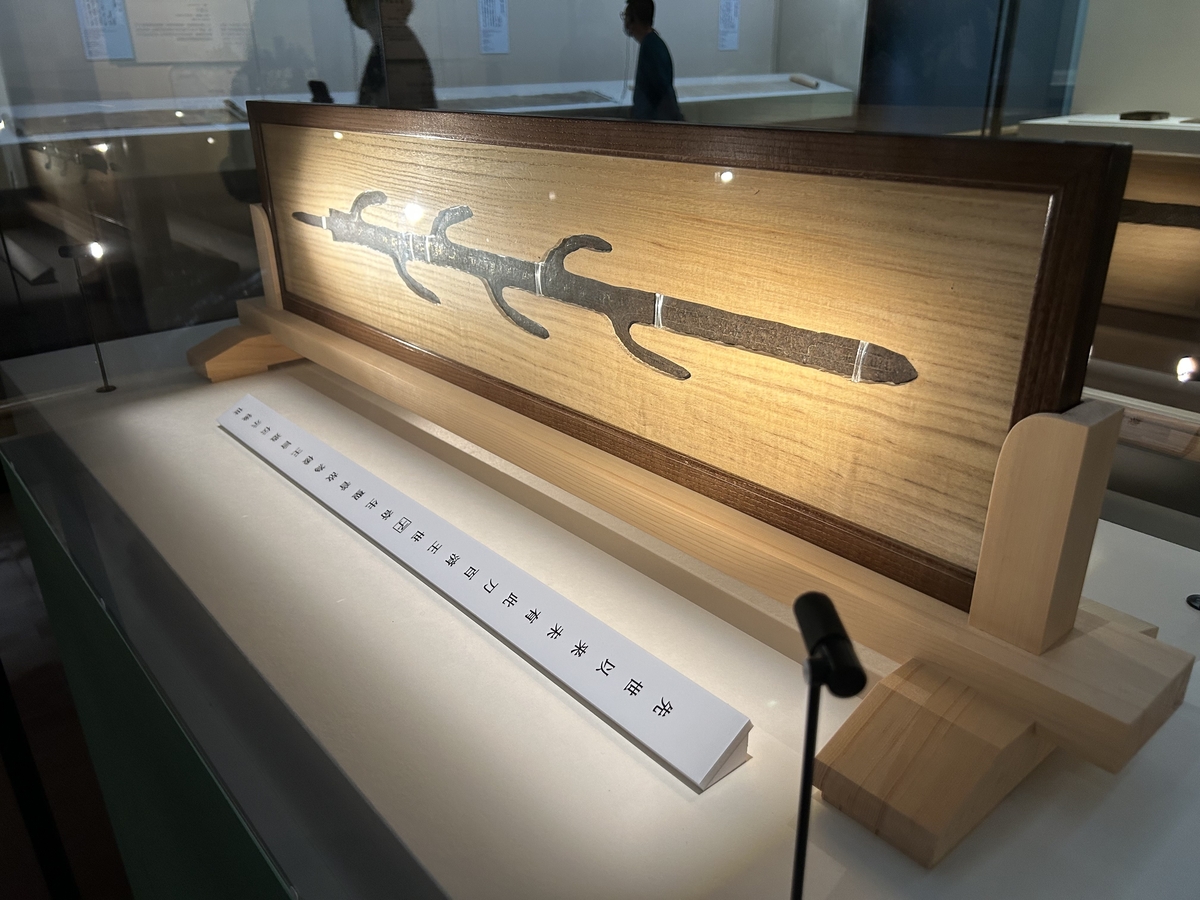
The scene shifts to a royal workshop in Hanseong (漢城), the capital of Baekje, in 372 CE. Fierce flames dance in the brazier, and dozens of artisans, sweating profusely, hammer iron, their sounds shaking heaven and earth. Before them, a sword of a peculiar and sacred form, unlike anything seen before, gradually takes shape. Three branches extending from each side of the sword’s body, like tree limbs, for a total of seven branches – a divine sword, the Seven-Branched Sword (七支刀).
This sword is not merely a weapon. Commissioned by a special order from the Crown Prince (later King Geungusu), it was a highly sophisticated diplomatic symbol forged with Baekje’s utmost skill, art, and political will. This sacred artifact would soon be loaded onto a ship, cross the rough waves of the Korea Strait, and be sent to the King of Wa (倭). And the moment the Seven-Branched Sword arrived at the Wa court, the relationship between the two countries was destined to fall into a new order.
Inscriptions and Debates: The Language of Power Carved on the Blade
The Seven-Branched Sword, today enshrined like a divine object deep within the Isonokami Shrine (石上神宮) in Nara, Japan, has been the subject of debate for over a century, primarily focusing on the inscription of some 60 characters meticulously inlaid with gold on its blade, especially the phrase “宜供供侯王 (Ui gong gong hu wang)”.
- The Gift Theory (下賜說) - The generally accepted view in Korean academia: ‘Hu wang’ (侯王) is a term used when an emperor enfeebles a feudal lord. Therefore, this phrase is interpreted as “fitting to be made for the Hu Wang (our feudal lord),” implying an act of ‘bestowing’ (下賜) the sword by the Baekje king, the superior ruler, to the Wa king, a feudal lord.
- The Tribute Theory (獻上說) - The traditional Japanese interpretation: Based on the records in the Nihon Shoki (日本書紀), they argue that Baekje ‘offered’ (獻上) this precious gift to Wa, the suzerain state, in pledge of loyalty.
Asymmetrical Interdependence: Rewriting the Grammar of Alliance
The Seven-Branched Sword is a highly sophisticated diplomatic product that perfectly embodies the complex, interdependent, yet clearly hierarchical relationship that existed between Baekje and Wa at the time. Baekje was the ‘senior partner’ in terms of culture and technology, while Wa was the militarily important ‘junior partner’.
The Seven-Branched Sword materially embodies this relationship. By presenting this sword, embodying cutting-edge technology, Baekje showcased its cultural superiority while clearly defining its political superiority by bestowing the title of ‘Hu Wang’. In particular, the claim that the era name ‘Taiwa’ (泰和) inscribed on the sword was a unique era name used only by Baekje strongly supports this imperial confidence. The Seven-Branched Sword was, in essence, a great diplomatic declaration written in steel.
Chapter 3: A Prince Born on an Island, The Birth of King Muryeong
In 461 CE, a Baekje royal fleet was cutting through the rough waters of the Korea Strait, heading for the Japanese islands. On board was Prince Gonji (昆支), the younger brother of King Gaero (蓋鹵王). Astonishingly, accompanying him was the king’s consort, who was pregnant with the king’s child.
The fleet eventually docked at Kakara-jima (加唐島), a small island in the northern part of Kyushu. And it was on that very island that the king’s consort gave birth to a baby boy who would become Baekje’s 25th king and a great monarch of revival: King Muryeong (武寧王). Because he was born on an island, the child was called ‘Sama’ (斯麻), meaning island.
The Strange Records of the Nihon Shoki and Archaeological Confirmation
This unbelievable story is recorded in astonishing detail in the Japanese historical text Nihon Shoki. And this legendary tale, transcending 1,500 years, miraculously became reality in the summer of 1971 in Gongju, South Chungcheong Province, with the discovery of King Muryeong’s tomb in its intact state.
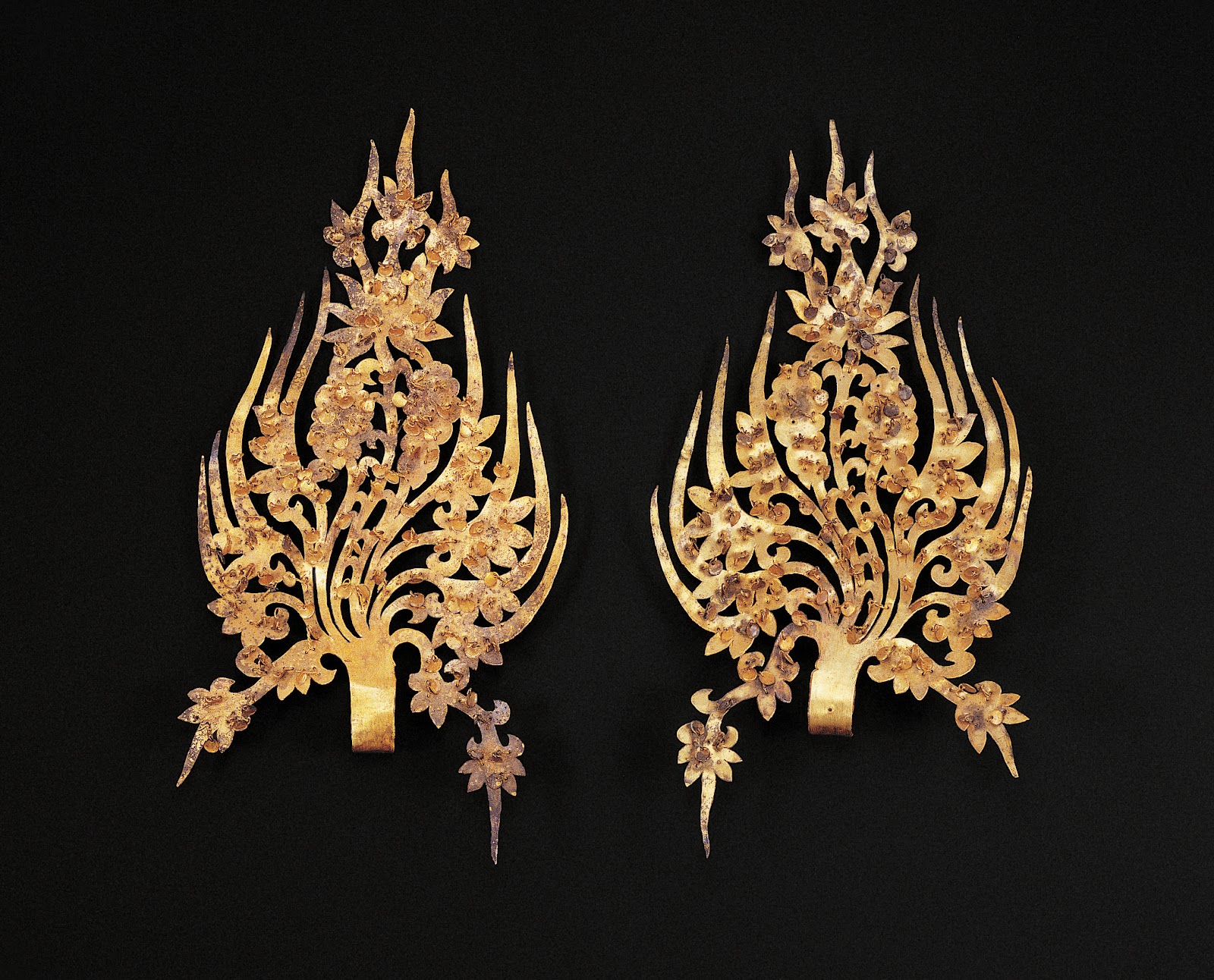
The most decisive evidence was the wooden coffin that encased the king’s body. Analysis revealed that this coffin was scientifically proven to be made of Japanese red pine (金松), a tree that grows only in southern Japan. A prince from a literary record who was born on a small Japanese island, lay in a coffin made of Japanese wood, in eternal sleep, 1,500 years later.
Wa: A ‘Strategic Rear’ for the Baekje Royal Family
The birth legend of King Muryeong clearly illustrates what Wa was to the Baekje ruling class at the time. It was not an unknown and dangerous land, but a safe zone deeply integrated within the sphere of influence of Baekje elites, a ‘strategic rear’ (Strategic Rear). As Goguryeo’s pressure intensified, Wa was considered a reliable refuge where the royal lineage could be safely preserved. The Damro established in Wa was not a method of ruling by sending troops but the perfected form of a ‘hegemonic Damro’, bound by kinship, trust, and common interests.
Chapter 4: The Rise of the Soga Clan, A Coup d’état in the Name of Buddha
In 587 CE, on the plains of Shigisan (信貴山) in the Kawachi region of Japan, the Mononobe (物部) clan, a military aristocracy protecting Japan’s traditional deities, and the Soga (蘇我) clan, descendants of Baekje immigrants and standard-bearers of the new ideology of Buddhism, engaged in a final battle for the fate of ancient Japanese history. This “holy war” was, in fact, the completion of a grand coup d’état where the Baekje-style state model achieved final victory on Japanese soil.
The Seed of Conflict: Buddha Who Crossed the Sea
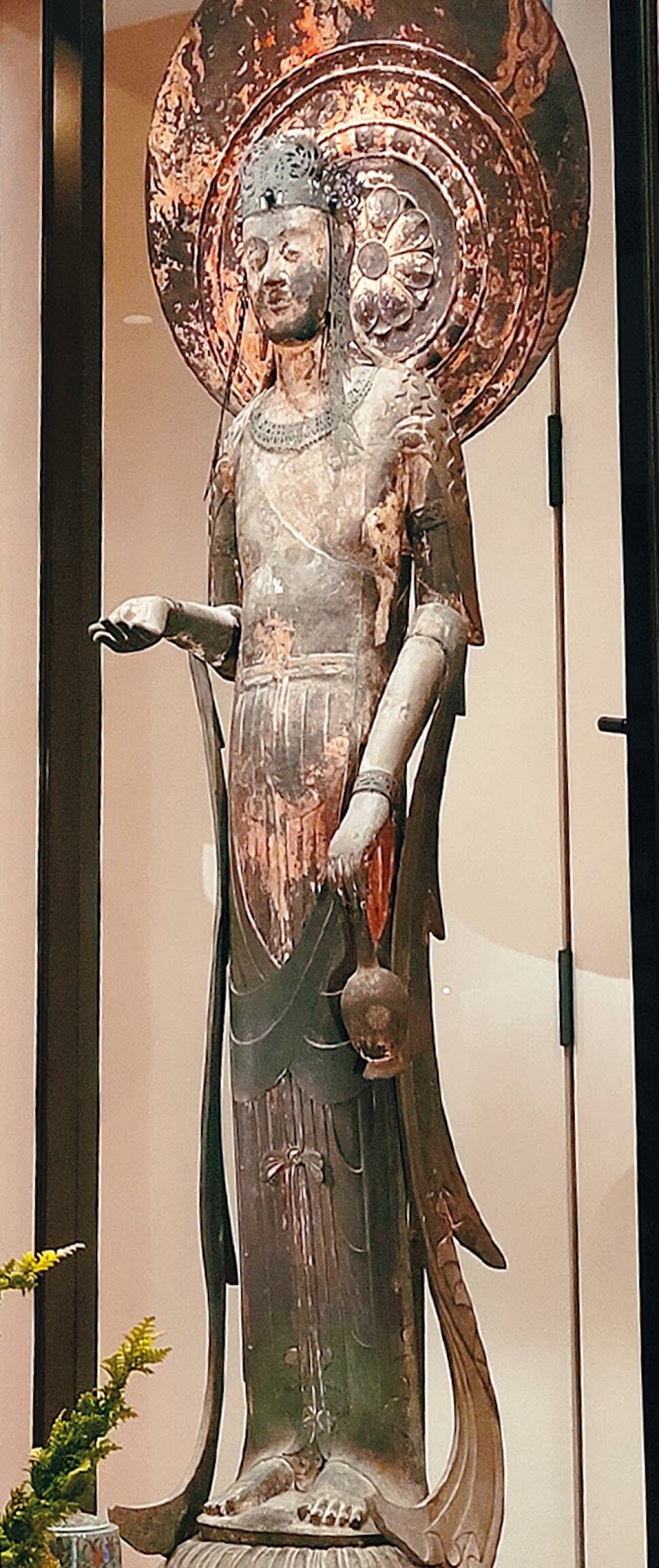
The seed of this conflict was sown about 50 years earlier, in 538 CE, when King Seong (聖王) of Baekje officially sent Buddhist statues and scriptures to the Wa court.
- The Soga Clan (Pro-Buddhism Faction, 崇佛派): Deeply connected to the Korean peninsula, they saw Buddhism as a powerful ideology for completing a 선진 (advanced) centralized state.
- The Mononobe Clan (Anti-Buddhism Faction, 排佛派): To them, traditional military aristocrats, Buddhism was merely an “alien plague god” that threatened their vested interests.
War and Its Aftermath: The Dawn of the Asuka Period
After achieving a decisive victory in the Battle of Shigisan, the Soga clan annihilated their political rivals, the Mononobe clan, and rose to supreme power in the Wa court. This victory flung open the doors to the golden age of ancient Japanese culture, the Asuka (飛鳥) Period. And Asuka culture was, in essence, ‘Baekje culture,’ brought to bloom by monks, scholars, and artisans who came from Baekje.
Buddhism, “exported” by Baekje, was a highly effective Soft Power that led to the desired outcome in this war. Baekje did not need to send a large army to conquer Wa. Instead, by conquering their minds through culture and religion, they ensured that the Japanese islands remained the most loyal partner in their maritime network.
Part 3: The Veins of the Empire - Ships, Trade, and the System of Governance
Chapter 5: Master of the Yellow Sea, Baekje Ships and Sea Routes
The great maritime network of Baekje’s ‘Damro’ was actually supported by shipbuilding and navigation techniques of the highest caliber for the time. Based on this formidable maritime power, Baekje navigated the East Asian seas as if they were its own backyard.
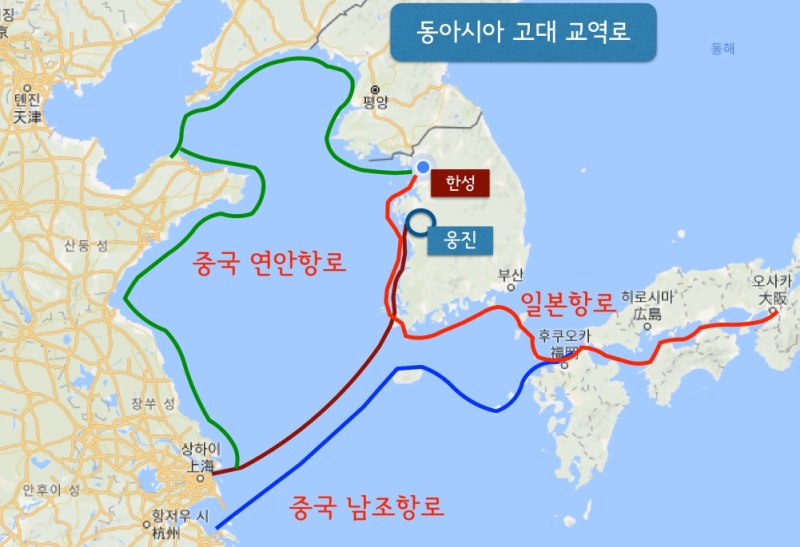
The sea routes these ships traveled were like the veins of the empire.
- Northern Route (Chinese Coastal Route): A military and diplomatic route extending to Liaoxi and the Shandong Peninsula.
- Direct Route (Southern Chinese Route): A route for importing the latest cultural artifacts to the Southern Dynasties of China.
- Eastern Route (Japanese Route): A path to alliances and resource acquisition leading to Japan.
Along these routes, envoys traveled, armies moved, and goods were exchanged. Active intermediary trade was the powerful economic heart that kept the Damro network constantly moving.
Chapter 6: The Damro System, A Network of Kings and Kin
Damro was originally a unique local governance system devised by Baekje as it annexed the various small states of Mahan (馬韓). The Book of Liang (梁書) records, “There are 22 Damro in that country, and the king’s sons and relatives were appointed to govern them.” By directly dispatching the most trusted family members as local officials, central authority was strengthened.
A Comprehensive Understanding of the Damro Network: The Three Faces of the Empire
‘Damro’ was not a singular concept but a multi-layered governance strategy flexibly applied according to Baekje’s diverse geopolitical situations.
| Feature | Type 1: Administrative Damro (Korean Peninsula) | Type 2: Colonial Damro (Liaoxi Region) | Type 3: Hegemonic Damro (Wa/Japan) |
|---|---|---|---|
| Governance Model | Direct rule through appointment of royals | Direct management of military/trade bases | Indirect rule through kinship and culture (Hegemony) |
| Primary Functions | Centralization, taxation, administration | Strategic defense against Goguryeo, trade hub | Military alliance, resource supply, cultural dependency |
| Key Evidence | Book of Liang (22 Damro) | Book of Song, Book of Liang (Establishment of Jinpyeong Commandery) | Seven-Branched Sword, King Muryeong’s tomb (Japanese Red Pine Coffin), Asuka artifacts |
| Representative Anecdotes | Prince appointed as local governor | Conquest of Liaoxi and establishment of Jinpyeong Commandery | Birth of King Muryeong, Rise of the Soga Clan |
These three types of Damro were organically connected to form the vast Baekje maritime empire.
Echoes of a Lost Empire
Through the four anecdotes we have reconstructed, we have glimpsed that Baekje’s Damro empire, based on its powerful navy, sophisticated diplomacy, and overwhelming cultural prestige, was a vast maritime network that stretched from the Chinese coast to the heart of Japan.
Then why did such a powerful empire become a “lost” existence in our history? With the fall of the capital to the Silla-Tang allied forces in 660 CE, the official historical records, the ‘Three Books of Baekje’ (백제삼서), were largely lost, and their glorious maritime activities were naturally reduced or forgotten in the historical narrative centered on Unified Silla.
Although the political network of Damro vanished into history 1,400 years ago, its echoes still remain with us. It breathes within the cultural DNA shared by the countries in this region and within the numerous artifacts still sleeping beneath the land and sea, awaiting the day they tell new stories. As long as the vast sea holds the memories of that time, our exploration of the forgotten empire will continue.