
A historical voyage to find the traces of ‘Damro’, the forgotten overseas territory of the great maritime empire Baekje that once ruled the East Asian seas.
- We delve into the reality of Baekje’s continental expansion recorded in Chinese historical texts, known as the ‘Yoseogyeongryakseol’.
- We explore the special relationship between Baekje and Wa through artifacts discovered in the Japanese archipelago.
- We examine the driving force behind Baekje’s establishment of a maritime empire and its legacy.
We are now aboard a ship of Baekje. The very name Baekje (百濟) is said to derive from ‘Baekgajaehae (百家濟海)’, meaning ‘a nation established by numerous groups crossing the sea’, indicating that their identity was deeply connected to the sea. What was the true extent of this great maritime power’s territory? Let us embark on a journey to uncover the reality of Baekje’s lost overseas territory, Baekje Damro (檐魯).
1. Footprints on the Continent: The Truth of the Yoseogyeongryakseol
Baekje Damro in Chinese Historical Texts
In the dusty historical records of the Southern Dynasties of China, we encounter a heated debate in Korean history, the ‘Yoseogyeongryakseol (遼西經略說)’. The Song Shu (宋書) records that “when Goguryeo occupied Liaodong, Baekje occupied Yodong,” while the Liang Shu (梁書) and Nan Shi (南史) mention that “the area governed by Baekje is called Jinping County, Jinping District,” providing specific place names.
Notably, the Liang Zhigong Tu (梁職貢圖), which depicts diplomatic envoys, clearly states that “Baekje-gun (百濟郡) was established.” This implies that Baekje did not merely pass through the region but established and governed an administrative unit bearing their name.
Table 1: Major Chinese Historical Sources on Baekje’s Expansion into Yodong
| Source (Compilation Period) | Main Content | Remarks |
|---|---|---|
| Song Shu (Late 5th Century) | “Baekje occupied Yodong (百濟略有遼西)” | First record |
| Liang Shu (Early 7th Century) | “The area governed by Baekje is called Jinping County, Jinping District” | Specific place name mentioned |
| Liang Zhigong Tu (Early 6th Century) | “Baekje-gun (百濟郡) was established” | Explicit mention of administrative unit establishment |
Interestingly, these records appear only in the historical texts of the Southern Dynasties of China, which were friendly to Baekje. This suggests that the Baekje army in Yodong served as a ‘strategic outpost’ to jointly confront northern threats amid the international situation in East Asia at the time. Rather than a permanent territory, it was a military and commercial foothold established out of the necessity of alliances.
The Silence and Testimony of Archaeology
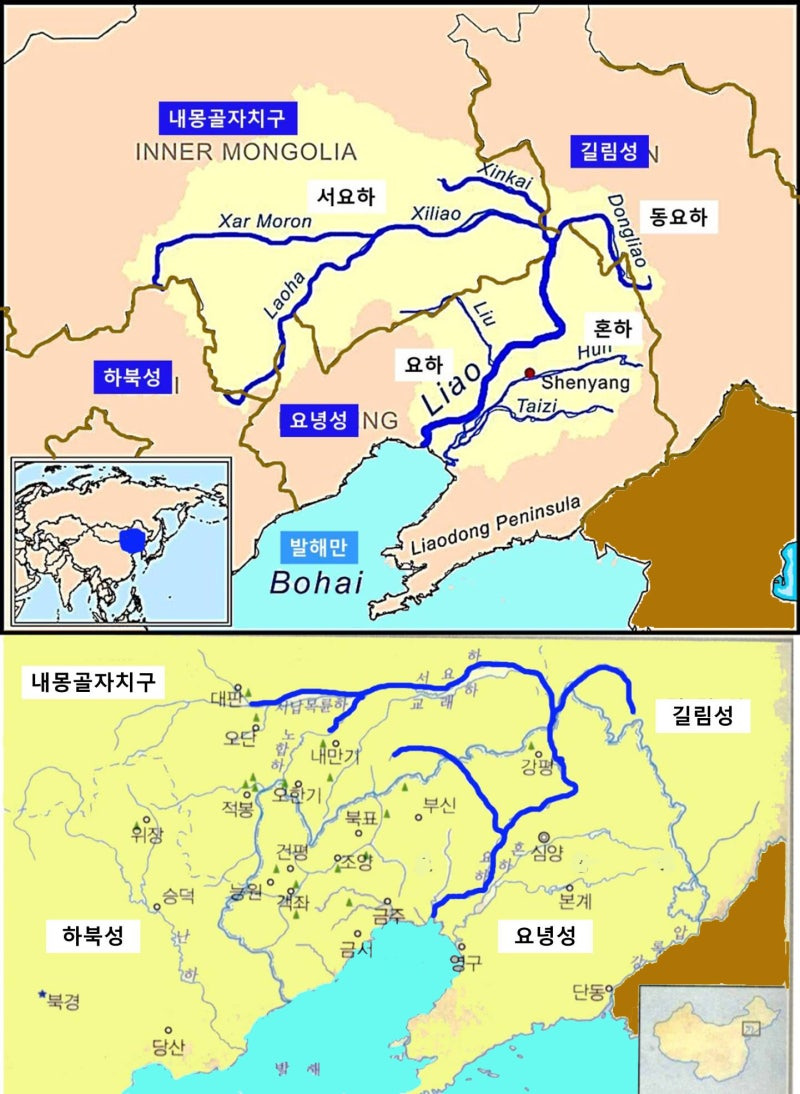
Historians estimate the location of ‘Jinping County’ to be around present-day Changli County in Hebei Province or Chaoyang City in Liaoning Province. However, the fact that not a single clear Baekje artifact has been discovered in this area poses the greatest challenge to the Yoseogyeongryakseol.
So, are all the records fictional? Here, a shift in perspective is needed. If the Baekje army in Yodong was a military base and trade post, the discovery of ‘Southern Dynasty artifacts’ as trade goods could paradoxically serve as evidence of Baekje’s activities. This is akin to finding more local trade goods than Korean products in the warehouse of a Korean trading company abroad.
2. Baekje Damro Embedded in the Japanese Archipelago
22 Damro: A Network Connecting the Empire
The key to understanding Baekje’s overseas activities lies in the ‘Damro (檐魯)’ system. The Liang Shu explains that “there were 22 Damro across the country, and royal offspring and clans were sent to govern them.” This was a powerful centralized governance method that directly dispatched royalty to seize key footholds.
It is highly likely that the ‘Jinping County’ in Yodong was also referred to as ‘overseas Damro’ in Chinese terms. Furthermore, the record that King Muryeong was born on an island in Kyushu strongly supports the existence of Baekje’s Damro in the Japanese archipelago.
Echoes from the Ground: Proof of Twin Artifacts
The gilt-bronze crown excavated from the Funayama tomb in Kumamoto Prefecture, Japan, is almost perfectly identical in design and production technique to the Baekje gilt-bronze crown from the Sunchonri tombs in Gongju, Chungcheongnam-do. They appear to be ’twin’ artifacts made by the same craftsman. The bronze iron from the Takai Dayama tomb in Osaka is also a perfect match for the items excavated from the tomb of King Muryeong.
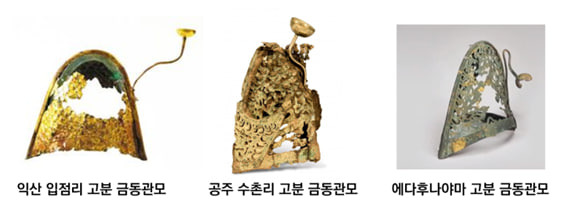
The discovery of artifacts such as gilt-bronze crowns, which symbolize royal authority, and irons used by the royal elite, across the sea raises significant implications. It strongly indicates that the tomb’s owner was not merely a local chieftain who preferred Baekje culture, but rather a ‘Baekje royal’ who held the same status as those in Baekje itself.
Three Gifts that Shaped Japan: Sword, Writing, and Buddha
Baekje delivered three gifts that changed the fate of Japan.
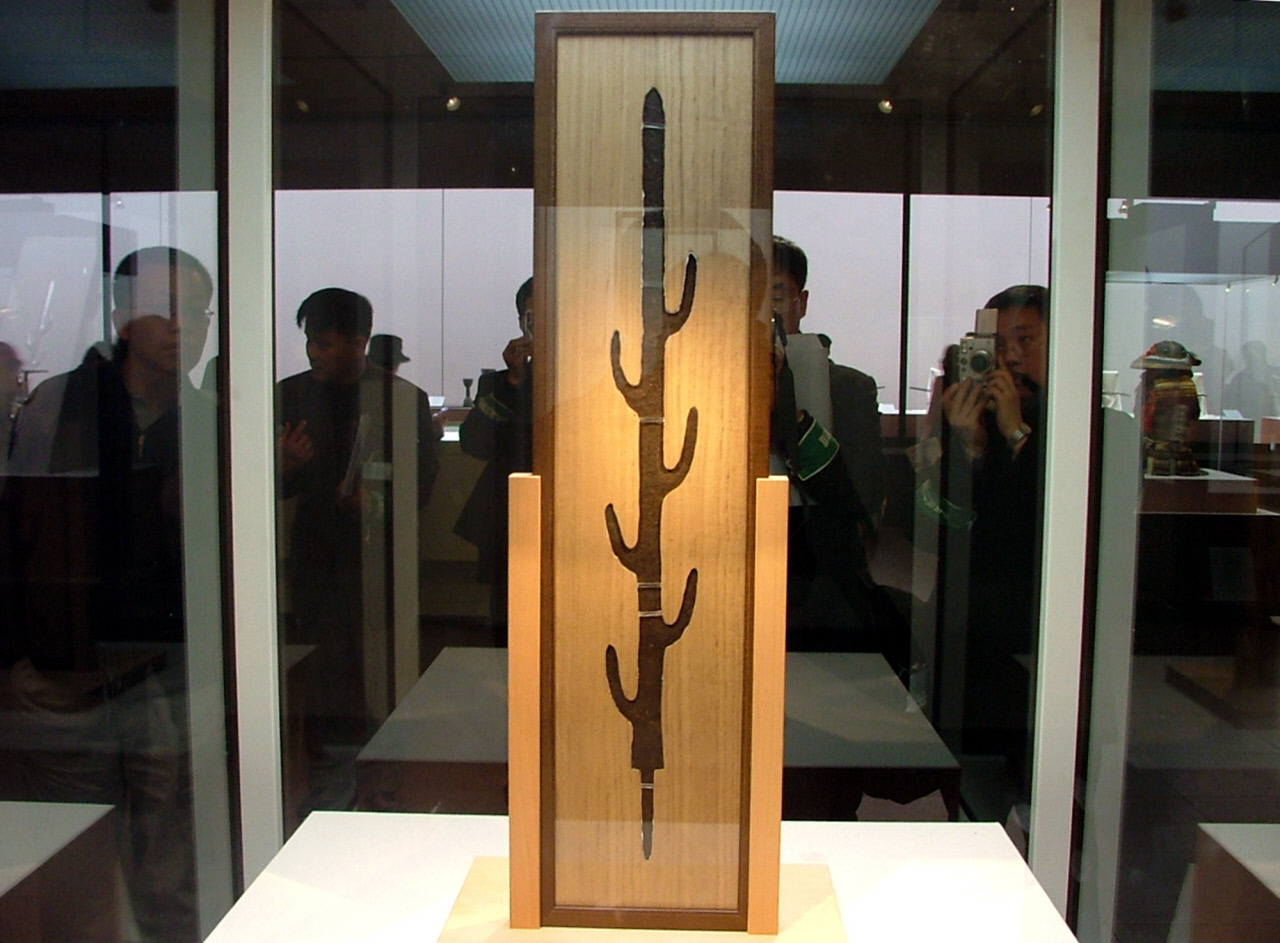
- Chiljido (七支刀): The inscription on the Chiljido, preserved at the Isonokami Shrine in Japan, is interpreted as the Baekje king ‘bestowing (下賜)’ the sword to the Wa king, serving as powerful evidence of Baekje’s political superiority at the time.
- Wangin (王仁) and Ajakki (阿直岐): The Nihon Shoki and Kojiki record that the Baekje scholar Wangin taught the Analects and Thousand Character Classic to the Japanese crown prince, marking a decisive moment in Japan’s transition to a written era.
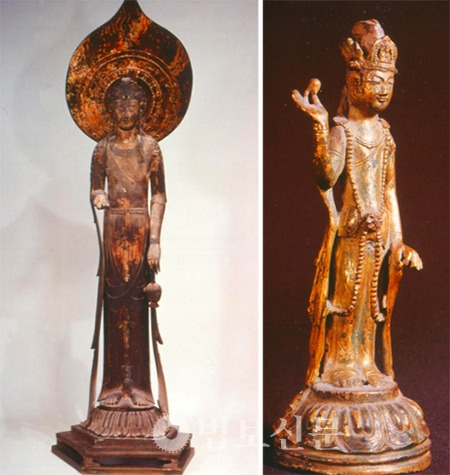
- Soga Clan (蘇我氏) and Buddhism: The Soga clan, which dominated Japan for a century, has roots in Baekje immigrants. They actively embraced Buddhism introduced by Baekje’s King Seong as a political foundation, leading to the golden age of ancient Japanese culture known as ‘Asuka Culture’.
3. The Driving Force of the Maritime Empire: The Sea
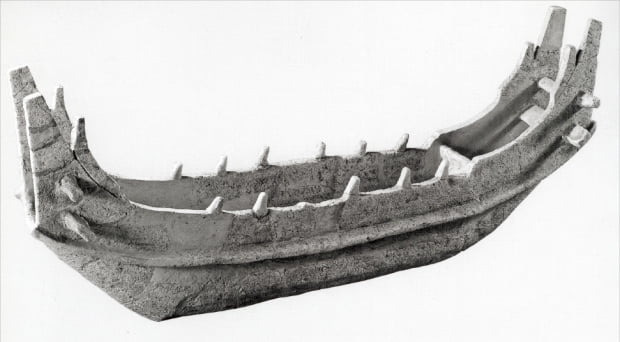
The power behind Baekje’s extensive activities stemmed from superior shipbuilding and navigation skills. Ancient Japanese records referred to excellent ships as ‘Baekje ships (百濟船)’, indicating that Baekje’s maritime capabilities were among the best in East Asia.
Based on this maritime power, Baekje dominated the Yellow Sea trade network, with the Jinping County in Yodong and the Damro in Japan serving as key footholds to protect and manage this vast trade network. This approach is remarkably similar to how the Phoenicians, who dominated the ancient Mediterranean, built trade posts along the coast to establish a maritime network. Both sought to control networks through strategic footholds rather than direct territorial conquest.
Comparison/Alternatives
How did Baekje’s overseas expansion differ from other ancient empires?
| Category | Baekje’s Maritime Network | Roman Conquest Empire |
|---|---|---|
| Goal | Securing military/trade footholds, strategic alliances | Territorial expansion and direct governance |
| Method | Damro (dispatching royalty), dissemination of technology/culture | Dispatching legions, building colonial cities |
| Nature | Flexible network type | Centralized governance type |
Conclusion
So far, we have traced the traces of Baekje’s lost overseas territory, Damro, through scattered records and artifacts.
- Baekje Damro was not merely a colony. In Yodong, it functioned as a military and commercial outpost, while in the Japanese archipelago, it served as a political partner in the birth of a new nation.
- Artifacts prove history. Especially the ’twin artifacts’ discovered in Japan provide strong archaeological evidence that Baekje royalty directly governed the Damro in Japan.
- Baekje was a ‘maritime network state’. Based on its excellent maritime capabilities, it established a vast network connecting China and Japan, reigning as a power in East Asia.
Although much of Baekje’s history was lost with its fall, the traces they left behind remain vividly across the sea. I hope this article serves as an opportunity to once again envision the true nature of the great maritime empire, Baekje, built upon the waves. How about visiting a nearby museum to encounter Baekje artifacts and feel their breath?
References
- Namu Wiki Yoseogyeongryakseol
- Incheon Ilbo [Following the Maritime Silk Road] 8. Our shipbuilding techniques were also present in the Ming Dynasty Zheng He’s fleet
- Sangsaeng Cultural Research Institute Thinking of Continental Baekje
- Encyclopedia of Korean Culture Baekje Yoseogyeongryak (百濟遼西經略)
- Ahasperts’ Thoughts New Evidence of Baekje in Yodong
- Yeonggwang Newspaper Revisiting Baekje
- First Assertion Yoon Yeodong Theory - Where is the Jinping County governed by Baekje?
- YouTube [2 million] The Secret of the Forgotten Land Baekje 22 Damro | KBS Sunday Special 1996. 09. 15
- Saenggeul Saenggeul An Economist’s View on Korean History 7: Ancient Foreign Trade and Transaction Costs
- Encyclopedia of Korean Culture Baekje (百濟)
- Pressian Koma and Damro
- Our History Net - National History Compilation Committee (1) Damro System
- Namu Wiki Chiljido
- Vancouver Central Daily [Easily Explained Korean History] Chiljido > Education Column](https://joinsmediacanada.com/bbs/board.php?bo_table=edu&wr_id=935)
- Unification News Our Painters Included in Japan’s Kojiki and Nihon Shoki
- Encyclopedia of Korean Culture Wangin (王仁)
- Namu Wiki Nihon Shoki
- Northeast Asian History Net Ancient Japanese Ruins, Artifacts, and Figures
- Kookmin News The Soga Clan, which ruled Japan for 100 years, was a Baekje person
- Wikipedia, The Free Encyclopedia Soga Clan
- Northeast Asian History Foundation Japanese Culture Containing the Breath of Baekje
- Our History Net (4) Ships and Navigation Techniques