
Have you ever seen a news headline like this? “South Korea ranks first in the world for AI patents per capita!” It’s an exhilarating piece of news, making us feel like we are the protagonists of the AI era.
In fact, the ‘AI Index Report’ published annually by Stanford University is the most authoritative source showing the current state of global AI technology, and South Korea boasts top rankings in various indicators within this report.
But have you ever thought about what criteria define an AI powerhouse? Just as a soccer team’s performance cannot be evaluated solely by the number of shots, a country’s AI competitiveness cannot be explained by a single metric. Patents, papers, investments, talent, and the actual AI models created… like a multi-sport event, the true strength is revealed only when scores from various categories are aggregated.
Today, we will step into the complex and exciting arena of the ‘Global AI Olympics.’ Based on the latest data, we will closely examine the performances of athletes (countries) in each category and have an honest and in-depth discussion about what kind of athlete South Korea is, and what our real strengths and weaknesses are.
Chapter 1: Global AI Olympics - Who are the Medalists in Each Category?
The competition for AI supremacy is truly a war without gunfire. Each country enters this competition with its own strategy. Let’s take a look at the current landscape in key categories.
Category 1: Idea Production (Papers & Patents)
This category measures how many AI-related ideas and research outputs are produced. It can be likened to basic physical fitness.
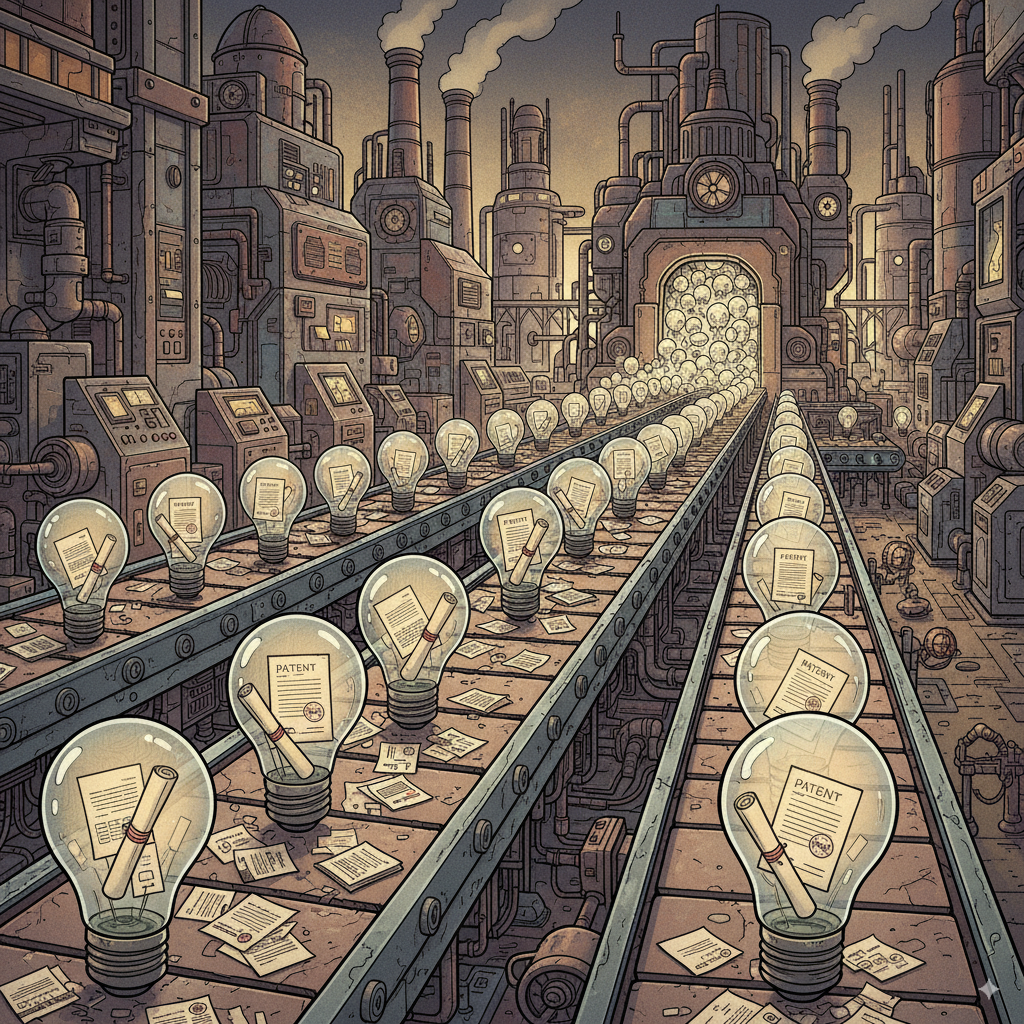
- Gold Medalist: China 🇨🇳: The overwhelming champion in this field is China. As of 2023, a staggering 69.7% of the world’s AI patents originated from China. It also swept the top spots in AI paper counts (23.2%) and the number of citations (22.6%). This is a veritable ‘factory of AI research.’
- United States 🇺🇸: While quantitatively lagging behind China, the U.S. remains strong in ‘quality.’ Half of the top 100 most cited papers in 2023 were produced by American researchers. Each contribution can be seen as a powerful ‘counterpunch.’
Category 2: Technical Implementation (AI Model Development)
This refers to the ability to turn ideas into technologies that impact the real world, namely AI models. It can be compared to the marathon, the highlight of the Olympics.
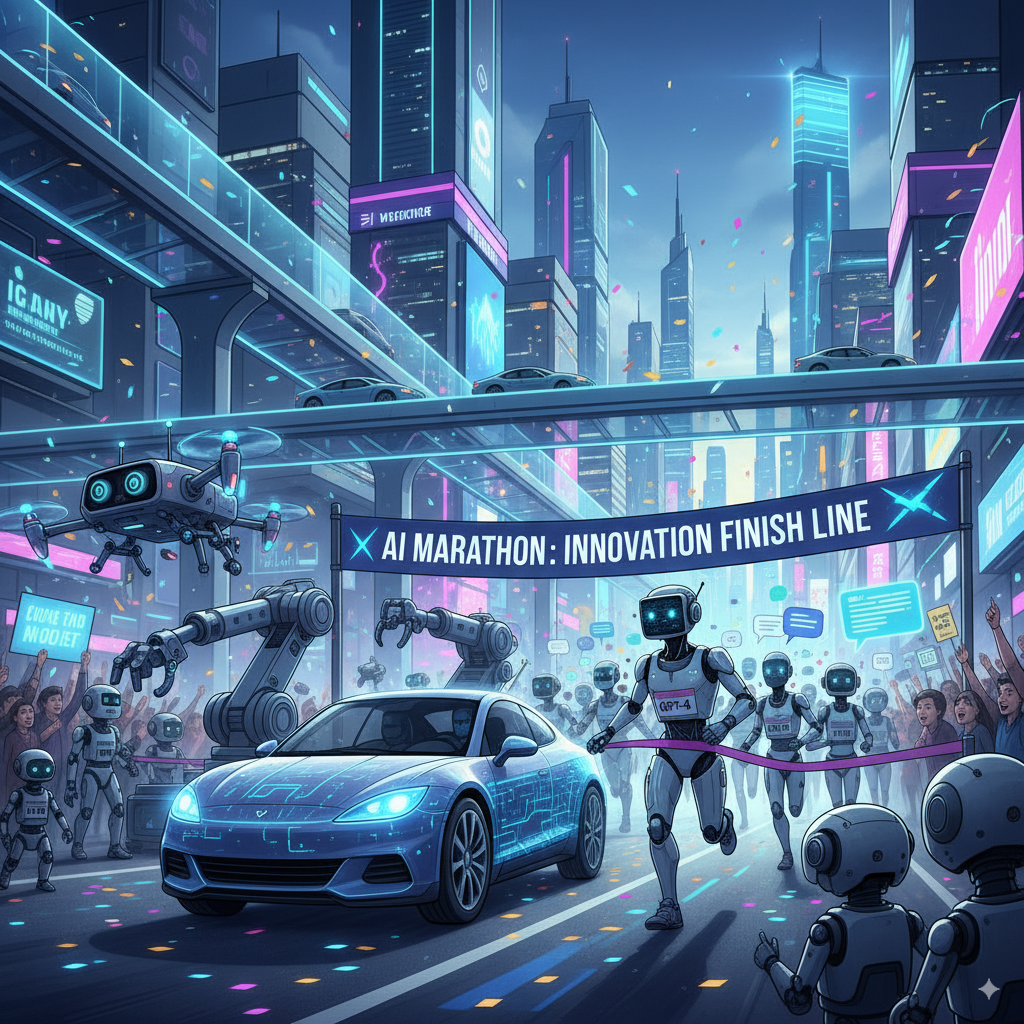
- Gold Medalist: United States 🇺🇸: This category is dominated by the U.S. In 2023, 40 out of 62 notable AI models were developed in the U.S. Most generative AI tools we use daily, like ChatGPT and Gemini, are products of American tech giants. They possess overwhelming technological prowess and systems to turn ideas into reality.
Category 3: Financial Power (Investment Scale)
Developing AI technology requires astronomical amounts of money. Ultimately, it can be called a ‘war of capital.’

- Gold Medalist: United States 🇺🇸: The U.S. is the clear leader in both private investment and public investment at the national level (approximately $5.23 billion). They are particularly focused on defense sector investments to maintain technological supremacy.
- Challengers: China has established semiconductor funds worth tens of trillions of won, while Saudi Arabia has announced an AI project worth a staggering $100 billion (about 130 trillion won). Countries like Canada, France, and the UK are also competitively unveiling large-scale investment plans, closely following the U.S.
Chapter 2: How Does South Korea Perform in This Arena?
So, what does South Korea’s report card look like in this fierce competition?
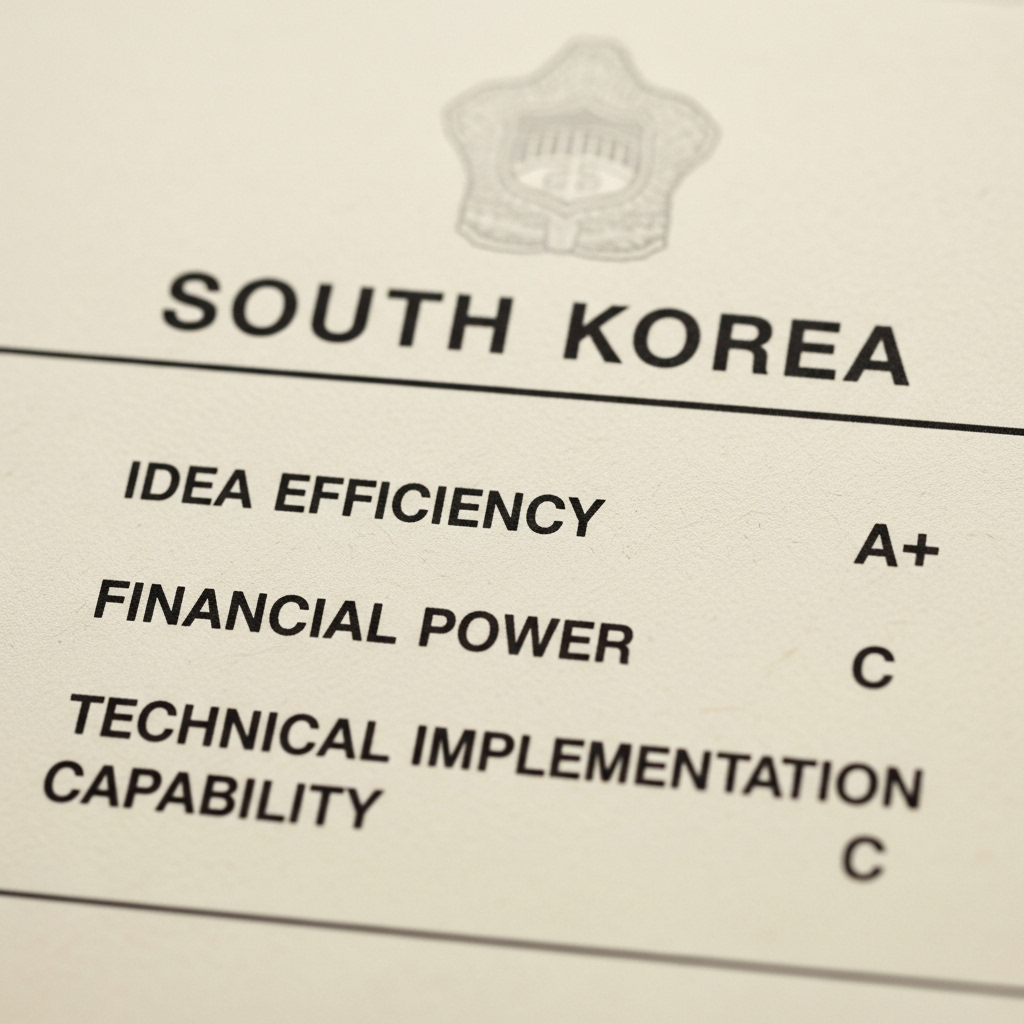
- Our Gold Medal Category: ‘Idea Efficiency’: We show a very special strength in the ‘Idea Production’ category, specifically in ’efficiency.’ With 17.27 AI patents per 100,000 people, we proudly rank first in the world. This means that a tremendous number of ideas are emerging from our small land. The quality of our papers is also commendable, with 6 out of the 100 most cited papers originating from us.
- Our Weaknesses: ‘Financial Power’ and ‘Technical Implementation’: Unfortunately, there is a significant gap in investment scale compared to giants like the U.S. and China. Although the government has set a goal to become one of the ’top three AI powers,’ there is still a sense of inadequacy in terms of the size of the playing field (for companies and research institutes) and the level of support. This naturally leads to limitations in ’technical implementation.’ There are still many hurdles to overcome for excellent ideas to transition from patent documents to AI models and services that can change the world.
Chapter 3: The One Factor That Determines Victory or Defeat in Every Game: ‘People’
So far, we have discussed patents, papers, and money. However, the most crucial resource that makes all of this possible has been overlooked: ‘Talent.’ Just as having the best players is essential, no matter how good the stadium and equipment are, without them, it is futile.
Behind the global AI competition lies a fierce ’talent acquisition war’ that transcends borders.
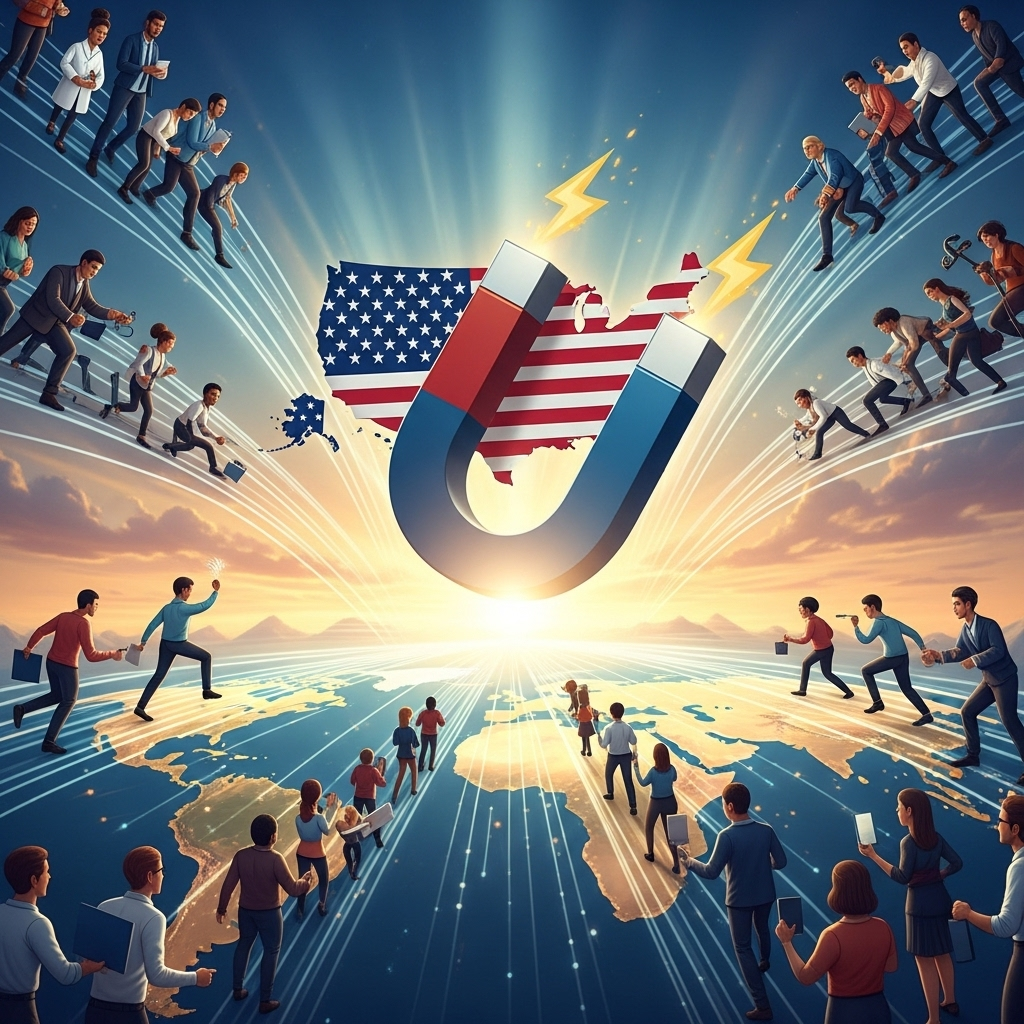
- Talent Black Hole: United States 🇺🇸: As you might expect, the clear winner of this war is the U.S. It attracts AI geniuses from around the world like a magnet, offering the best opportunities, rewards, and research environments.
- Talent Exporters: India 🇮🇳 & Israel 🇮🇱: These two countries are famous for producing world-class IT talent. However, unfortunately, most graduates thrive not in their home countries but in Silicon Valley, USA. India, which has experienced talent outflow for six consecutive years, is a prime example.
And here we face the most uncomfortable truth. The Stanford report points out that South Korea’s net outflow of AI talent is alarmingly similar to that of India and Israel.
Chapter 4: Why Are We Losing Our Best Players?
Behind the glamorous report card of ‘first in patents’ lies the shadow of ’talent outflow.’ This makes us reconsider all the indicators we have examined. Perhaps the numerous patents and papers we produce are merely the last ‘graduation projects’ left by outstanding talents before they leave for the bigger stage of the major leagues (the U.S.) from the KBO (Korea).

The immense added value and innovation they create will be entirely the gain of other countries. Why is this unfortunate situation occurring?
First, the overwhelming difference in ‘opportunities and rewards.’
To be honest, the South Korean market may still be too small to realize the grand dream of changing the world with AI technology. American tech giants like Google and OpenAI conduct research that shakes the future of humanity with massive capital. The opportunity to turn imaginative projects into reality alongside the best colleagues, coupled with world-class rewards, is an incredibly strong incentive.
Second, the difference in ’environment and culture.’
AI research is a long and lonely battle to find one success amid numerous failures. This process requires a flexible research environment that acknowledges failures as assets rather than fixating on short-term results. Instead of asking, “When will the results come out?” encouragement like, “That’s an interesting attempt. Let’s do more!” is needed.
From ‘Talent Academy’ to ‘Dream Team’
It seems that all the puzzle pieces are falling into place. South Korea is a potential AI Olympic athlete with a clear gold medal category in ‘Idea Efficiency.’ However, we are in a serious crisis of losing our best players to other teams.
If this continues, we may remain a ‘market’ consuming technology rather than a ‘producer’ leading AI technology.
But a crisis is also an opportunity. Recognizing the problem accurately means we are at the starting point of a solution. What we need now is not just to increase R&D budgets, but a ‘paradigm shift.’ Our questions should be:
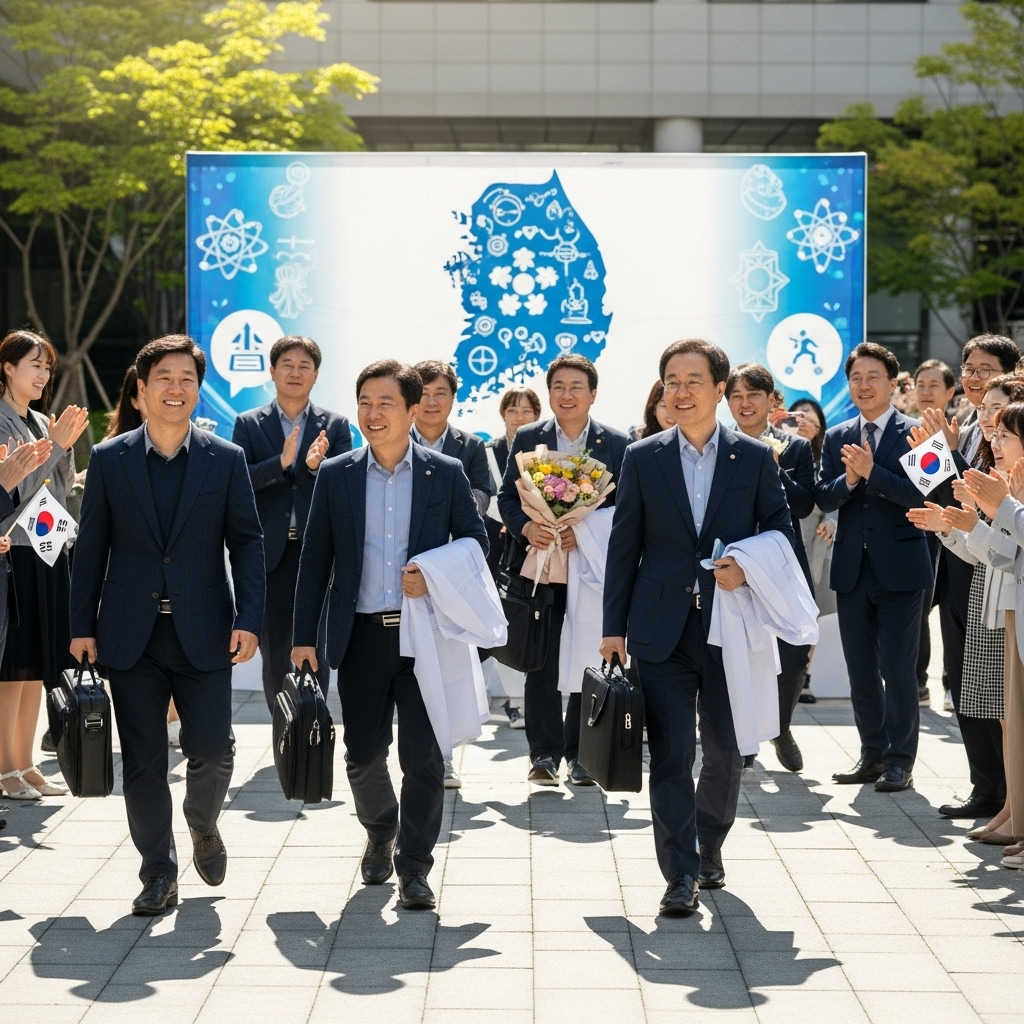
- How can we create a ‘dream team’ that makes players who have gone abroad want to return and play?
- How can we provide the best environment so that our promising talents do not have to long for overseas leagues?
Finding answers to these questions will be the only way to turn the shining title of ‘first in AI patents’ into the reality of a true ‘AI powerhouse.’ Time does not wait for us.