
“Can Machines Think?”
The journey of AI, which began with Alan Turing’s question, is a grand history that we will explore in an easy and enjoyable way.
- The background of AI’s birth and its early theoretical foundations
- The causes and overcoming processes of the two ‘AI winters’
- How the deep learning revolution has changed our lives and industries
“Can Machines Think?” - The Beginning of AI History
The grand prologue of the history of artificial intelligence opened in 1950, when British mathematician Alan Turing posed the fundamental question, “Can machines think?” This question transcended mere technical possibilities and sparked philosophical inquiries into the nature of intelligence, serving as a beacon that would guide the direction of AI research for decades to come. Instead of the ambiguous concept of ’thinking,’ Turing proposed a practical experiment to determine how similarly machines could exhibit intelligent behavior to humans, known as the ‘Turing Test.’
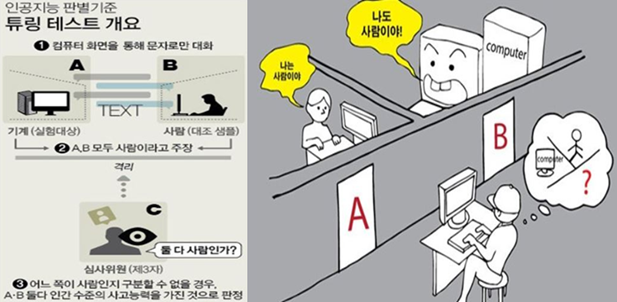
The essence of the Turing Test lies in its functionalist perspective, focusing on the ‘function’ of intelligence. If a human interrogator cannot distinguish between a machine and a human through text conversation, then that machine should be considered intelligent. This shift in perspective redefined intelligence as a problem of information processing, separate from the hardware of the brain, and provided a theoretical foundation for computer scientists to challenge the goal of implementing intelligence.
In this article, we will deeply follow the history of artificial intelligence, starting from Turing’s question, through the heated discussions of the 1956 Dartmouth Conference, the two harsh ‘AI winters,’ and the deep learning revolution, up to the era just before large language models (LLMs).
Chapter 1: The Beginning of AI History: Birth and Dawn (1940s-50s)
1.1. Theoretical Foundations: Cybernetics and Early Neural Networks
Before the term artificial intelligence was coined, the discovery that the brain is a vast electrical network of nerve cells called ’neurons’ sparked the idea that ‘could we mimic the brain with machines?’
This idea was concretized through the combination of Norbert Wiener’s ‘Cybernetics’ and Claude Shannon’s information theory.
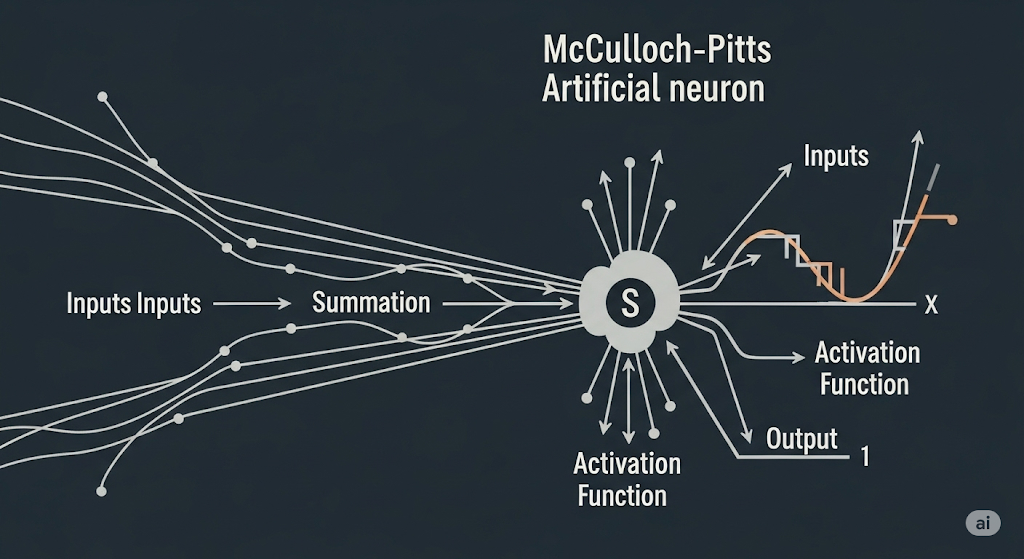
In 1943, Warren McCulloch and Walter Pitts introduced the first concept of an ‘artificial neuron,’ mathematically modeling brain neurons. This model demonstrated that it could process multiple inputs and produce outputs once a threshold was exceeded, proving the feasibility of simple logical operations (AND, OR, NOT). This became the theoretical cornerstone of artificial neural network technology.
This theory was physically implemented through the first neural network machine, ‘SNARC,’ created by Marvin Minsky in 1951, proving its potential.
1.2. The 1956 Dartmouth Conference: The Official Launch of ‘Artificial Intelligence’
In the summer of 1956, a historic workshop held at Dartmouth College became a decisive moment in uniting scattered research on ’thinking machines’ into a single academic field.
Young mathematician John McCarthy proposed the new term ‘Artificial Intelligence’ under the bold hypothesis that “any characteristic of learning or intelligence can be simulated by machines,” establishing the identity of this field.
Participants like Allen Newell and Herbert Simon expressed tremendous optimism, predicting that computers would defeat chess champions within ten years. Although the predictions were premature, the enthusiasm of the Dartmouth Conference acted as a catalyst for launching AI as an independent discipline.
1.3. Early Successes and Two Approaches
Early AI researchers found success in ‘closed worlds’ with clear rules, such as games and logical proofs. Arthur Samuel’s checkers program learned and improved its skills, embodying the early concept of ‘machine learning.’
The most shocking achievement was the ‘Logic Theorist’ unveiled by Allen Newell and Herbert Simon in 1956. This program proved 38 out of 52 mathematical theorems, some of which were more elegantly proven than by humans.
These successes showcased two core approaches to AI:
- ‘Connectionism’ (bottom-up) mimicking brain structure
- ‘Symbolism’ (top-down) modeling human logic with symbols and rules
At the time, the clear success of the Logic Theorist rapidly shifted the focus of AI research towards symbolism.
Chapter 2: The Rise of Symbolism and the First AI Winter (1960-early 1980s)
2.1. The Era of Symbolic AI (GOFAI)
The 1960s and 70s saw the dominance of symbolic AI, also known as ‘Good Old-Fashioned AI (GOFAI).’ This approach followed a top-down method of explicitly programming human expert knowledge into symbols and rules that computers could understand.
The greatest advantage of this method was its ’explainability,’ allowing for a step-by-step trace of the conclusion-drawing process. I liken symbolic AI to a ’textbook genius’—it exhibits perfect logic within established formulas and rules but easily collapses in the face of ambiguous and unpredictable real-world problems.
2.2. Expert Systems: The Commercialization of Knowledge
Symbolic AI achieved commercial success through ‘Expert Systems,’ which implemented the knowledge of domain experts in fields like medical diagnosis and mineral exploration.
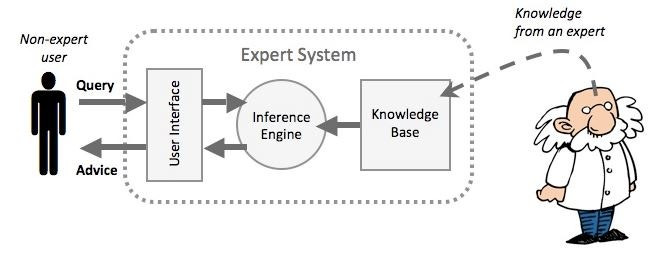
Expert systems consisted of a ‘knowledge base’ and an ‘inference engine,’ using rules in the form of ‘IF A, THEN B’ to solve problems. This demonstrated that AI technology could generate substantial economic value, leading to massive investments.
2.3. Limitations and the First ‘AI Winter’
However, by the mid-1970s, the rosy outlook collided with harsh reality, leading to the ‘First AI Winter’ (c. 1974-1980).
- Combinatorial Explosion: The problems of the real world had too many variables for the computational power of the time to handle.
- Knowledge Acquisition Bottleneck: It was nearly impossible to code the vast ‘common sense’ and expert knowledge, making systems highly vulnerable to unforeseen situations.
- Criticism of Connectionism: Marvin Minsky’s 1969 book ‘Perceptrons’ proved that simple neural networks could not even solve basic logical problems like XOR, draining funding for neural network research.
Due to these limitations, support for AI research was drastically cut, leading to a prolonged stagnation in the field.
Comparison: Symbolism vs. Connectionism AI
The differences between these two approaches are key to understanding the history of artificial intelligence.
| Characteristic | Symbolic AI | Connectionist AI |
|---|---|---|
| Core Philosophy | Intelligence arises from the manipulation of symbols and rules. | Intelligence emerges from interconnected networks of simple processing units. |
| Approach | Top-down: Explicitly programs human knowledge. | Bottom-up: Learns patterns from data to form knowledge independently. |
| Knowledge Representation | Expressed through explicit rules, facts, and logical relationships (e.g., knowledge base). | Implicitly represented by connection strengths (weights) between neurons in the network. |
| Learning Method | Primarily relies on logical reasoning and search algorithms, with limited learning ability. | Core of statistical learning (training) from large amounts of data (e.g., backpropagation). |
| Key Technologies | Expert systems, logic programming, search algorithms | Artificial neural networks (ANN), perceptrons, deep learning |
| Advantages | - Easy to explain results (Explainable). - Strong in problems with clear rules. |
- Can learn independently from data. - Robust to noise or incomplete data. |
| Disadvantages | - Vulnerable to ambiguity and uncertainty in the real world (Brittle). - Knowledge acquisition bottleneck. - Lacks flexibility for new situations. |
- Difficult to understand how it works (Black Box). - Requires large amounts of training data. - Demands significant computational resources during training. |
| Historical Examples | Logic Theorist, Expert Systems (MYCIN, etc.), Deep Blue | Perceptron, SNARC, AlphaGo |
Chapter 3: The Revival of Connectionism and the Second AI Winter (1980-early 2000s)
3.1. Backpropagation Algorithm and Multilayer Neural Networks
Even during the first AI winter, a handful of researchers kept the flame of connectionism alive. In the mid-1980s, the ‘Backpropagation Algorithm’ emerged as a decisive breakthrough for reviving neural networks.
The backpropagation algorithm adjusts connection weights by propagating the error between the predicted and actual values backward. Thanks to this algorithm, effective learning of multilayer neural networks with multiple ‘hidden layers’ became possible, allowing connectionism to return to the center of AI research.
In 1989, Yann LeCun’s handwritten postal code recognition system demonstrated the practical utility of backpropagation-based deep neural networks in real-world applications.
3.2. Deep Blue vs. Kasparov: A Milestone in Machine Intelligence
In 1997, symbolic AI once again captured public attention when IBM’s chess supercomputer ‘Deep Blue’ defeated world champion Garry Kasparov.
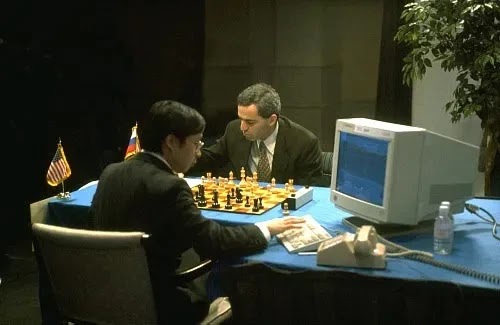
Deep Blue’s victory represented the pinnacle of brute-force search, calculating 200 million positions per second. While it was more a triumph of ‘computational power’ than ‘intelligence,’ it reinforced the public’s perception of AI’s potential.
3.3. The Return of the Second ‘AI Winter’
Despite signs of revival, the AI field faced another ‘Second AI Winter’ from the late 1980s to the early 2000s.
- Commercial Failures: The much-anticipated expert systems showed limitations in solving real-world problems, leading to market collapse.
- Technical Limitations: The computing power of the time was insufficient to train deep neural networks using backpropagation, and the ‘Vanishing Gradient Problem’ became a serious challenge as networks deepened.
These limitations led to another depletion of research funding, resulting in a prolonged stagnation in the AI field, which had powerful algorithms but lacked sufficient data and computing power.
Chapter 4: The Deep Learning Revolution: Becoming the Mainstream of AI History (Mid-2000s onwards)
4.1. Three Catalysts of the Deep Learning Revolution
After two winters, the mid-2000s saw three key elements converge to usher in the spring of AI.
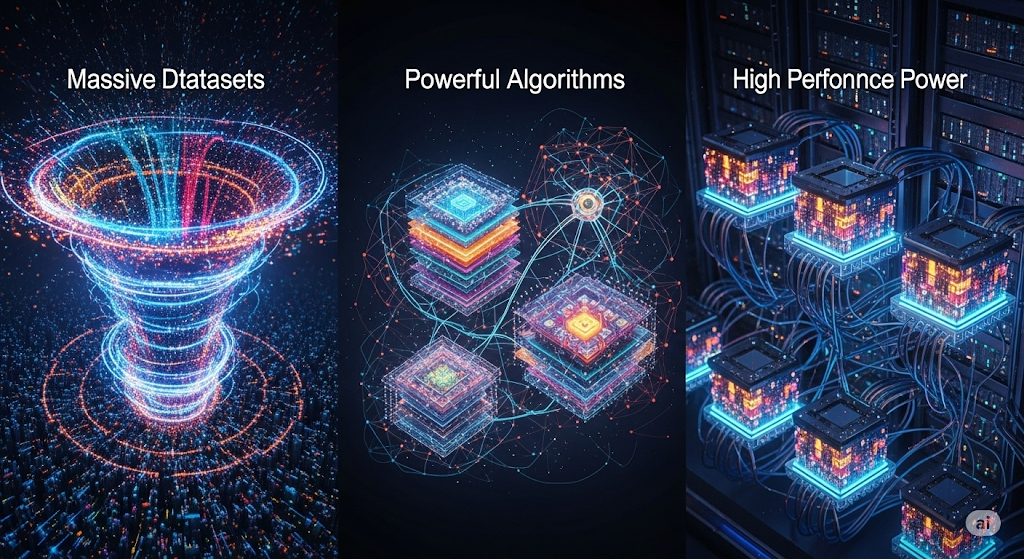
- Big Data: The proliferation of the internet led to an unprecedented accumulation of data, particularly the ImageNet dataset containing over 14 million images, which was crucial.
- GPU (Graphics Processing Unit) Computing: The discovery that the parallel processing capabilities of GPUs, developed for gaming graphics, were highly efficient for neural network training opened the door to training deep neural networks at a low cost.
- Evolution of Algorithms: In 2006, Geoffrey Hinton and others proposed methods to alleviate the persistent ‘vanishing gradient problem’ in neural networks, enabling stable learning of ‘deep’ networks with dozens of layers, marking the official start of the ‘Deep Learning’ era.
4.2. Pivotal Moments: ImageNet Competition and Speech Recognition
The potential of deep learning was proven in 2012 at the ImageNet Large Scale Visual Recognition Challenge (ILSVRC), where the ‘AlexNet’ developed by Geoffrey Hinton’s team won with overwhelming performance, heralding the arrival of the deep learning era. By 2015, the error rate of deep learning models in image recognition finally surpassed human levels (around 5%).
Around the same time, deep learning technology drastically reduced error rates in speech recognition, significantly enhancing the performance of smartphone voice assistants and automatic translation services.
4.3. AlphaGo Shock: A New Dimension of Intelligence
The pinnacle of the deep learning revolution occurred in March 2016 when Google’s DeepMind’s ‘AlphaGo’ defeated world-class Go player Lee Sedol with a score of 4 to 1.
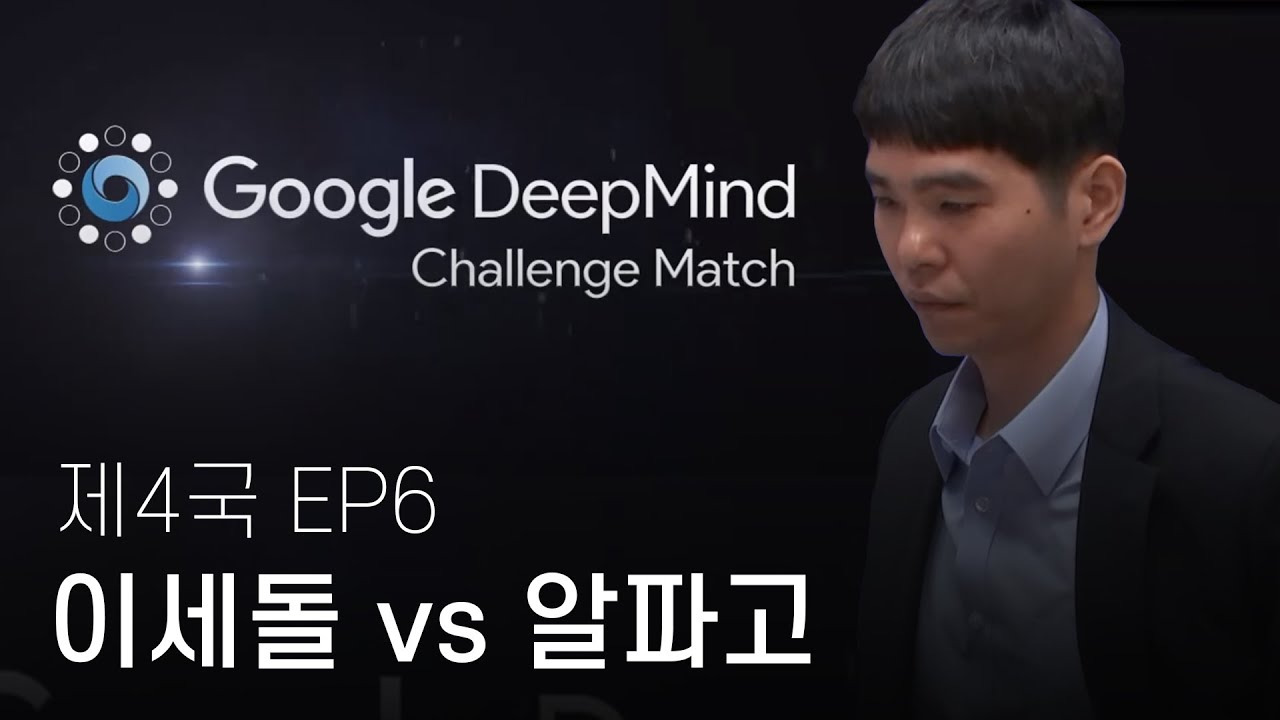
While Deep Blue’s victory showcased ‘computational power,’ AlphaGo’s victory delivered a far greater shock. In Go, where the number of possible moves exceeds the number of atoms in the universe ($10^{360}$), AlphaGo implemented an area similar to human ‘intuition’ through deep learning and reinforcement learning.
AlphaGo demonstrated the ability to make creative moves not found in human games, showing that it could ‘create’ new knowledge rather than merely imitating humans. The AlphaGo Shock symbolized that deep learning could enable complex strategic thinking and creative problem-solving.
Chapter 5: The Integration of AI into Our Lives: Changes in Daily Life and Industry
After the deep learning revolution, AI began to fundamentally change the landscape of our daily lives and industries.
5.1. AI in Daily Life: Invisible Intelligence
Behind the conveniences we experience daily are deep learning algorithms.
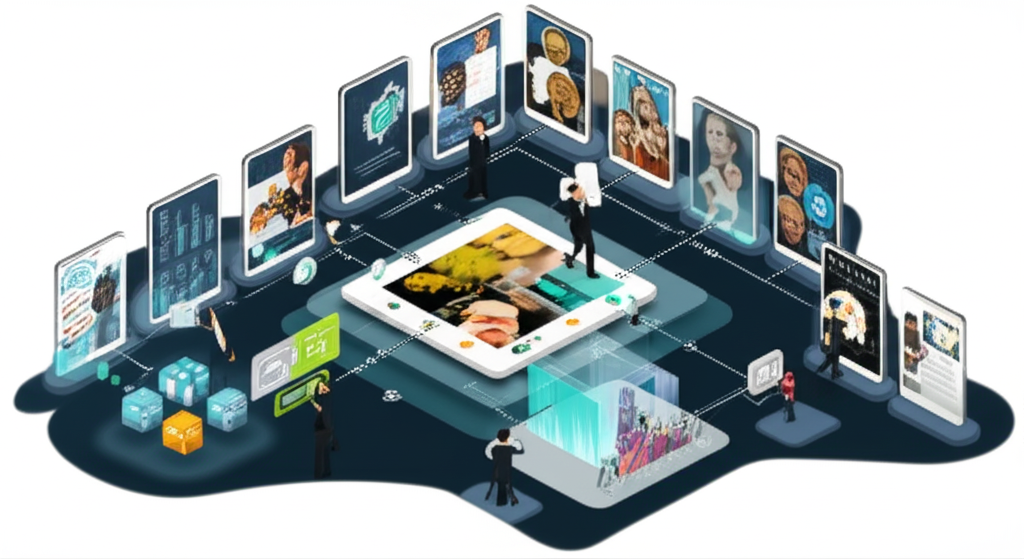
- Content Recommendation Systems: YouTube and Netflix use AI to analyze user preferences and personalize content recommendations.
- Personal Assistants and Smart Homes: AI voice assistants like Apple Siri and Google Assistant understand our commands through natural language processing and perform various tasks.
- Image Recognition and Processing: Smartphone cameras automatically recognize scenes to optimize settings, and camera apps recognize faces to apply fun AR filters.
5.2. AI in Industry: A New Horizon of Efficiency
- Manufacturing: In ‘smart factories,’ AI predicts equipment failures in advance and automatically detects subtle defects using vision systems.
- Finance: AI chatbots provide 24/7 customer support, and ‘robo-advisors’ manage assets and prevent financial fraud.
- Healthcare: Deep learning models help doctors with early diagnosis by detecting subtle cancer cells in medical images.
5.3. Autonomous Driving Technology: Changing the Paradigm of Mobility
Autonomous vehicles are the epitome of AI technology. By integrating various sensor data, they recognize their surroundings in 3D and identify and predict the movements of other vehicles, pedestrians, and traffic lights using deep learning-based computer vision technology.
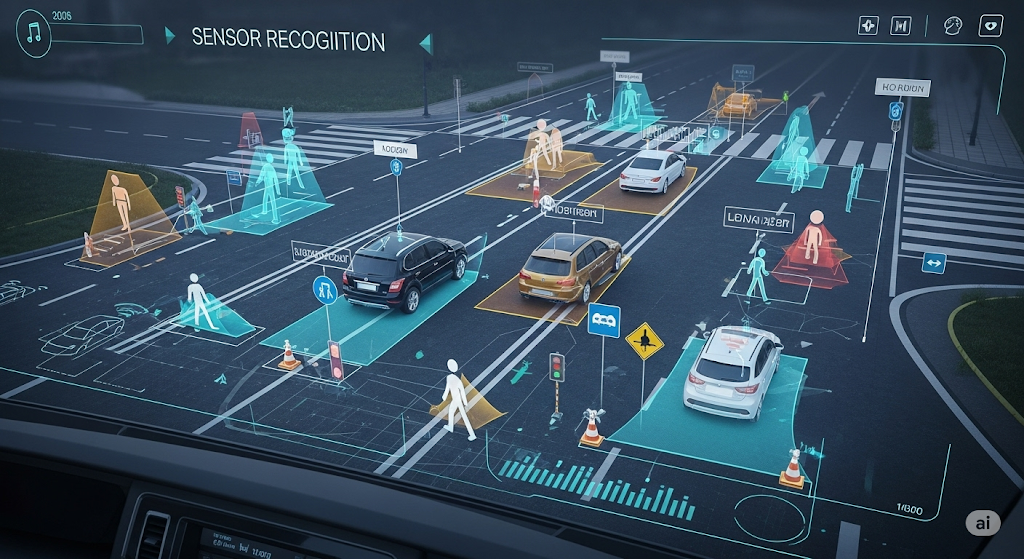
Based on this recognized information, AI plans and controls driving routes and makes safe driving decisions. While full autonomy is still a way off, AI is already present in the form of advanced driver-assistance systems (ADAS) like lane-keeping assistance.
These consumer AI services are not only the ‘products’ of AI technology but also create a massive virtuous cycle as a ‘data engine’ that produces vast amounts of data to train the next generation of AI.
Conclusion: Questions from the Past to the Future
The history of artificial intelligence began with Turing’s question, endured two harsh ‘AI winters,’ and became part of our lives through the deep learning revolution built on the foundations of big data and GPUs.
Looking back at the path AI has taken up to the era just before LLMs, we can identify several key points:
- AI development is cyclical. It has progressed through repeated cycles of excessive expectations (booms) and deep disappointments (winters) amid the tension between symbolism and connectionism.
- Innovation results from convergence. The deep learning revolution was not the result of a single algorithm but rather the convergence of big data, computing power, and algorithm improvements.
- Past issues remain relevant. Ethical and social challenges raised in the past, such as data bias, privacy, the ‘black box’ problem, and job displacement, have become even more critical today.
Ultimately, reflecting on the past of artificial intelligence is an essential process for understanding the current LLM revolution and wisely addressing future changes. The decades-old question of ‘how to align machine intelligence with human values and goals’ remains one of the most important challenges of our time.
Based on these lessons from the past, how can we ensure that the powerful tool of LLM is used for the benefit of humanity? Please share your thoughts in the comments.
References
- A brief summary of the history of artificial intelligence Brunch
- Episode 17: AI technology rises through the Dartmouth Conference Brunch
- Artificial Intelligence Wikipedia
- Dartmouth Workshop(O), Conference(X) (1) - How AI Happened Tistory
- [AI Story by Jeon Chae-nam] Dartmouth Academic Conference Yeongnam Ilbo
- The History of Artificial Intelligence Tistory
- Symbolic AI Namu Wiki
- AI Winter: The Cycle of Over-Expectation and Disappointment that Created Innovation Contents Tailor
- [AI History] The History of Artificial Intelligence, The Second Winter and Flourishing Period Chapter 5 Eunkwangº
- AI Winter Wikipedia
- Thinking Machines AI… The term ‘artificial intelligence’ was born at the Dartmouth Conference in the US AI Life
- Major Events in Artificial Intelligence, Deep Blue’s Chess Victory Neo Platform
- A Comprehensive Overview of the History of AI Technology Engineer Daddy
- Ethical Issues and Social Responsibility of Artificial Intelligence Codeit