
The Hidden Anxiety of Joseon Patriarchs: ‘Donkey’s Wind’ and the Great Labor of Mothers in the Industrial Era: ‘Mom’s Wind’. How has the driving force of Korean education evolved over time?
- The social significance of the father-centered educational fervor ‘Donkey’s Wind’ in the Joseon era
- The structural background of the emergence of ‘Mom’s Wind’ centered around mothers after industrialization
- How the role of parents in modern Korean society is evolving
Part 1: ‘Donkey’s Wind’ - The Hidden Educational Passion of Joseon Patriarchs
‘The King’s Ears are Donkey’s Ears’ and the Secrets of Patriarchs
To understand the concept of ‘Donkey’s Wind’, a deep analysis of the Silla King Gyeongmun’s legend is necessary. This story symbolizes the origins of Korean educational fervor, representing the immense pressure exerted by the patriarch in the Joseon era to protect the family honor tied to his son’s success.
‘Donkey’s Ear’ symbolizes the anxieties and weaknesses the patriarch wished to hide, while the ‘wind’ in the bamboo forest represents the uncontrollable social reputation that spreads these secrets. According to the ‘Samguk Yusa’, only the master of the barber knew the secret of King Gyeongmun’s donkey ears, but he could not bear the weight and shouted it into the bamboo forest, causing the secret to echo every time the wind blew.
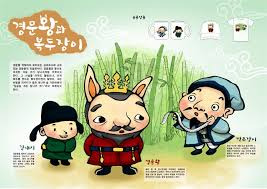
The king’s secret in the legend symbolizes the anxiety of the Joseon patriarch who bore the family’s fate.
The ‘Donkey’s Ear’ that the Joseon patriarch wanted to hide was the success or failure of his child’s civil service exam.
‘Donkey’s Wind’ and ‘Mom’s Wind’ show differences in their fundamental dynamics.
- ‘Donkey’s Wind’: An internal, downward pressure that starts from the patriarch and must be digested within the family. The leaking of secrets meant failure.
- ‘Mom’s Wind’: An external, upward force projected by mothers to influence the public education environment. It is essentially a public act.
In other words, this transition signifies a change from a model of internal control and concealment to a model of external influence projection.
The Patriarch and the Educator: The Male Education of Joseon Scholar Families
In the Joseon era, fathers were not only responsible for livelihood but also served as the family’s educator, moral anchor, and chief strategist leading the journey to pass the civil service exam. This was a core duty to uphold the family’s lineage.
When a child reached the age of 6-7, home education centered around the father began. The home served the role of a school. In Lee Mun-geon’s childcare diary ‘Yangarok’, there are detailed records of grandfathers directly overseeing their grandsons’ studies and wielding a rod, showing how practical the patriarchal educational responsibility was at the time.
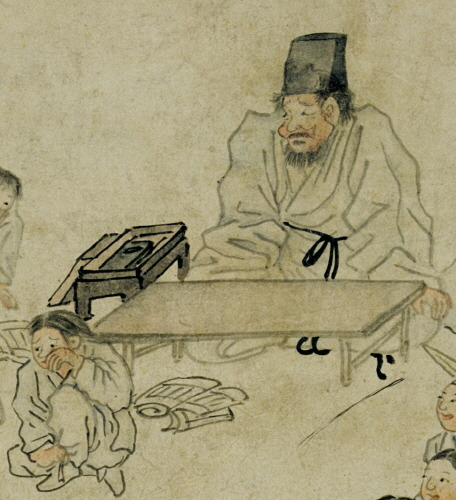
In the Joseon era, the home was the center of education, and fathers were key educators.
An extreme example of male educational fervor can be found in the relationship between King Yeongjo and Crown Prince Sado. Yeongjo’s coercive and obsessive educational fervor ultimately ended in tragedy, demonstrating how heavy a burden a father’s expectations could be on a child.
In Joseon society, the father’s economic role and educational authority were intertwined. He managed the family’s assets while also being the head of ‘family education’. However, with the separation of work and home during the industrial era, the father’s role was reduced to that of an external wage laborer. The separation of economic and domestic spheres dismantled the father’s traditional role as an educator and created a structural background for mothers to emerge as the primary educators.
The Civil Service Exam: A Father’s Dream, A Family’s Fate
The civil service exam was the key driving force behind ‘Donkey’s Wind’. This exam was the almost sole pathway to social mobility and maintaining the family’s yangban status.
Starting in the Goryeo era and perfected in the Joseon era, the civil service exam had a competition ratio of about 2000 to 1 for the final exam in the literary section. This led to the formation of a private education market in the Joseon era, with private educational institutions like seowon gradually transforming into specialized exam preparation institutions.
High stakes led to organized malpractices. The emergence of proxy exam experts known as ‘geobuk’ and answer sheet writers known as ‘sasu’ can be seen as the precursors to today’s high-priced college admission consulting. Sometimes, a high-ranking bureaucrat father would exert influence for his son, a phenomenon known as ‘dad chance’.
Theoretically merit-based, the civil service exam functioned as a mechanism for reproducing the power of the existing ruling class. The vast resources required for education could only be borne by the yangban class. At this point, ‘Donkey’s Wind’, or the father’s massive investment of resources and networking, became the key mechanism bridging the gap between theoretical meritocracy and practical status inheritance.
Part 2: A Major Transition - Socioeconomic Transformation of Korean Families
Abolition of the Civil Service Exam and the Korean War: The Collapse of the Old Order
The decisive historical rupture that ended the era of ‘Donkey’s Wind’ was the abolition of the civil service exam in the 1894 Gabo Reform, severing the link that upheld the authority of yangban patriarchs.
Subsequently, the 1950 Korean War destroyed the traditional class structure and had a leveling effect on society as a whole. In this upheaval, the educational authority of fathers was fundamentally dismantled. Knowledge of Confucian classics was no longer valid for social success. The resulting gap in expertise transformed the role of education from ’transmitter of content’ to ‘manager of processes’, heralding the emergence of a new role that mothers would fill.
The Emergence of ‘Salaryman’ Fathers and Nuclear Families
The industrialization that began in the 1960s gave rise to ‘salaryman’ fathers and nuclear families. Fathers became separated from the family, commuting early in the morning and returning late at night. This new structure solidified a clear gender division of labor between ’external breadwinner fathers’ and ‘internal household manager mothers’.
As the father’s role was reduced to economic provider, the mother’s domestic role included a new form of ‘productive labor’ focused on ‘producing successful children’. The academic performance and college admissions of children became visible success indicators of the mother’s capabilities. Ultimately, ‘Mom’s Wind’ came to signify not just educational fervor, but the performance of this crucial maternal labor that became indispensable for family success in a new social order.
The Birth of ‘Education CEO’ Mothers
Modern Korean mothers have become the ‘Education CEOs’ of their families. College admissions have become the modern equivalent of the civil service exam, and strategic management is essential for success in this new system.
This managerial role has become solely the mother’s responsibility. Mothers have become experts who, like project managers in a corporation, oversee and allocate resources such as time, money, and information to achieve the goal of their children’s successful college admissions.
This change has completely inverted the structure of educational knowledge. While fathers in the Joseon era were holders of substantive knowledge, in modern Korea, mothers have become holders of procedural and relational knowledge regarding the college admission system. Through networks like parent associations, mothers have become repositories and distribution channels for this essential knowledge, positioning themselves as new educational experts capable of navigating the complex system of college admissions.
Part 3: ‘Mom’s Wind’ - Maternal Love in Modern Competition
The Birth of ‘Mom’s Wind’ in the 1960s and the ‘Radish Juice Incident’
‘Mom’s Wind’ emerged in the 1960s as a negative term referring to the zealous social activities of mothers regarding their children’s education. Collective pressures regarding bribes and schools were typical behaviors at the time.
The ‘Radish Juice Incident’ of 1965 exemplified the peak of ‘Mom’s Wind’. When an answer in a middle school entrance exam that used ‘radish juice’ as an ingredient for making candy was marked wrong, parents demonstrated their skills by making candy with radish juice, ultimately correcting the answer. This incident ingrained the perception that ’education moms’ represent an undeniable organized social force in the public consciousness.
The negative connotation embedded in the term ‘Mom’s Wind’ reflects society’s anxiety about the newly emerging collective public power of women, breaking away from traditional patriarchal control.
The Pinnacle of Competition: Gangnam’s 8 Districts and International Similarities
The institutional and spatial embodiment of educational fervor is clearly evident in the formation of ‘Gangnam’s 8 Districts’. The government’s policy in the 1970s to relocate prestigious high schools to Gangnam concentrated the education-sensitive wealthy class, creating a hub of private education represented by the Daechi-dong academy district.
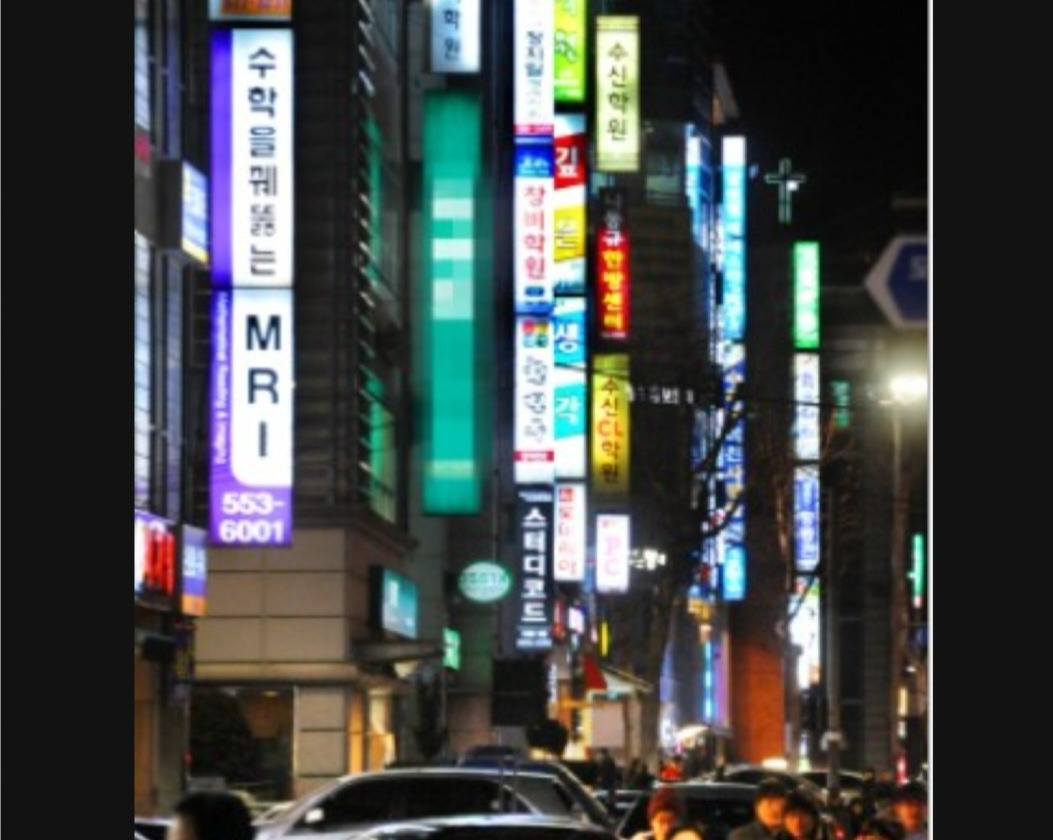
Gangnam’s 8 Districts have become a symbol of South Korea’s fierce educational fervor and private education market.
This phenomenon is not limited to Korea. The ’education mama’ in Japan, ’tiger mom’ in China, and the ‘jiwa’ phenomenon show that East Asian societies with hyper-competitive entrance exam systems have produced a strong type of mother with high educational fervor.
Paradoxically, the main factor that deepened ‘Mom’s Wind’ was government policy. The government created a zero-sum game with college admissions and concentrated prestigious high schools in specific areas (Gangnam), triggering the ‘8 Districts phenomenon’ and real estate speculation. Ultimately, the state was the culprit that turned extreme ‘Mom’s Wind’ into a rational strategy for children’s success.
Part 4: Winds of Change - The Evolution of Parental Roles in Korea
The Return of Fathers? From ‘Goose Dads’ to ‘Frendy’
In the 21st century, the role of Korean fathers is undergoing complex changes. The extreme phenomenon of ‘Goose Dads’, who are separated from their families for their children’s early study abroad, has recently been joined by new participatory fatherhood models such as ‘Frendy’ and ‘Scandi Daddy’.
- Frendy: A blend of ‘Friend’ and ‘Daddy’, referring to fathers who aim for a friend-like relationship with their children.
- Scandi Daddy: Fathers who actively participate in childcare and household chores, similar to the Nordic model. Also known as ‘Latte Papa’.
As a father myself, I often ponder what role I should play between being an authoritative patriarch and a friend-like dad. Modern fathers face dual expectations to be successful providers (the past model) and devoted caregivers (the new model), but the social structures to support this are still lacking.
‘Goose Dads’ and ‘Frendy’ are not merely different options; they represent the polar extremes of unresolved tensions in our society regarding the role of fathers in family and education.
Comparison of ‘Donkey’s Wind’ and ‘Mom’s Wind’
A table summarizing the characteristics of the two ‘winds’ clearly shows their differences. Which side do you think your family is closer to?
| Attribute | ‘Donkey’s Wind’ | ‘Mom’s Wind’ |
|---|---|---|
| Historical Background | Joseon Era (before 1894) | Post-Korean War, especially from the 1960s to present |
| Key Subject | Patriarch (father, grandfather) | Mother |
| Main Goal | Maintaining family honor and yangban status through passing the civil service exam | Social mobility and class movement through college admissions |
| Field of Influence | Internal, private sphere: exerting influence within the family, fear of external failure | External, public sphere: projecting influence on schools, academies, and parent networks |
| Main Means | Direct academic instruction, character education, mobilizing family resources, utilizing networks | Educational management, information gathering, networking, investment in private education, negotiating with educational institutions |
| Underlying System | Agricultural economy, extended family system, Confucian patriarchy, civil service exam system | Industrial/post-industrial economy, nuclear family system, hyper-competitive college entrance exam system |
Conclusion
Over the past 100 years, Korea’s educational fervor has continued to evolve in its subjects and methods according to the changes of the times.
-
Key Summary
- Joseon’s ‘Donkey’s Wind’: An internal and downward educational pressure led by fathers for family honor.
- Modern ‘Mom’s Wind’: Transitioned to an external and public influence led by mothers for family status elevation amid industrialization and nuclear family formation.
- Future Parental Roles: The emergence of new father figures like ‘Frendy’ suggests a potential shift towards a co-parenting model, but structural barriers remain a challenge.
The history of these two winds reflects how much energy Korean society has poured into education. What do you think is the ideal educational role of parents? Please share your thoughts in the comments.
References
- Namu Wiki The King’s Ears are Donkey’s Ears
- Encyclopedia of Korean Culture Mom’s Wind
- Seoul Newspaper [Social Section at That Time] The Wind of Mom’s Education
- Our History Net From Child to Adult
- Medical World News [Historical Journal That Day] Special Edition 1: The Educational Fervor that Swept Joseon
- Monthly Chosun [History and Today] The Education of Joseon Crown Princes through the Jo Hyun-ah Incident
- Policy Briefing The Civil Service Exam, the Backbone of the Joseon Dynasty
- Gyeongsang Daily News To Fulfill the Role of a Father as the Head of the Family
- Our History Net Education and the Civil Service Exam System
- Hankook Ilbo [Science Essay] The Private Education that Destroyed Joseon
- Encyclopedia of Korean Culture Civil Service Exam (科擧)
- Our History Net Trials of History and the Birth of Resilient Women
- Korea Institute for Health and Social Affairs Family Conflict Patterns and Policy Tasks Due to Family Changes
- Segye Ilbo From Seoul National University to Medical School… The 100 Years of Mom’s Wind is Leaving Marks on Korea
- Namu Wiki Gangnam’s 8 Districts
- Encyclopedia of Korean Culture Goose Dad
- Namu Wiki Goose Dad
- Eduwill Official Blog [Current Affairs/General Knowledge] Frendy & The Treaty of Detroit