
Starting from an individual’s breakfast table to the reshaping of the global technology landscape, we conduct an in-depth analysis of the massive butterfly effect triggered by semiconductor tariffs.
- The direct impact of a 100% semiconductor tariff on consumer goods prices, such as laptops and cars.
- The policy contradictions and conflicts of interest arising within the U.S. economy and industry.
- The process of global supply chain restructuring and the new geopolitical landscape of technological hegemony.
Semiconductor Tariffs Change the Mornings of Ordinary Households
Semiconductor tariffs are no longer an abstract term in international news. As illustrated by the story of David, a 45-year-old project manager living in Austin, Texas, this is a reality that directly impacts all of our household budgets.
While reviewing monthly expenses at the breakfast table, he discovers that the price of a new laptop for his child has risen significantly beyond expectations. This was just the beginning. Plans to purchase a new car have been continuously postponed due to parts shortages and tariff issues, while consumer electronics prices have skyrocketed.

The moment David saw the headline on his smartphone, “U.S. Announces 100% Tariff on Imported Semiconductors”, everything clicked into place. The Yale Budget Lab has analyzed that such tariffs could impose an additional annual cost of $3,800 on the average American household.
This anxiety extends to the workplace. David’s company is considering reverting some inventory management tasks back to manual processes due to skyrocketing costs of replacing advanced equipment. This reflects the warning from the Information Technology and Innovation Foundation (ITIF) that companies may reduce purchases of productivity-enhancing tools and revert to manual processes.
On his way home, he worries about his son’s future, recalling news about the reduction of entry-level jobs in the tech sector due to AI. The economic slowdown caused by tariffs could make it difficult for the next generation to even take their first steps into society.

Thus, semiconductor tariffs serve as an ‘amplifier of economic anxiety’, compounding job insecurity from technological advancements and inflation following the pandemic. This transcends mere wallet issues, evolving into a psychological problem that shakes the stability of American households.
The Economics of 100% Tariffs: From GDP to Productivity
Beyond David’s personal anxiety, let’s analyze the potential impacts of this unprecedented tariff policy on the U.S. macroeconomy with a cool head. This foreshadows structural changes that could shake the foundations of the U.S. economy.
A Duet of Carrots and Sticks
The core of the policy is to impose a 100% tariff on imported semiconductors while providing exceptions for companies that promise to build production facilities in the U.S. This serves as a ‘stick’ to compel foreign companies to invest in the U.S., while offering a ‘carrot’ of tariff exemptions to investing companies, aiming for the reshoring of the semiconductor supply chain.
Direct Hits on GDP and Living Standards
Semiconductors are akin to the “heartbeat” of the modern digital economy. According to ITIF simulations, even a 50% tariff could reduce U.S. GDP growth by 2.56% in ten years. With a 25% tariff, Americans would lose $4,208 in growth opportunities over ten years. The pressure on David’s household budget could become a nationwide reality.
Table 1: Projected Impact of Semiconductor Tariffs on the U.S. Economy
| Tariff Scenario | GDP Growth Rate Impact (Year 10) | Cumulative Household Income Loss (Year 10) |
|---|---|---|
| 10% Tariff | -0.20% | No data available |
| 25% Tariff | -0.76% | -$4,208 |
| 50% Tariff | -2.56% | No data available |
| Source: ITIF Analysis |
Inflation and Loss of Future Competitiveness
The burden of tariffs is largely passed on to domestic consumers and businesses. A 100% tariff will likely lead to price increases close to 100%. Particularly, information and communication technology (ICT) products are sensitive, with a 1% price increase resulting in a 1.3% decrease in consumption, meaning a $11.8 billion reduction in consumption could occur even with a 25% tariff.
This goes beyond mere consumer inconvenience; it diminishes the accumulation of ICT capital, hindering national productivity as a whole. For instance, if U.S. manufacturers reduce their adoption of robotics, the industrial competitiveness of the U.S. will be severely compromised. Ultimately, the skyrocketing costs of building AI data centers could lead to falling behind in the future competition for technological hegemony.
A Divided America: Winners and Losers of Semiconductor Tariffs
The 100% semiconductor tariff divides the U.S. industry into ‘semiconductor users’ and ‘semiconductor manufacturers’, creating deep fissures of interest.
The Dilemma of Finished Goods Companies
Companies like Apple, Dell, and HP find themselves in a “lose-lose” situation, either absorbing increased costs (sacrificing profits) or passing them on to consumers (leading to decreased sales). Ultimately, price increases become the most realistic option, directly impacting consumers.
The Paradoxical Situation of Semiconductor Manufacturers
Even theoretical beneficiaries like Intel and Micron, U.S. semiconductor manufacturers, are sending strong warnings against this policy. Modern semiconductor fabs cannot be built solely with American-made equipment.
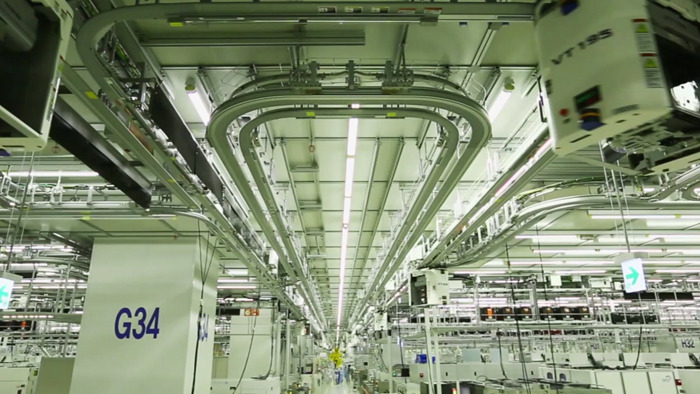
Building cutting-edge fabs requires essential imported equipment like EUV lithography machines from ASML in the Netherlands. If a 100% tariff is imposed on these, constructing state-of-the-art fabs in the U.S. will become commercially unfeasible.
This is akin to pressing the accelerator with one foot (‘CHIPS Act’ subsidies) while pressing the brake with the other (tariffs on essential equipment). The government is revealing a fatal internal contradiction by providing subsidies with one hand while imposing punitive costs with the other, effectively nullifying the effects of the CHIPS Act.
South Korea’s Survival Strategy: Turning Crisis into Opportunity?
South Korea, one of the primary targets of U.S. tariff policies, has chosen to avoid the crisis through strategic investments.
Samsung Electronics and SK Hynix have pledged to build factories worth billions of dollars in Texas and Indiana, respectively. This is not merely an expansion of business but a strategic investment to evade the U.S. tariff bomb. As a result, South Korean companies have been excluded from tariff targets, and the U.S.-Korea technology alliance has deepened.
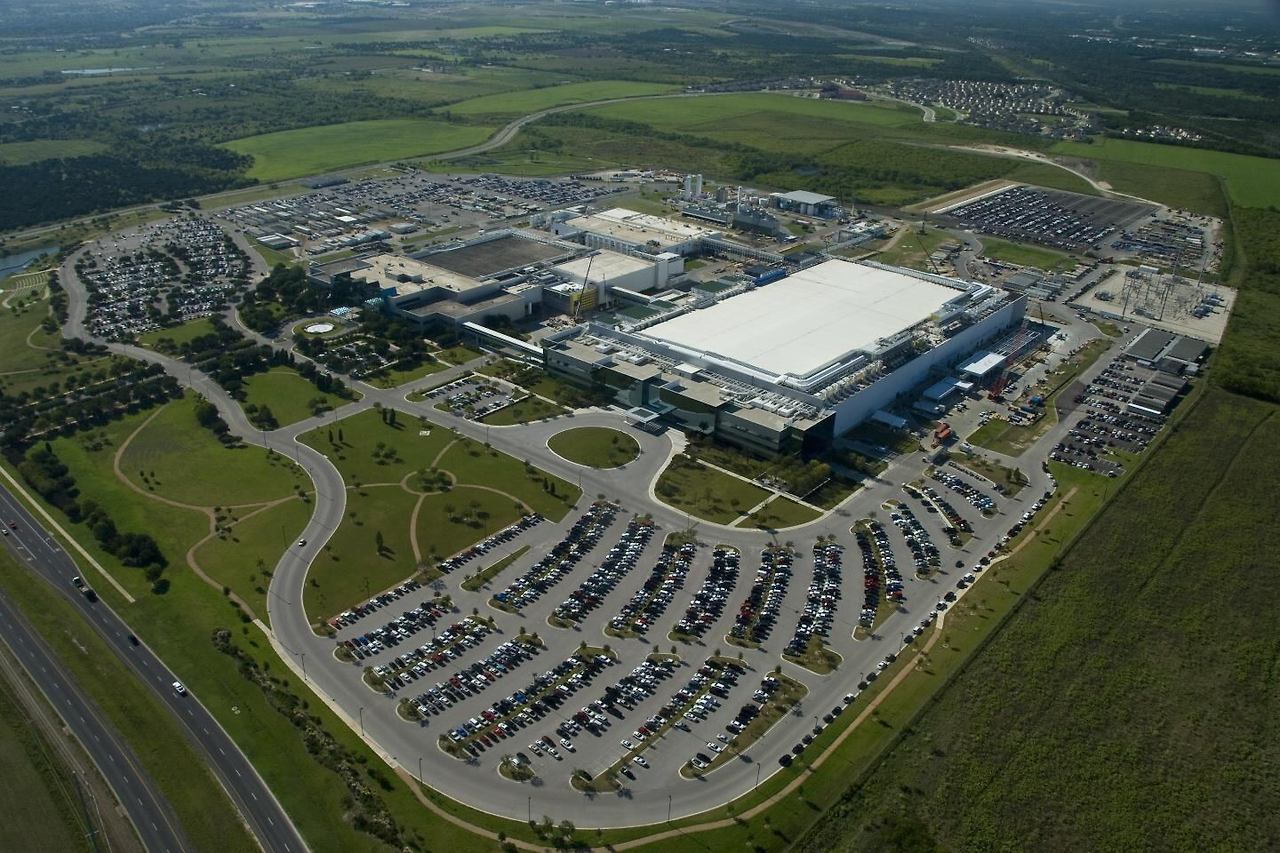
Table 2: Current Status of South Korea’s Semiconductor Exports and Impact of U.S. Tariffs
| Indicator | Data | Source |
|---|---|---|
| Global DRAM Market Share | 73% | International Trade Administration |
| Global NAND Flash Market Share | 51% | International Trade Administration |
| Largest Export Market (China) | $46.6 billion | ITIF |
| Second Largest Export Market (U.S.) | $10.7 billion | ITIF |
However, this choice comes with a cost. The largest export market for South Korean semiconductors remains China. As the alliance with the U.S. strengthens, relations with its largest customer, China, become precarious, facing a geopolitical tightrope. This illustrates that the essence of tariff policies lies in restructuring the geopolitical order using corporate investments as leverage.
A Fragmented World: The New Order of Technological Hegemony
The ripple effects of semiconductor tariffs are shaking the global technology supply chain, leading to unintended ‘collateral damage’ and a new geopolitical landscape.
Bottlenecks in the Global Supply Chain
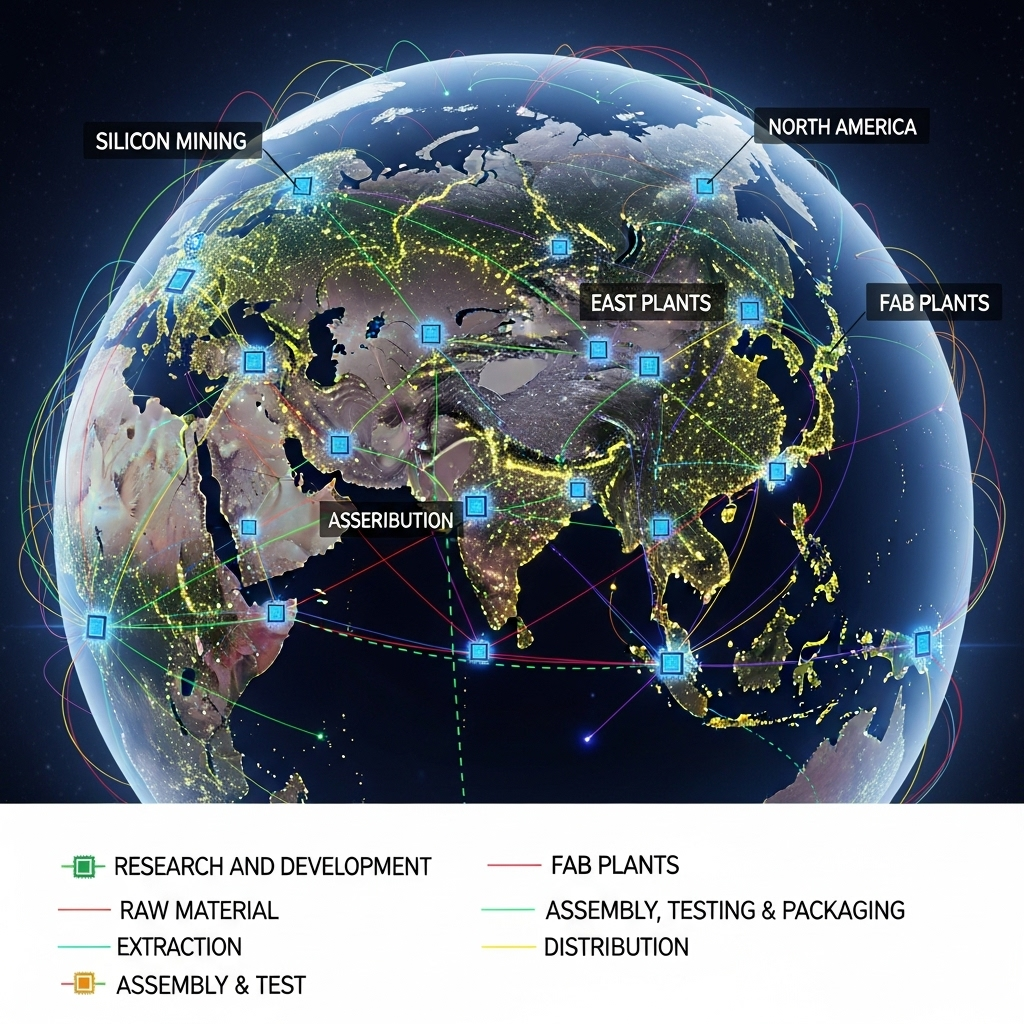
The semiconductor supply chain is a product of global specialization, involving Taiwan (foundries), Japan (materials), and the Netherlands (equipment). The U.S. has already pressured Japan and the Netherlands to join in export controls against China, indicating that this is part of a larger strategy to control ‘chokepoints’ in the global supply chain.
Unintended ‘Collateral Damage’
The Center for Strategic and International Studies (CSIS) warns that such aggressive policies could lead to ‘collateral damage’. If global clients begin to exclude U.S. components to avoid future trade disputes, U.S. companies could fall into a ‘death spiral’ in the long run.
Conclusion
Ultimately, the bill for all these changes will fall back on ordinary citizens like David, the protagonist of the first chapter. As a consumer who also enjoys IT devices, I cannot help but feel that the price increases and technological stagnation brought about by this tariff policy are not someone else’s problem.
Key Takeaways:
- Increased Consumer Burden: A 100% semiconductor tariff directly raises prices of essential goods like laptops, smartphones, and cars, placing significant burdens on households.
- Policy Contradictions: Contrary to the goals of the CHIPS Act to foster the domestic semiconductor industry, tariffs on essential imported equipment negate its effects and hinder domestic industrial development.
- Weakening Global Leadership: Unpredictable policies undermine the trust of allies and accelerate the emergence of competitive technological ecosystems, such as the European Union (EU), potentially weakening U.S. technological hegemony in the long run.
This policy poses a fundamental question to us: ‘Is the goal of building a secure supply chain worth the enormous costs incurred in the process?’ The pursuit of absolute security may lead to relative decline, and this is the heavy question posed by the chips resting on our shoulders.