

Do you recall the fairy tale “Chicken Little”? I read it as a child and thought, “Why is that character like that?” But as I grew older, I realized that character often described me. When just one acorn falls on their head, they cause a commotion throughout the entire village, shouting, “The sky is falling!” It’s funny, isn’t it? But it’s not always a laughing matter. Don’t we all have a “Chicken Little” living inside us?
Psychologists Arthur Freeman and Rose DeWolf called this phenomenon “Smart Mistakes.” It’s when the clever brain employs strategies to protect itself, only to end up trapping itself instead. It’s truly paradoxical.
Among these, the ultimate boss is “Catastrophizing,” also known as the “Chicken Little Syndrome.” This is a very bad psychological habit where one takes a trivial or manageable issue and imagines a cascade of failures, ultimately leading oneself to conclude, “I’m doomed,” and give up.
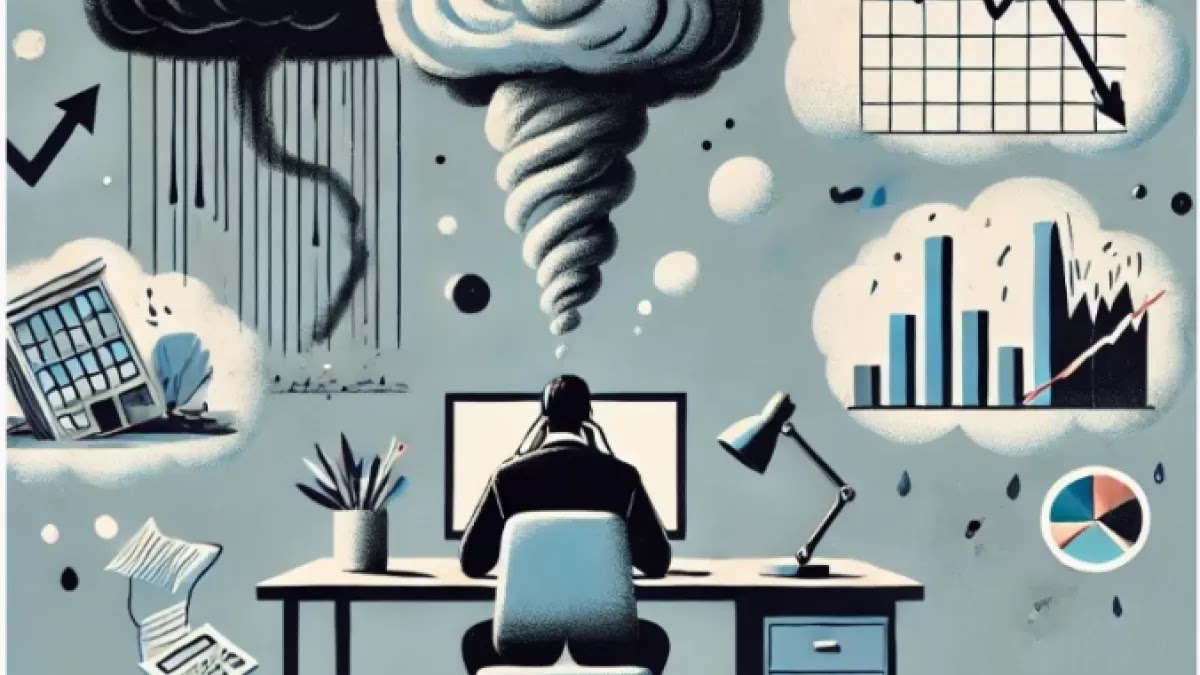
This article will begin by differentiating between this persistent anxiety and “true” catastrophic thinking. Then, we’ll explore how these thoughts manipulate our reality and guide you through a concrete 5-step path to break free from this cycle and become someone with robust “Realistic Resilience.”
1. Why Do You Imagine the Worst-Case Scenario?
Let’s take an example. This isn’t about a friend of mine (laughs), but let’s imagine a capable manager named “David.” He’s reviewing the quarterly report and notices that sales have dropped by 3% compared to last month. It happens, right? It could be due to the weather, or perhaps a holiday this month.
But in his mind… the “Chicken Little” sounds the alarm. “A 3% drop? This is just the beginning. Next month it will plummet by 10%, and this division is ruined. The entire team will be blamed, and I’ll be labeled an incompetent leader. My career is over.”
This is catastrophic thinking. It’s the instantaneous leap from objective data (a 3% drop) to subjective disaster (career end). But why does our brain do this?
One reason is “negativity bias,” according to studies. Come to think of it, it’s natural. In ancient times, it was far more advantageous for survival to be startled by a small sound in the bushes and flee from a predator than to admire pretty flowers and get eaten. Our brains are wired to process negative information with several times more importance than positive information. In short, our brains aren’t broken… they’re just reading a 21st-century Excel file with a Stone Age manual. How sad, isn’t it?

Second, and this is somewhat ironic, it’s due to a “craving for control.” Imagining the worst is, in reality, a misguided attempt to protect oneself from future disappointment and pain. “If I imagine all the terrible things that could happen in advance… won’t it hurt less when they actually occur?”

Hmm… has that ever really worked? As in most cases, it just drains mental energy and doesn’t help solve the actual problem at all. Rather, it terrifies David, preventing him from taking any constructive action.
2. The Worst-Case Scenarios Created by ‘ANTs’
These negative thoughts never come alone. They always bring friends along, like dominoes.
Now, let’s talk about “Sarah,” who recently changed jobs. She sent a work report email to an important client… and oops. Immediately after hitting send, she discovered a critical typo in the subject line. You’ve experienced this, right? That chilling sensation.
At that moment, a waterfall of thoughts poured into Sarah’s mind (the domino effect of negative thinking).
- Trigger (Fact): “I made a typo.”
- Overgeneralization: “Why am I always like this? I always make mistakes at crucial moments.” (Turning a single incident into a permanent failure pattern.)
- Mind Reading: “The client will think I’m careless and unprofessional. They won’t trust me.” (Assuming others’ thoughts without any evidence.)
- Catastrophizing (The worst-case leap): “Because of this one typo, the company’s image will be ruined. I’ll be fired from this project, and ultimately I won’t even pass my probation.”
- Emotional Reasoning: “I feel so anxious and terrible, so this must be an irreversible mistake.” (Using one’s emotions as the basis for judging reality.)
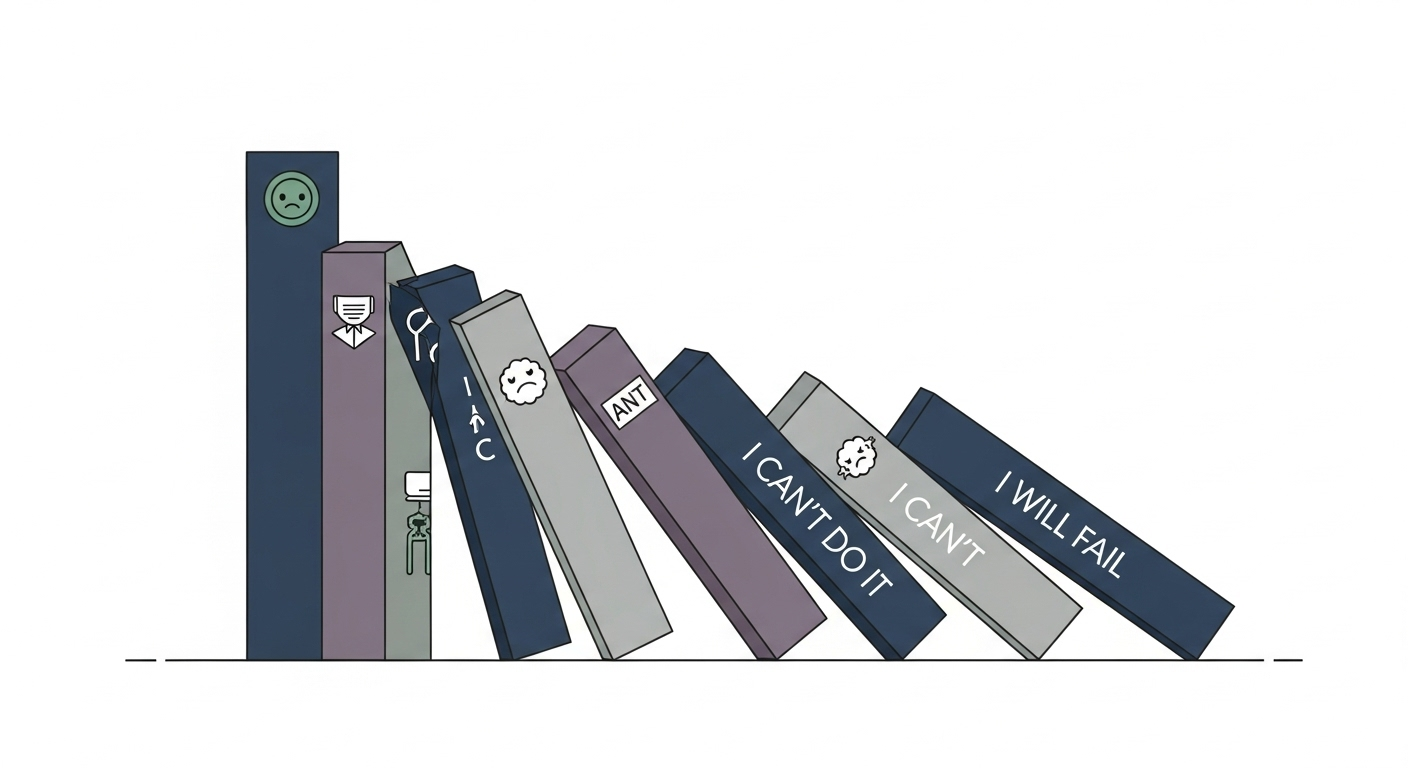
In Cognitive Behavioral Therapy (CBT), this chain reaction is called “Automatic Negative Thoughts” (ANTs). The name itself… “ANTs.” They truly come in a swarm, gnawing away at our minds.
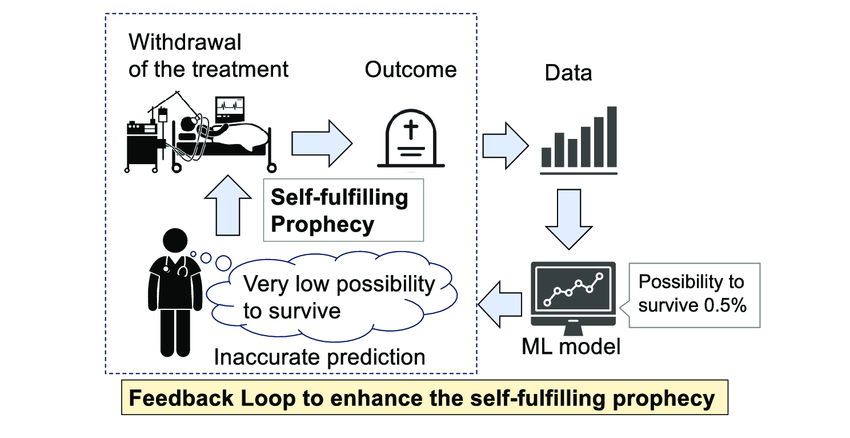
What’s truly terrifying is that these thoughts eventually control reality. Overwhelmed by extreme anxiety, Sarah couldn’t focus on her next task and showed a lack of confidence in her subsequent meeting with the client. In the end, she herself created the image of an “untrustworthy person” that she had imagined. This is the “self-fulfilling prophecy.”
3. Applying the Brakes: The Power of Realistic Thinking to Stop ‘Catastrophizing’

So, how do we stop this relentless domino effect of thoughts? By simply shouting, “Everything will be fine!”? No, not like that. Honestly, such forced positivity doesn’t help us much. It’s like telling someone who’s dying, “Cheer up!”
What we need is thinking based on ‘reality,’ not ‘positivity.’
The case of “Mark,” a programmer, is a perfect example. The day before a crucial service launch, he discovered a critical bug where payments failed under specific conditions. Oh no. If it were me, I might have put my head on the desk…
His initial reaction was also catastrophizing. “It’s ruined! The entire system is wrong. Tomorrow’s launch is impossible. Everything will collapse!” However, he stopped there. Instead of falling into a panic, he activated his trained “realistic thinking” process.
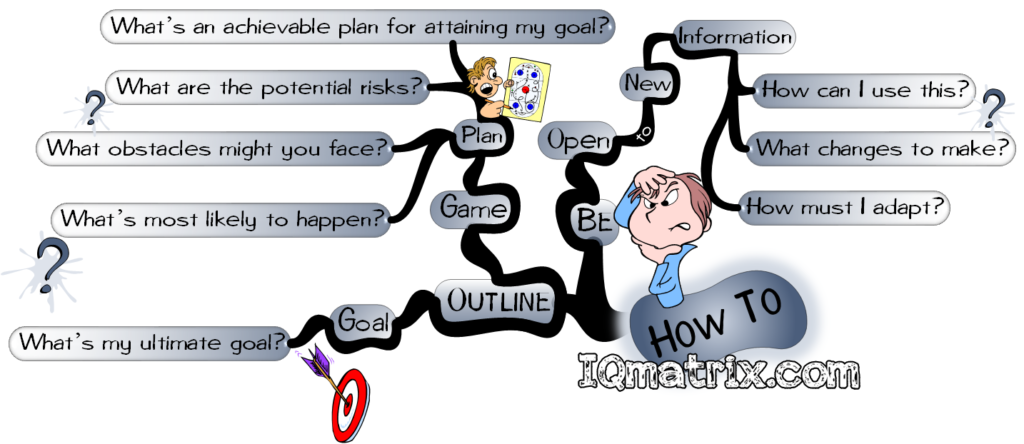
- Recognize automatic thoughts: “My current thought is that ’everything has collapsed.’ This is my emotion, not an objective fact.”
- Challenge the evidence (fact-check): “What is the evidence for this thought? The only evidence I have is that ‘payments fail under specific conditions.’ 99% of the system is still functioning perfectly.”
- Consider alternatives (expand perspective): “What are other more plausible explanations? A) It’s a logic error in a specific module. B) It’s an issue with an external API integration. C) It could be a simple setting I overlooked.”
- De-catastrophize (assess impact): “In the worst case, what happens if I can’t fix this overnight? Will the entire service collapse? No. We can postpone the launch by a day or two, or temporarily disable that payment option and issue a notice. This isn’t a ‘disaster,’ it’s a ‘problem’ that needs solving.”
Do you see the difference? As his thoughts were reframed, Mark’s adrenaline subsided, and his brain started working again. He calmly reviewed the log files and found the cause within a few hours. The disaster of “everything has collapsed” was merely an illusion that existed only in his mind.
Catastrophic thinking fixates on the 0.1% of rare worst-case “possibilities.” Realistic thinking, however, focuses on the most “plausible” outcomes based on 99.9% of the evidence. This is a skill anyone can acquire through training.
4. Moving Forward: Building Mental Muscle with ‘Eclectic Thinking’
Okay, we’ve managed to put out the immediate fire with “realistic thinking.” We’ve stopped it. But that’s not quite enough. To build long-term “mental muscle,” or true resilience, something else is needed.
That is “Eclectic Thinking.” The term might sound complicated, but in simple terms, it’s thinking that acknowledges the “gray areas.” This is the perfect counter to “All-or-Nothing Thinking,” which divides the world into two categories: “success or failure,” “perfect or garbage.”

When caught in black-and-white thinking, a single mistake becomes the entire failure. Consider “Emily,” who is practicing the guitar. She perfectly played the first three chords of a difficult song, but then produced a jarring note on the fourth measure. Her black-and-white thinking immediately declares: “Ah, I’m just not talented. I can’t even do this one thing right. This song is a failure.” …Sound familiar?
Eclectic thinking whispers to us in such moments: “Hold on. You made a mistake on the fourth measure. But the first three measures were perfect. 75% of this song is already a success, and the remaining 25% is just a challenge. Doesn’t it seem strange that 25% of mistakes make 75% of success equal to zero?”
This perspective is incredibly important.
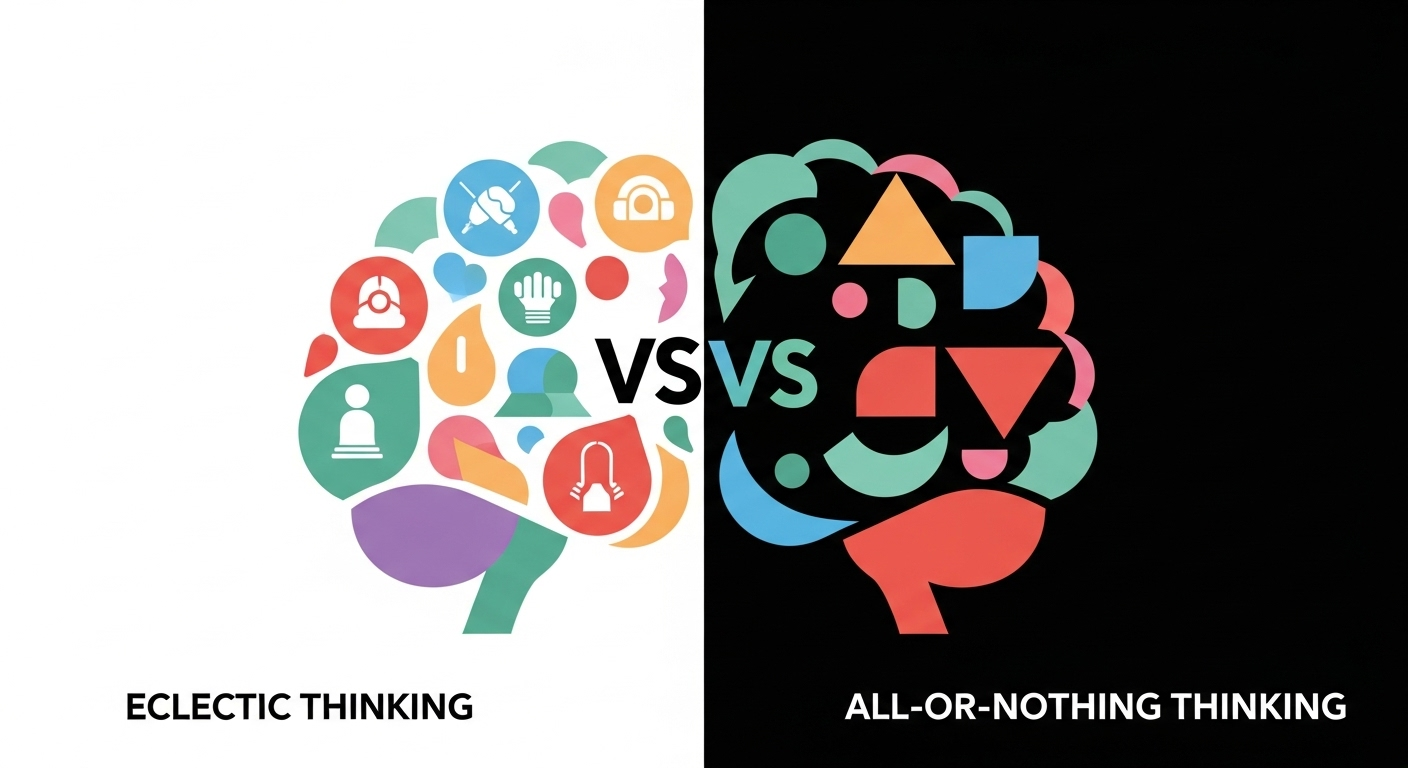
Let’s look at the more complex case of “Minjun’s” online store. His first-day sales target was 5 million won. The actual result was 500,000 won.
- Black-and-white thinking: “This is a complete failure. I have no talent for business. I should close it down immediately.” (Anything less than 5 million won (success) is considered failure.)
- Eclectic thinking: “Okay, 500,000 won is far short of the 5 million won target. That’s a fact. But wait, 500,000 won in sales did occur. That’s not ‘zero,’ is it? It means 10 customers purchased my product. This is proof that people want my product and the payment system works. This isn’t a ‘complete failure,’ but rather ‘10% success’ or ‘insufficient first-day data.’ The gap of 4.5 million won isn’t a judgment of my incompetence, but a ’to-do list’ indicating that my marketing or pricing strategy needs revision.”
Black-and-white thinking imposes impossible rules like “I must be perfect” and leads us to give up easily even at minor setbacks.
But eclectic thinking is different. It is the ‘psychological flexibility’ that allows us to keep moving forward amidst life’s inevitable imperfections. All great achievements in the world are not the result of a single perfect success, but rather a combination of numerous ‘partial successes’ and learning from mistakes as ‘data.’
5. Defending Your Mind: The Powerful Shield of ‘Eclectic Thinking’
This intelligent “eclectic thinking” serves as a powerful shield, a “defensive” strategy, not only against internal criticism but also against external attacks—or rather, ‘feedback.’
“Jihoon,” a researcher pursuing his doctorate, submitted his core thesis to a journal and received a notification for “revise and resubmit.” The reviewer comments included sharp criticism of his methodology, along with praise for the originality of his data.
A catastrophic/dichotomous mindset immediately gets bogged down in the ‘criticism.’ “They’ve basically rejected my thesis. My methodology was flawed. I’m not qualified as a researcher.” This reaction is a typical cognitive distortion that completely ignores the value of ‘praise.’
If Jihoon uses the defensive tool of eclectic thinking at this point, he interprets the feedback differently. He first avoids the trap of accepting the entire review as a single lump of “good/bad” and deconstructs the feedback.
- [Positive elements: Originality of data, timeliness of the topic]
- [Areas for improvement: Appropriateness of a specific statistical model]
Then, instead of defensive thinking like “Yes, but…”, he uses receptive thinking like “Yes, and…”
“Yes, the reviewers acknowledged that my data is original. And I need to refine the statistical model further.”
This approach precisely prevents criticism from devaluing praise. It allows him to see the ‘spectrum of outcomes,’ moving away from the extremes of ‘acceptance’ and ‘rejection.’ He realizes he is not failing now, but standing at a healthy intermediate stage of the spectrum.
Ah, this seems like a very intelligent approach. Accepting that two seemingly contradictory thoughts, like “I am competent” and “This aspect of me is weak,” are not contradictory but simply coexistings facts. Isn’t this an essential condition for growth?
Conclusion: Taming the Inner Chicken Little - From Victim to Architect
Wow, that was a truly long journey. You’ve seen together how the “Chicken Little” in our minds diligently, and perhaps foolishly (sorry), drags us from a single acorn to a monumental disaster. We witnessed how that voice originates from the brain’s ancient survival instincts and how it creates a “cognitive cascade” that demolishes us.
Now, let’s just remember two key tools to break this cycle.
First, “Realistic Thinking.” This is the brake that slams on a runaway train screaming “It’s all over!” It helps us escape panic by asking, “Wait! What objective evidence supports this thought as fact?”
Second, and this is the real deal, “Eclectic Thinking.” If you just hit the brakes, the car just sits there. We need to move forward again. Eclectic thinking is that “sustainable momentum.”
Catastrophic thinking and black-and-white logic turn our lives into a harsh exam grading “pass/fail.” It’s terrible. A single mistake, a single shortfall, becomes a “fail” notice.
However, eclectic thinking allows us to view life as ‘scores.’ You might get 90 out of 100, or 60. The key is this: 60 is not 0. 60 is not ‘failure,’ but a clear ‘base camp’ for reaching 70 next time. Just as Minjun’s 500,000 won was not a failure but ‘10% of assets’ for the next leap.
In life, we will encounter countless “acorns.” That’s unavoidable. But whether we see those acorns as just acorns or as signs of the sky falling… is now our choice.
This is the journey of transforming from a “victim” passively subjected to one’s thought patterns, to an “architect” actively designing mental resilience. And the most important blueprint for that design is this “eclectic thinking.”
References
- Smart Mistakes You Didn’t Know About (Arthur Freeman, Rose DeWolf) (Aladin Book Introduction)
- [eBook] Smart Mistakes You Didn’t Know About (Yes24)
- Chicken Little Syndrome - Imagining the Worst-Case Scenario (Steemit)
- Smart Mistakes You Didn’t Know About (Google Books)
- [eBook] Smart Mistakes You Didn’t Know About (Kyobo Bookstore)
- Failure is Practice (Millie’s Library)
- Imagining the Worst-Case Scenario, Is It a Disease? How to Stop Thinking? (Dr. Now)
- When Problems Arise, “My Life is Ruined” - Imagining the Worst… How to Stop Worry’s ‘Sudden Onset’ (Donga Ilbo)
- Does Imagining Worst-Case Outcomes Help? Effective Strategies and Coping Methods (Mental Experience Design)
- Cognitive Distortions (Wikipedia)
- Changing Negative Emotions with Cognitive Behavioral Therapy Practice | Finding Automatic Thoughts (YouTube, Meta Research Institute)
- 7 Steps to Develop Critical Thinking Skills (with Examples) (Asana)
- Curious Heart Series Episode 5 - How is Panic Disorder Treated? (Psychiatry News)
- What is Eclectic Therapy and Why is it Helpful? (Carepatron)
- Success or Failure, Escaping Extreme Dichotomous Thinking (Psychiatry News)
- The Dangers of Absolute Thinking Are Absolutely Clear (Doing Philosophy)