

Have you heard of the fairy tale “Chicken Little”? I read it when I was little and thought, “Why is that character like that?” But as I grew older, I realized that it often describes me.
Chicken Little panics and tells the whole town that “the sky is falling!” just because an acorn dropped on their head. It’s funny. But it’s not entirely a laughing matter. Don’t we all have a bit of “Chicken Little” inside us?
Psychologists Arthur Freeman and Rose DeWolf call this phenomenon “smart mistakes.” It’s when a clever mind’s protective strategy actually leads it into a trap. It’s truly paradoxical.
The ultimate form of this is “Catastrophizing,” also known as the “Chicken Little Syndrome.” This is a very bad psychological habit where you take one small, manageable issue and imagine a cascade of failures, ultimately convincing yourself, “I can’t do it” and giving up.
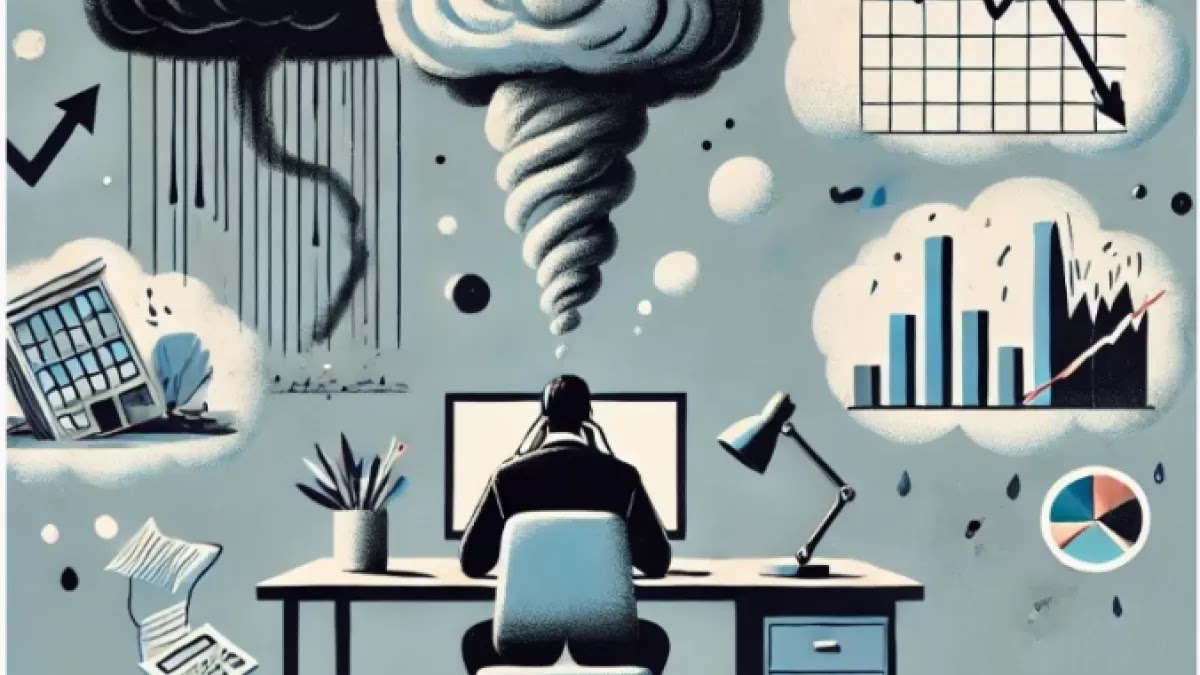
This article will start by distinguishing between this tiresome anxiety and “true” catastrophizing. Then, we’ll explore how these thoughts control our reality and follow a concrete 5-step path to break free and become someone with strong “realistic resilience.”
1. Why Do You Imagine the Worst-Case Scenario?
Let’s take an example. This isn’t about a friend of mine (laughs), but let’s imagine a capable manager named “David.” He’s reviewing the quarterly report and notices sales are down 3% from last month. That can happen, right? Maybe it’s due to the weather, or perhaps there was a holiday this month.
But in his mind… “Chicken Little” sounds the alarm. “A 3% drop? This is just the beginning. Next month, it’ll plummet 10%, and this division is doomed. The whole team will be criticized, and I’ll be branded an incompetent leader. My career is over here.”
This is catastrophizing. Objective data (a 3% drop) instantly escalates into a subjective disaster (career end). Why does the brain do this?
Firstly, it’s due to the “brain’s negativity bias.” Come to think of it, it makes sense. In ancient times, it was much more advantageous for survival to be startled by a small sound in the bushes and flee than to admire a pretty flower and be eaten by a predator. Our brains are wired to prioritize negative information far more than positive information. In short, our brains aren’t broken… they’re just reading a 21st-century Excel file with a Stone Age manual. It’s quite unfortunate.

Secondly, and this is ironic, it’s a “craving for control.” Imagining the worst is actually a misguided attempt to protect yourself from future disappointment and pain. “If I imagine all the terrible things that could happen beforehand… won’t it hurt less when they actually occur?”

Hmm… did that really work? In most cases, it just drains your mental energy and doesn’t help solve the actual problem at all. Instead, it just terrifies David, preventing him from taking any action.
2. The Worst-Case Scenarios Created by ‘Ants’
These bad thoughts never come alone. They always bring their friends, like dominoes.
This time, let’s look at “Sarah,” who recently changed jobs. She sent a work report email to an important client… Oops. Right after hitting send, she noticed a critical typo in the subject line. Have you experienced this? That chilling feeling.
In that moment, a waterfall of thoughts pours through Sarah’s mind (the domino effect of negative thinking).
- Trigger (Fact): “I made a typo.”
- Overgeneralization: “Why am I always like this? I always make mistakes at crucial moments.” (This turns a single event into a permanent pattern of failure.)
- Mind Reading: “The client will think I’m not meticulous and unprofessional. They won’t trust me.” (This assumes what others are thinking without any evidence.)
- Catastrophizing (Escalation to the Worst): “This one typo will ruin the company’s image. I’ll be fired from this project and won’t even pass probation.”
- Emotional Reasoning: “I feel so anxious and terrible, which means this must be an irreversible mistake.” (This uses one’s feelings as the basis for judging reality.)
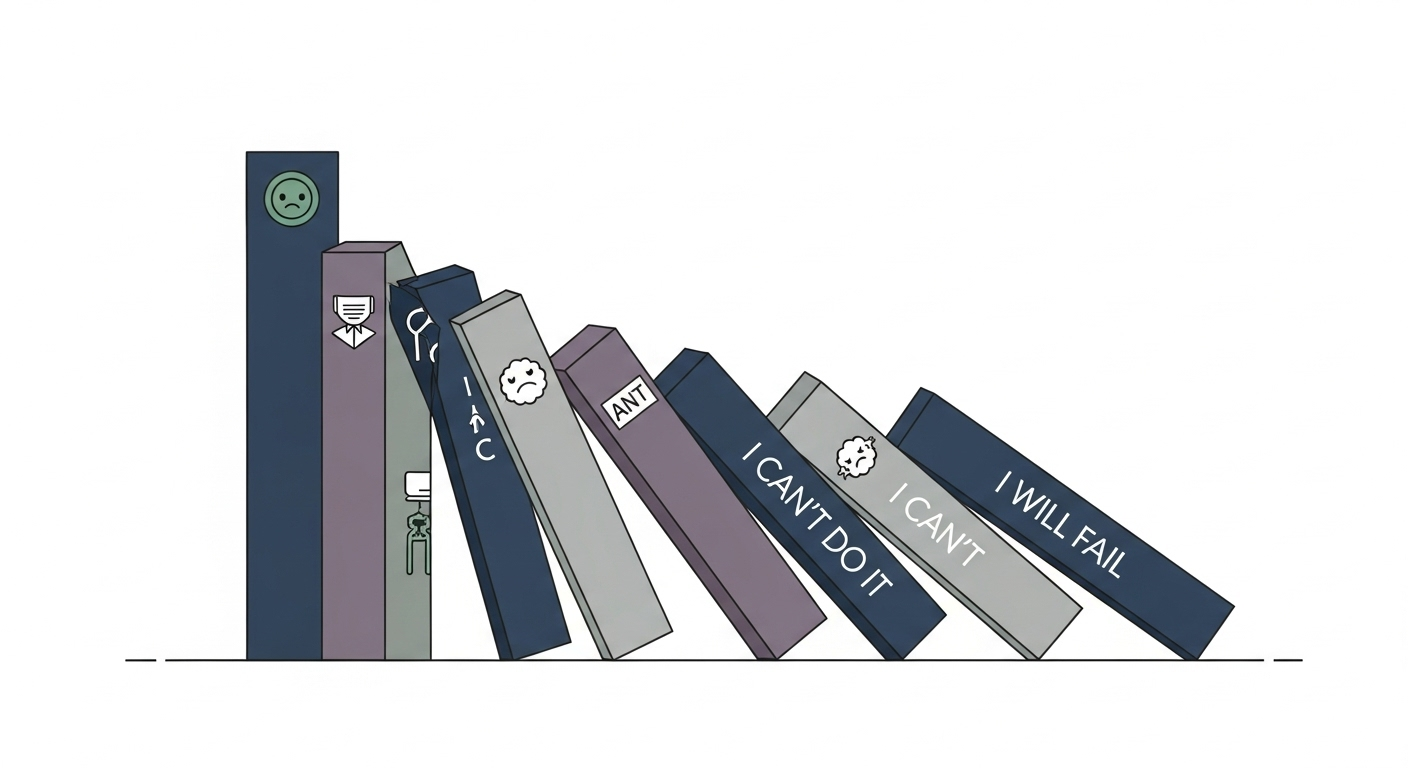
In Cognitive Behavioral Therapy (CBT), this chain reaction is called “Automatic Negative Thoughts (ANTs).” The name itself is fitting… like “ants,” they swarm and gnaw at our minds.
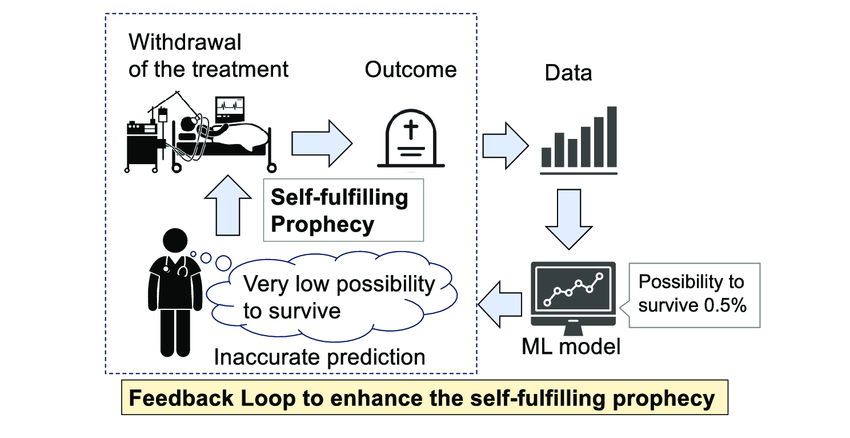
The truly terrifying part is that these thoughts end up controlling reality. Overwhelmed by extreme anxiety, Sarah couldn’t focus on her next task and appeared unconfident in her next meeting with the client. Ultimately, she created the “untrustworthy person” image she had imagined. This is called a “self-fulfilling prophecy.”
3. Hitting the Brakes: The Power of Realistic Thinking to Stop ‘Catastrophizing’

So, how do we stop this tiresome chain of thought? By blindly shouting, “Everything will be fine!”? No, not like that. Honestly, forced positivity doesn’t help us much. It’s like telling someone who’s struggling “Cheer up!” when they’re at their lowest point.
What we need is thinking based on ‘reality,’ not ‘positivity.’
The case of a programmer named “Mark” is a good example. The day before a crucial service launch, he discovered a critical bug where payments failed under specific conditions. Oh my. If it were me, I might have buried my head on my desk…
His first reaction was catastrophizing. “It’s ruined! The whole system is wrong. Tomorrow’s launch is impossible. Everything will collapse!” But he stopped there. Instead of panicking, he activated his trained ‘realistic thinking’ process.
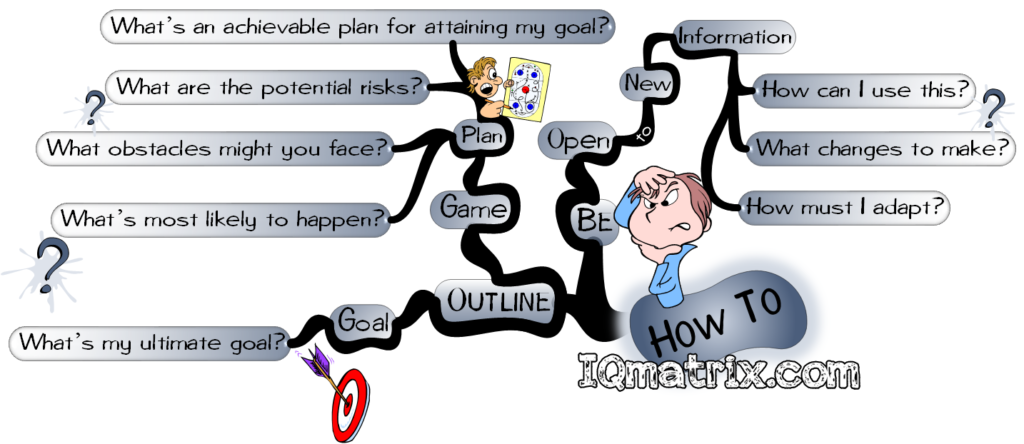
- Recognize Automatic Thoughts: “The thought in my head right now is ’everything has collapsed.’ This is my feeling, not an objective fact.”
- Challenge the Evidence (Fact-Check): “What’s the evidence for this thought? The only evidence I have is ‘payments fail under specific conditions.’ 99% of the system is still working fine.”
- Consider Alternatives (Broaden Perspective): “What are other more likely explanations? A) It’s a logic error in a specific module. B) It’s a problem with external API integration. C) It could be a simple setting I overlooked.”
- De-Catastrophize (Assess Impact): “Worst case, what happens if I can’t fix this overnight? Will the entire service collapse? No. We can delay the launch by a day or two, or temporarily disable that payment option and post a notice. This isn’t a ‘disaster,’ it’s a ‘problem’ to be solved.”
Do you see the difference? As soon as he reframed his thoughts like this, Mark’s adrenaline subsided, and his brain started working again. He calmly sifted through log files and found the cause within a few hours. The disaster of “everything collapsing” was only an illusion in his mind.
Catastrophizing fixates on the 0.1% chance of the worst-case “possibility.” Realistic thinking, however, focuses on the most “plausible” outcome based on 99.9% of the evidence. This is a skill anyone can develop through practice.
4. Moving Forward: Building Mental Muscle with ‘Eclectic Thinking’
Okay, we’ve put out the immediate fire with ‘realistic thinking.’ We’ve stopped it. But that’s not quite enough. To build long-term “mental muscle,” true resilience, we need something else.
That’s ‘Eclectic Thinking.’ The term sounds complicated, but it simply means accepting the “gray areas.” It’s the perfect counter to ‘All-or-Nothing Thinking,’ which divides the world into just two categories: “success or failure,” “perfect or garbage.”

When you fall into all-or-nothing thinking, a single mistake becomes total failure. Consider “Emily,” who is practicing the guitar. She played the first three chords of a difficult song perfectly, but hit a sour note on the fourth measure. Her all-or-nothing thinking immediately exclaims: “Ah, I guess I have no talent. I can’t even do this one thing right. This song is a failure.” …Familiar pattern, right?
Eclectic thinking whispers to us in such moments: “Hold on. You made a mistake in the fourth measure. But the first three measures were perfect. 75% of this song is already a success, and the remaining 25% is just a challenge. Isn’t it strange that 25% of mistakes make 75% of success worth zero?”
This perspective is crucial.

Let’s look at a slightly more complex case: “Minjun’s” online store. His sales goal for the first day was 5 million won. The actual result was 500,000 won.
- All-or-Nothing Thinking: “This is a complete failure. I have no talent for business. I should close it immediately.” (Anything less than 5 million won (success) is failure.)
- Eclectic Thinking: “Okay, 500,000 won is far short of the 5 million target. That’s a fact. But wait, 500,000 won in sales did occur. That’s not ‘zero,’ is it? It means 10 customers bought my product. This is evidence that people want my product and the payment system works. This isn’t a ‘complete failure,’ but ‘10% success’ or ‘data from an insufficient first day.’ The 4.5 million won gap isn’t a verdict of my incompetence, but a ’to-do list’ for revising marketing or pricing strategies.”
All-or-nothing thinking forces us to follow impossible rules like “I must be perfect” and makes us give up easily even at minor setbacks.
But eclectic thinking is different. It’s the ‘psychological flexibility’ that allows us to keep moving forward amidst life’s inevitable imperfections. Every great achievement in history is not the result of a single perfect success, but a combination of numerous ‘partial successes’ and the process of correcting mistakes by using them as ‘data.’
5. Defending Your Mind: The Powerful Shield of ‘Eclectic Thinking’
This clever ’eclectic thinking’ acts as a powerful shield, a “defensive” strategy, against not only internal criticism but also external attacks… or more accurately, “feedback.”
“Jihoon,” a doctoral student, submitted his core paper to a journal and received a “revise and resubmit” notification. The reviewer’s comments included sharp criticism of his methodology, along with praise for the originality of his data.
A catastrophic/dichotomous mindset immediately fixates on the “criticism.” “They basically rejected my paper. My methodology was flawed. I’m incompetent as a researcher.” This reaction is a typical cognitive distortion that completely ignores the value of “praise.”
If Jihoon uses the defensive tool of eclectic thinking, he interprets this feedback differently. First, he avoids the trap of taking the entire review as a single block of “good/bad” and deconstructs the feedback.
- [Positive elements: originality of data, timeliness of the topic]
- [Areas for improvement: appropriateness of a specific statistical model]
Then, instead of a defensive thought like “Yes, but…”, he uses an accepting thought like “Yes, and…”
“Yes, the reviewers acknowledged my data is original. And I need to refine the statistical model further.”
This approach perfectly prevents criticism from devaluing the praise. It moves away from the extremes of “acceptance” and “rejection” and views the “spectrum of outcomes.” He realizes he’s not failing now, but standing at a healthy intermediate stage of the spectrum.
Ah, this seems like a truly intelligent approach. Accepting that two seemingly opposing thoughts, like “I am competent” and “This part of me is weak,” are not contradictions but simply coexisting facts. Isn’t this a prerequisite for growth?
结论:驯服内心的“小鸡斯凯”——从受害者到掌控者
我们走过了一段漫长的路。 你们看到了,内心那个“小鸡斯凯”是如何拼命地、又多么糊涂地(抱歉)把我们从一颗小橡子引向灭顶之灾。我们见证了那个声音源于大脑古老的生存本能,以及它是如何制造出“认知瀑布”,让我们自己崩溃。
现在,我们只需要记住两个关键的工具,来打破这个循环。
第一,“现实思维”。这就像给那辆失控的火车踩刹车,它会喊出:“一切都完了!”但我们问:“等等!有什么客观证据证明这个想法是真的吗?”这样就能让我们从恐慌中挣脱出来。
第二,这才是真正的重点,“折衷思维”。 如果只踩刹车,车就停在原地。我们需要继续前进。折衷思维就是那股“可持续的动力”。
灾难性思维和非黑即白的想法,会让我们的生活变成一场严酷的考试,结果只能是“及格/不及格”。太可怕了。一次小小的失误,一次微小的不足,就会变成一张“不及格”的通知单。
但是,折衷思维让我们能从“分数”来看待生活。我们可能考90分,也可能考60分。关键在于:60分不是0分。60分不是“失败”,而是我们下次考70分的“大本营”。就像民俊的50万韩元不是失败,而是下次前进的“10%的资产”。
生活中,我们还会遇到无数的“橡子”。这是不可避免的。但是,我们是把它仅仅看作一颗橡子,还是看作天空要塌下来的征兆……现在,我们可以选择。
这就是从被动接受自己思维模式的“受害者”,蜕变成主动设计心理韧性的“建筑师”的旅程。而这个设计的核心蓝图,正是“折衷思维”。
参考资料
- 你一直不知道的聪明失误 (Arthur Freeman, Rose DeWolf 著) (Aladin 书介)
- [电子书] 你一直不知道的聪明失误 (Yes24)
- 小鸡斯凯综合征 - 想象最坏情况的你 (Steemit)
- 你一直不知道的聪明失误 (Google Books)
- [电子书] 你一直不知道的聪明失误 (Kyobo Bookstore)
- 失败是练习 (Millie’s Library)
- 想象最坏情况,这是病吗?如何停止思考? (Doctor Now)
- 一出问题就“人生完了” 想象最坏情况……如何停止担心的“突然加速” (Dong-A Ilbo)
- 想象最坏的结果有帮助吗?有效的策略和对策 (Mental Experience Design)
- 认知扭曲 (Wikipedia)
- 改变负面情绪的认知行为疗法练习 | 寻找自动思维 (YouTube, Meta Research Institute)
- 培养批判性思维技能的7个步骤 (含案例) (Asana)
- 烦心事系列第5篇 - 如何治疗惊恐障碍? (Psychiatric News)
- 什么是折衷疗法(Electic therapy)?为何有帮助? (Carepatron)
- 摆脱成功或失败的极端二元思维 (Psychiatric News)
- 绝对思维的危险性是绝对明确的 (Doing Philosophy)