
A few days ago, while skimming through some trend briefing materials, I caught a specific sentence.
It described the $100 billion announcement in Louisiana as happening the day after Starship’s 13th test flight concluded quietly.
It painted a picture of a quiet launch followed by a loud announcement just one day later. It sounded plausible enough that I almost moved on, but out of habit, I counted the days—and something felt off.
The 13th flight was on July 24, 2026. The Louisiana announcement was on August 25. That’s a 32-day gap. It wasn’t one day; it was over a month.
As I looked into which part was incorrect, the events that transpired in between became much more interesting than the error itself.
And as I followed that thread, it became clear that a pattern already perfected in Boca Chica, Texas, is now being repeated in the Louisiana wetlands.
Why did the 13th Starship test flight pass so quietly?
In fact, the July 24 launch was a fairly symbolic result for SpaceX.
This flight, conducted with Booster 20 and Ship 40, finally cleared the launch pad on its third attempt.
On July 16, it was automatically aborted just before launch due to four engines failing to ignite, and on July 23, it was delayed again due to weather. Then, on the 24th, all 33 engines ignited properly, and it took off.
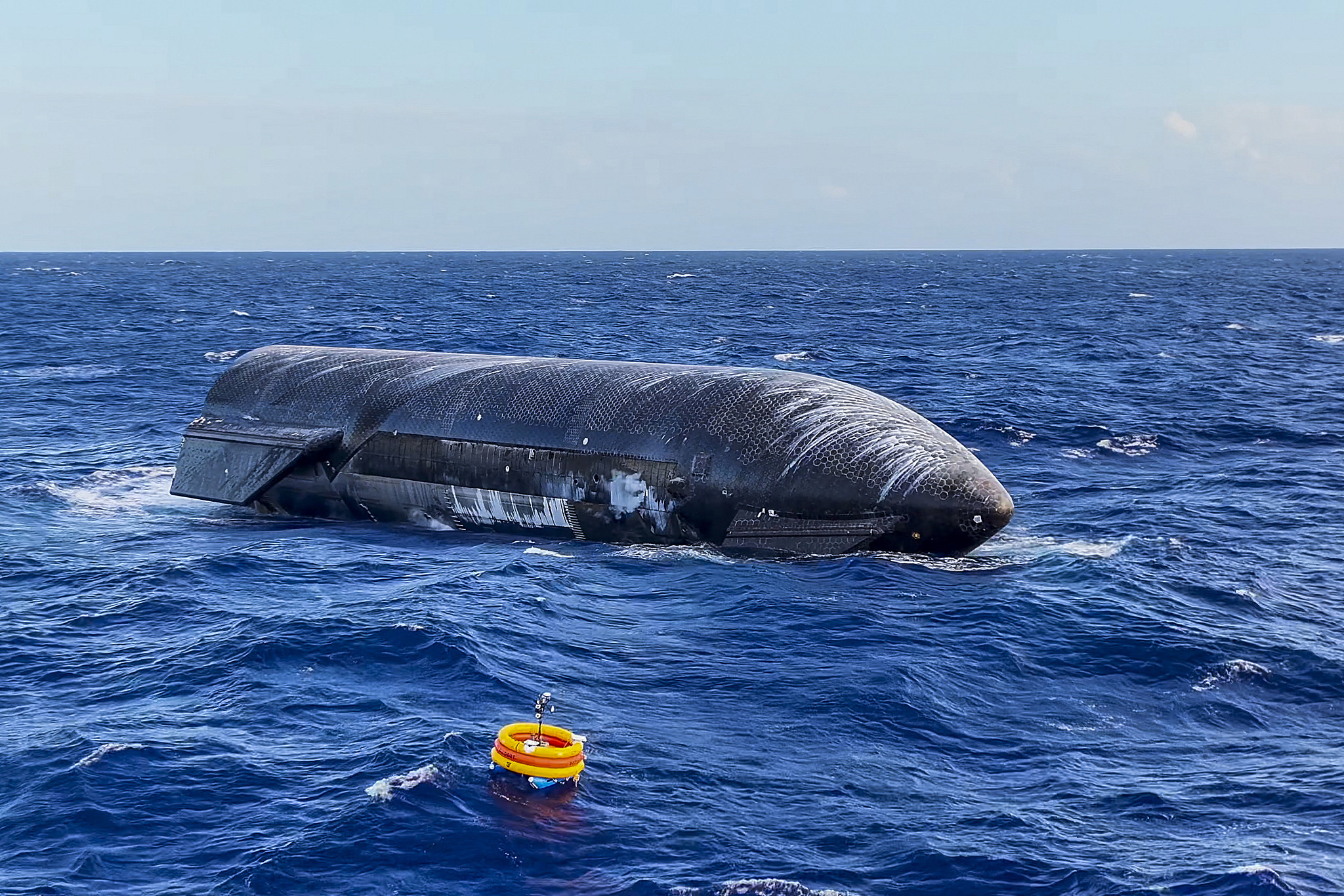
Once it reached orbit and headed for the Indian Ocean, the ship didn’t explode like previous flights; it remained floating on the water. A SpaceX spokesperson even called it “the softest splashdown ever” during the live broadcast, noting, “We’ve never seen anything like this.” Thanks to this, we were finally able to see the state of the heat shield tiles, which we had previously only been able to confirm through explosion debris. They also successfully reignited the engines in space and deployed 20 V3 Starlink satellites for the first time, confirming communication with ground stations.
Looking at the achievements alone, there seems to be no reason it should have passed quietly. However, the fact that the booster’s landing was somewhat rough and that the flight itself was just the “13th” in a somewhat mundane sequence might have suppressed its buzz. In any case, there was no official word on Louisiana at this point.
*## Was the Louisiana announcement really one day later? I counted the days.
I’m not sure where the “one day later” claim in the trend briefing came from, but it was likely a summary that tried to create drama by placing the two events close together.
In reality, there was a 32-day interval, and local media reports tracking the progress during that time reveal that this announcement didn’t come out of nowhere.
Weeks before the August 25 announcement, local Louisiana media were already reporting on circumstances like “Elon Musk’s private jet landed in Lafayette” or “real estate inquiries in Vermilion Parish have surged.”
This means that even before the 13th launch was successful, site negotiations and incentive package discussions were already well underway behind the scenes.
Rather than the launch success triggering the announcement, it looks more like two separate tracks that happened to overlap during the same summer season.
This makes me wonder about something else: Why August 25 specifically? According to documents from the Louisiana Economic Development agency, the announcement was a “well-prepared event” featuring live music and catering in front of a theater in Abbeville. That’s the kind of event that requires preparation time.
Conversely, the 13th launch was a schedule that was difficult to predict, achieved only after three attempts. If the two schedules had aligned one day apart, it would likely have been a coincidence; a 32-day gap suggests they were two projects moving on different timetables from the start.
## How did Texas’s Starbase become a city from a company?
Before moving on to the Louisiana story, we must look at the Texas precedent.
To understand exactly what is being repeated, we have to look at the original.
It was March 2021 when Elon Musk first tweeted that he would “create the city of Starbase.” At the time, it was taken as a passing joke, but everything changed in December 2024 when SpaceX filed an official petition with Cameron County.
In a letter to local officials, Starbase General Manager Kathy Lueders wrote, “To continue to increase the workforce developing and manufacturing Starship, we need the authority to grow Starbase as a community.”
In February 2025, the county judge approved an election, and the vote took place on May 3. The result was 212 to 6. It was virtually unanimous.
Given that most voters were SpaceX employees or their families, this was an expected outcome.
This is how a new city was born in Cameron County for the first time in 30 years since Los Indios in 1995. A city with a population of about 500, the vast majority of whom are SpaceX affiliates.
Bobby Fedden, SpaceX’s VP of Test and Launch Operations, ran unopposed and was elected mayor. Two city council seats were also filled uncontested by an engineering manager and a senior director of environmental health and safety. The city government itself is effectively an extension of the company’s organizational chart.
Thanks to this structure, SpaceX can now handle the beach and road closure procedures required for every launch much more easily. What used to require approval from the county every time is now handled by the city’s own decision.
The old idea of a company town: What went wrong in Pullman?
In fact, the method of a company building and operating an entire city is not new at all.
In the late 19th century, there were once over 2,500 company towns in the U.S., and at their peak, 3% of the population lived in such villages.
The most famous case is Pullman, Illinois, built by George Pullman on the outskirts of Chicago.
Pullman was the president of a sleeping car manufacturing company who bought 4,000 acres in the early 1880s to design a complete town equipped with worker housing, shops, libraries, churches, and theaters.
The goal was clear: he calculated that providing a better environment would attract better workers and increase productivity. Early on, sanitation was actually better than in downtown Chicago, and they even operated free education up to the 8th grade and a kindergarten, which was radical by the standards of the time.
The problem was after the Panic of 1893.
Pullman cut wages by an average of 25% while keeping the rent on company-owned housing the same. For the workers, their paychecks had shrunk, but their rent remained unchanged. Furthermore, there was a de facto mandatory clause that to work at Pullman, one had to live in Pullman-owned housing.
It eventually erupted into a massive strike in 1894, escalating to the point where federal troops were deployed.
In 1898, the Illinois Supreme Court ordered the Pullman Company to sell off all real estate not used for industrial purposes.
This history is not exactly the same as the current Starbase story.
Texas Starbase is closer to a form where employees formed an official local government through voting, rather than a structure where the company owns the real estate and collects rent.
However, since the people filling that government are all company affiliates, critics point out that while the facade has changed to a city hall and city council, the decision-making structure is not significantly different from the Pullman era.
It means that while there is political autonomy, the question of who exercises that autonomy remains.
$100 billion, 10 launch pads — what is Louisiana building?
To summarize what was announced in front of the theater in Abbeville on August 25:
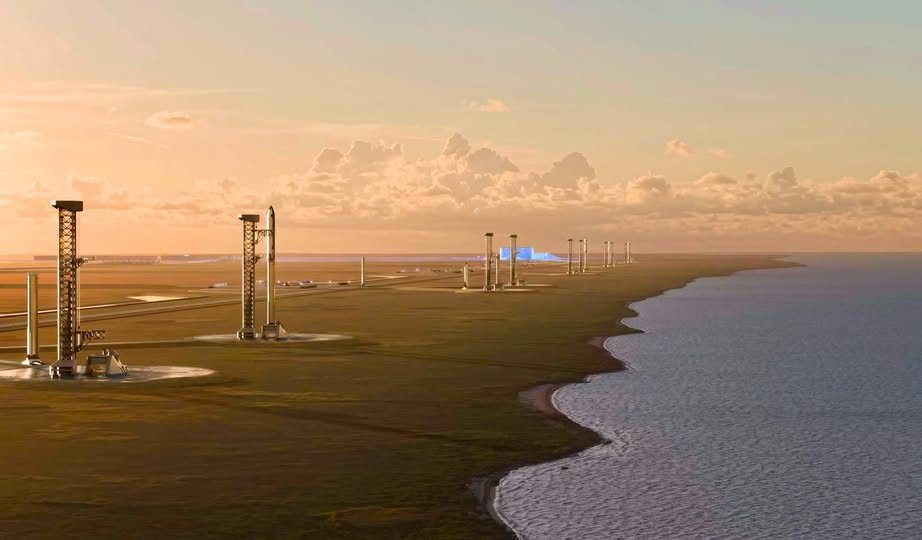
SpaceX will invest at least $100 billion in about 125,000 acres of former Exxon-owned land near Pecan Island in Vermilion Parish. Once completed, there will be a total of 10 launch pads—five launch complexes with two pads each. This includes propellant production facilities, a private power plant, a deep-sea port, vehicle processing facilities, and a private airport, aiming for a self-sufficient base that “does not rely on the outside.”
Employee housing is also included in the plan. SpaceX COO Gwynne Shotwell compared this project to a “small city,” stating that at least 3,000 people will reside there, creating up to 10,000 permanent jobs. She also added that they expect local residents to fill 60–80% of those roles.
They have effectively taken the “employee housing + self-contained infrastructure” combination already proven at Texas Starbase and put it into the blueprint from the very beginning.
They also signed a PILOT (Payment in Lieu of Taxes) agreement with Vermilion Parish.
It’s a structure where they pay $20 million upfront, followed by $25 million annually for 25 years, increasing slightly each year. The total amount the local government will receive over 25 years is estimated to be over $820 million. There is also a separate "competitive incentive package" provided by the state of Louisiana. The conditions are **capital investment, job creation, and a $25 million donation to the Acadiana Regional Foundation.**
## Why build another self-sufficient base?
*The question that naturally arises here is why build another one by dredging new wetlands from the start when there is already a launch site in Texas. The answer seems to lie in the constraints experienced in Texas.
Boca Chica is a narrow coastal wetland surrounded by national wildlife refuges and state parks. In 2024, the EPA fined them $148,378 for unauthorized pollutant discharges related to drainage facilities, and before that, there were constant controversies regarding the destruction of the habitat of the endangered Kemp’s ridley sea turtle. Every time they try to increase the number of launches, environmental reviews and lawsuits hold them back.
The Louisiana site is largely free from these constraints. According to the state government, it is advantageous for methane-based propellant production due to abundant natural gas, and the wide-open land allows for various orbital trajectories. However, the wetlands themselves are a much more sensitive ecosystem than Boca Chica, so new hurdles like environmental impact assessments and coastal protection plan adjustments are already expected. While construction is slated to begin in 2027 with the first launch targeted for 2029, this schedule should be viewed more as a goal than a certainty.
Another point is political leverage. When launch infrastructure is concentrated on a single site, bargaining power is focused on that region’s regulators, environmental groups, and local public opinion. If the number of launch sites increases to two or three, SpaceX has room to shift its center of gravity to another location if regulations become too strict in one place. While this isn’t an officially stated reason, it’s not an unfounded speculation given that many media outlets point to the repeated regulatory friction in Texas as the backdrop for the Louisiana expansion.
## $8 million per job — will the subsidy math add up?
Louisiana has promised at least 3,000 direct jobs over 10 years with an average annual salary of $92,600. This is said to be 192% of the average income in Vermilion Parish. Including indirect jobs, the state government estimates that over 11,100 total jobs will be created in the Acadiana region.
The problem arises when you divide this number by the scale of the incentives. If you divide the $2.7 billion incentive package by 3,000 jobs, it comes out to nearly $8 million per job over 25 years, or $320,000 per year. Of course, one must take into account that such calculations always carry the premise of “if the promised employment is realized exactly as is.” The 10-year employment outlook is just a prediction at the time of the announcement, not a fixed number.
This kind of skepticism is not new. Local government incentives for attracting large corporations always leave the question of “whether the promised employment will actually be realized.” However, in this case, the calculation becomes a bit more complex because the result is not just a factory, but a “city” equipped with housing, schools, and its own power plant. The fact that the tax revenue agreement is for 25 years also suggests that this project is not a one-off factory attraction, but is premised on changing the region’s population composition and financial structure itself in the long term.
Will Vermilion Parish become a city one day too?
At this point, I haven’t heard any official talk of a Texas-style city incorporation plan in Louisiana. However, the site description includes “residential facilities for employees and their families,” and one real estate outlet noted that “Vermilion Parish could undergo a similar transition.”
Looking at the Texas case, it followed a sequence of starting as just a launch site, then accumulating employee housing, adding schools, and finally becoming independent as a separate local government. It’s unclear if Louisiana will follow the exact same path, but at the very least, the ingredients to follow that path are included in the blueprint from the start.
One more thing that catches my eye is the fact that Texas Starbase is still expanding. According to an NPR report in mid-August, the city of Starbase is looking to incorporate an additional 7,100 acres, and local environmental groups are reportedly considering lawsuits over this. Becca Iñosa, co-founder of the South Texas Environmental Justice Network, reportedly said, “They call it Starbase, but if you pull back the curtain, it’s just a SpaceX annexation.” In other words, the Texas company-town model is not yet a finished product but is still growing, and Louisiana looks closer to two instances of the same expansion logic rolling out simultaneously at different speeds rather than an entirely new second edition of the model.
This overlaps with the news that the state of Texas recently included $192.4 million in its 10-year transportation plan to expand Highway 4, the only access road to Starbase. Coincidentally, the budget was finalized on August 26, the day after the Louisiana announcement. Once a launch site takes root, surrounding infrastructure like roads, schools, and power grids are sequentially reorganized to fit the company’s needs—a flow that appears similarly in Texas and in the just-beginning Louisiana project.
Will the watchers move too?
Around Texas Starbase, YouTube channels that livestream 24/7 during launches have set up shop. Channels like LabPadre and NASASpaceflight have had cameras set up since 2019 to broadcast the launch and assembly process in near real-time, and these videos often leak information before SpaceX’s official announcements.
According to reports from Texas Monthly, there is concern that since being incorporated as a city, the city of Starbase has been gradually narrowing the scope of activities for these independent streamers. Since the company is the city government, the decision-making power over the roads and land where cameras can be set up is in the company’s hands from the start.
It’s unclear if a similar culture will emerge in Louisiana. However, since a pattern of onlookers, streamers, and merchandise sellers following a launch site has already been confirmed in Boca Chica, it seems quite likely that the quiet fishing village near Pecan Island will turn into a similar landscape within a few years. Reactions from environmental groups are already divided. Since the Gulf Coast wetlands are ecologically much more sensitive than Boca Chica, SpaceX announced that it would expand coastal protection plans and cooperate with wildlife agencies alongside the state government, but it’s still unclear if this is a promise with concrete numbers attached. Given that over 15 related lawsuits and environmental issues have already accumulated in the Texas case, the probability of Louisiana repeating a similar process is not low.
The “one-day gap” I was initially curious about was, in the end, an incorrect description. But as I followed that error, the truly interesting part wasn’t the date, but the fact that this pattern itself is already designed to be repeatable. If the story of a third Starbase comes up somewhere else next time, I probably won’t be surprised.
References
- SpaceX announces enormous $100 billion Starbase Louisiana Starship launch site
- SpaceX $100B Louisiana Spaceport Takes Aim at Industrial Scale
- Louisiana Illuminator
- News From The States
- SpaceX announces plan to build $100 billion Starbase Louisiana launch facility
- SpaceX's Starbase Louisiana: A $100bn spaceport
- SpaceX Louisiana Spaceport
- SpaceX Starbase - Wikipedia
- Starship flight test 13 - Wikipedia
- Super Heavy Starship rocket chalks up mostly successful test flight
- SpaceX's Starship megarocket makes the softest splashdown ever after launching next-gen Starlink satellites in flight 13 test
- Starbase is Elon Musk's city in Texas for SpaceX employees
- Elon Musk's Starbase, Texas: SpaceX
- Pullman, Illinois
- Company Towns (1890s to 1935)