
A Small Miracle in a Madrid Grocery Store
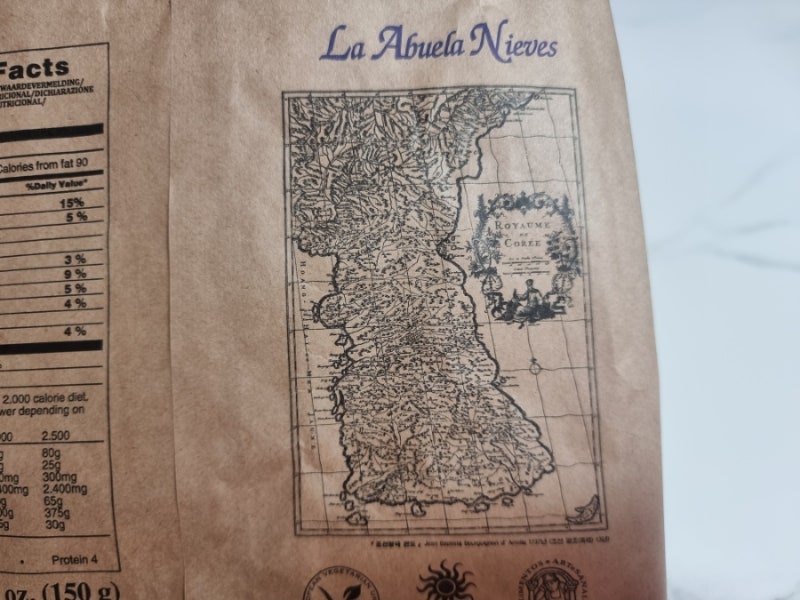
The story begins in an ordinary grocery store in Madrid, Spain. One day in 2022, a woman was passing by the potato chip aisle when she stopped in front of a new product from the familiar brand ‘Bonilla a la Vista.’ However, it wasn’t the crispy chips that captured her attention. It was the antique map drawn on the bag, designed like faded parchment, with the inscription ‘Royaume de Corée’ – the ‘Kingdom of Joseon.’
Curiosity piqued, she pulled out her smartphone and began to search, soon encountering a surprising fact. This map was from the 18th century, one of the earliest records by a Frenchman who captured the mysterious Eastern kingdom with an astonished gaze. And next to the small islands in the Eastern Sea, the name ‘Dokdo’ was clearly engraved.
How could a Spanish potato chip bag contain the 280-year-old French perspective and 21st-century Korean history? This small discovery is not a mere coincidence. It is living proof that the greatest change of our time – ‘story’ – is reshaping borders, industries, and even the currents of history. From now on, we will embark on an incredible journey to explore how K-content, a powerful storytelling engine, is redrawing everything in the world.
Chapter 1: The Birth of the Story Monster
Every great myth has a secret origin story. So, where and how was this colossal ‘story monster’ called K-content born? The secret lies hidden within the most dynamic and demanding laboratory in the world: the Korean market.
The Critics Who Never Sleep

3 AM. A drama editing room in Seoul is still brightly lit. This is because sharp criticisms from viewers, such as “The pattern on the king’s dragon robe doesn’t match the era,” poured onto the bulletin board regarding a scene from the historical drama aired yesterday. The production team stays up all night, re-examining every prop and line of dialogue for the next episode from scratch.
This is the ordinary daily life of K-content production. ‘Critics who never sleep,’ numbering in the tens of millions of netizens, analyze, evaluate, and sometimes temper creators like steel in real-time. From the intricate texture of the Joseon-era clothing worn by the zombies in Netflix’s Kingdom to the color palette of the surreal stairs walked by the participants in Squid Game, the near-perfect details have bloomed from this suffocating intensity.
From Deepest Sorrow to Hottest Joy

On the other side of the globe, in an apartment in São Paulo, Brazil. A woman clutches her fist unconsciously while watching Netflix’s The Glory. Painful memories from her school days resurface, and she immerses herself wholeheartedly in the protagonist Moon Dong-eun’s desperate revenge. She doesn’t know a word of Korean, but the deep sorrow and anger when human dignity is trampled, the emotion of ‘Han (恨)’, easily breaks through the language barrier and pierces her heart.
A few days later, she cheers with her friends while watching an online concert by the K-pop group Stray Kids. She jumps up and dances to the explosive energy emanating from the screen. Although she doesn’t understand the exact meaning of the lyrics, the heart-pounding beat and the primal joy of everyone becoming one, the energy of ‘Heung (興)’, unites everyone across borders.
The true power of K-content lies in its ability to freely move between these extreme emotions, from the deepest sorrow to the hottest joy, touching the most universal human heart.
Chapter 2: Stories That Infiltrate Your Daily Life
Before we knew it, K-content had moved beyond the screen and entered our dining tables, wardrobes, and even our mental travel bags. Everything we eat, wear, and dream of is now being reconstructed through the new filter of K-content.
Jjapaguri: A Kitchen Revolution
Do you remember the famous scene from the movie Parasite? On a rainy night, Mr. Park and his wife order ‘sirloin jjapaguri’ for their son. The housekeeper, Chung-sook, combines two cheap ramens with expensive Korean beef in just 8 minutes, serving the contradictions of Korean society in one bowl. This scene left a strong impression on people worldwide.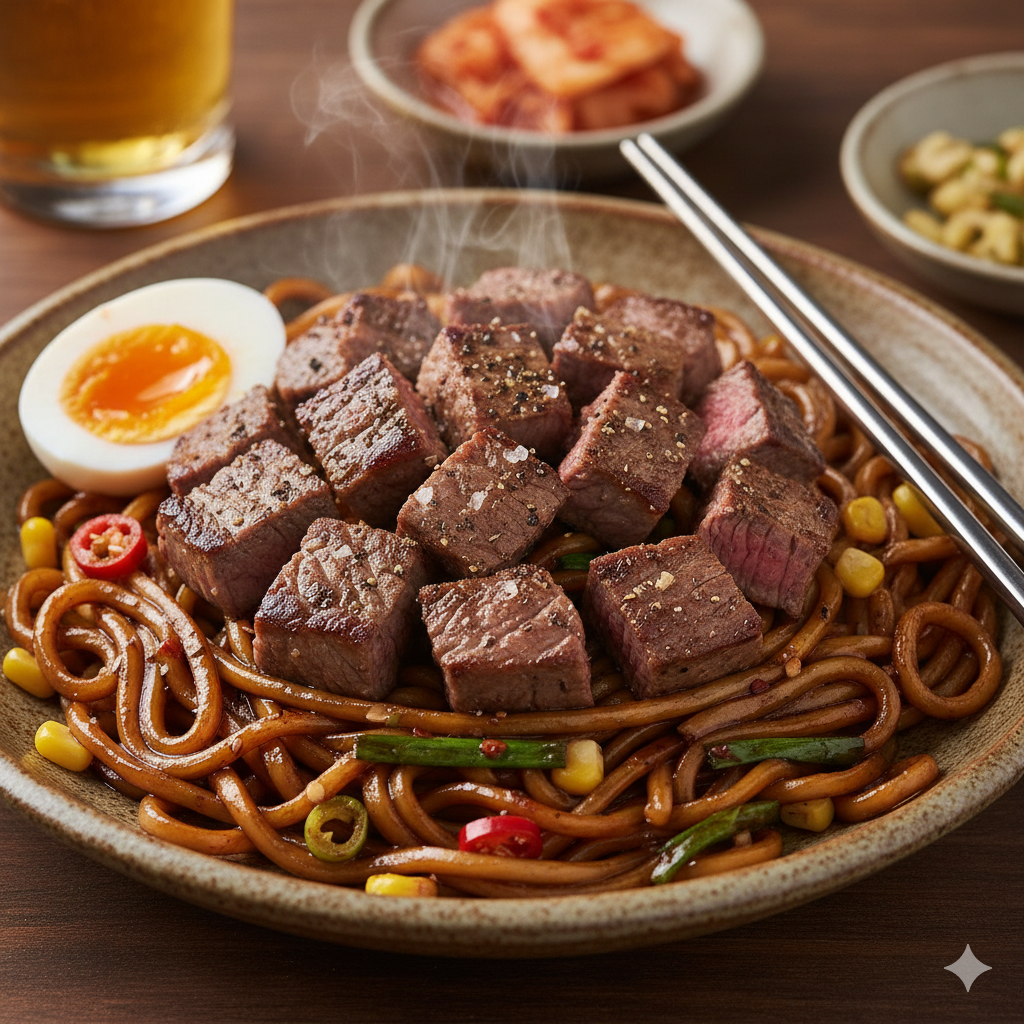
Afterward, a university student in New York posted a video on TikTok of her and her friends cooking ‘Ram-don’ with Chapagetti and Neoguri ordered from Amazon in their dormitory. This video garnered millions of views and sparked a global ‘Jjapaguri Challenge.’ Nongshim’s ramen was no longer just an instant food. It was reborn as part of a cinematic experience and a ‘cultural text’ that prompts reflection on social messages.
Jennie’s Sunglasses: The Magic of 7 Seconds

The arrival hall of Incheon International Airport, filled with flashing cameras. Jennie of Blackpink has just returned from Paris. All eyes worldwide are focused on the black sunglasses she casually wears. Just 10 minutes after a 7-second video goes viral on social media, the specific model from the Korean eyewear brand ‘Gentle Monster’ sells out instantly on online stores worldwide.
The phrase “Jennie’s sunglasses” was more powerful than any advertisement. Fans weren’t just buying a product; they wanted to participate in Jennie’s worldview by purchasing her ’taste.’ The characters in K-content have transcended being models who advertise products; they have become ‘style curators’ who directly design consumers’ desires.
The Red Scarf on Jumunjin Beach
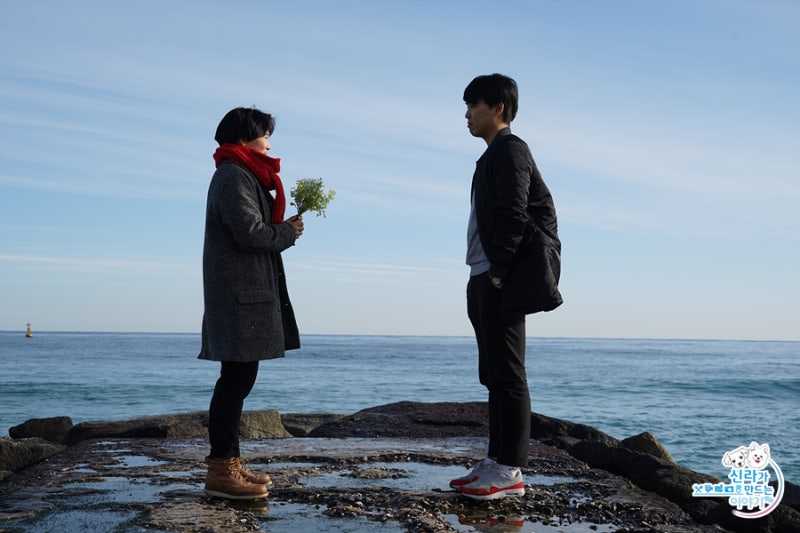
Maria, a university student from Mexico, became captivated by the drama Goblin and dreamed of traveling to Korea for the first time. With money saved from a year of part-time work, she booked a flight and finally stood on the breakwater in Jumunjin, Gangneung, where the drama’s protagonists first met.
She takes out the red scarf she prepared, wraps it around her neck, and just like in the drama, closes her eyes and listens to the sound of the waves. At that moment, Jumunjin was no longer an ordinary beach. It became the most special ‘sacred site’ of her life, where an immortal love story spanning 900 years came alive. In this way, K-content draws countless Marias from around the world to Korea, transforming ordinary spaces into stages for extraordinary stories.
Chapter 3: Stories That Change the Face of a Nation
The massive wave of K-content is beyond individual lives; it is creating a miracle that completely transforms a nation’s image and status – its ’national brand.’
“Korea? Ah, the country of BTS!”
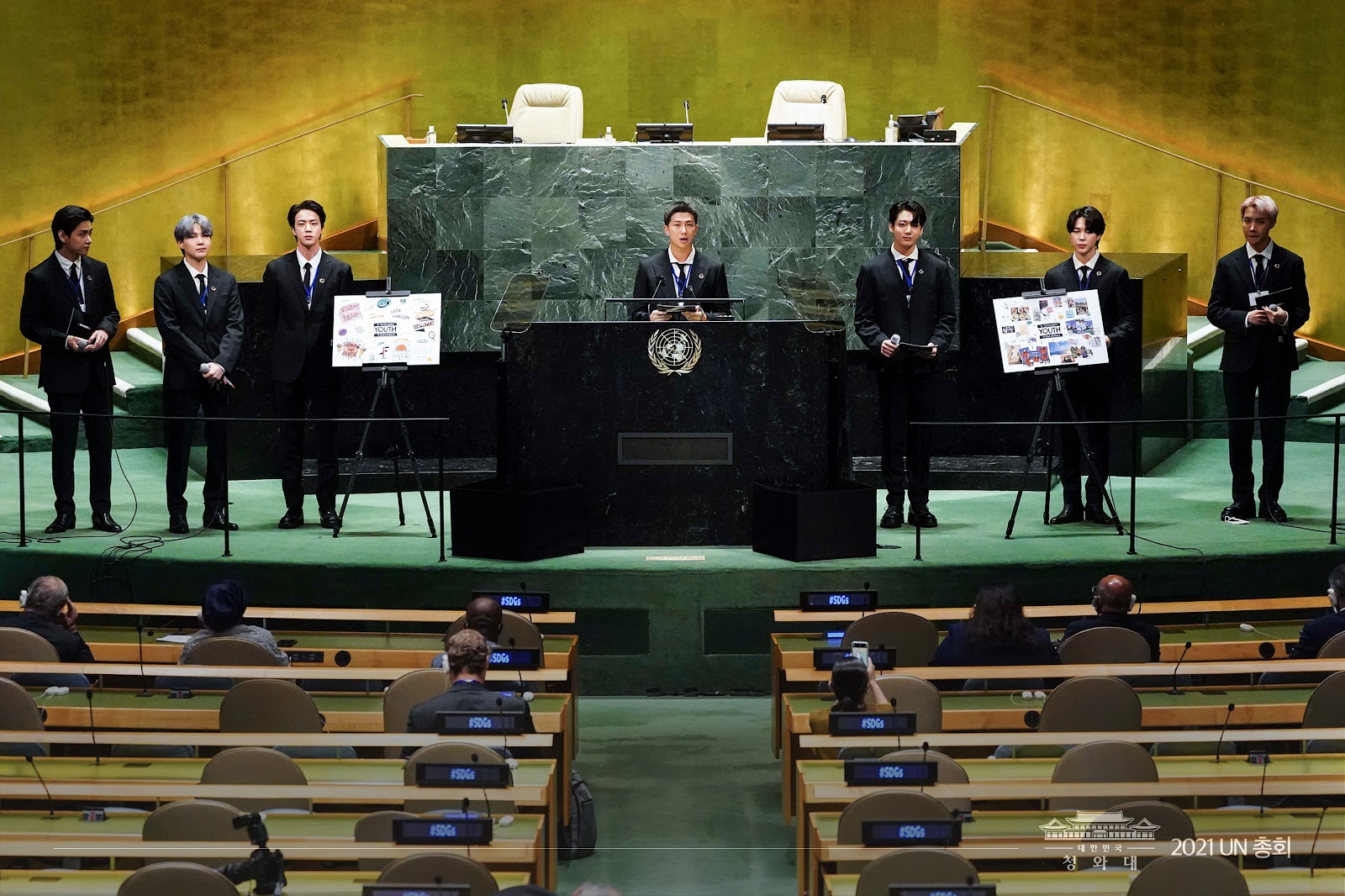
In a German history classroom in the 1990s, ‘Korea’ was depicted as a divided nation marked by the tragedy of the Cold War. Thirty years later, the children of those students are learning about Korea by watching BTS deliver a speech at the UN General Assembly on their smartphones, urging them to “love themselves.”
K-content has peeled away the old, dark framework of ‘war’ and ‘ideology,’ and in its place, it has brilliantly filled it with new images of ‘innovation,’ ‘creativity,’ and ‘sophistication.’ This is a rebranding that is close to a miracle, something that no national promotion project, despite pouring enormous budgets for decades, has been able to achieve.
“Annyeonghaseyo”: The ‘Hip’-est Language in the World
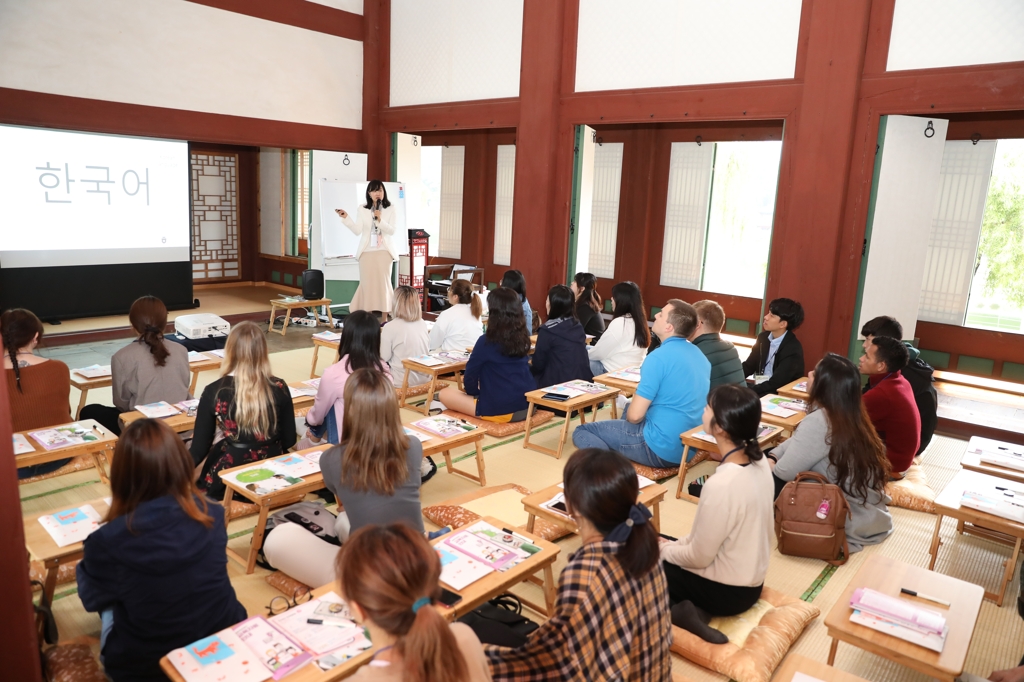
A Sejong Hakdang in Warsaw, Poland. A teenager with dyed hair like a K-pop idol, a 60-year-old retired teacher engrossed in Korean historical dramas, and a 30-year-old chef who dreams of opening his own Korean restaurant in Seoul sit in the same classroom, repeating “Annyeonghaseyo” with hesitant pronunciation.
For them, Korean is no longer a strange Eastern language. It is the ‘key to their dreams’ to understand the lyrics of their favorite songs and feel the dialogues of the dramas that moved them. K-content has gifted people worldwide a powerful ‘motive’ to learn Korean. The spread of the language is the surest evidence that K-content’s influence is not just a fleeting trend but is laying deep roots that will extend to the next generation.
Towards the Next Story
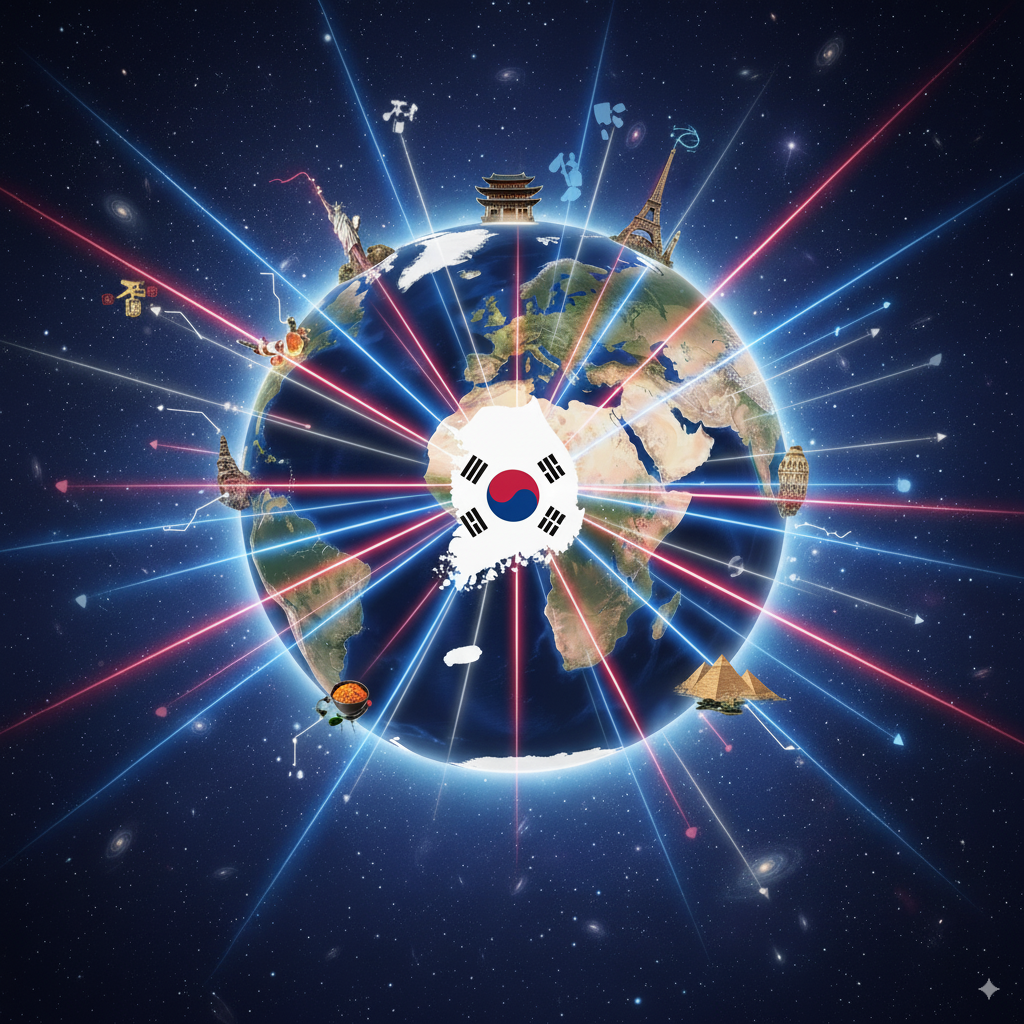
Now, shall we return to the starting point of our story, the grocery store in Madrid? This story, which began with a small discovery by a Spanish woman, has now become all of our stories. The ‘Map of the Kingdom of Joseon’ engraved on the potato chip bag seems like a symbol of the incredible achievements of K-content and the dawn of a new era yet to unfold.
Of course, the shining myth has its shadows. The suffering of creators born from endless competition, the fatigue from the repetition of success formulas, and concerns about commercialization cast by massive capital are challenges we must overcome together.
But one thing is clear. The true heart of K-content beats not from capital or technology, but from the universal ‘power of story’ that penetrates eras and transcends races. This incredible vitality, nurtured in the most Korean soil and blossoming into different stories in the hearts of people worldwide.
As long as that story continues, the ‘Korea Effect’ will be remembered as the most powerful force redrawing the map of the 21st century. And we stand together today, at the very center of that grand narrative.