
A Comprehensive Overview of the Turbulent History of the Japanese Yen, One of the World’s Three Major Reserve Currencies.
- Understand the historical flow from the birth of the yen to the era of ‘ultra-weak yen’.
- Identify the key impacts of the US-Japan interest rate differential on the value of the yen.
- Analyze the opportunities and threats posed by the yen’s depreciation to the South Korean economy.
Hello! Today, I will delve into the ‘Japanese Yen’, which plays a crucial role in the global economy. The value of the yen is a complex indicator that reflects Japan’s economic power, monetary policy, and international standing, going beyond mere exchange rate figures. In this article, I will divide the history of the yen into eras and explore its rise and fall through economic narratives.
Chapter 1: The Birth of the Yen and the Early Stability Period (1871 - Early 1970s)
The Meiji Restoration and the Introduction of the Yen (1871)
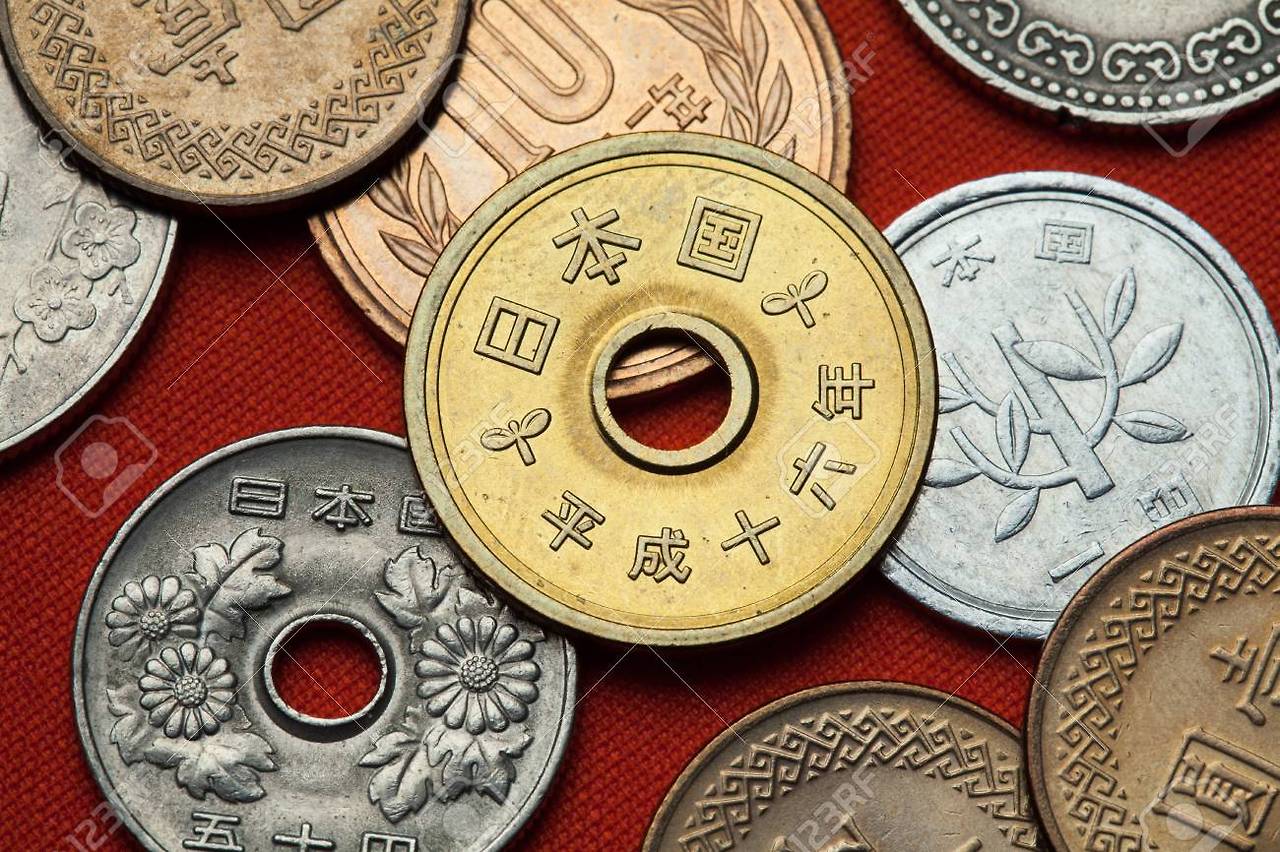
The history of the Japanese yen dates back to the late 19th century during the Meiji Restoration. In 1871, the yen was officially introduced as the currency under the ‘New Currency Act’. This was a key measure to organize the complex monetary system of the feudal era and move towards a modern state.
At that time, the New Currency Act defined the value of the yen as 1.5 grams of gold, establishing Japan’s monetary sovereignty, which later became a springboard for rapid economic growth.
Fixed Exchange Rate System Post-WWII and the Collapse of the Bretton Woods System
After World War II, Japan maintained a fixed exchange rate of ‘1 dollar = 360 yen’ to rebuild its economy. Thanks to the intentionally undervalued yen, Japanese products gained tremendous price competitiveness, which was a key driver of the ‘Japanese economic miracle’.
However, the ‘Nixon Shock’ in 1971 led to the collapse of the Bretton Woods system, and Japan adopted a floating exchange rate system in 1973, where exchange rates were determined by market principles. This marked a significant change as the yen began to be directly exposed to the dynamics of the international market.
Chapter 2: The Plaza Accord and the Bubble Economy (Mid-1980s - Early 1990s)
The Plaza Accord (1985) and the Surge in Yen Value
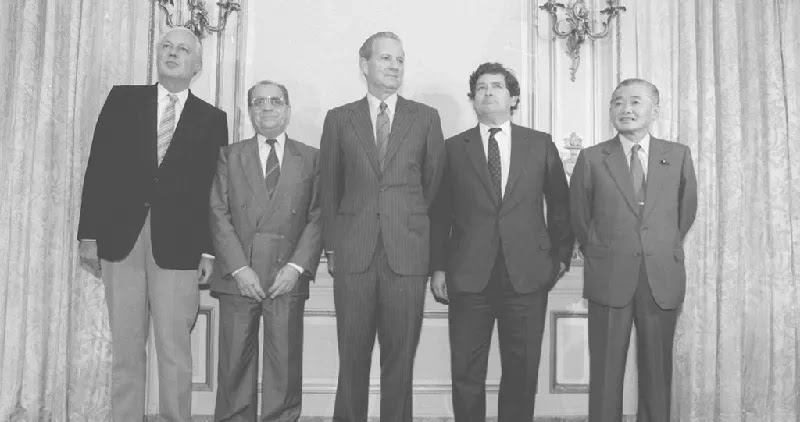
In the mid-1980s, G5 finance ministers gathered at the Plaza Hotel in New York to artificially lower the value of the dollar to address the massive US trade deficit, leading to the famous ‘Plaza Accord’.
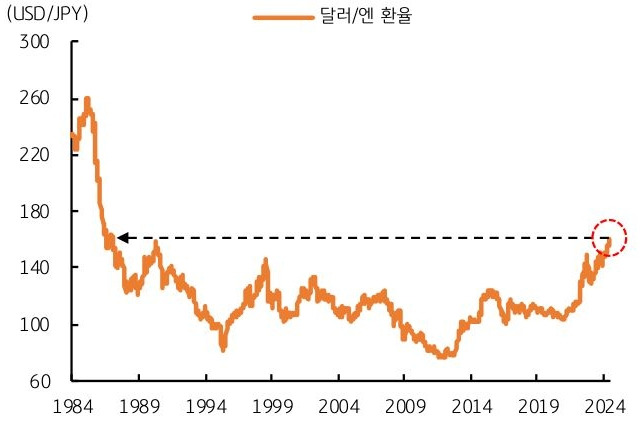
As a result of this agreement, the exchange rate, which was around 240 yen per dollar, plummeted to the 120 yen range in just two years, causing the yen’s value to soar by 46.3%.
Formation and Collapse of the Bubble Economy
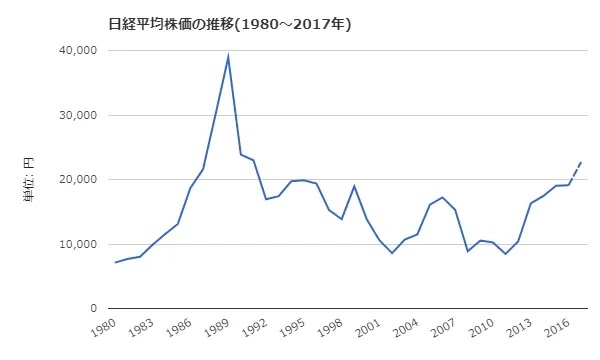
The rapid appreciation of the yen (yen appreciation) hit export companies hard, and the Bank of Japan lowered interest rates to 2.5% to prevent recession. However, this low-interest policy became a catalyst for creating the worst bubble economy in history, as massive liquidity flowed into the real estate and stock markets.
At that time, it was said that “selling Tokyo could buy the entire United States,” as asset values inflated abnormally. The bubble, which seemed eternal, began to deflate in 1989 with the Bank of Japan’s interest rate hike, leaving a deep scar on the Japanese economy known as the ’lost 30 years’.
Chapter 3: The ‘Lost 30 Years’ and the Quagmire of Deflation (1990s - Early 2010s)
After the bubble burst, the Japanese economy fell into a quagmire of deflation and prolonged recession, with prices continuously declining. Japan’s ’lost 30 years’ is often compared to the prolonged low growth experienced by the West after the 2008 global financial crisis. However, Japan’s case offers deeper lessons due to the combination of chronic deflationary psychology and aging population, which dampened the effects of policy measures.
To overcome this, the Bank of Japan implemented the world’s first ‘Quantitative Easing (QE)’ in 2001, where a central bank injects money into the market, but it was insufficient to resolve deep-rooted structural issues.
Interestingly, during the 2008 global financial crisis, the yen temporarily surged as a ‘safe asset’. This was due to Japan’s relative stability being highlighted amid global unrest, but it was attributed more to special circumstances than to fundamental economic strength.
Chapter 4: Abenomics and the Era of Ultra-Weak Yen (2012 - Present)
In 2012, Prime Minister Shinzo Abe launched ‘Abenomics’ with the goal of escaping long-term deflation. The core strategy was to lower the value of the yen (yen depreciation) through ‘unlimited quantitative easing’ to boost exports and stimulate the economy.
However, due to the relocation of production bases overseas, the traditional formula of ‘weak currency = strong exports’ no longer held, and instead, side effects emerged that only increased import costs.
The Intensification of Yen Depreciation Due to US-Japan Interest Rate Differential
The most direct cause of the recent ‘ultra-weak yen’ phenomenon is the extreme interest rate differential with the United States. While the world is raising interest rates to combat inflation, the Bank of Japan has maintained an ultra-low interest rate policy.
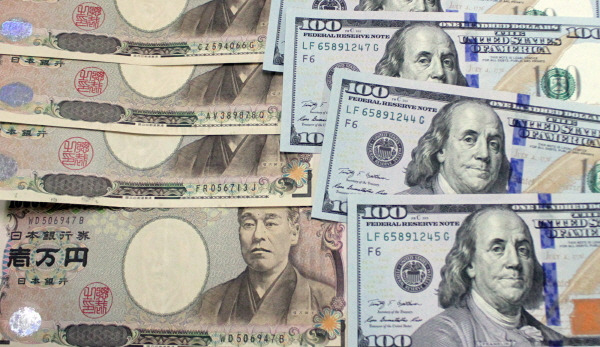
Analysis shows that when the long-term interest rate differential between the US and Japan widens by 1 percentage point, the yen exchange rate rises by 14.6 yen. This reflects the phenomenon of investors selling yen and buying dollars in search of higher yields, indicating that the fate of the yen is essentially tied to the monetary policies of both countries.
Historical Low Real Value of the Yen
Recently, the Real Effective Exchange Rate (REER), which indicates the real purchasing power of the yen, has recorded the lowest level since the 1970s. This means that the value of the yen is lower than during the period of ‘1 dollar = 360 yen’ before the introduction of the floating exchange rate system, directly impacting the quality of life for the Japanese people.
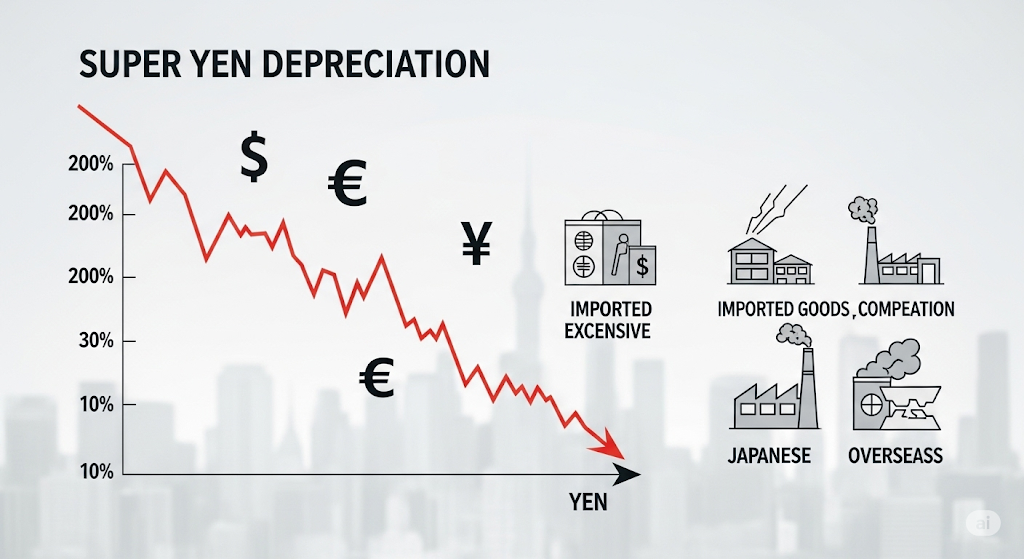
| Date | USD/JPY Exchange Rate (Yen/Dollar) | Major Events and Explanations |
|---|---|---|
| January 1971 | 358.44 | All-time high, last point of fixed exchange rate system |
| September 1985 | Around 240 | During the Plaza Accord |
| April 1995 | 79.75 | Approaching historical low (yen appreciation) |
| End of 2008 | 87 | During global financial crisis (preference for safe assets) |
| Early July 2024 | Surpassing 160 | Highest level in 34 years (super weak yen) |
Chapter 5: The Impact of Yen Depreciation on the South Korean Economy
So, what impact does this yen depreciation phenomenon have on us?
The Synchronization Phenomenon of Won-Yen Exchange Rates
The South Korean won and the Japanese yen exhibit a ‘synchronization’ phenomenon, moving similarly against the dollar. Recently, the correlation coefficient between the two exchange rates has reached 0.973, indicating a high likelihood that yen depreciation will lead to won depreciation as well.
Export Competitiveness and Tourism Balance
The yen’s depreciation increases the price competitiveness of Japanese products in the global market, putting pressure on our export companies. According to a study, when the won/yen exchange rate falls by 1% (won appreciation), South Korea’s total export volume decreases by 0.49%.
I also recently traveled to Japan taking advantage of the yen’s depreciation, and I was surprised by how much cheaper the expenses were compared to before. Thus, while yen depreciation provides opportunities for individuals to travel, it casts a shadow of worsening tourism balance on the overall national economy.
| Impact Factor | Details | Estimates/Correlation Coefficient |
|---|---|---|
| Won-Yen Exchange Rate Synchronization | Correlation coefficient since 2021 | 0.973 (very high) |
| Total Export Volume Decrease | When won/yen exchange rate falls by 1% | Estimated decrease of 0.49% |
| Economic Growth Rate | Decrease effect due to worsening trade/tourism balance | Estimated decrease of around 0.2 percentage points |
Chapter 6: Future Outlook and Implications for the Yen
Possibility of Yen Appreciation with Reduced US-Japan Interest Rate Differential
Many experts predict that in the future, the US will lower interest rates while Japan will gradually raise them, leading to a gradual reduction in the interest rate differential between the two countries. This is the most important driver for the yen to gradually appreciate.
Former Vice Minister of Finance Eisuke Sakakibara, known as ‘Mr. Yen’, has predicted that the yen will strengthen to around 130 yen by 2025.
However, structural issues in the Japanese economy and variables such as US-Japan trade conflicts remain, suggesting that any rebound will likely be gradual rather than rapid.
| Institution | Forecast Date | USD/JPY Exchange Rate Forecast |
|---|---|---|
| Trading Economics | End of 2025 | 147.07 |
| UBS | End of 2025 | Stabilization in the 140s |
| KB Kookmin Bank | Q4 2024 | Drop below 145 |
| Eisuke Sakakibara | 2025 | Around 130 |
Conclusion
We have examined the tumultuous history of the Japanese yen. Here are three key points summarized:
- A Product of Policy and Environment: The value of the yen has historically fluctuated dramatically due to government policy interventions (such as the Plaza Accord) and macroeconomic environments.
- The Era of ‘Bad Yen Depreciation’: The current ‘ultra-weak yen’ phenomenon is primarily caused by the extreme interest rate differential with the US, and unlike in the past, the burden of rising import prices outweighs the benefits of increased exports, characterizing it as ‘bad yen depreciation’.
- Gradual Appreciation Transition Expected: The yen is expected to gradually appreciate due to the reduction in the US-Japan interest rate differential, but this process will not be smooth.
Understanding the complex flow of the yen is a crucial key to reading the global economy.