
A Warning Sound from The Hague
I am an IT analyst and storyteller who examines the intricacies of technology through the lens of the humanities. Today, I would like to share a somewhat serious story that may have profound implications for our future and that of our children. It is about ‘AI Sovereignty’.
Have you ever imagined this? One day, suddenly, the email and cloud services we use daily become inaccessible overnight due to ‘policies from a country on the other side of the globe.’ Does it sound too much like a science fiction movie?

Surprisingly, this actually happened in 2023. Prosecutors at the International Criminal Court (ICC) in The Hague experienced the absurdity of suddenly losing access to Microsoft’s cloud services they used daily. Their investigation into Russian war crimes was nearly paralyzed in an instant. What was the reason? When the U.S. government placed the ICC on its sanctions list, the American company Microsoft halted its services to comply with domestic laws.
This incident sent chills down the spines of policymakers worldwide. It starkly illustrated how dangerous it is to entrust all our data to the servers of massive foreign corporations in exchange for the sweet convenience of technology, and how technological dependence can undermine our sovereignty in an instant.
And this chilling fear is now approaching us as a colossal tsunami in the era of artificial intelligence (AI). While the suspension of cloud services was akin to cutting off the supply line of a single unit, dependence on AI is like handing over the entire central nervous system of a nation.
Chapter 1. Discovering a New Continent: The Operating System of the AI Era, ‘Foundation Models’
You have probably heard endlessly about GPT and Gemini lately. These super-large AI models are technically referred to as ‘Foundation Models.’ As the term suggests, they serve as the ‘foundation’ of the AI ecosystem, the starting point for everything.
Why is this so important? Let’s take a brief trip back in time to the IT era.
- 1980s, PC Era: Many companies wanted to create programs that operated on PCs, but the ‘platform’ that made all of this possible was Microsoft’s ‘Windows.’ By dominating the operating system (OS) called Windows, Microsoft established all the rules of the PC era and amassed immense wealth from all the companies selling software on that platform.
- Late 2000s, Smartphone Era: This time, Google’s ‘Android’ and Apple’s ‘iOS’ reigned as the new OS. No matter how innovative and excellent our apps were, we had to adhere to the marketplace of the app stores defined by Google and Apple, following their commission policies (commonly known as ’tolls’).
Indeed, the foundation model is the ‘operating system of the AI era.’
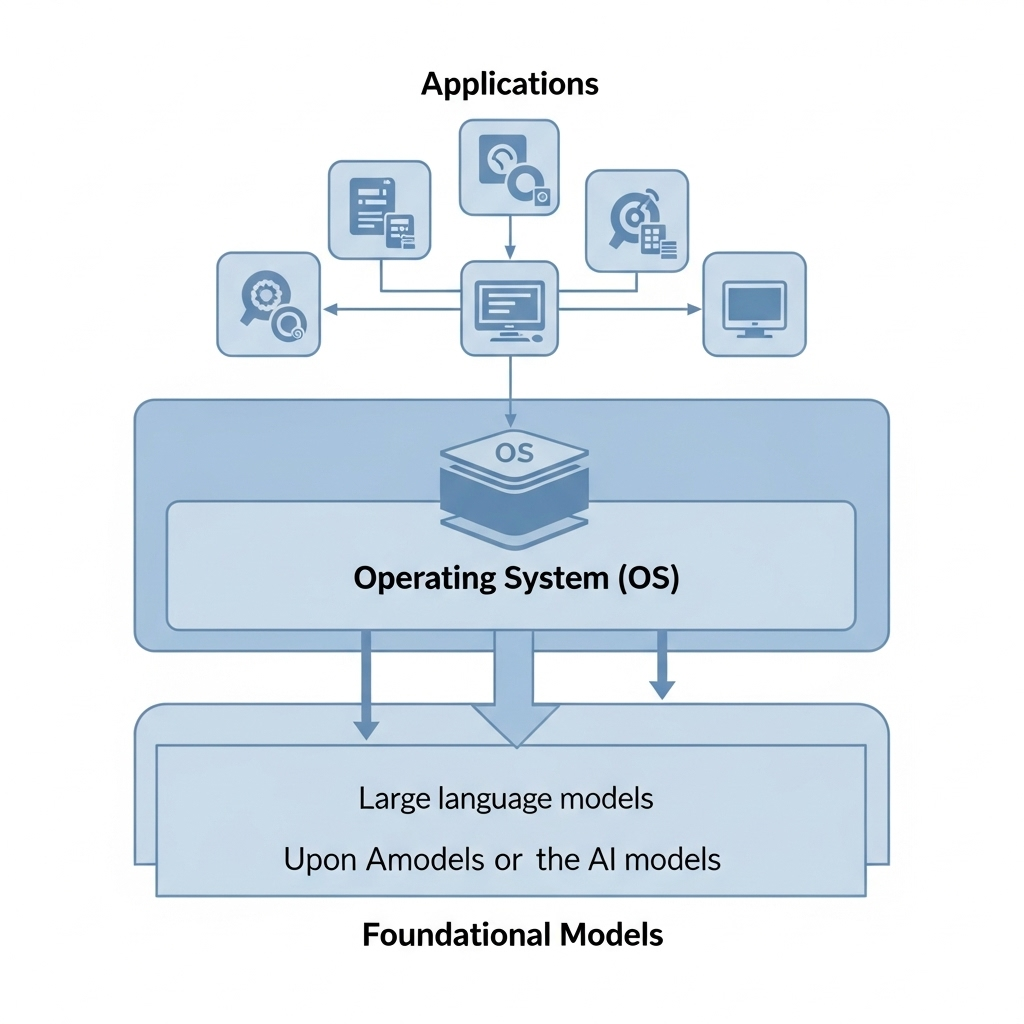
If past operating systems dominated the ‘digital territories’ of PCs and smartphones, the foundation model is sucking up text, image, and video data from around the world like a giant vacuum cleaner, learning all of humanity’s knowledge, and building a new ‘AI territory’ on top of that. And all the rules and order of this territory are determined by the ’landlords’ who own it.
The painful reality is that most of this vast new continent is monopolized by a few ‘digital empires’—the giant tech companies of the U.S. and China, such as Google, Microsoft, OpenAI, Meta, Baidu, and Tencent. As expressed by Park Tae-woong, chairman of Hanbit Media, we are now at risk of becoming ‘serfs’ who must farm the land within the boundaries they have drawn while merely watching the discovery of this new continent called AI.
Chapter 2. “Can’t We Just Rent It?”: Three Hidden Poisons in the Sweet Temptation
At this point, many people ask a very rational and reasonable question.
“There’s already a well-developed model out there, so do we really need to invest hundreds of billions or trillions of won to create a new one? Isn’t it much more efficient and economical to just use it in the form of an API?”
That’s a very valid question. After all, there’s no need to build a tire factory just to make a car. However, the foundation model, which serves as the ‘AI engine,’ is not just a simple component. It hides three fatal traps that we cannot ignore.
First, Security: A Digital Dagger in the Heart
Recall the ICC case I mentioned earlier. What if it were not an international organization but our Ministry of Defense, the National Intelligence Service, or a nuclear power plant?
Imagine processing sensitive military operation plans, diplomatic secrets exchanged with key allies, citizens’ medical records, and financial information, as well as blueprints of critical national infrastructure on a foreign company’s foundation model. Would we truly have ultimate control over that data? In a rapidly changing international situation, can we guarantee 100% that they won’t halt services for their own interests or even analyze our data to use it as a ‘digital dagger’ against us?
Just as the U.S. controls semiconductor equipment exports to pressure its competitors, in the future, ‘access to AI models’ will become the most powerful diplomatic weapon. Without our own ‘AI engine’ to protect ourselves, we will be helplessly exposed to situations where the fate of our nation is determined by their decisions.
Second, Culture: Us in a Distorted Mirror
An even more insidious and frightening issue is cultural and linguistic dependence.
Most global foundation models have been trained primarily on data from the U.S. and the West, centered around the English language. When asked, “Which country does Dokdo belong to?” they might respond, “Dokdo is a region with territorial disputes between Korea and Japan (Liancourt Rocks is a disputed territory…)"—an answer that we can hardly accept. They simply provide the most ‘probabilistically correct’ answer based on the data they have learned.
Is this limited to just the Dokdo issue? Only AI created from our data, by our hands, can fully understand and reflect our history, the process of establishing democracy, social values, and the subtle and delicate nuances unique to the Korean language (e.g., ‘Jeong,’ ‘Han,’ ‘Nunchi’).
Relying on foreign AI for education, media, and content creation is akin to handing our children ‘history textbooks biased by foreign perspectives.’ Our identity will gradually lose its light, trapped in the ‘distorted mirror’ they have created. Just as search engines changed the way we acquire knowledge, AI will shake our very ways of thinking and values. If we lose sovereignty in this invisible war, we could fall into ‘cultural and mental colonialism’ beyond economic colonialism.
Third, Economy: The Eternal Cycle of ‘Digital Serfs’
This is the most practical issue. As long as we rely on foreign engines without our own foundation model, we will forever be stuck in the position of ’technological serfs’ paying exorbitant licensing fees.
We have seen smartphone app developers paying 30% of their earnings to Google and Apple as ‘app store fees.’ In the AI era, this dependence will deepen. Every industry—finance, healthcare, law, manufacturing, content—will achieve innovation based on AI. But what happens if the heart of that innovation is not our own engine?
No matter how excellent our AI services are, a significant portion of the added value they create will continuously be funneled to the ’tech landlords’ in the U.S. and China under the guise of engine usage fees. This is akin to a serf who toils on fertile land but loses most of the harvest to the landlord. The structure of the ‘digital rent economy,’ where all industry profits are absorbed by a few global big tech companies with AI engines, will become entrenched. This is the reality of ‘digital colonialism.’
Chapter 3. A Thorny Journey: Four Great Mountains Toward ‘Our Own Engine’
In this urgency, the concept of ‘Sovereign AI’ has emerged. It advocates that our data should be processed within our territory, following our laws and regulations, using AI created by us. The alpha and omega, the key to realizing this sovereign AI, is to have ‘our own foundation model.’
Recently, the South Korean government appointed two experts who led the development of Naver’s ‘HyperCLOVA X’ and LG’s ‘Exaone’ as the top officials for AI policy, which is a clear response to this urgent need of the times. It expresses a strong will: “We will no longer rent. We will create our own AI engine and build our own AI territory.”
This is not simply a ‘catch-up strategy’ that awkwardly follows the U.S. or China. It is closer to a ‘declaration of technological independence’ to determine our own fate in the face of the monumental wave of civilization that is AI.
Of course, the path will not be easy. There are towering mountains we must overcome.
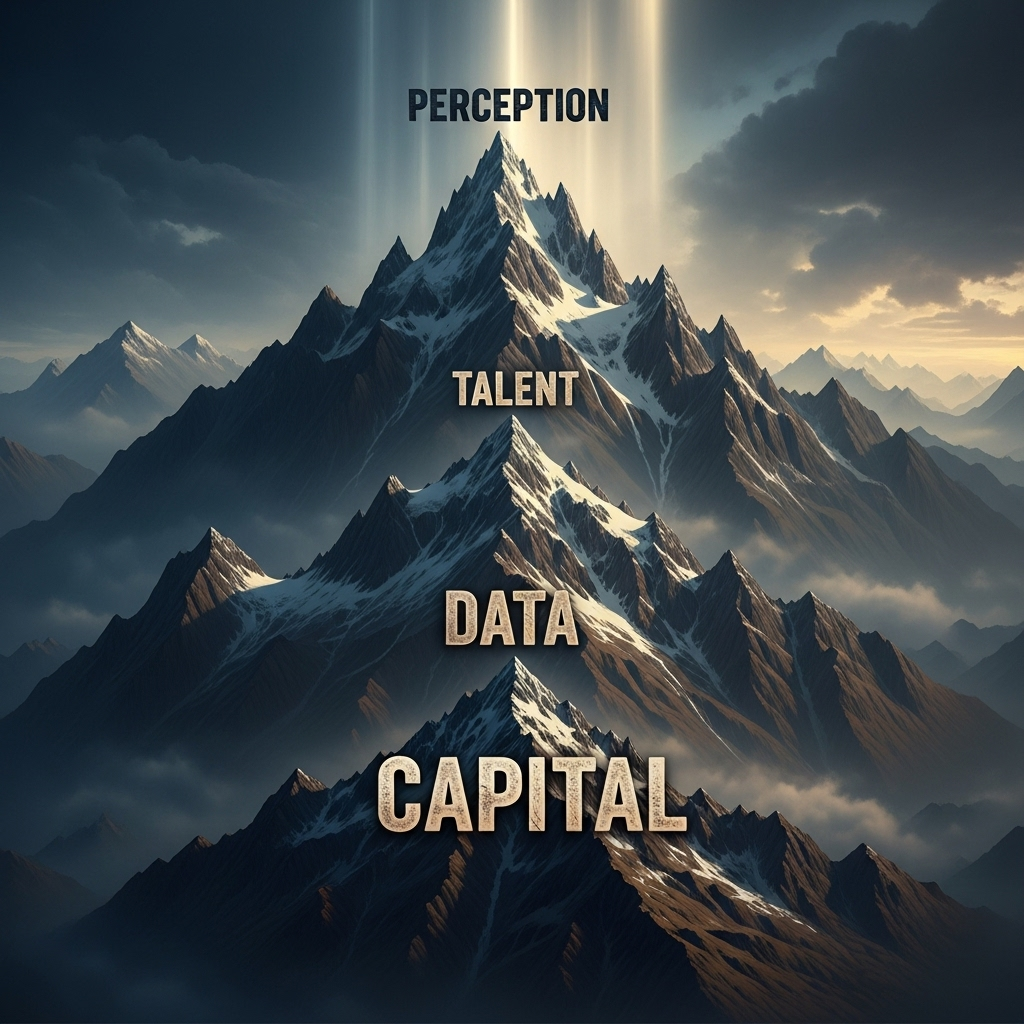
- First, the Mountain of Capital: Astronomical ‘Bullets’ Needed Training a super-large AI model once incurs enormous costs. It requires running thousands of the latest GPUs (graphics processing units) continuously for weeks or months. Nvidia’s latest AI chip, ‘Blackwell,’ costs around $40,000 (approximately 55 million won) each. When you combine the costs of securing thousands of these chips and building data centers that consume massive amounts of electricity, you need ‘bullets’ in the trillions. Companies like Google and Microsoft are entering this war based on their immense cash-generating capabilities, but the scale is overwhelming for our companies and government to handle.
- Second, the Mountain of Data: Lack of ‘High-Quality Korean Data’ The performance of AI models ultimately depends on the quantity and quality of training data. Data from the global web is overwhelmingly dominated by English. Korean data is not only quantitatively insufficient but also securing ‘high-quality data’ that is free from copyright issues and bias is even more challenging. Especially in specialized fields like law, healthcare, and finance, systematically building and refining specialized data is a massive task that requires national-level efforts.
- Third, the Mountain of Talent: A Global War for ‘AI Brains’ Currently, there is a silent war worldwide to secure the best AI researchers and developers. Global big tech companies are offering tens of millions of won in salaries and stock options to the top talents in Silicon Valley to form ‘AI dream teams.’ Can we gain an advantage in the competition for talent against them? We need to honestly assess whether the AI education system in domestic universities and the research environment in companies are attractive enough to retain these talents.
- Fourth, the Mountain of Awareness: Overcoming the Trap of ‘Short-Term Efficiency’ Perhaps the hardest mountain to overcome is our internal ‘awareness.’ From a short-term perspective that only considers immediate efficiency and economy, the argument to “just rent it” always sounds more rational. There is also a cynical view that questions, “Why do we need to do everything ourselves, including AI, when we aren’t even in semiconductors?” Convincing the public and policymakers of the long-term and strategic value of AI sovereignty and leading to social consensus will be as challenging as technological development itself.
Chapter 4. South Korea’s Compass: What Should We Do and How?
So, should we despair and give up in front of these four great mountains? No. We have our own way, and there is a path we can excel at. In the 1970s, we built semiconductor factories and car engines on barren land that everyone said was impossible, demonstrating our resilience.
In the AI era, where should South Korea’s compass point?
First, ‘Strong Small Country AI Strategy’ Toward ‘Optimal’ Rather Than ‘Best’
It may be reckless to try to create a model larger than GPT-5 right now. Catching up to the capital and data scale of Google and Microsoft is realistically difficult. However, we have the wise card of ‘selection and concentration.’
Instead of creating an ‘omni-AI’ that does everything well, we should develop ’expert AI’ specialized in areas where we excel the most. By pouring all our capabilities into world-class manufacturing, semiconductors, healthcare, and K-culture content, we can build a ‘vertical sovereign AI’ in these fields that no one can match. For example, creating AI optimized for semiconductor design and yield management, precision medical AI based on the genetic information and medical records of Koreans, and content generation AI targeting the preferences of K-pop fans worldwide. This ‘small but powerful AI’ with overwhelming performance is the path we should take.
Second, Forming ‘Team Korea’: Uniting the Strengths of Government, Industry, and Academia
Developing an AI engine has become a ’national competition’ that cannot be achieved by the power of individual companies alone. The government must create a ‘playground’ where companies can freely thrive through consistent R&D investment and bold regulatory innovation that looks 10 to 20 years ahead, rather than being fixated on short-term results. Universities should become ’training grounds for talent’ that cultivate key personnel who can immediately contribute in the industrial field. And large corporations like Naver, Kakao, LG, SKT, and KT should demonstrate a ‘one team’ spirit, competing to develop their own models while collaborating on common goals like building national data infrastructure and nurturing talent.
Third, Building a ‘Data Dam’: Stockpiling the Oil of the AI Era
If data determines AI performance, we need to construct a ’national data dam’ that systematically collects and refines high-quality public and industrial data scattered across the country, allowing for safe utilization. Of course, privacy protection and data security are paramount principles. However, locking away all data under the pretext of ‘security’ is like not planting a garden for fear of worms. We urgently need to revise laws and systems to actively utilize safely de-identified data for AI training and to lead efforts for social consensus.
If We Cannot Build Our ‘AI Factory’ in the 21st Century
Why did we endure hunger to pave the Gyeongbu Expressway, ignite the furnace of the Pohang Steelworks, and build semiconductor factories in the 20th century? It was an expression of our desperate will to ensure that our descendants do not inherit a history of poverty and dependence, declaring that ‘we will determine our own fate.’
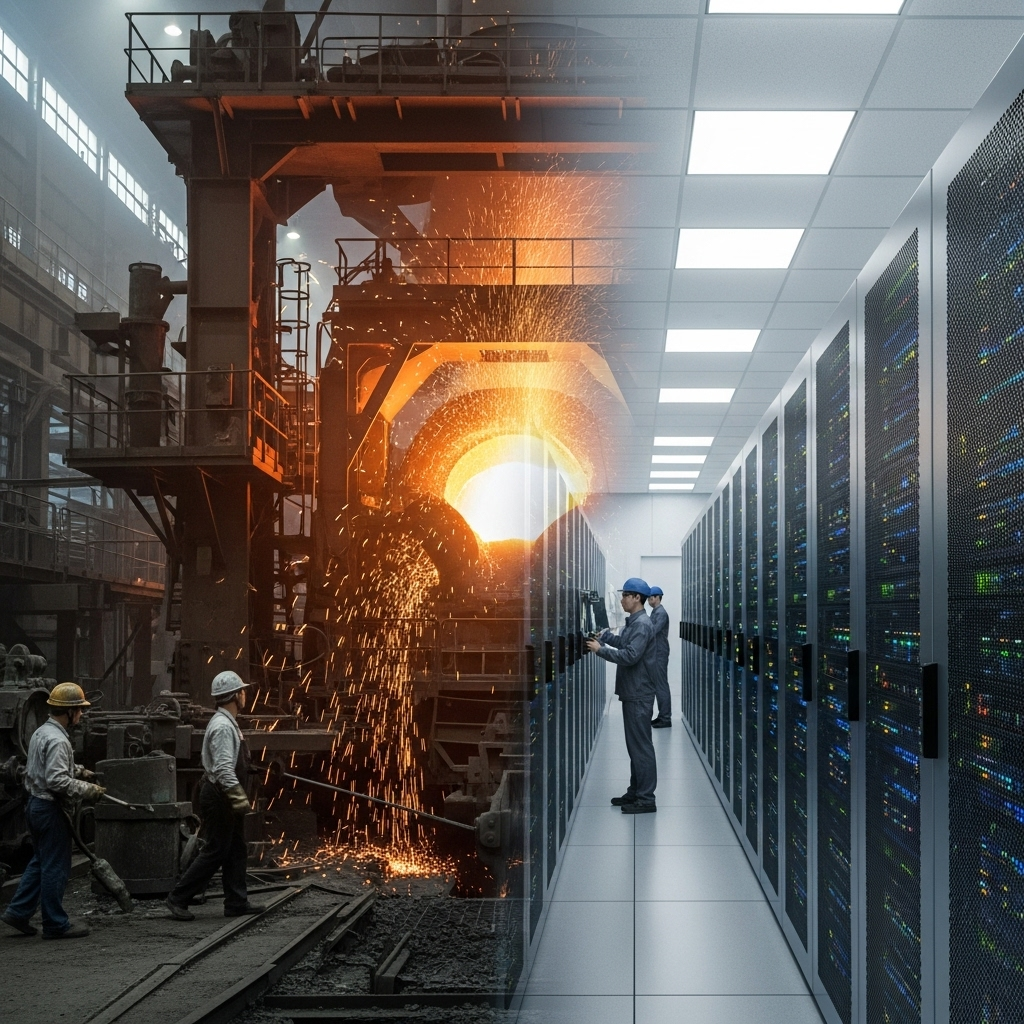
In the 21st century, the fierce battlefield of industrialization has merely shifted to the ‘AI territory.’ Building our ‘AI factory’ and creating our ‘AI engine’ carries the same weight and significance as constructing highways and steelworks in the past.
AI sovereignty is no longer just a discourse or choice for technology experts. It is a matter of survival that determines whether we and our children can live as citizens of a ‘digital sovereign nation’ rather than as subjects of a ‘digital colony’ in the coming future.
The future where the heart of the AI engine we created beats vigorously is the vision we must build together for South Korea. The journey will undoubtedly be arduous and challenging, but we can achieve it once again.