
The Center of the World’s Fastest Change
Let me tell you a story. A frog lived in a large pot of water. At first, the water was just right. But someone slowly started to heat the water from below, so slowly the frog didn’t notice. The frog enjoyed swimming in the warming water, feeling comfortable. But it was too late when it realized it was being cooked.
What’s happening in China today with digitalization is very similar to this story. People are enjoying the rapidly changing world in the warm waters of convenience. But behind these changes, a new order is growing that we never imagined. Today, we will talk about this hot digital experiment happening inside this giant pot, China.

The Invisible Conductor: The Digitalization of Politics
The Eye That Records Everything: The Social Credit System
Imagine a day in the life of Mr. Wang, who lives in China. He wakes up and checks the news on his smartphone. He passes through a facial recognition gate to take the subway. He pays for lunch with a QR code. In the evening, he receives an item ordered from an online shopping mall. What if every one of these actions is being added to an invisible scoreboard called a “social credit score”?
The Nation’s Report Card: How the Social Credit System Works
This massive system, which the Chinese government began building in 2014 with the goal of creating a “trustworthy society,” is like assigning a “report card” to all citizens and businesses. Government agencies, financial companies, and internet companies collect personal data, assign scores, and give rewards or punishments based on those scores.
- Where Does the Data Come From?: Almost all data is collected, including financial transaction records, traffic violations, public utility payment history, court judgments, and even online shopping lists and social media activity. Simply being caught crossing the street illegally on CCTV can lower your score.
- Rewards and Penalties: “Model” behavior like consistently repaying loans, volunteering, or donating blood earns bonus points. Conversely, borrowing money and not repaying it, violating traffic laws, causing disturbances in public, or spreading “harmful” information online can lead to deductions.
Two Faces: The “Red List” and the “Blacklist”
The scores assigned divide people’s lives into extremes.
- The Angel’s Face: Privileges of the “Red List”: Those with high scores on the “red list” receive VIP treatment everywhere. They can easily get loans with low interest rates from banks and get priority for medical treatment and public services. They might not need a deposit to rent a bike, or even find it easier to meet a good spouse.
- The Devil’s Face: Shackles of the “Blacklist”: Conversely, those with low scores on the “blacklist” face significant restrictions in their daily lives. They are banned from buying high-speed rail or plane tickets, restricting their freedom of movement. It becomes difficult to find good jobs or send their children to good schools. In some areas, their personal information is even publicly displayed, marking them as “credit offenders.”

This is China’s “social credit system.” It started by evaluating the reliability of financial transactions, but now it includes traffic violations, bad behavior in public, and even online comments. High scores offer benefits like easier loan approvals and convenient hospital appointments for being a “good citizen.” Low scores can result in penalties like being blocked from booking flights or having trouble getting children into good schools.
The government claims this system helps increase social trust and maintain order. Indeed, there have been positive effects like reduced tax evasion and lower rates of credit default. However, the fact that all our actions are being evaluated without our knowledge, and that the results can impact our lives, reminds many of the emergence of a “digital Big Brother.” This is why some critics feel it’s like George Orwell’s novel <1984> coming to life.
A Smart Government, But…
China’s digitalization has deeply infiltrated government administrative services. Now, instead of visiting government offices with piles of paperwork, Chinese citizens can handle most administrative matters with a single smartphone app. The “digital government” has greatly improved administrative efficiency and played a significant role in reducing official corruption.
However, behind this smart government lies a massive surveillance network called “Tianwang” (天网) and “Xueliang” (雪亮) Project. Millions of CCTV cameras with facial recognition technology monitor every corner of cities and rural areas in real-time, identifying criminals and promoting social stability. While there are clear positive aspects like crime prevention, the fact that the state possesses powerful tools to monitor citizens’ every move raises many questions from a democratic perspective.

Changing the Landscape of Life: The Digitalization of Society
A Wallet-Free Society: Your Smartphone is Enough!
Have you been to China recently? You’ve probably seen street vendors selling skewers who ask for a QR code on a smartphone instead of cash. China has already become the world’s largest mobile payment market. Alipay and WeChat Pay have become “life platforms” beyond simple payment tools, allowing for utility payments, hospital bookings, and even investments.
These changes have made people’s lives incredibly convenient. There’s no need to carry a heavy wallet, and all financial transactions are transparently managed. However, not everyone benefits from this convenience. Issues like the “digital divide” are emerging, where the elderly who are not familiar with smartphones or the poor who lack access to digital devices are being left behind by this massive trend.

An Experiment in Future Cities: Smart Cities
The Chinese government is investing heavily in building “smart cities” by utilizing technologies like artificial intelligence, 5G, and the Internet of Things (IoT). In smart cities, AI analyzes real-time traffic flow to control traffic lights, drones deliver goods, and remote medical systems monitor patients’ health. Major cities like Shanghai, Beijing, and Shenzhen are already beginning to resemble these future cities.
However, the advanced infrastructure of smart cities also means a more intricate surveillance network. As all city data is concentrated and analyzed on a central server, the risk of personal privacy infringement increases. It’s a delicate balance between the ideal of a convenient and safe city and the reality of a society where everything is controlled.

The Dragon Awakens: The Digitalization of the Economy
A Giant Swallowing the World: E-commerce and the Digital Economy
Have you heard of “Singles’ Day” (光棍节)? November 11th, originally “Singles’ Day,” is now the world’s largest online shopping festival led by Alibaba. The transaction volume on a single day is beyond imagination, symbolically showing the explosive growth of China’s digital economy.
As of 2023, the size of China’s digital economy reached approximately 54 trillion yuan (about 10 quadrillion Korean won), accounting for over 40% of its GDP. This means it’s not just about active online shopping, but also the rapid “industrial digitalization” where digital technologies are integrated into traditional agriculture, manufacturing, and service industries. The entire industrial structure is changing, such as predicting crop yields through big data analysis and improving production efficiency with robots connected to smartphones in factories.
A New Currency Challenging the Dollar: The Digital Yuan
One of the areas China is focusing on most recently is the introduction of the “digital yuan” (e-CNY). The digital yuan is a legal digital currency issued directly by the People’s Bank of China. While Alipay and WeChat Pay are “payments” made through private company platforms, the digital yuan is the “money” itself, holding the same value as cash.
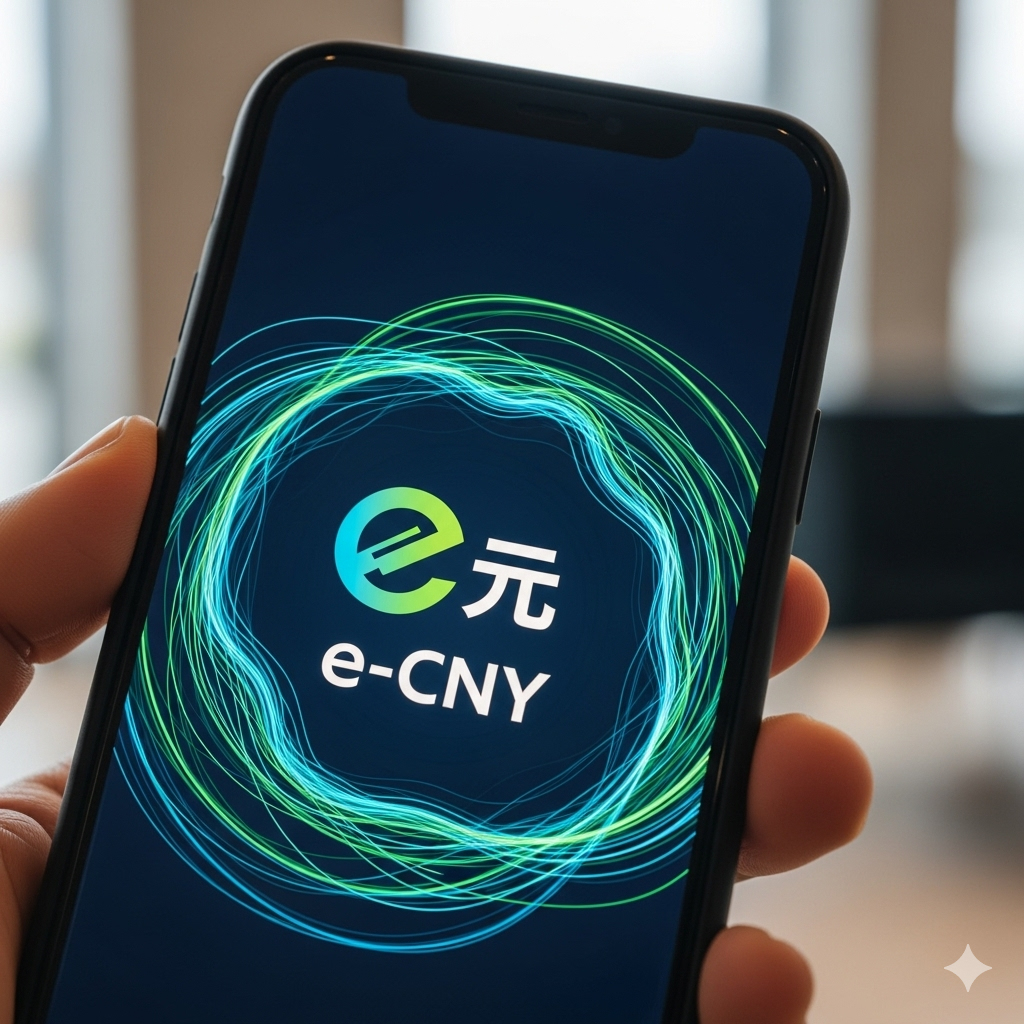
The government explains that the digital yuan can increase transaction transparency and prevent financial crimes like money laundering. It is also a key tool in the “de-dollarization” strategy, aiming to expand the yuan’s influence in the international financial market dominated by the dollar.
However, the fact that all transaction records are held by the central bank means that individuals’ economic activities can be perfectly tracked by the state. This, combined with the social credit system mentioned earlier, raises concerns that individual control could become much stronger.
The Awakened AI Dragon: Big Data and the Rise of AI
The most powerful and formidable entity created by China’s grand digital experiment is artificial intelligence (AI). Like a slumbering dragon awakening and breathing fire, China’s AI technology is growing at a frightening pace, astonishing the world.
Infinite Fuel: Big Data and the State’s Will
Just as a great chef needs fresh and abundant ingredients to make the best dishes, vast amounts of data are essential for creating excellent AI. This is where China has an overwhelming advantage that no other country can match.
- A Sea of Data Created by 1.4 Billion People: As over 1.4 billion people make payments, search, and watch videos on their smartphones daily, an unimaginable amount of data is accumulated. This data serves as infinite “fuel” for training China’s AI.
- State-Led Data Superhighway: Unlike Western countries that have strict rules on data collection and use due to privacy concerns (like GDPR), the Chinese government has made AI development a top national priority and actively encouraged data utilization. This has essentially paved a superhighway for companies to freely use data to develop AI technology. While this is criticized for weakening individual privacy, it has led to an astonishing pace of AI technological advancement.
As a result, China has achieved world-class technological capabilities in areas like facial and voice recognition, and has emerged as an AI powerhouse, giving birth to numerous AI unicorn companies (startups valued at over 1 trillion won).

New Rules for Future Warfare: “Intelligent Warfare”
The real reason China is going all out for AI development is not just for economic gain. Beyond that lies an ambitious ambition to seize dominance in future warfare. The name of the future warfare envisioned by the Chinese military is “Intelligent Warfare” (智能化战争).
This signifies a new paradigm where AI determines the outcome of wars, moving beyond the eras of mechanization and informatization.
- The Emergence of AI Commanders: While human commanders analyze vast amounts of information and make decisions, AI commanders can analyze all battlefield data in real-time to instantly suggest optimal attack routes and strategies. This is about gaining the “advantage of decision-making” that surpasses human judgment speed.
- Drone Swarms Attacking Like a Swarm of Bees: The “drone swarm” attack, where thousands or tens of thousands of AI-controlled drones swarm from the sky, sea, and land to neutralize enemy defense systems, is becoming a reality.
- The Invisible Battlefield: AI plays a crucial role in cyberspace and electronic warfare. It becomes an invisible sword that leads to victory in a war without gunfire by disrupting enemy communication networks and spreading fake information to destabilize society.
China aims to surpass the United States in this “intelligent warfare” by mobilizing its strengths in data and state-led development capabilities. This is not just a new arms race; it could be the beginning of a massive shift that redefines the very concept of warfare.

光与影,硬币的两面
我们刚刚一起走过了中国庞大的数字试验场。现在,让我们用一张图来对比一下这场实验带来的光明与阴影,为我们的故事画上句号吧。
| 优点 (光明) | 缺点 (阴影) |
|---|---|
| **惊人的经济增长:**数字经济和人工智能产业成为中国新的增长引擎,创造了巨额财富。 | **隐私的终结:**国家主导的监控系统严重威胁着个人自由和隐私。 |
| **生活更加便利:**移动支付、数字政府等极大地改变了人们的日常生活,让一切变得更加方便。 | **社会控制加强:**社会信用体系可以成为一种强有力的工具,通过分数来评估和控制民众。 |
| **社会效率提升:**智慧城市和数字政务有助于解决交通、安全、福利等城市问题。 | **数字鸿沟加剧:**不熟悉新技术的群体可能面临更大的社会边缘化风险。 |
| **技术加速发展:**海量数据和政府支持推动了人工智能等尖端技术的飞速进步。 | **数据垄断与偏见:**大型平台公司和政府的数据垄断可能带来新的不平等。 |
| **提高透明度:**所有交易都以数字形式记录,有助于预防腐败和金融犯罪。 | **军事紧张加剧:**利用人工智能技术准备“智能化战争”可能引发国际社会新的军备竞赛和冲突。 |

中国的数字化是一场人类历史上罕见的宏大社会实验。它的结局究竟是便利高效的乌托邦,还是万事皆被掌控的反乌托邦,现在谁也无法断定。可以确定的是,锅里的水正在不断升温,这场变革的浪潮也不会仅仅局限于中国。这正是我们必须持续关注这场伟大实验的原因。