
Doorstep Magic, and Its Bill
Have you found a delivery box on your doorstep this morning? It might be a daily ritual for us now. The colorful boxes lined up in apartment hallways are like small monuments to modern city abundance.
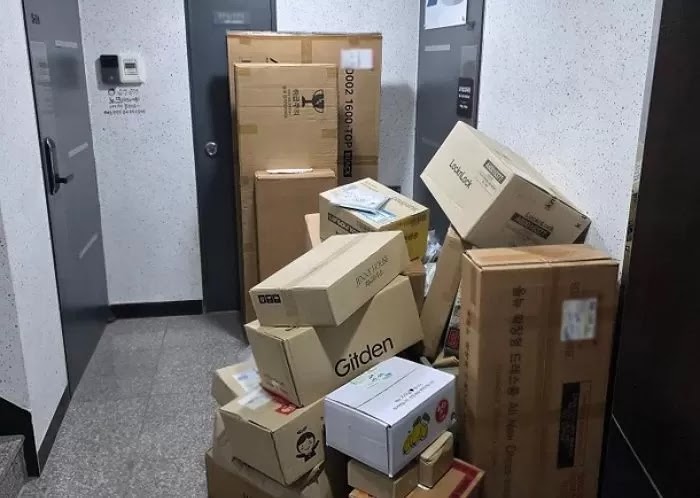
A few taps on your phone before bed, and your salad and your child’s milk have arrived like overnight fairies. This magical convenience, “overnight delivery,” has completely changed our dining tables and lifestyles over the past decade.
Amazing statistics prove this change. The market, just 10 billion won in 2015, is projected to reach a staggering 12 trillion won by 2023. This number signifies more than just market growth; it means “grocery shopping” has been freed from the constraints of time and space.
But today, I want to look closely at the “bill” hidden behind these friendly magic boxes with you. Beyond the product prices, I mean the costs written in invisible ink. That bill records trillions of won invested in a founder’s dream, the sleep and health of delivery drivers who race through the city while everyone else sleeps, and the environmental debt left by countless packaging materials used for freshness.
So, shall we turn the first page of this enormous bill together?
Chapter 1: A Working Mom’s Dream Ignites a “Morning Star”
Every great beginning starts not with grand slogans, but with small, urgent “inconveniences.” The dawn of overnight delivery in Korea began with the worries of a working mom who returned in 2014.

Kim Seul-ah, a successful finance expert. But after work, taking care of her child and preparing a fresh dinner felt like a battle. “Why can’t I get good products delivered at the time I want in the morning?” This small question was the seed of “Market Kurly,” which changed the landscape of the distribution market.
In 2015, “Morning Star Delivery,” promising “arrival before 7 AM if ordered by 11 PM,” appeared in the world. This wasn’t just fast delivery. It was a shift in thinking that turned the silent hours of the night into a “golden time” for logistics.
But Market Kurly’s real strength wasn’t speed, but its “strict adherence to quality.” The “Product Committee,” composed of experts, chose products based on the single criterion: “Can I use this for myself and my family?” This principle led to the elimination of complex distribution channels and the direct procurement of goods from producers. This dramatically reduced the waste rate for fresh food to less than 1%.
Of course, building a “cold chain” logistics system to maintain freshness from scratch was a arduous journey. But CEO Kim Seul-ah boldly invested in building her own logistics centers and delivery subsidiaries, confronting this difficult path head-on. The morning star, born from a working mom’s small inconvenience, thus became a giant beacon illuminating the darkness of the Korean distribution market.
Chapter 2: Giants Enter the Arena, and Fates Diverge
The era of peace Market Kurly initiated was short-lived. In 2018, e-commerce titan Coupang entered the market under the name “Rocket Fresh.”
Coupang’s strategy was simple and powerful. While Market Kurly competed on “premium quality,” Coupang aimed to overwhelm the market with its overwhelming “capital and scale.” Leveraging its already extensive nationwide logistics network, it stocked tens of thousands of products and implemented a radical policy of free delivery even for a single bag of bean sprouts.

With the entry of Coupang, traditional giants Shinsegae (SSG.com) and Lotte (Lotte On) also joined the fray. The competition devolved into a chicken game of “who can sell cheaper, faster, and more.” The market grew explosively, but behind it lay a terrible bleeding. Overnight delivery often fell into a “negative margin” structure where the more they sold, the more they lost due to logistics and labor costs.
Ultimately, Lotte On, GS Fresh Mall, and others, unable to compete with the power of capital, threw in the towel, leaving behind hundreds of billions in losses. After a long war, the market was left with only three giants: Coupang, Market Kurly, and SSG.com.
Winners and Survivors: Mixed Fortunes
- The Winner, Coupang: With the vast funds secured from its US stock listing in 2021, it subdued competitors and finally achieved annual profitability in 2023, proving who the ultimate winner of the war was.
- The Survivor, Kurly: It opened the market, but in the process of growing to compete with the giants, it incurred massive losses. Facing the market’s cold question, “When will you make money?”, it eventually had to withdraw its IPO plans. The icon of revolution now faces the arduous task of “how to survive.”
Chapter 3: Ghosts Running in the Dawn, The Price of Speed
While we sleep, some people race through the city’s arteries. They are the overnight delivery drivers. Our convenience is built upon their invisible labor.
Surprisingly, many drivers spent 2-3 hours sorting and loading goods before starting their deliveries, considering it “free labor.” It’s “shadow work” not included in their pay. The grueling work schedule of 10 hours a day, 60 hours a week, exposes them to the risks of night work, which the WHO has designated as a “carcinogen.” According to one study, their rates of sleep disorders and depression were more than three times higher than those of general workers.
Furthermore, the “pressure of algorithms,” where contracts can be terminated for even a 0.5% delay in delivery, constantly whips them. It’s a structure where they cannot rest even when sick and are driven into dangerous situations. Perhaps the boxes we receive at dawn carry someone’s sleep, health, and sometimes even their life as collateral.
Chapter 4: An Unconventional Survivor, The Anomaly of Profitability
When everyone said, “Overnight delivery equals losses,” one entity defied this formula, achieving profitability for 13 consecutive years: “Oasis Market.”
Oasis’s success was different.
- Smart Omni-channel: Inventory remaining after processing online orders overnight is all sold at its over 60 offline directly managed stores the next morning. This brings the inventory waste rate to an astonishing 0.2%.
- Software Innovation: Instead of automated robots costing hundreds of billions, it optimized worker routes with its self-developed logistics system, “Oasis Route.” It maximized efficiency through smart software without massive investment.
Oasis’s story poses a question: Was the bloody competition the only way? The story of this unglamorous but most resilient survivor resonates deeply.
Chapter 5: The Dragon at the City Gates, A Completely Different Storm is Coming
Just as Korean companies were catching their breath after a long war in 2024, a giant dragon appeared at the city gates. “AliExpress” and “Temu,” namely China’s C-commerce.
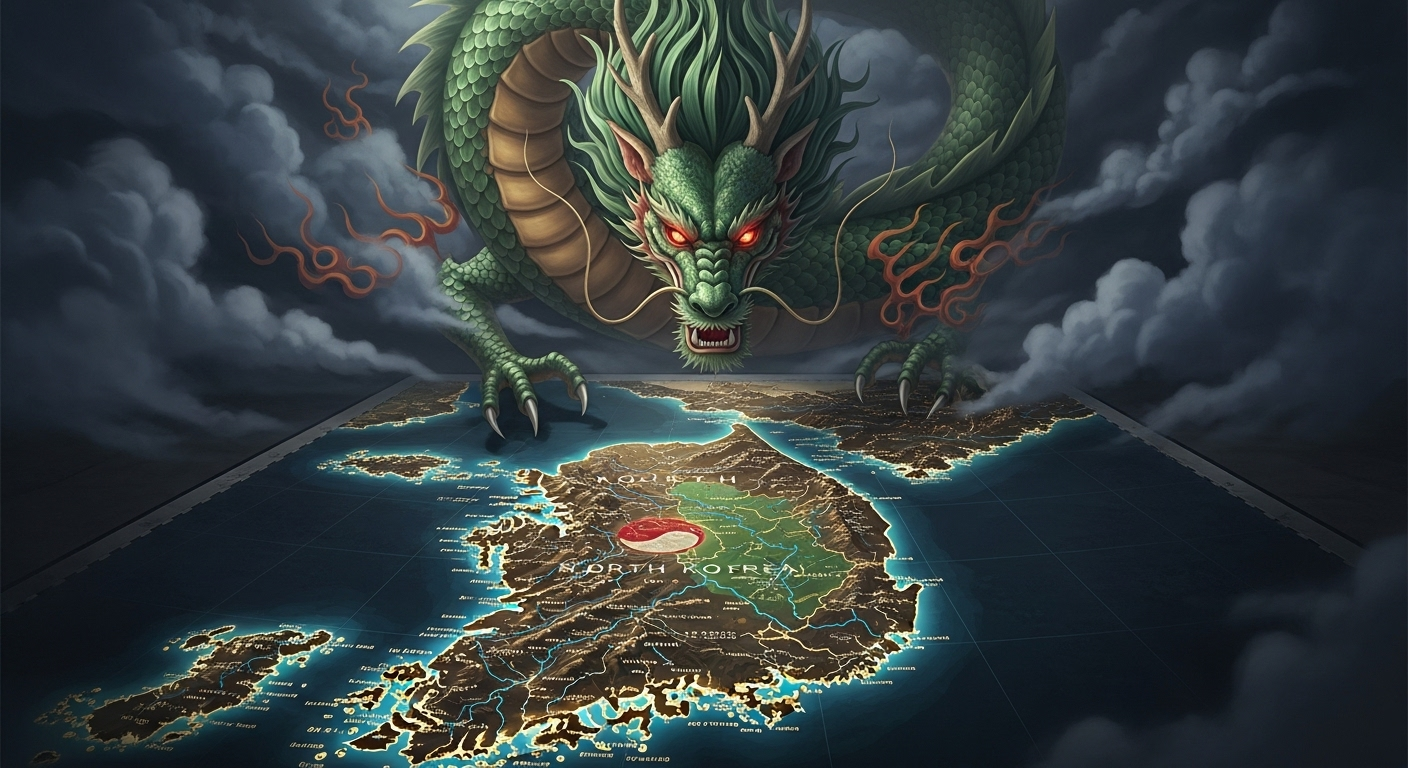
Armed with “ultra-low prices” and “free shipping,” they are rapidly encroaching on the Korean market. Now, their sights are set on our “dining tables.” Ali has started selling fresh Korean food and announced a 1.5 trillion won investment over the next three years to build a massive logistics center.
What if this vast capital begins “ultra-low-price overnight delivery”? This could be a disaster that shakes the entire distribution ecosystem we’ve built over the last decade. This goes beyond competition between companies; it could become an issue of “industrial sovereignty” that threatens our producers and jobs.
The Final Signature on the Receipt is Ours
We look at the boxes at our doors again. Inside, they hold the dreams of a founder, the wars of giants, the fatigue of delivery drivers, the wisdom of a company, and the shadow of a giant dragon – a testament to our society’s desires and the spirit of the times over the past decade.
Overnight delivery has undoubtedly enriched our lives. But now, we are entering the second chapter of this revolution. We are on a new testing ground, facing a massive wave from outside.
Ultimately, it is up to all of us to sign the final page of this bill as wise consumers and responsible citizens. When you open a box, why not pause to consider the stories beyond it? Choosing and supporting companies that use more sustainable packaging, provide fair treatment to workers, and coexist with our producers.
The new dawn will begin with those small choices.