
Tracing the massive energy transition triggered by the endless energy appetite of data centers, the invisible engine of the AI revolution.
- Understand the vast scale of power consumption in AI data centers.
- Grasp the background of Silicon Valley’s pivot to nuclear energy.
- Learn about the realities and challenges of small modular reactors (SMRs) as a new alternative to nuclear power.
Main Text
The Invisible Engine of the AI Revolution
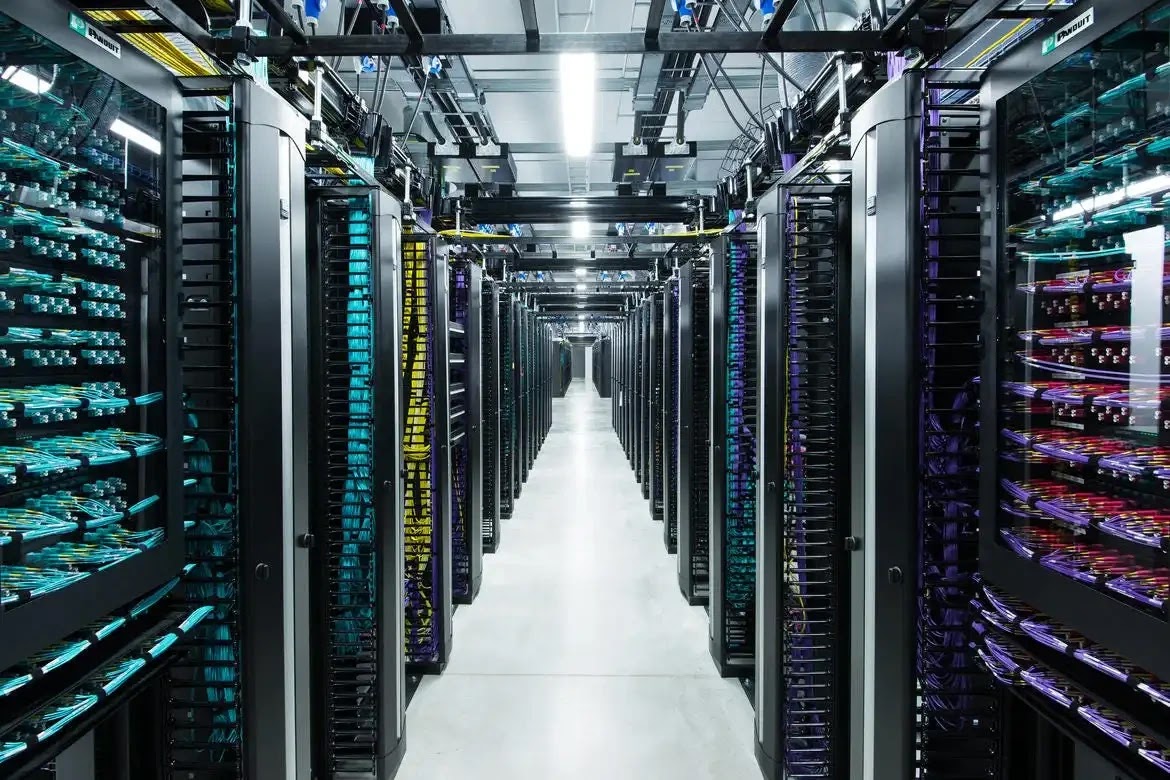
Imagine the magical moment when we ask generative AI to write a poem or create a fantastic image with just a few words. But behind that curtain lies a massive physical engine, the data center, emitting intense heat from countless servers. Every simple question we pose awakens this giant machine, causing it to consume vast amounts of electricity. The energy used to ask a chatbot 26 questions is equivalent to heating lunch in a microwave, and just one question can power a smartphone for 24 minutes.
This is where the greatest paradox of modern technology emerges. The AI revolution, once seen as a symbol of an immaterial future, is generating the largest and most centralized energy demand in human history. This endless energy appetite is forcing a fundamental re-examination of global energy policies, leading even Silicon Valley, which once championed ‘100% renewable energy’, to embrace nuclear power once again.
Quantifying AI’s Endless Appetite: The Billion-Watt Brain
Why has AI become an ’electric hippo’? First, AI computations rely on simultaneously operating thousands of high-performance GPUs. Training a large model like GPT-3 requires about $1.3 \text{GWh}$ of electricity, equivalent to the daily power consumption of thousands of households.
Second, the bigger issue is ‘heat’. Intense computations generate tremendous heat, necessitating as much electricity for cooling systems as is used for computing itself. Currently, about 40% of data center power is consumed solely for cooling.
The International Energy Agency (IEA) forecasts that global data center electricity consumption will increase from 460 TWh in 2022 to 1,050 TWh by 2026, more than doubling in just four years. This is an enormous amount, comparable to Japan’s total annual electricity consumption. Notably, 80% of this demand is expected to be concentrated in the U.S. and China, transforming energy policy into a key tool in the geopolitical competition for AI supremacy.
Table 1: Global Data Center Power Consumption Forecast
| Region/Country | 2022 (TWh) | 2026 Forecast (TWh) |
|---|---|---|
| Global | 460 | 1,050 |
| U.S. | ~190 | ~430 (by 2030) |
| China | ~100 | ~275 (by 2030) |
The challenge is how to meet this explosive demand. AI data centers are typical ‘baseload’ demand sources that require stable power supply 24/7, 365 days a year. Intermittent renewable energy sources (wind, solar, etc.) cannot adequately meet this demand when the sun sets or the wind stops. Ultimately, the IEA projects that more than 40% of the new power demand for data centers will be met by natural gas and coal generation by 2030. This represents a ‘climate change paradox’ where the AI revolution directly conflicts with humanity’s decarbonization goals.
A Great U-Turn: The World Embraces Nuclear Power Again
After the Fukushima nuclear disaster in 2011, the world experienced a ’nuclear winter’ for over a decade. However, the variables of climate change, energy security, and AI are dramatically reversing this trend.
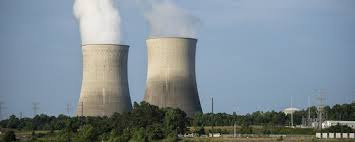
- United States: The Inflation Reduction Act (IRA) provides significant tax incentives for nuclear power, and California, facing power shortages, has extended the lifespan of the Diablo Canyon nuclear plant, which was scheduled for closure.
- Europe: France announced plans to build up to 14 new nuclear reactors, while the UK presented a roadmap to quadruple its nuclear power capacity.
- Asia: Even Japan, the site of the accident, has shifted towards restarting and extending the lifespan of its reactors, and South Korea has officially announced plans for the construction of three new reactors and the commercialization of next-generation SMRs.
An Unexpected Alliance: When Silicon Valley Met Reactors
The most surprising scene is that major tech companies in Silicon Valley have emerged as the most ardent supporters of nuclear power. Once champions of RE100 (sourcing 100% of their energy from renewables), they are now actively reaching out to nuclear energy. This is due to the cold realization that renewable energy alone cannot reliably meet the vast power needs of data centers that must operate 24/7.
This strategic pivot is manifesting in concrete investments. Amazon has acquired data centers next to nuclear plants and invested in SMR developers, while Microsoft has signed a long-term contract that includes restarting the Three Mile Island (TMI) reactor. Even Google is boldly betting on the future of nuclear power by signing a large power purchase agreement with an SMR startup.
Table 2: Big Tech and Nuclear Power Alliance
| Tech Giant | Partner | Contract Type and Size |
|---|---|---|
| Amazon | Talen Energy, X-energy | Data center acquisition, SMR development investment |
| Microsoft | Constellation Energy | 20-year long-term PPA, reactor restart |
| Kairos Power | 500MW scale PPA |
Small and Beautiful? Is SMR the Universal Solution?
At the center of the new nuclear renaissance is the small modular reactor (SMR). Promoted for its advantages of Safety, Scalability, and Speed, it is seen as a technology that could change the paradigm of nuclear power.
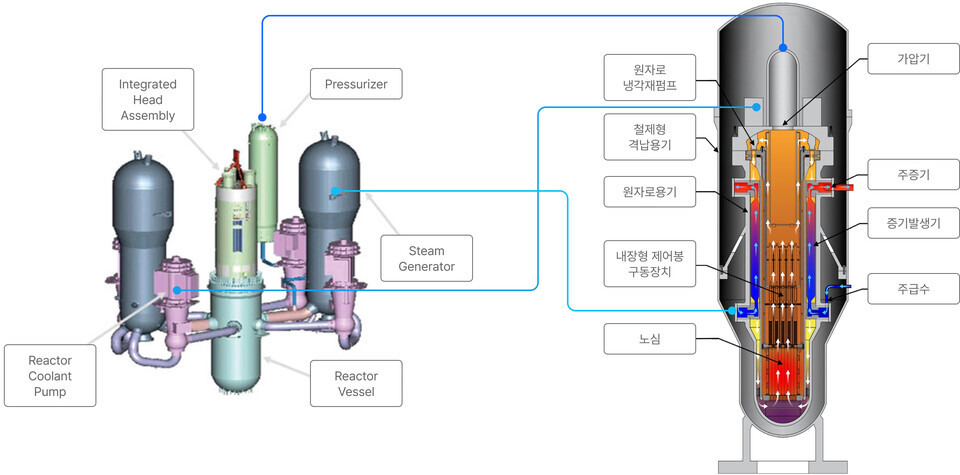
However, the first commercial project of the U.S. leader in SMRs, NuScale, has faced setbacks due to economic viability issues. Rising construction costs and expensive electricity have led customers to abandon contracts. This illustrates that for SMRs to be commercialized, they must overcome the significant costs and risks of the ‘first-of-a-kind’ ‘valley of death’.
The Harsh Reality: The Eternal Obstacles on the Path of Nuclear Power
Despite meeting a powerful ally in AI, the future of nuclear power remains fraught with challenges.
- Cost Issues: As seen with the Vogtle nuclear plant in the U.S., new nuclear construction always carries the risk of cost overruns and delays beyond predictions.
- Nuclear Waste: There is still no permanent disposal method for spent nuclear fuel, which emits lethal radiation for thousands of years. This presents a serious ethical and technical dilemma, passing the solution onto future generations.
- Social Acceptance: Regardless of technical safety, the NIMBY phenomenon (‘Not In My Backyard’) and political volatility act as significant barriers to nuclear projects.
Conclusion
The endless energy demand of AI is leading us into an era that requires both renewable energy and nuclear power, rather than a binary choice between the two. Renewable energy can provide variable power depending on the weather, while nuclear power can ensure stable baseload supply 24/7. Currently, nuclear power is the only proven zero-carbon technology capable of fulfilling this role on a large scale.
We stand at a critical crossroads. Decisions made regarding energy infrastructure over the next decade will not only determine the achievement of climate goals but also define the ultimate limits of the AI revolution. Humanity’s quest to create artificial brains paradoxically leads us to fundamentally redesign the physical world that powers those brains.
References
- Surfshark How much energy does generative AI use?
- Grantable What is the environmental impact of AI?
- IEA Global electricity demand to keep growing robustly through 2026
- Utility Dive NuScale, UAMPS terminate small modular reactor project in Idaho
- Grist Georgia’s Vogtle plant could herald the beginning — or end — of a new nuclear era