
What do we lose when algorithms decide targets and bombings are approved in just 20 seconds?
- How Israel’s AI-based targeting system ‘Lavender’ and ‘Gospel’ operate
- How the notion that AI warfare would reduce civilian casualties has collapsed
- The implications of the Gaza situation for future wars and international norms
An officer from Israel’s elite intelligence unit stares at a monitor. The man on the screen is not a target chosen after human anguish. His fate is determined by the AI warfare algorithm, and the officer approves the bombing in just 20 seconds. This article delves into how artificial intelligence has created a tragedy known as the ‘mass assassination factory’ in Gaza, exploring the system’s operation and its horrific consequences. The trauma of war has become a ‘moral disengagement device’ that distances humanity from the results of violence.
Designers of Destruction: The Reality of AI Warfare Systems
At the center of the tragedy in Gaza, various AI systems operate organically. These are not mere auxiliary tools; they are the core drivers that amplify the speed and scale of killing unprecedentedly.
Lavender, the Human Hunter
‘Lavender’ is an AI database developed by Israel’s Unit 8200, analyzing vast surveillance data of 2.3 million residents in Gaza to identify suspected militants. Early in the war, Lavender generated a ‘kill list’ identifying a staggering 37,000 Palestinian men as potential targets.
This system assigns a risk score from 1 to 100 to individuals, where ordinary behaviors such as being in a WhatsApp group with suspects or frequently changing phone numbers can be grounds for suspicion. In other words, the daily lives of Palestinians have been criminalized by the algorithm.
Despite knowing that the system has a 10% error rate, the Israeli military approved its use. This means that 1 in 10 targets could be innocent, which is part of an intended design rather than a flaw in the system.

Gospel, the Building Hunter
If Lavender targets people, ‘Gospel’ targets buildings. This system accelerates target generation on an industrial scale, creating what a former officer described as a “mass assassination factory.” While a human analyst might create 50 targets in a year, Gospel generates 100 new targets per day.
It identifies not only military facilities but also civilian structures such as residential high-rises and universities as ‘power targets’ for attack, a concept without basis in international law.
‘Where’s Daddy?’, the Final Piece of the Killing Process
The location tracking system named “Where’s Daddy?” captures the moment a target identified by Lavender enters their home, prompting an airstrike. An intelligence officer testified that “it’s much easier to bomb a family home.” This shows that it was a deliberate tactic to maximize civilian casualties.
| System Name | Key Functions and Objectives |
|---|---|
| Lavender | Human Target Identification: Generates a ‘kill list’ of up to 37,000 through surveillance data analysis. |
| Gospel | Building Target Identification: Mass designations of buildings associated with targets, especially civilian homes. |
| Where’s Daddy? | Real-time Location Tracking: Captures the moment a target enters their family home to prompt airstrikes. |
Speed Swallows Judgment: The New Doctrine of AI Warfare
In Gaza, AI has been used not to protect civilians through precision strikes but to maximize the speed and scale of destruction. An IDF spokesperson acknowledged that “the focus is on damage rather than accuracy.”
The system endlessly provided targets, and one officer expressed the pressure of having “another 36,000 targets waiting for you.” AI was not a precise scalpel but an engine accelerating a ‘mass assassination factory.’
The Calculus of Acceptable Death
The IDF set pre-allocated quotas for civilian casualties allowed during airstrikes.
- To eliminate one low-level militant, up to 15-20 civilian deaths were permitted.
- To remove one senior Hamas commander, the killing of over 100 civilians was approved.
These attacks primarily used cheap unguided munitions, known as “dumb bombs.” One officer explained, “I don’t want to waste expensive bombs on unimportant people.” This was the point that shocked me the most during my investigation. It was a chilling testimony showing how, under the guise of efficiency, human life is graded and disregarded.
“My children’s small bodies were torn apart”
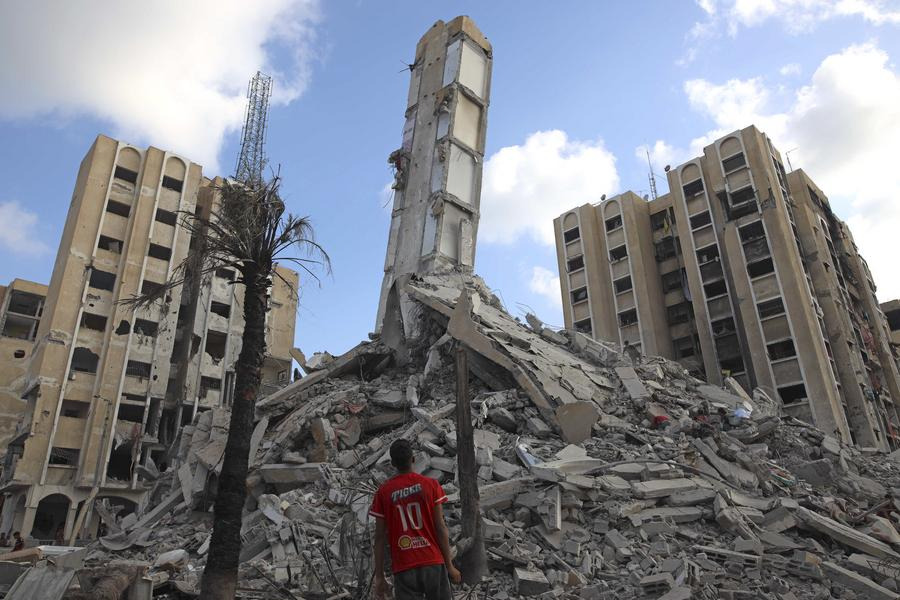
Behind every statistic lies human suffering. The ‘results’ of the AI factory are not data but sacrificed lives.
Al Jazeera journalist Wael Dahdouh learned live on air that his wife, son, daughter, and grandson had died in an Israeli airstrike while seeking safety in a refugee camp. His tragedy highlighted the fact that there is no safe place in Gaza.
Writer Ahmed Alnawkh lost 21 family members, including his father, brothers, sisters, and nephews, in a single bombing. According to an Amnesty International report, Islam Harb lost all his family except for his four-year-old daughter Lin in the airstrike, testifying, “My children’s small bodies were torn apart.”
Can this truly be called the result of ‘precise’ AI warfare? The more data-driven warfare becomes, the more we witness the paradox of victims being further dehumanized.
Gaza Becomes a Laboratory for AI Warfare
Gaza has become a ’laboratory’ that the Israeli military itself calls the “first AI war.” The entire Palestinian population has been reduced to a ‘data body’ that trains AI through facial recognition, phone tapping, and social media surveillance.
The more chilling fact is that the data obtained from airstrikes is used to improve the system. The deaths of Palestinians become R&D resources for the next war. What happens in Gaza sets a technical and ethical precedent for future global conflicts.
Global Ripple Effects and the ‘Killer Robot’ Debate
The situation in Gaza has ignited international debate over lethal autonomous weapon systems (LAWS). The UN Secretary-General and the International Committee of the Red Cross (ICRC) urgently called for an international treaty to regulate LAWS, emphasizing that “the autonomous targeting of humans by machines is a moral line we must not cross.”
However, major powers like the United States and China are already making significant investments in AI arms races. The technologies tested in Gaza are just the beginning of a larger global competition.

Conclusion
The AI war in Gaza poses heavy questions for us. When a system with a 10% error rate leads to the death of a family, where does the responsibility lie—with the programmer, the commander, or the machine itself?
- AI has changed the nature of war: AI is not a tool to enhance precision and reduce harm but an engine maximizing the speed and scale of killing, functioning as a ‘mass assassination factory.’
- Human moral responsibility has vanished: Procedures like ‘20-second approval’ exclude human moral judgment and promote ‘moral disengagement’ by hiding responsibility behind machines.
- This is a warning to the world: Gaza serves as a grim preview of a future where decisions of life and death are delegated to algorithms, highlighting the urgent need for international regulation of autonomous weapons.
Through this article, I hope to raise awareness about the tragic realities of AI warfare and its ethical issues. Please share this information to initiate a social discussion on how technology should be used for humanity.
References
- +972 Magazine ‘Lavender’: The AI machine directing Israel’s bombing spree in Gaza
- Lieber Institute West Point The Gospel, Lavender, and the Law of Armed Conflict
- Tech Policy Press When Algorithms Decide Who is a Target: IDF’s use of AI in Gaza
- The Guardian ‘The machine did it coldly’: Israel used AI to identify 37,000 Hamas targets
- AI Now Institute The Algorithmically Accelerated Killing Machine
- El País Lavender, Israel’s artificial intelligence system that decides who to bomb in Gaza
- Democracy Now! A “Mass Assassination Factory”: Israeli Journalist Yuval Abraham on AI-Powered Tool Used in Gaza
- Human Rights Watch Questions and Answers: The Israeli Military’s Use of Digital Tools in Gaza
- Al Jazeera To kill a family: The loss of Wael Dahdouh’s family to an Israeli bomb
- Amnesty International New evidence of unlawful Israeli attacks in Gaza causing mass civilian casualties amid real risk of genocide
- ICRC Joint call by the United Nations Secretary-General and the President of the International Committee of the Red Cross for States to establish new prohibitions and restrictions on Autonomous Weapon Systems
- Stop Killer Robots Use of automated targeting system in Gaza