
The Geopolitical Impact of the Economic War Launched Against BRICS by ‘America First’
- Background of Trump’s ‘America First’ and the rise of BRICS
- Case studies of tariff wars by major BRICS countries and their impacts
- Unintended consequences of the tariff war on de-dollarization and the global economy
The Rise of BRICS: A Challenge to the Old Order
To understand the tariff war during the Donald Trump era, we must first look at the world order before his emergence. The BRICS (Brazil, Russia, India, China) coalition of emerging economies had already established itself as a significant player on the global stage.
From Investment Term to Political Block
Originally, BRICS was an investment term coined by Goldman Sachs in 2001 to describe the growth potential of Brazil, Russia, India, and China. However, following the 2008 global financial crisis, these countries began to coalesce into a political entity, expressing skepticism towards the Western-centric financial system.
Starting with their first summit in 2009, they aimed to reform the governance of institutions like the United Nations (UN), International Monetary Fund (IMF), and World Bank, which are dominated by the US and Europe, and to challenge the dollar-centered reserve currency system.
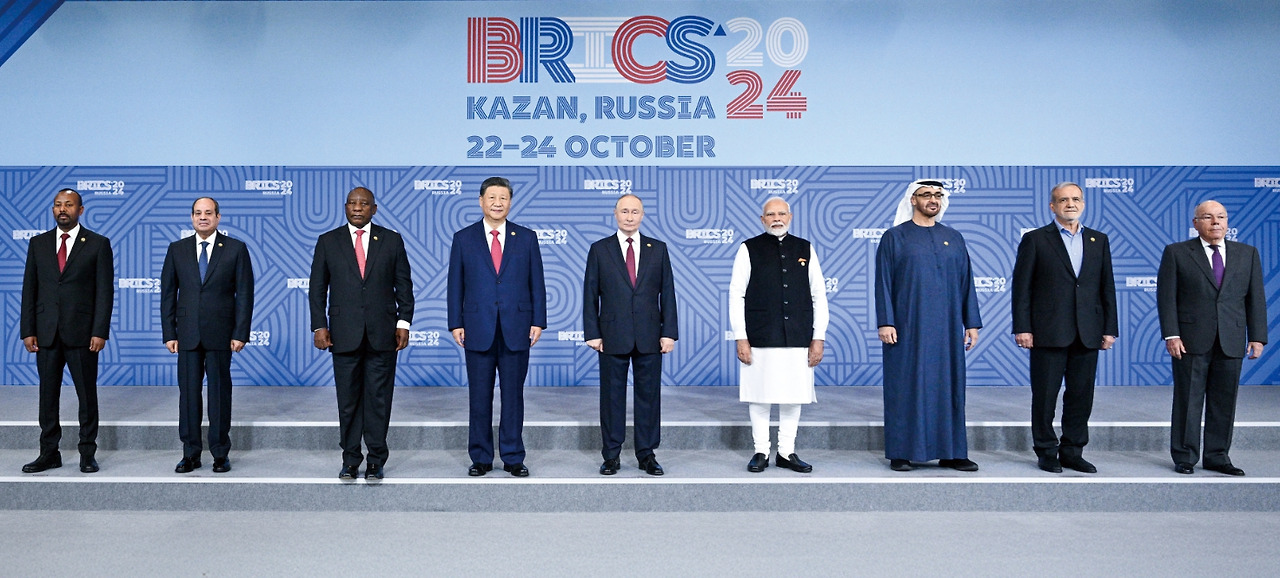
With the addition of South Africa in 2010, and later Iran and the UAE in 2024, BRICS grew into a massive block representing about 45% of the world’s population and over 35% of global GDP (PPP). Notably, the establishment of the New Development Bank (NDB) and Contingent Reserve Arrangement (CRA) in 2014 was an attempt to create a practical alternative to the existing Western-centric financial order.
The Desire for a ‘Safe Harbor’
The rise of BRICS was a reaction against the US-centered unipolar system. For countries suffering from Western economic sanctions, the dollar-centered financial system was perceived as a ‘weapon’ enforcing US foreign policy.
In this context, BRICS was seen as a ‘safe harbor’ to escape US economic pressure. Thus, the de-dollarization promoted by BRICS was a realistic and defensive measure to secure their economic sovereignty.
The Trump Doctrine: The Prelude to ‘America First’ and the Tariff War
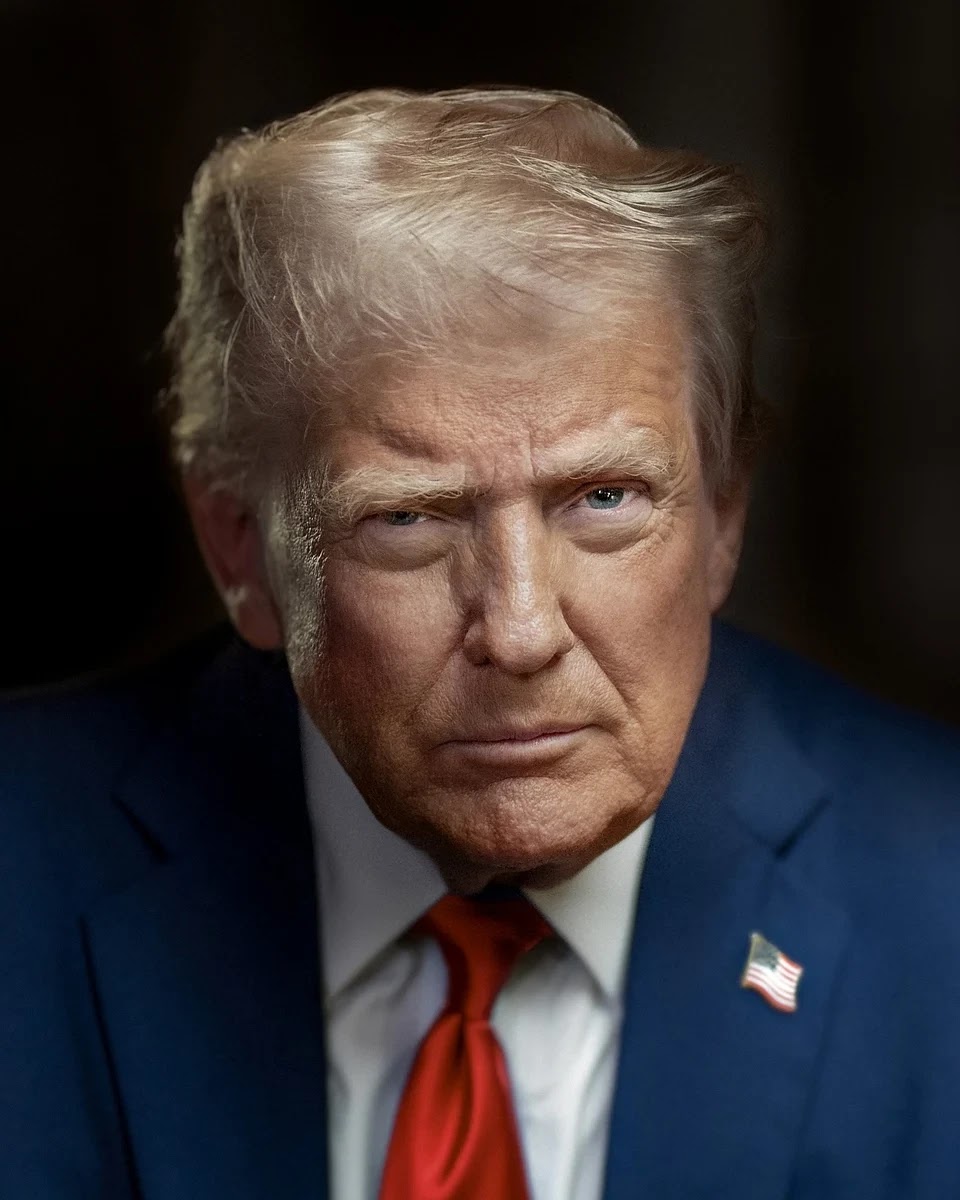
“We will impose a 100% tariff.”
President Trump threatened that if BRICS challenged the hegemony of the US dollar, he would impose such tariffs, belittling BRICS as a “rapidly disappearing small group.” This was a declaration of war based on the ‘America First’ philosophy.
The Architect of the Trade War: Peter Navarro
Behind the Trump administration’s hardline trade policies was Peter Navarro, Director of the White House Office of Trade and Manufacturing Policy. His logic was straightforward:
- China is the enemy: China is an ’economic aggressor’ destroying America’s industrial base through unfair means.
- Trade deficits are a drain on national wealth: Trade deficits represent a net loss from GDP.
- Tariffs are not harmful: Tariffs are an effective negotiating tool to pressure foreign exporters.
- Security and economy are one: Economic independence equates to national security.
Personally, I view Navarro’s logic as an oversimplification of the ’national balance sheet’ akin to a household budget. Ignoring the complexities of global supply chains and capital flows, he appealed to voters with an intuitive yet dangerous logic that ’exports are income, imports are expenses.’ This simplicity was the source of the political power of his arguments.
The Hidden Purpose of Tariffs
Trump’s tariff policy was less an economic strategy and more a core tool of populist politics. Imposing tariffs created a strong political narrative of protecting Americans against ’external enemies,’ effectively rallying his core support base, such as the ‘Rust Belt.’ In essence, the real goal of tariffs was not to improve the trade balance but to secure political momentum.
Case Study: How Trump’s Tariffs Targeted BRICS
The Trump administration’s offensive manifested as an economic war precisely targeting the weaknesses of each BRICS country.
The Dragon Under Crossfire: Full-Scale War with China
The primary target of the war was undoubtedly China. While the justification was to address the trade deficit, the essence was a technological hegemony war aimed at China’s ‘Made in China 2025’ initiative.
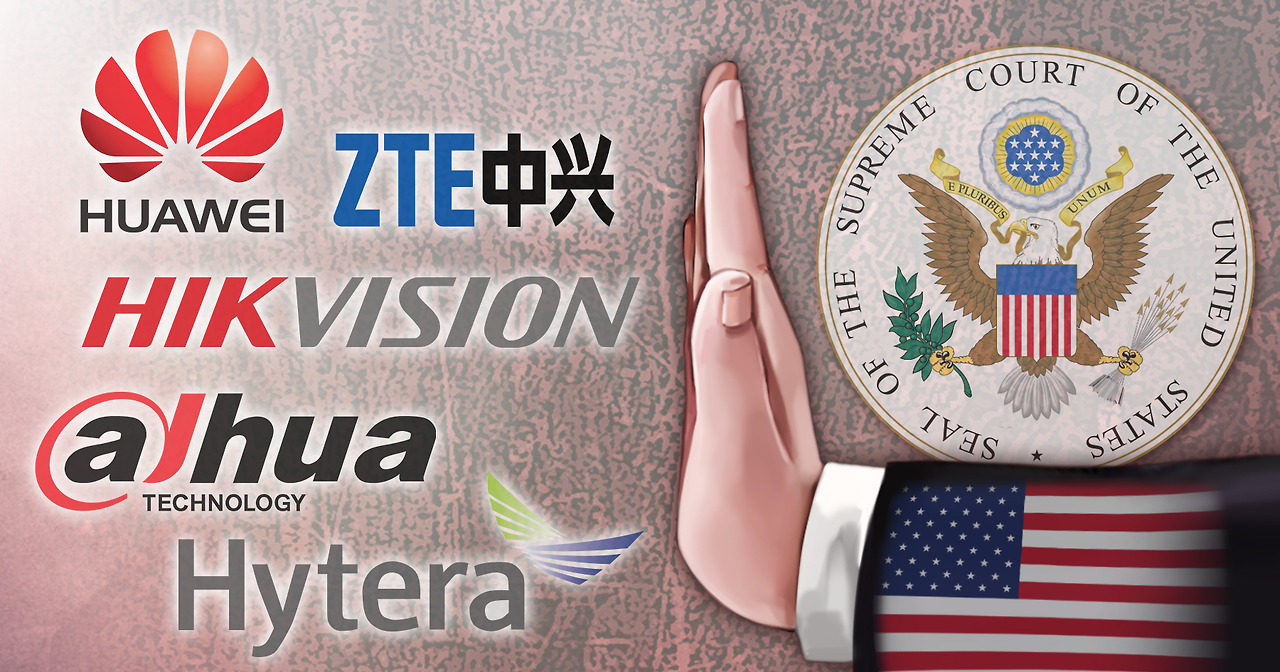
The most powerful weapon in the US-China trade war, which began in 2018, was the ‘Entity List’ for export controls. In 2019, the US placed the Chinese telecommunications giant Huawei on this list, cutting off access to American technology and components. This dealt a severe blow to Huawei’s global supply chain but paradoxically spurred China to focus on technological self-sufficiency, such as semiconductor localization.
Political Tariffs: Pressuring Brazil for Bolsonaro
The case of Brazil illustrates how overtly Trump used trade policy as a political tool. Trump labeled the Brazilian judiciary’s investigation into former President Jair Bolsonaro, known as the ‘Trump of South America,’ as a ‘witch hunt’ and threatened to impose a 50% tariff on all Brazilian imports if it did not cease.
Brazilian President Lula strongly opposed this, calling it an “unacceptable infringement of sovereignty.” This incident had the counterproductive effect of pushing Brazil away from US-centric diplomacy and strengthening its ties with BRICS.
Market Access Pressure: Taming India
Trump referred to India as the “tariff king” and sought to force open its protectionist market. The key weapon was the revocation of its Generalized System of Preferences (GSP) status. GSP is a duty-free benefit provided by the US to developing countries, and in 2019, the US suspended India’s GSP status, citing that India did not guarantee fair market access for US companies.
This action impacted over $6 billion in Indian exports, forcing India to confront the power imbalance while trying to maintain relations with its largest trading partner.
Loyalty Test: ‘Punishing’ South Africa
The pressure on South Africa stemmed from a mix of political grievances, including land reform and pro-Russian/pro-Chinese foreign policy. The Trump administration threatened to impose a 30% tariff that would undermine the African Growth and Opportunity Act (AGOA) benefits.
This incident made South Africa realize the dangers of excessive dependence on the US market and prompted a diversification of exports to other markets in Europe and Asia.
Overview of Tariff Wars by BRICS Countries
| Country | Key Actions and Justifications | Core Impacts and Results |
|---|---|---|
| China | Imposed Section 301 tariffs and sanctions on tech firms like Huawei under the pretext of unfair trade and technological hegemony challenges | Supply chain disruptions and accelerated technological self-sufficiency. US-China relations shifted to an irreversible strategic competition |
| Brazil | Threatened 50% tariffs and judicial personnel sanctions under the pretext of political persecution of ally Bolsonaro | Strong backlash against perceived sovereignty infringement and heightened anti-US sentiment. Strengthened cohesion within BRICS |
| India | Revoked GSP status due to high tariff barriers and market access restrictions | Impact on exports in textiles and manufacturing. Tensions with the US increased, but India sought negotiations amid power imbalances |
| South Africa | Threatened 30% tariffs undermining AGOA benefits over land reform and anti-US foreign policy | Heightened awareness of the risks of dependence on the US market. Necessity for export diversification and strengthening BRICS ties |
| Russia | Strengthened existing sanctions and threatened additional tariffs under the pretext of the Ukraine war and attempts to undermine Western sanctions | Deepened financial isolation. Strengthened anti-Western stance and sought to bypass sanctions through closer ties with China and BRICS |
The Paradox of Uniting a Divided BRICS
Originally, BRICS was a group with internal heterogeneity and conflict. However, Trump’s indiscriminate offensive paradoxically provided them with a strong unifying narrative of an ’external enemy.’
Would BRICS have been able to unite as they are now without Trump’s pressure? Probably not. This is akin to different students temporarily uniting due to a common external factor, like a ‘strict teacher.’ Trump’s policies acted as a catalyst, covering up fundamental conflicts within BRICS (e.g., the China-India border dispute) and providing a temporary common goal of ‘anti-hegemony.’
Unintended Consequences: The Tariff War Accelerating De-dollarization
The greatest paradox of Trump’s policies is that his threats to maintain dollar hegemony became a catalyst for accelerating BRICS’ de-dollarization.
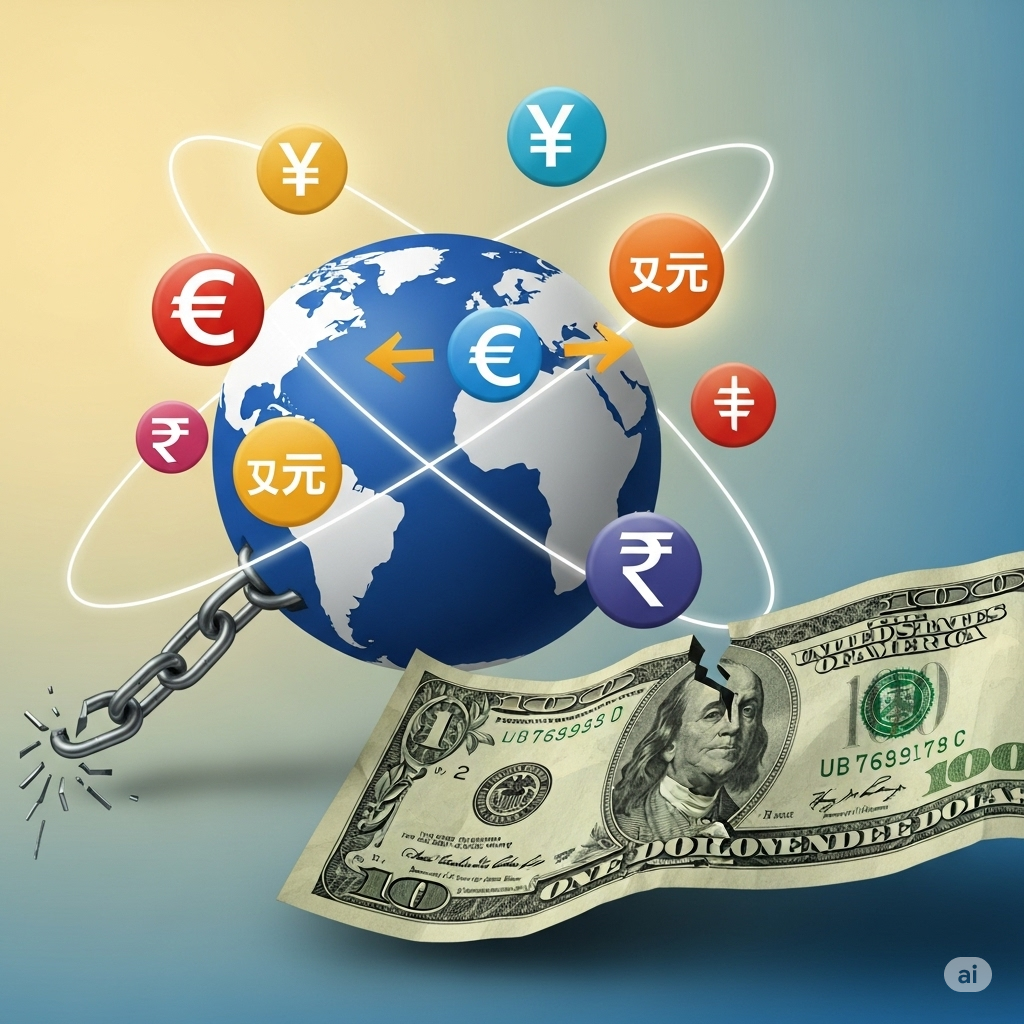
His threats were perceived as evidence that the US could use its currency as a geopolitical weapon at any time, imprinting the risks of dollar dependence on the world. Consequently, BRICS countries began increasing the proportion of their own currencies in trade and actively discussed building alternative systems (like ‘BRICS Pay’) to bypass the US-led SWIFT.
Trump’s policies undermined the three pillars of global reserve currency: trust, stability, and predictability. As a result, he provided the strongest argument for China and Russia to advocate for creating their own systems, claiming, “The current system is unreliable, so let’s create our own.”
Everyone is a Loser: The Economic Scars of the Tariff War
Trump’s tariff war left deep scars not only on BRICS but also on the US economy and the entire multilateral trade system.
Economic Shock and Damage to the Multilateral Trade System
Institutions like the Peterson Institute for International Economics (PIIE) warned that the tariff war was a ’losers’ game’ that would reduce the GDP of all involved countries. In reality, the US-China trade war resulted in substantial income losses for both countries.
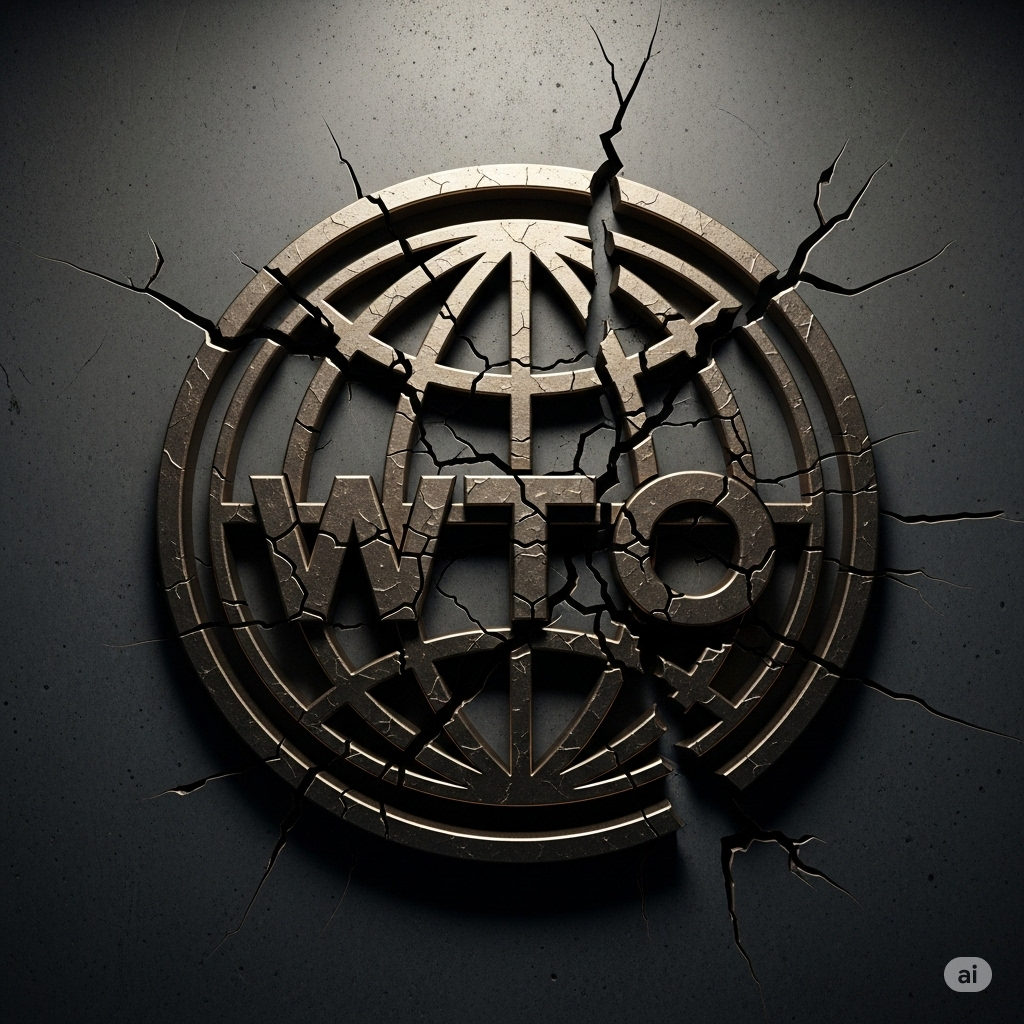
The bigger victim was the multilateral trade system represented by the World Trade Organization (WTO). Trump bypassed WTO norms under the guise of ’national security’ and paralyzed its dispute resolution function, shaking the foundations of a predictable and stable global trade environment.
Burden on US Consumers and Businesses
Trump claimed that tariffs were taxes paid by foreigners, but the reality was the opposite. Almost all tariff costs were passed on to American consumers through US importers. Ultimately, the tariffs intended to ‘Make America Great Again’ resulted in taking money from ordinary American citizens and businesses.
Conclusion: The Legacy and Future of the Tariff War
Trump’s ‘America First’ offensive paradoxically accelerated the emergence of a more divided and multipolar world. The legacy of the tariff war is clear and poses significant questions for our future.
-
Key Summary
- Reconfiguration of US-China Relations: Trump’s offensive turned US-China relations into an irreversible strategic competition.
- Weakening of the Multilateral Trade System: Undermined the authority of the WTO and instilled unpredictability in the global trade environment.
- Unintended Cohesion of BRICS: By creating an external enemy, it provided strong momentum for BRICS’ de-dollarization and discussions on alternative systems.
If a second Trump term materializes, he has indicated stronger protectionist policies, such as imposing 10% tariffs on all imports and 60% on Chinese products. This would signify an escalation of trade wars against the entire world.
I hope this article helps you understand the tariff wars and geopolitical changes of the Trump era. What do you think about the potential impact of new trade conflicts that may arise in the future on the global economy? Please leave your thoughts in the comments.
References
- Peterson Institute for International Economics (PIIE) Report
- World Bank Trade Report
- International Monetary Fund (IMF) World Economic Outlook