
The Question Raised by the Drama: “Could This Really Have Happened?”
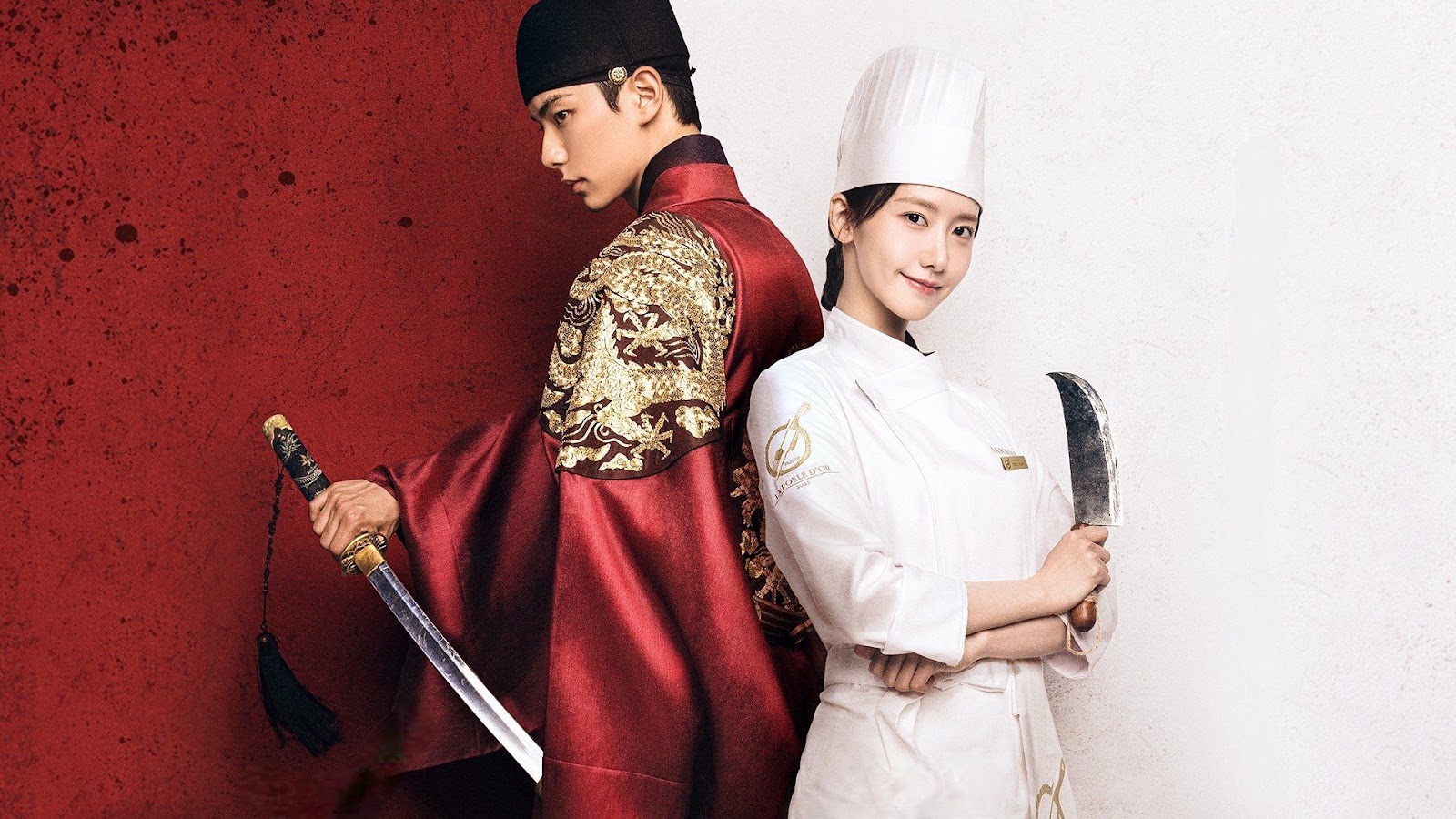
Are you all engrossed in the drama <The Tyrant’s Chef>? I, too, lost sleep over the scene where the 21st-century chef Yeon Ji-young melts the heart of the tyrant Lee Heon with her cooking. But have you ever thought, “Wait, was there really a female chef in the royal kitchen during the Joseon Dynasty?” “Does it even make sense to engage in politics through food?”
Yes, that’s right. A drama is just a drama, but these curiosities are the most enjoyable starting point for encountering real history. Let’s lift the curtain on the fantasy we loved in the drama and embark on a journey to discover the story of the ‘real royal chef’ hidden behind it. A time travel that becomes more interesting the more you know, let’s set off right now!
Part 1: When Imagination Meets History
1. Ta-da! The Secret of the Female Chef
The biggest shock that opened the door to the drama was the sudden appearance of the female chef ‘Yeon Ji-young’ in what seemed to be a male-dominated royal kitchen. In fact, this was a very clever move by the writer.
Looking into historical records, the royal kitchen of Joseon was clearly a ‘men’s world’. Preparing food for hundreds or thousands required wrestling with enormous pots and carrying heavy ingredients, which was tremendous physical labor. Above all, the king’s meals were a matter of ‘security’, so the core cooking tasks were entrusted to male officials who were easier to control.
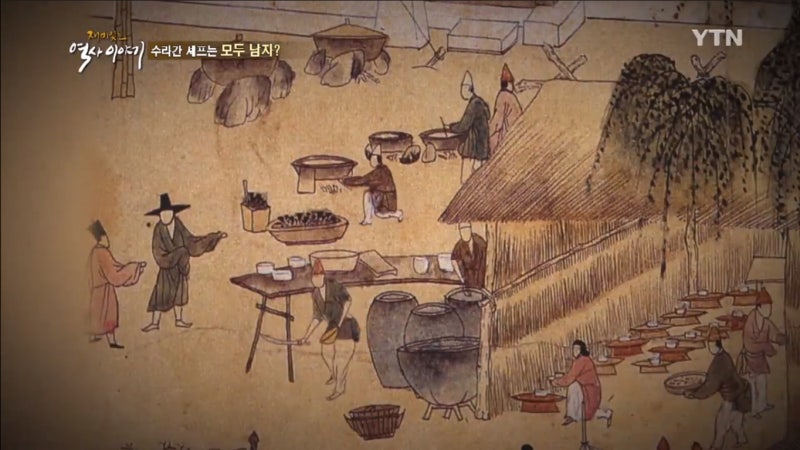
So, what did the kitchen maids we saw in
<The Tyrant’s Chef> twists this historical fact to maximize the tension of a strange woman appearing and the romance with the king. The portrayal of a modern woman breaking through with her skills in a repressive era provides us with thrilling vicarious satisfaction!
2. The ‘Political Recipe’ That Cooks Hearts
Another core element of the drama was ‘culinary politics’. The setup of healing the wounded heart of the king and restoring the country through food was truly romantic.
In actual history, however, the king’s table, or surasang, symbolized ‘safety’ and ‘authority’ rather than ‘healing’. The primary purpose was to protect the king from potential poisoning threats and to showcase his authority with the best ingredients.
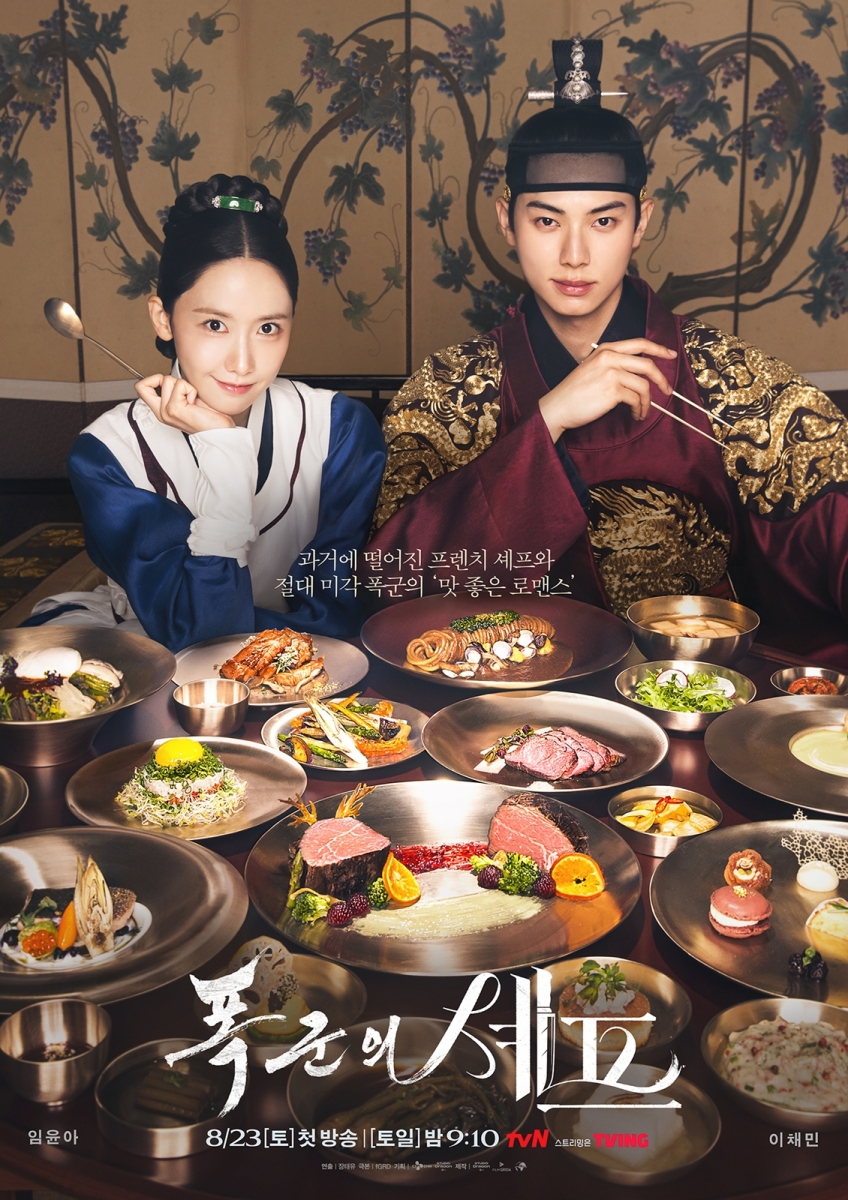
But if you think about it, the idea of ‘soothing the heart with food’ is a sentiment that feels very familiar to us today, right? Just like the ‘soul food’ we seek in tough times. The drama brilliantly brought this modern empathy into the Joseon era, transforming the rigid surasang into a ‘healing table’ that saves a person’s soul.
Part 2: Meeting the Real Royal Chef, ‘Dae Ryeong Suk Soo’
3. The Unique Name: ‘Suk Soo’ and ‘Dae Ryeong Suk Soo’
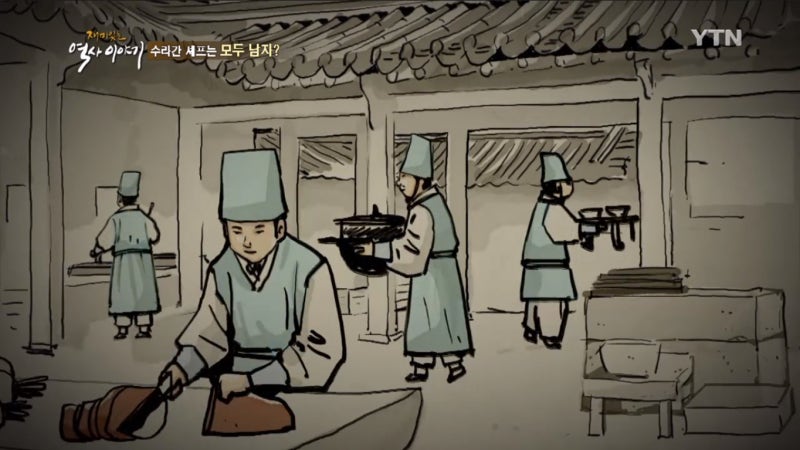
So, who was the real royal chef? They were called ‘Suk Soo (熟手)’, meaning ‘skilled hands’. Among them, the elite who were responsible for the king’s meals and awaited only the king’s orders were referred to as ‘Dae Ryeong Suk Soo (待令熟手)’. They could be likened to the president’s personal chef today.
These individuals were formal technical civil servants belonging to a national institution called ‘Saongwon (司饔院)’. They were the control tower responsible for all food in the palace. Although many were of low status, such as slaves or commoners, their skills were respected like national treasures. Their status might have been ‘frugal’, but their skills were ’national representatives’.
4. A Day Like Walking on Thin Ice
Unlike the drama, the life of a Dae Ryeong Suk Soo was like walking on thin ice every day. They had to be responsible for the king’s taste, health, and safety, which must have been an immense pressure. Historical records indicate that some Suk Soo even fled due to the overwhelming stress.
A small mistake could mean death. During King Gojong’s reign, when a minor issue was discovered in a banquet dish, there were immediate calls for punishment of the responsible Suk Soo, ‘Kim Won-geun’, and others involved. Any problem with the king’s food was seen not as a simple mistake but as a ‘challenge to the king’. These individuals cooked every day with their lives on the line.
Part 3: Beyond the Palace Walls, The Birth of ‘Royal Cuisine’
5. The Dispersed Royal Chefs
As the seemingly eternal Joseon Dynasty faded into the annals of history, the centuries-old institution of Saongwon also closed its doors. The Dae Ryeong Suk Soo, who had cooked only within the palace all their lives, suddenly lost their jobs and found themselves on the streets.
However, this sad history became the catalyst for the emergence of a new culture known as ‘royal cuisine’. The secret dishes that had only been tasted by the king and a select few royals were finally ready to come out into the world!
6. Is ‘Royal Cuisine’ an Invention?
In 1903, a magnificent restaurant called ‘Myeongwolgwan (明月館)’ opened in the heart of Seoul. This was the first ‘royal cuisine specialty restaurant’ where ordinary people could pay to taste the king’s food.
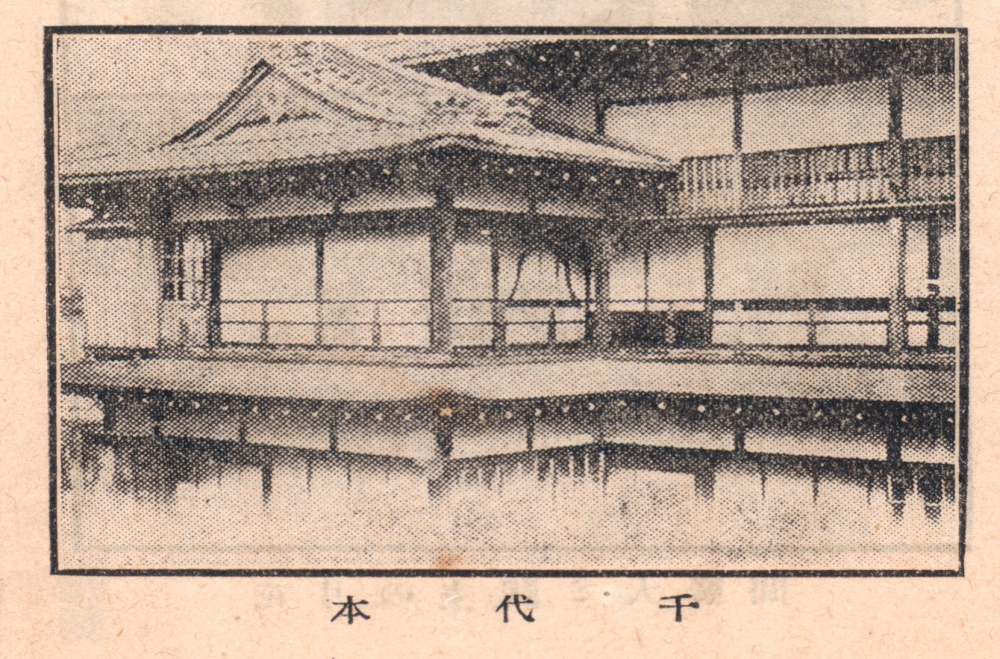
The owner of Myeongwolgwan, ‘An Soon-hwan’, was not actually a chef but a genius entrepreneur with a keen eye for the times. He hired skilled Suk Soo who had come out of the palace and packaged their skills under the high-end brand of ‘royal cuisine’. Instead of the simple meals the king ate daily, he prominently featured extravagant and special ‘banquet dishes’ like fresh fish and gujeolpan.
Ultimately, the image of the luxurious Korean traditional meal we now associate with ‘royal cuisine’ was close to an ‘invention’ born from the planning of a genius manager over a hundred years ago. Isn’t that fascinating?
The Joy of Knowing Real History
<The Tyrant’s Chef> is certainly not a history textbook. It features cooking methods like ‘sous-vide’ that didn’t exist in the Joseon era, and modern desserts made with intriguing ingredients like butter (which existed under the name ‘suyu’) and almonds.
However, this drama serves as a wonderful ‘invitation’ that makes us curious about the lives of the forgotten ‘Dae Ryeong Suk Soo’. Enjoying the thrilling fantasy of the drama while uncovering the real history hidden behind it is truly the best way for us to enjoy the story 200% deeper and more interestingly, isn’t it?