
The Dark Shadow of High-Income Part-Time Jobs on SNS: Stories of Young People Trapped
- Learn about the dangers and actual methods behind high-income part-time job ads on social media.
- Understand the weight of legal penalties you will face when involved in ‘Yami Baito.’
- Discover ways to seek help when in danger.
The Sweet Temptation Begins: ‘High-Income Part-Time Jobs’ on SNS
The story begins when a 21-year-old young man named Kaito (pseudonym) casually browses SNS. “Short-term high-income part-time job, cash payment on the same day, possible earnings of 9 million won a month.” This magical phrase instantly captivated his weary heart. This was the start of ‘Yami Baito’ (闇バイト), or dark part-time work.
Kaito was not a special person. He was an ordinary Japanese youth suffering from worries about an unstable future and living expenses. The COVID-19 pandemic had particularly hit the younger generation, who were concentrated in irregular jobs, hard, and Kaito had lost his part-time job and was struggling with debt collection. For him, the term ‘high pay’ was an irresistible temptation.
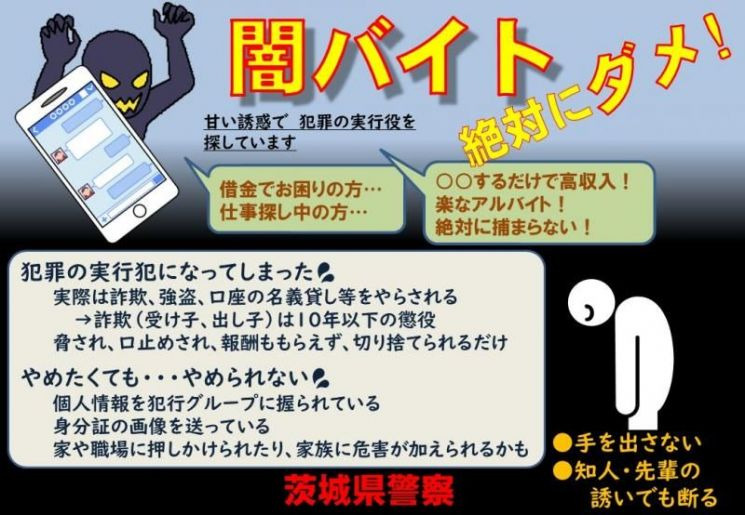
The ads broke down the barriers of suspicion about illegality with phrases like ‘No risk (リスクなし)’, ‘White case (ホワイト案件)’. ‘White case’ is slang for a legitimate job. Criminal organizations use the desperation of those in urgent need of money to throw out the bait of ‘high income’ and employ meticulous psychological warfare to quell anxiety with claims of ‘safety.’
Such recruitment for criminals now masquerades as legitimate on Twitter, Instagram, and even major job search sites. The Japanese police refer to them as ‘Tokuryu (トクリュウ, 匿名・流動型犯罪グループ)’, meaning ‘Anonymous and Fluid Crime Groups.’ They operate in a decentralized manner, using online platforms as new hunting grounds to continuously refine their ‘business model.’
Kaito sent a message to the account listed in the ad with the thought of ‘just this once.’ Little did he know, this was the first step across an irreversible river.
An Inescapable Trap: When Personal Information Becomes a Shackle
As soon as contact was made, the other party requested to move the conversation to secure messengers like Telegram or Signal, which automatically delete chat content. This is a typical tactic of criminal organizations to avoid leaving evidence.
In the new chat room, the ‘person in charge’ requested photos of identification such as a driver’s license or student ID, claiming it was necessary for part-time job registration. Since it appeared to be a normal hiring process, Kaito sent the photos without suspicion.
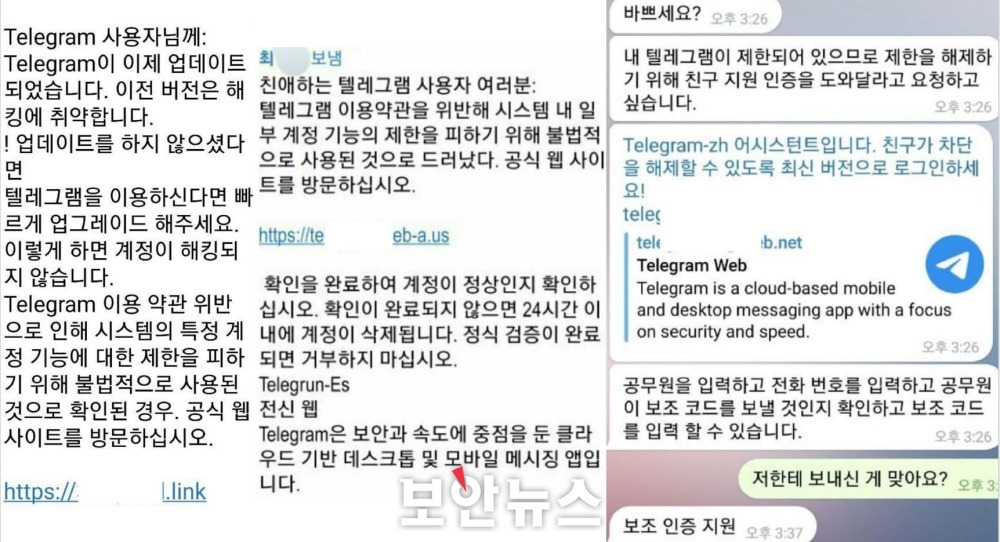
The demands did not stop there. They asked for parents’ contact information, addresses, workplace details, as well as a ‘selfie verification’ holding the ID and a video of the inside of his home. It felt strange, but having already sent his ID, he felt he could not stop. The most shocking part when I first encountered this case was precisely this point. Having already given away too much information, it created a psychological ‘sunk cost’ trap that made him think, ‘I can’t back out now.’
Once Kaito handed over all his personal information, the attitude of the person in charge changed 180 degrees. The nature of the ‘work’ was clearly criminal acts such as voice phishing, robbery, and fraud. When he refused, the threats began immediately.
- “We have all your personal information. Family contacts, home address, everything.”
- “If you have other intentions, we will come to your house. We will spread the word to your school and friends that you tried to get involved in crime.”
- “We don’t know what might happen to your parents.”
The sweet offer quickly became an inescapable shackle. The ‘job application’ was from the beginning a ‘collection of threatening information,’ and the applicant became a ‘hostage’ who lost the strength to resist.
Becoming a Component of Crime: Roles in ‘Yami Baito’
Kaito, succumbing to the threats, was given his first ’task.’ The crime was thoroughly divided into roles, and participants moved like components without knowing the whole picture. They use slang to dilute their sense of guilt.
Roles Related to Special Fraud (特殊詐欺)
- Uke-ko (受け子): The role of directly receiving cash or cards from the fraud victim.
- Dashi-ko (出し子): The role of withdrawing cash from ATMs using stolen cards.
- Kake-ko (掛け子): The voice responsible for deceiving victims over the phone in voice phishing.
Roles Related to Robbery (強盗)
- Tataki (タタキ): The act of breaking into homes or shops to steal valuables.
Other Roles
- Hakobiya (運び屋): The role of transporting illegal goods (cash, drugs, etc.).
- Meigikashi (名義貸し): The role of opening burner phones or accounts in one’s name.
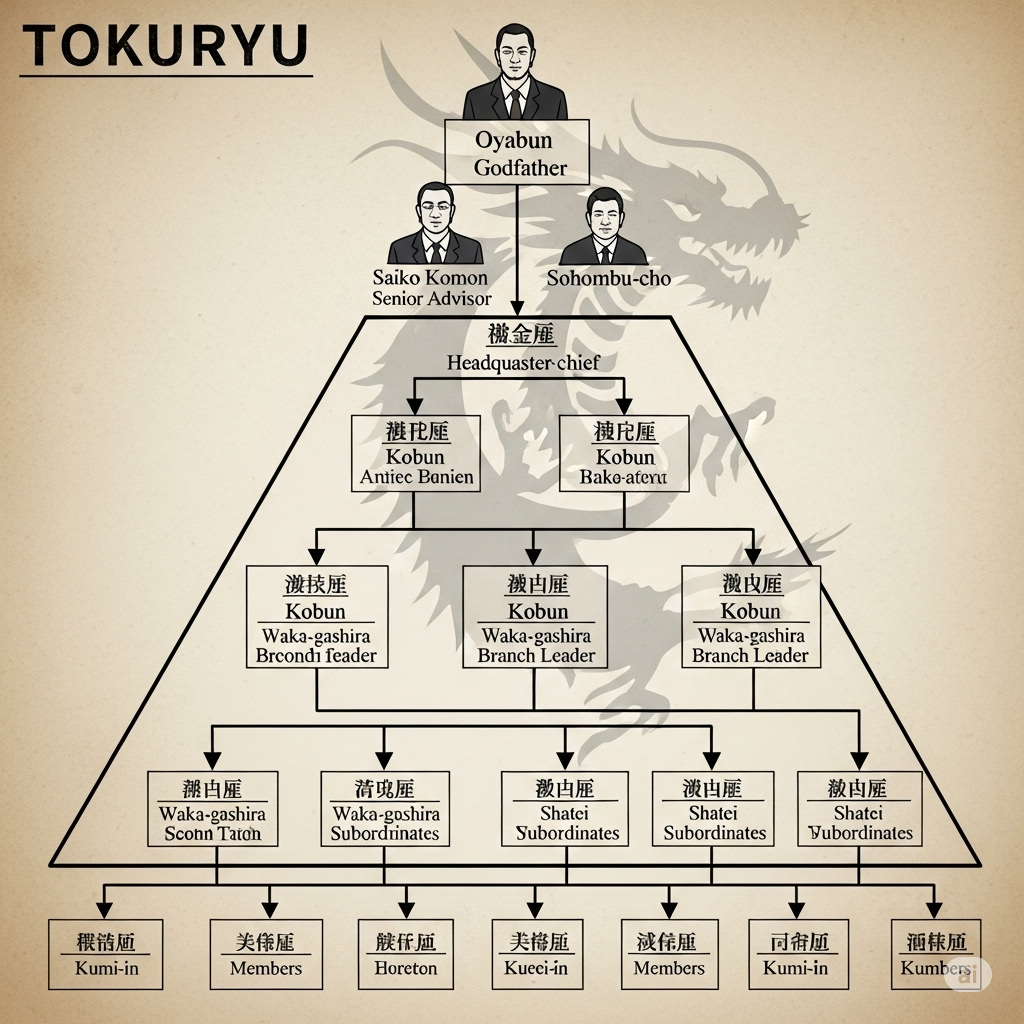
The ‘Rufi Widespread Robbery Incident’ that shocked Japanese society in 2023 clearly illustrated their reality. The masterminds remotely directed executioners across Japan via Telegram from the Philippines.
The participants at the bottom of this organization’s pyramid, ‘Yami Baito’ members, are merely ‘disposable pawns (使い捨ての駒).’ The promised monthly 9 million won is an illusion, and the organization uses them until they are caught and then discards them. This digitally native crime organization finds it difficult to apprehend masterminds overseas, leading to a vicious cycle where only low-level executors are continuously arrested while the crime system remains intact.
The Pinnacle of Tragedy: The Komae Robbery Murder Case
The most horrific tragedy born from the ‘Yami Baito’ system occurred in January 2023, in Komae City, Tokyo, during a robbery murder case. The court testimony of the perpetrator, Rikuto Nagata (21), painfully shows how an ordinary young person can transform into a monster.
Struggling with loan shark debts, Nagata connected with a director named ‘Kimu’ through SNS and got involved in crime. Initially, it was simple theft, but it gradually turned violent.

On the day of the incident, the perpetrators, including Nagata, disguised themselves as delivery personnel to break into the home of 90-year-old Ms. Kinuya Oshio. They moved as ‘human drones,’ receiving real-time commands from the director ‘Kimu’ through earphones.
When Ms. Oshio did not disclose the location of her valuables, ‘Kimu’ ordered, “Give her a hit,” and Nagata punched her in the jaw. As resistance continued, ‘Kimu’ issued more brutal commands, and ultimately, Ms. Oshio was beaten with a metal rod, suffering 24 fractures before dying.
After the horrific assault, when a photo of the victim was sent, the response from across Telegram was shocking. “Oops, I mistook the person.” (あちゃー人違いですね).
All the violence and suffering were a ‘mistake.’ The life of a 90-year-old woman was sacrificed without reason, a victim of the director’s cruel performance. This incident illustrates the extreme nihilism and dehumanization of ‘Yami Baito,’ where violence itself became the objective rather than money.
In his final statement in court, Nagata tearfully said, “I believe the death penalty is deserved. I strongly desire the death penalty.” This was a tragic cry warning of the horrific price that the temptation of ’easy money’ demands.
The Harsh Reality: The Legal Consequences of Involvement in ‘Yami Baito’
Recruiters say, “The chances of getting caught are low,” and “Even if you get caught, you’ll be out quickly,” but this is a blatant lie. The arrest rate of the Japanese police is very high, and if caught, you will face penalties far heavier than imagined.
| Crime (罪状) | Typical Role in ‘Yami Baito’ | Legal Penalty (法定刑) |
|---|---|---|
| Fraud (詐欺罪) | Uke-ko, Dashi-ko, Kake-ko | Up to 10 years in prison |
| Theft (窃盗罪) | Burglary, shoplifting | Up to 10 years in prison or fines up to 500,000 yen |
| Robbery (強盗罪) | Tataki (assault/robbery) | Imprisonment of 5 years or more |
| Robbery Causing Injury (強盗致傷罪) | If injury is caused by Tataki | Life imprisonment or imprisonment of 6 years or more |
| Robbery Causing Death (強盗致死罪) | If death is caused by Tataki | Death penalty or life imprisonment |
| Violation of the Act on Prevention of Transfer of Criminal Proceeds | Meigikashi (name lending) | Up to 1 year in prison or fines up to 1 million yen |
The minimum sentence for robbery is ‘5 years or more in prison,’ and there is almost no way to avoid imprisonment even for first-time offenders. For robbery causing death, like in the Komae case, the only penalties are the death penalty or life imprisonment. The excuse of “I was just following orders” will never hold up. The cost of a moment’s wrong choice is not the promised money, but years of imprisonment, a lifelong criminal record, and an indelible sense of guilt.
The Shadow of Japanese Society: Causes of Rising Crime Rates
The phenomenon of ‘Yami Baito’ is not merely a deviation of some young people but is connected to structural problems in Japanese society. Japan’s crime rate, which had been declining for over 20 years, rebounded after COVID-19, with a surge in special fraud crimes at its center.
| Year | Number of Cases (Change) | Total Damage (Change) |
|---|---|---|
| 2021 | 14,461 cases (-) | Approximately 28.2 billion yen (-) |
| 2022 | 17,570 cases (+21.2%) | Approximately 37.08 billion yen (+31.5%) |
| 2023 | 19,038 cases (+8.4%) | Approximately 45.26 billion yen (+22.0%) |
The total damage from special fraud has surged from 28.2 billion yen to 45.2 billion yen in just two years. This shows how successfully the ‘Tokuryu’ crime business model has expanded. The soil in which this system thrives includes:
- Economic Hardship: For young people whose income was cut off by the pandemic, ‘Yami Baito’ appears as a dangerous escape route.
- Social Isolation: ‘Isolated young people’ who have severed ties with family or friends become prime targets for criminal organizations. They provide a distorted sense of belonging to those with no one to consult.
- The Existence of ‘Tokuryu’: They easily connect with desperate individuals through SNS and expand their criminal business across borders.
‘Yami Baito’ acts as a ‘conveyor belt’ that turns economically vulnerable individuals into serious criminals, resulting from the festering wounds of Japanese society. How would you respond to such temptations?
A Ray of Light in the Darkness: Is There an Escape?
Even in desperate reality, an exit exists. The Japanese government and police are sending a message: “It’s not too late, so ask for help.”
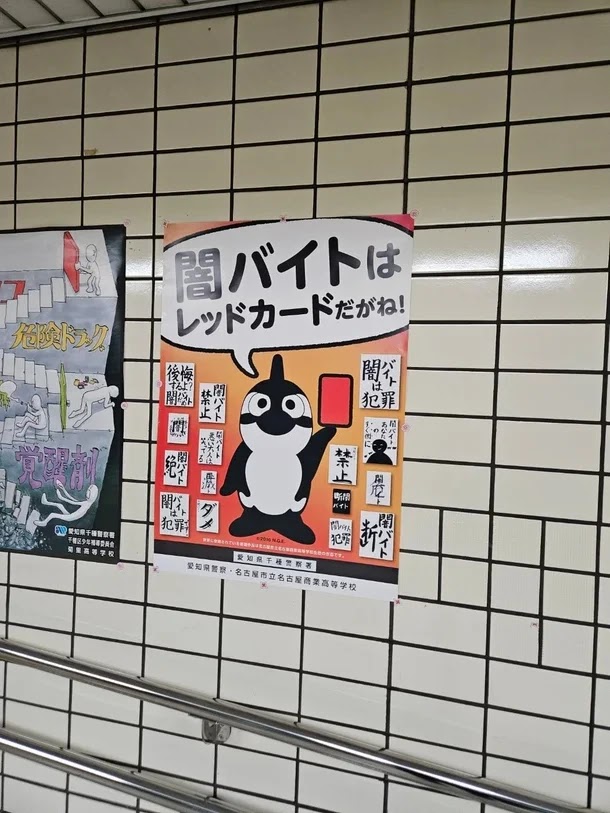
The core of the ‘Yami Baito’ trap is fear and isolation. The police’s “We will definitely protect you and your family” promise directly attacks this fear. It is the most powerful weapon that informs you that you are not alone and that there are other options.
If you or someone around you has become involved in ‘Yami Baito,’ do not hesitate to seek help.
- Police Counseling Hotline:
#9110 - Nearby Police Station or Substation
- Youth Counseling Phone (Young Telephone Corner):
03-3580-4970
Even if you have already participated in a crime, confessing can lead to a reduced sentence. It is best to muster the courage to seek help rather than trembling in fear and sinking deeper into the mire.
Conclusion
‘Yami Baito’ is not just a part-time job; it is a crime that destroys lives. The sweet number of ‘9 million won a month’ will ultimately be stained with tragedy and tears.
Key Summary:
- High-income part-time jobs on SNS are mostly bait for crime. Easy money always comes with a much greater cost.
- Never give away personal information easily. IDs, family information, selfies, etc., are used as tools for extortion by criminal organizations.
- Once trapped, it is difficult to escape, but there is always an exit. Do not hesitate to seek help from the police or counseling organizations immediately.
Through this article, I hope to clearly recognize the dangers of ‘Yami Baito’ and widely inform those around you of this fact. Do not forget that a moment’s temptation can ruin your entire life.