
Digital Assets Breaking the Boundaries of Traditional Finance: A 10-Year Journey and Future Outlook
- The background of Ripple’s inception and its fundamental differences from Bitcoin
- Key issues in the SEC lawsuit and the significance of the historic ruling
- Ripple’s future strategy expanding beyond payments into RWA and stablecoins
Ripple is a unique digital asset project born with a clear goal of addressing the inefficiencies of traditional finance. Over the past decade, it has overcome numerous challenges to establish a unique position within the cryptocurrency industry and is now evolving into a massive infrastructure that merges institutional finance with blockchain technology.
The Birth of Ripple: Ideas Before Bitcoin
Tracing the history of Ripple is not just about a single cryptocurrency but understanding how a financial technology paradigm was formed at the intersection of traditional finance and blockchain technology. Its origins date back to a time well before Bitcoin, shaped by the visions, conflicts, and strategic choices of several key figures that led to the current Ripple.
Pre-Blockchain Era: The Vision of Ryan Fugger
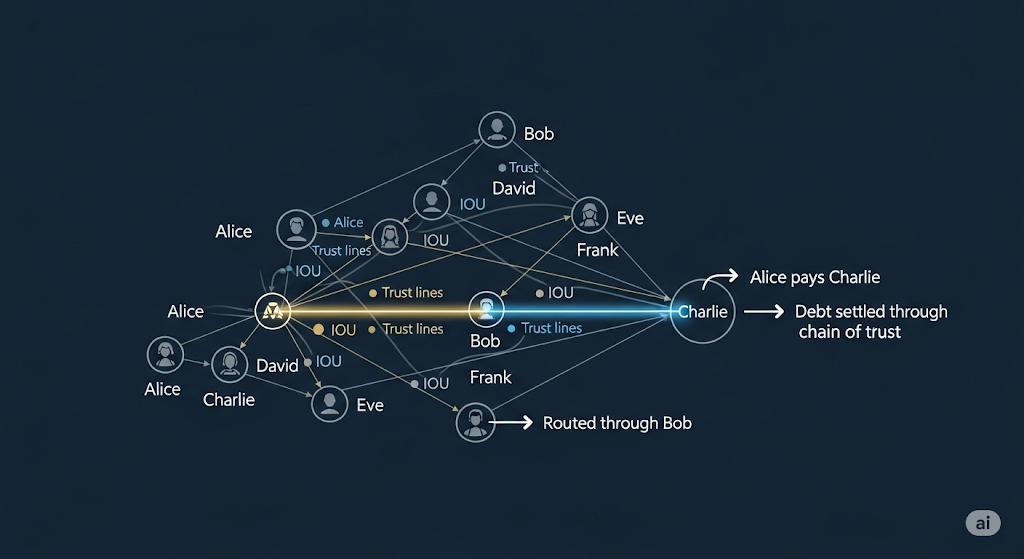
The origins of Ripple can be found in 2004, when Canadian web developer Ryan Fugger conceived ‘RipplePay’. RipplePay was not based on blockchain technology; it was a decentralized P2P (Peer-to-Peer) credit network where individuals exchanged funds based on trust without a central intermediary like a bank.
The core of this system was the concepts of ’trust lines’ and ‘IOUs (I Owe You)’. Users could set credit limits with other trusted users, allowing funds to be transferred even between users who were not directly connected. Fugger’s initial goal was to provide a system for individuals and communities to create their own virtual currencies for safe global transactions. This idea laid the philosophical and conceptual foundation for the Ripple project.
Transition to Blockchain and the Birth of the XRP Ledger
In 2011, eDonkey founder Jed McCaleb deemed Bitcoin’s Proof-of-Work method inefficient and envisioned a faster and more efficient digital asset system that validated transactions through consensus without mining.
He, along with cryptographer David Schwartz and distributed systems expert Arthur Britto, developed the core code for the ‘XRP Ledger (XRPL)’. In June 2012, the XRP Ledger was launched, featuring transaction speeds much faster than Bitcoin and lower energy consumption.
Founding and Conflict: From OpenCoin to Ripple Labs
To commercialize the technology, fintech entrepreneur Chris Larsen joined the team. In 2012, McCaleb and Larsen co-founded ‘OpenCoin Inc.’ to continue Ryan Fugger’s RipplePay project. Their goal was to provide financial institutions with a fast and efficient global payment solution using the XRP Ledger.
At this time, a total of 100 billion XRP were pre-mined, with 80 billion allocated to the company. This decision became a strong business driver but later served as a key basis for the SEC classifying XRP as ‘unregistered securities’.
In my view, the founders’ vision differences resembled a clash between ‘idealism’ and ‘reality’. Jed McCaleb wanted XRP to remain a decentralized cryptocurrency, while Chris Larsen pursued a realistic business model through partnerships with banks and regulatory compliance. Ultimately, McCaleb left the company in 2013 to establish the competing project Stellar.
The company rebranded to ‘Ripple Labs’ in 2013 and finally to ‘Ripple’ in 2015, solidifying its identity as a provider of enterprise solutions.
Timeline of Ripple’s Corporate History
| Year | Major Events | Key Figures |
|---|---|---|
| 2004 | Development of RipplePay concept | Ryan Fugger |
| 2011-2012 | Development of XRP Ledger (XRPL) code | Jed McCaleb, David Schwartz, Arthur Britto |
| 2012 | Establishment of OpenCoin Inc. | Chris Larsen, Jed McCaleb |
| 2013 | Jed McCaleb leaves the company | - |
| 2015 | Final rebranding to ‘Ripple’ | - |
Ripple’s Core Technology: How the XRP Ledger (XRPL) Works
Ripple’s competitiveness lies in the unique architecture of the XRP Ledger (XRPL). XRPL clearly demonstrates its characteristics as a highly optimized financial utility for efficient payments.
Unique Consensus Algorithm and Performance
The XRP Ledger uses a proprietary mechanism called the ‘Ripple Protocol Consensus Algorithm (RPCA)’ instead of Proof-of-Work (PoW) or Proof-of-Stake (PoS). This system relies on a network of trusted validators included in a ‘Unique Node List (UNL)’ to confirm new transactions with over 80% consensus every 3 to 5 seconds.
- Transaction Speed and Finality: Final confirmation in an average of 3 to 5 seconds (Bitcoin takes over 10 minutes)
- Throughput: Capable of processing approximately 1,500 transactions per second (TPS), theoretically scalable to tens of thousands
- Transaction Cost: Approximately 0.00001 XRP per transaction, nearly zero
XRP Tokenomics: Burning and Escrow
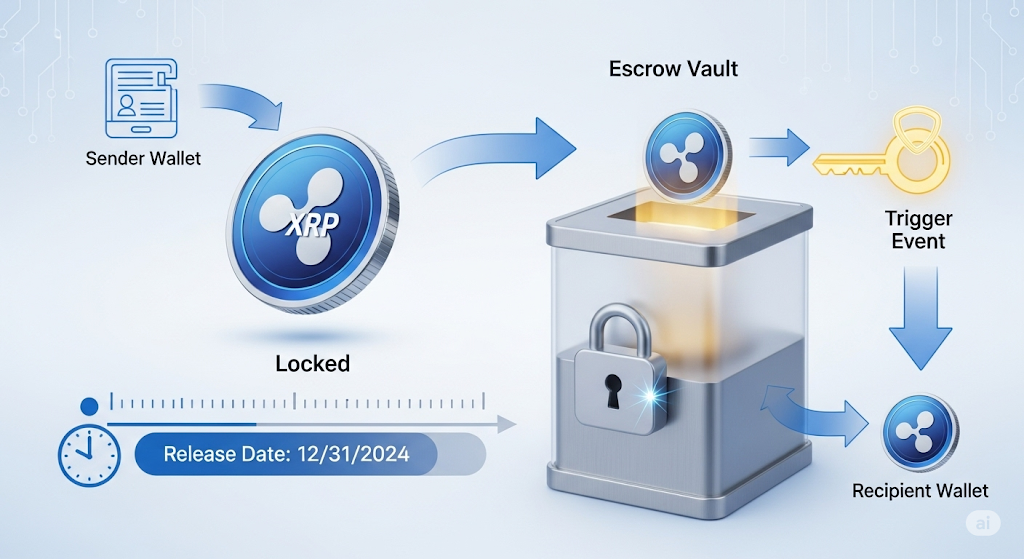
A total of 100 billion XRP have been issued, with no further issuance possible, and transaction fees are permanently burned, creating a gradual deflationary effect. Additionally, to enhance market predictability, Ripple locked 55 billion XRP in on-ledger escrow in 2017. Each month, 1 billion XRP is released, and any unused amount is re-locked in escrow.
Ripple’s Business Model: A Journey Towards the Internet of Value
Ripple’s technology serves as a means to realize the vision of the ‘Internet of Value’. This aims to create a world where value, like money, moves as seamlessly as information.
The Role of ODL and Bridge Currencies
Ripple’s core commercial solution is ODL (On-Demand Liquidity). ODL uses XRP as a ‘bridge currency’ between two fiat currencies to address the inefficiencies of existing international remittances. This allows banks to secure liquidity instantly when needed, without having to pre-fund ’nostro/vostro’ accounts abroad.
Competition and Collaboration with SWIFT
Ripple’s ODL directly targets the SWIFT model that connects financial institutions worldwide. However, Ripple also adopts a sophisticated strategy by fully complying with the new financial messaging standard ISO 20022, keeping the possibility of integration with future financial systems open.
The Defining SEC Lawsuit: Is Ripple a Security?
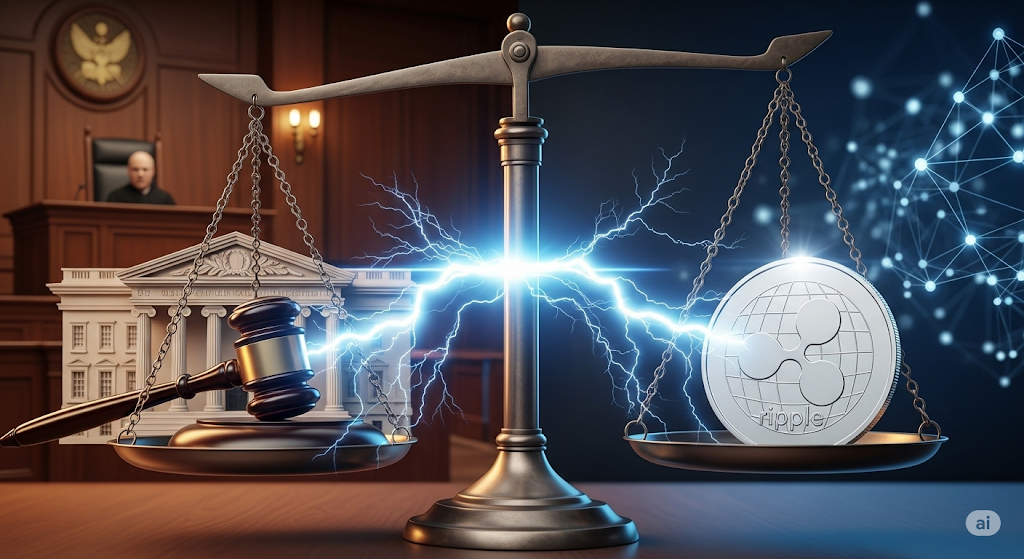
In December 2020, the U.S. Securities and Exchange Commission (SEC) filed a lawsuit against Ripple, claiming it sold XRP as ‘unregistered securities’. This lawsuit set a significant legal precedent for the entire U.S. cryptocurrency industry.
Significance of the Historic Summary Judgment (July 2023)
In July 2023, the court ruled that while “XRP tokens themselves are not securities,” the application of securities laws varies depending on how and under what circumstances they are sold. Sales made directly to institutional investors were deemed ‘securities transactions’, while sales to the general public through exchanges were considered ’non-securities transactions’. This ruling provided Ripple with a partial victory and offered crucial regulatory clarity for the U.S. cryptocurrency market. What impact will this ruling have on other altcoins in the future?
Ripple’s Future: Evolving into a Comprehensive Financial Platform
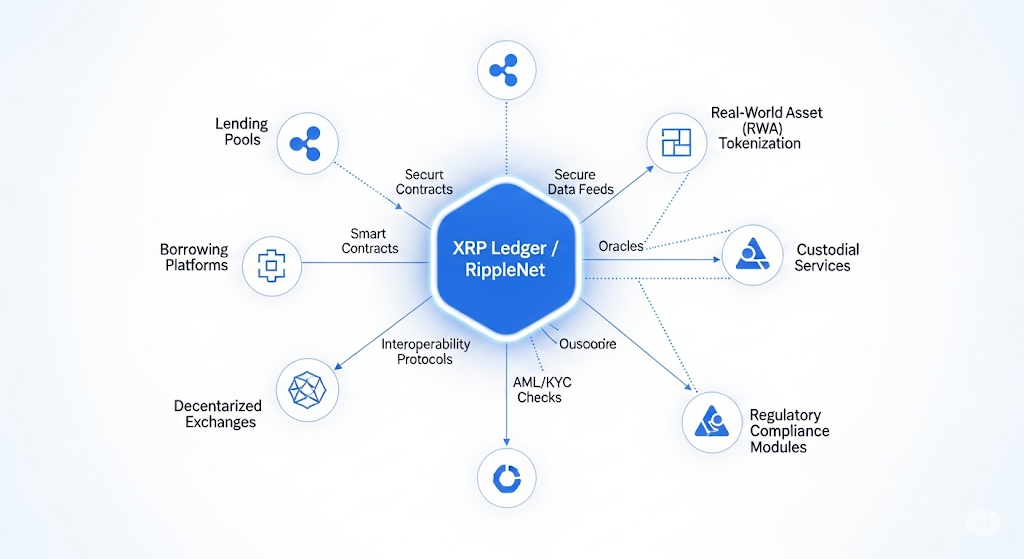
After the SEC lawsuit, Ripple aims to transform from a simple payment network into a comprehensive blockchain platform for institutional investors. The core strategy includes achieving EVM compatibility, tokenizing real-world assets (RWA), and building its own stablecoin ecosystem.
Gateway for Institutional Funds: Pushing for a Spot XRP ETF
The launch of a spot XRP exchange-traded fund (ETF) in the U.S. will be a key driver accelerating the influx of funds into the Ripple ecosystem. Numerous asset management firms, including WisdomTree and Franklin Templeton, have already submitted applications to the SEC, and if the ETF is approved, accessibility to XRP will dramatically improve, leading to significant new capital inflows.
Comparison: Ripple’s Strengths and Weaknesses
| Category | Details |
|---|---|
| Strengths | Technical Efficiency: Fast transaction speeds of 3-5 seconds and negligible fees Regulatory Clarity: Partial victory in the SEC lawsuit alleviating business uncertainties in the U.S. Institution-Centric Strategy: Deep trust relationships and networks with financial institutions Strong Financial Backing: Stable business operations through large initial XRP holdings Evolving Ecosystem: Expanding beyond payments into RWA, DeFi, and stablecoins |
| Weaknesses | Centralization Concerns: Large XRP holdings and network influence by Ripple Intense Competition: Presence of existing and new competitors like Stellar and SWIFT Barriers to Large-Scale Adoption: Slow adoption of blockchain technology by conservative financial institutions |
Conclusion
The vision of the ‘Internet of Value’ that Ripple dreams of is still a work in progress. While the inherent limitations of centralization remain, the unique regulatory clarity in the U.S., trust relationships with institutional finance, and an integrated technology stack encompassing payments, DeFi, and RWA are powerful assets.
Key Takeaways:
- Unique Path: Ripple prioritized collaboration with financial institutions over decentralization from the start.
- Technical Efficiency: The XRP Ledger boasts a highly optimized tech stack for fast and affordable payments.
- Secured Regulatory Clarity: The partial victory in the SEC lawsuit has provided a crucial legal foundation for expanding operations in the U.S.
In conclusion, Ripple is making significant strides in its attempt to combine the stability of traditional finance with the efficiency of blockchain, showing ample potential to play a crucial role in the future global financial system. Keep an eye on the future of finance that Ripple is set to create.
References
- The Ripple Mafia - getPIN.xyz
- Ripple (XRP) - Bitcoinwiki
- Ripple (XRP): All About This Cryptocurrency | Coinhouse
- The Origin Story Of XRP | Digital One Agency
- The Investment Case for XRP - Bitwise
- When the Outsider Redefines the Game - WarTime CEO Stories
- What Is XRP? - Investopedia
- All You Need To Know About Ripple (XRP) - Medium
- XRP: SWIFT on the Blockchain? | 21Shares
- An Explanation of Ripple’s XRP Escrow - XRP Ledger
- Ripple (XRP) Securities Law Violation Lawsuit Ruling and the Determination of Virtual Assets as Securities - Dlight Law Firm
- SEC v. Ripple: A Landmark Case in Cryptocurrency Regulation - Investopedia
- XRP Ledger Deploys EVM-Compatible Sidechain - Cryptodnes
- Ondo Finance to bring tokenized US treasuries to Ripple’s XRP Ledger - Finextra
- BNY to provide custody for Ripple’s stablecoin - Ledger Insights
- Will There Be a Spot XRP ETF? The Ripple Effect Swells - TradingView