
Over the past decade, the RE100 paradigm that defined corporate climate action has faced fundamental challenges in the face of the massive waves of the AI revolution, geopolitical crises, and the ’nuclear renaissance’ led by big tech. In this whirlwind of transformation, what path should Korea’s industries and companies take?
- Current State of the RE100 Paradigm: Understand the fundamental limitations and challenges faced by RE100 in the context of new megatrends such as AI and geopolitical crises.
- In-depth Analysis of Korea’s RE100 Paradox: Identify the structural causes behind the low domestic implementation rate despite the world’s highest membership rate, and clearly recognize the associated greenwashing risks.
- Conflict and Strategy between RE100 and CFE: Explore the strategic direction that Korean industries should take between the renewable energy-centric RE100 and the carbon-free energy (CFE) that includes nuclear power.
RE100 Initiative: The Beginning of Corporate-Led Climate Action
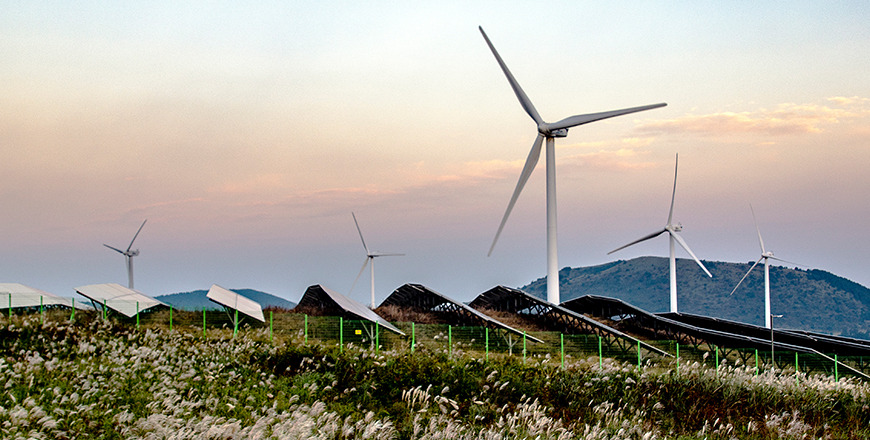
The RE100 (Renewable Energy 100%) campaign, launched in 2014, opened a new era of corporate-led climate action. This initiative is fundamentally distinct in that it is a bottom-up movement where companies voluntarily participate, rather than being driven by top-down government regulations. The goal of RE100 is a public commitment for companies to source 100% of their electricity from renewable energy sources like solar and wind by 2050 at the latest.
Companies go beyond merely reducing greenhouse gas emissions (Scope 2) and leverage their substantial purchasing power to send long-term demand signals to the renewable energy market and drive technological innovation. Notably, the strengthened ‘Additionality’ principle starting in 2024 specifies that the electricity purchased by companies must be generated from power plants that began commercial operation within the last 15 years, thereby enhancing the credibility of RE100.
Korea’s RE100 Paradox: High Will and Harsh Reality
As the global RE100 campaign spread and the demands of exporting companies intensified, the Korean government introduced the ‘K-RE100’ system in 2021, tailored to domestic circumstances. This system secured international consistency with global RE100 and encouraged corporate participation. As a result, by 2024, 36 Korean companies officially joined the global RE100, making Korea the fourth-largest member country in the world.
However, behind the high membership rate lies a serious contradiction, known as the ‘Korean RE100 Paradox’. This refers to the stark discrepancy between the world’s highest membership rate and the lowest domestic implementation rate. The average domestic implementation rate of Korean companies that joined RE100 is only about 9%, far below the global average of 50%. This paradox illustrates the severe constraints on the physical and institutional environment for implementing renewable energy in Korea.
Structural Barriers and Greenwashing Risks
Korea’s RE100 paradox stems from three structural barriers. First, there is an absolute shortage of renewable energy supply. Korea’s share of renewable energy generation falls significantly below the OECD average. Second, there are world-class procurement costs. The supply shortage leads to high prices, causing companies to hesitate in purchasing renewable energy. Third, the rigid regulatory environment monopolized by Korea Electric Power Corporation (KEPCO) suppresses free electricity trading between companies and power producers and makes it difficult to secure new power plant sites.
These barriers have pushed companies towards the easiest implementation method, the ‘green premium’. A distorted structure has emerged where 98% of K-RE100 implementation volumes are procured through green premiums. However, the green premium struggles to prove ‘additionality’ that directly contributes to new renewable energy investments, and thus is not recognized as a greenhouse gas reduction achievement under international standards. The act of advertising ‘greenhouse gas reductions’ through a system with low credibility has led to ‘greenwashing’ controversies, becoming a ’ticking time bomb’ that could severely damage corporate reputations.
| Category | Additionality Contribution | Global Credibility |
|---|---|---|
| Self-Generation | Very High | Very High |
| PPA | High | High |
| REC Purchase | Medium/Low | Medium |
| Green Premium | Very Low/None | Low (Not Recognized) |
Paradigm Shift: AI and Geopolitical Crisis
In the 2020s, two massive structural changes have emerged that fundamentally shake the RE100 paradigm. One is the explosion of electricity demand due to the AI revolution, and the other is the resurgence of energy security due to geopolitical crises.
AI Revolution and Surge in Power Demand
The spread of artificial intelligence, particularly generative AI, has driven electricity demand in data centers to unprecedented levels. The International Energy Agency (IEA) projects that global data center electricity consumption, which was 460 TWh in 2022, will more than double to 1,050 TWh by 2026.
The power required by AI is not only quantitatively challenging. AI models must operate continuously 24/7, necessitating extremely stable baseload power. This ‘24/7, high-density, centralized’ power demand is in stark contrast to the ‘intermittent, low-density, decentralized’ characteristics of solar and wind power.
Geopolitical Crisis and Energy Security
The 2022 Russia-Ukraine war underscored the importance of energy security worldwide. As Russia weaponized natural gas supplies, Europe realized how fatal its dependence on fossil fuels was. This event elevated ‘security’ to the top priority among the ’energy trilemma’ of security, economic viability, and sustainability in energy policy decisions. Remarkably, the technological demand triggered by the AI revolution and the political demand triggered by geopolitical crises converge on the same conclusion: the need for a stable clean energy source (Clean Firm Power).
Nuclear Renaissance: Strategic Choice of Big Tech
The massive demand for ‘stable clean energy’ created by the AI and geopolitical crises has provided a historic opportunity for the revival of nuclear power. Notably, the entities leading this ’nuclear renaissance’ are global big tech companies that were once the strongest advocates of RE100. They are choosing nuclear power as the most realistic alternative to meet the explosive electricity demand of AI data centers.
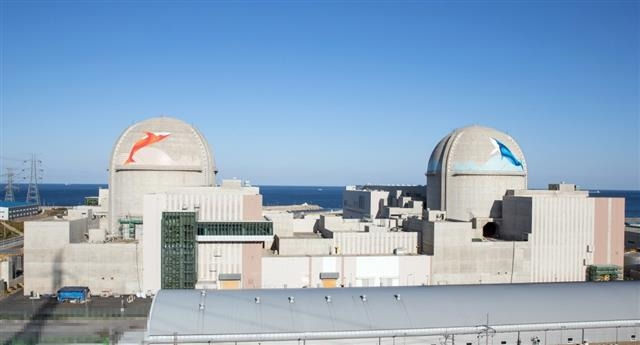
Microsoft, Google, Amazon, and Meta have already entered into long-term power purchase agreements (PPAs) with large-scale nuclear power plants or are directly investing in the development of small modular reactors (SMRs). Their actions go beyond simple energy purchases; they are acting as ‘market makers’ by providing long-term and reliable demand to the nuclear industry, which has struggled with financial uncertainty for decades, thereby promoting technological development and commercialization.
RE100 vs. CFE: Strategic Confusion in Korea
The concept that emerged from attempts to overcome the limitations of RE100 is carbon-free energy (CFE). CFE aims to supply power from carbon-free energy sources on an hourly basis rather than on an annual total basis. To achieve this, a technology-neutral approach that includes nuclear power, clean hydrogen, and carbon capture technology is essential. While CFE is an evolved concept beyond RE100, the problem lies in the fact that RE100 does not recognize nuclear power, placing the two standards in a competitive relationship.
The Korean government presents CFE, which includes nuclear power, as a future strategy, while Korea’s key export industries are deeply integrated into the supply chains of global customers who strongly demand RE100. As a result, Korean companies find themselves in a ‘strategic confusion’. Following government policy risks losing immediate export competitiveness, while adhering to RE100 places them in a dilemma of being unable to respond to energy security and future technology demands.
Conflict between RE100 and CFE and Strategic Alternatives
Comparative Analysis of RE100 vs. CFE
| Category | RE100 | CFE |
|---|---|---|
| Core Goal | 100% Renewable Energy Procurement | Hourly Carbon-Free Energy Procurement |
| Recognized Energy Sources | Strictly Limited to Renewable Energy | All Carbon-Free Energy Sources including Nuclear and Hydrogen |
| Major Support Groups | Consumer Goods Companies (e.g., Apple) | AI/Data Center Companies (e.g., Google) |
The future is expected to be a complex ‘multi-standard’ environment where RE100 and CFE coexist, with different standards applied according to industry and regional characteristics. In this era, Korean companies and the government should adopt flexible and multi-layered strategies rather than going ‘all-in’ on one side.
Strategic Recommendations for Companies
- Adopt a Dual-Track Strategy: In business sectors dealing with key customers demanding RE100, faithfully implement RE100 through reliable means such as PPAs and self-generation. At the same time, actively participate in CFE initiatives in the long term to explore power procurement options based on nuclear and clean hydrogen.
- Actively Participate in the CFE Ecosystem: Go beyond passively following government-led CFE initiatives and actively voice the need for a reliable system to certify the use of carbon-free power produced from nuclear energy.
- Lead Supply Chain Education: Transparently explain the realities of Korea’s energy market and the government’s CFE policy direction to global customers, and proactively engage in efforts to persuade them of the carbon reduction contributions of CFE-based products.
Policy Recommendations for the Government
- Fundamental Reform of the PPA Market: Improve unreasonable site regulations to enable companies to activate PPAs as a reliable implementation means, and strengthen tax incentives and financial support.
- Redesign or Abolish the Green Premium System: To resolve greenwashing controversies, either completely redesign the system or develop an exit strategy to gradually reduce its weight.
- Invest in Modernizing Power Grids for a Hybrid Future: To stably operate a future power grid where nuclear and renewable energy coexist, increase flexibility and make large-scale investments in building next-generation power grid management systems based on AI.
Conclusion
The RE100 paradigm stands at a fundamental turning point in the face of three megatrends: the AI revolution, geopolitical crises, and the nuclear renaissance led by big tech.
- AI Revolution and Energy Security: AI data centers and geopolitical crises simultaneously raise the need for 24/7 stable clean power, challenging the renewable energy-centric approach of RE100.
- Korea’s Dilemma: Despite a high RE100 membership rate, Korea faces low domestic implementation rates and greenwashing risks, experiencing strategic confusion between the conflicting global standards of RE100 and CFE.
- Future Strategy: Korean companies and the government must prepare for a multi-standard era that embraces both RE100 and CFE, actively invest in PPA market activation and power grid modernization.
Can our companies transcend the ‘basic conditions of transactions’ to become ‘game changers of the future’ in this tumultuous energy transition? This is a significant challenge that goes beyond simple energy policy and is crucial for the future competitiveness of Korean industries.
References
- Korea Energy Agency - RE100 Implementation Means and Status
- Daily Korea - Samsung Electronics’ Renewable Energy Transition Rate, Significant Differences by Sector…DX 93.4% vs. DS 24.8%
- Samsung Electronics - Sustainability Management Report
- SK Hynix - Sustainability Management Report
- Energy News - Solar Power Supply Stagnation ‘Excessive Distance’…Maximum 1km Regulation by Local Governments
- Hankyoreh - “POSCO and SK, Green Premium is Greenwashing” First Report to the Fair Trade Commission
- PwC - AI Grows on Electricity
- KBS News - US Research Institute “Korea, Vulnerable to Energy Security”…Reasons for Warning?
- Carbon Credits - Microsoft (MSFT) to Get Fusion Power as Helion Energy Kicks Off Orion Plant Construction
- ESG Today - Amazon Signs 1.9 GW Nuclear Deal to Power Data Centers
- Google Blog - Google signs advanced nuclear clean energy agreement with Kairos Power
- Constellation Energy - Constellation, Meta Sign 20-Year Deal for Clean, Reliable Nuclear Energy in Illinois
- Energy Platform News - Carbon Neutrality Cannot Be Achieved with RE100…Only CFE Including Nuclear is Possible
- Climate Solutions - Directions for Improving the PPA System