
Uncovering the Geological Inevitability Warned by Science: Everything About the Nankai Trough Megaquake.
- Scientific causes and historical cycles of the Nankai Trough megaquake
- Official damage predictions and national preparedness strategies from the Japanese government
- How to distinguish between prophecy and pseudoscience and establish practical preparedness measures
The Nankai Trough megaquake is not just a possibility; it is recognized by the scientific community as a ‘geological inevitability.’ How much do we know about this threat that has shaped Japan’s past and casts a huge shadow over its future? This article aims to analyze the imminent disaster from multiple angles, including scientific facts, historical records, future prediction scenarios, and cultural anxieties.
Part 1: The Geological Reality of the Nankai Trough
Dissecting the Megathrust: Defining the Threat
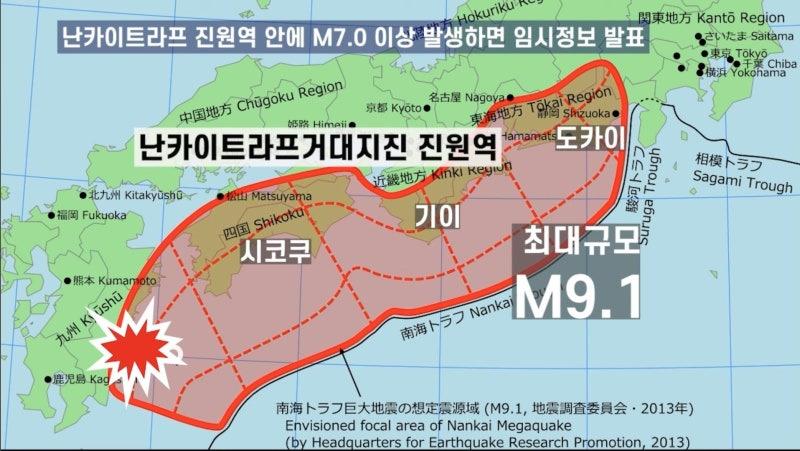
The core of the Nankai Trough megaquake is the periodic large-scale earthquakes caused by the rupture of the plate boundary between the subducting Philippine Sea Plate and the overlying Amur/Eurasian Plate.
When the energy accumulated over approximately 100 to 150 years exceeds a threshold, the locked fault slips, triggering a powerful earthquake of magnitude M8.0 to M9.0 and a devastating tsunami. This is due to the immense stress caused by the Philippine Sea Plate continuously subducting while the two plates interlock.
Silent Precursors: Slow Slip and Undersea Monitoring Networks
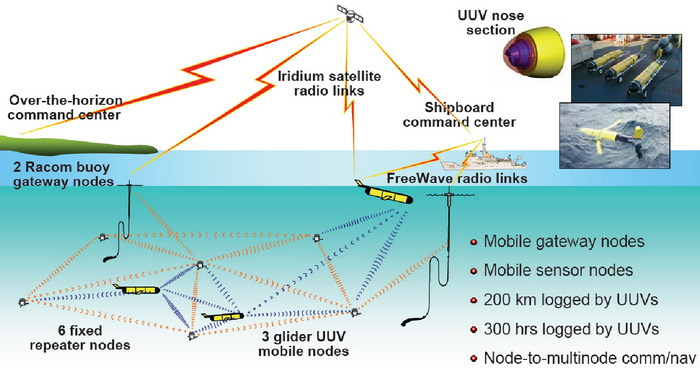
Modern seismology focuses on measurable precursors known as ‘Slow Slip Events (SSEs).’ These are phenomena where the plate boundary gradually slips, which can trigger a major earthquake, although they are not felt by humans.
To monitor this, Japan has established the world-class undersea observation network DONET (Dense Oceanfloor Network system for Earthquakes and Tsunamis). DONET detects seismic waves and tsunamis from the seafloor directly above the epicenter several seconds to minutes earlier than on land, playing a crucial role in early warning systems.
Part 2: History Written in Vibrations: Lessons from the Past
1,400 Years of Chronology: Establishing Repetitive Cycles
From the oldest record, the 684 AD Hakuho earthquake, to the 1944/46 Showa earthquakes, history clearly shows that the Nankai Trough megaquake has repeated approximately every 100 to 150 years. Now, about 80 years have passed since the last major rupture, and the geological clock indicates that the next earthquake is imminent.
Mega-Linked Earthquakes: Comparing Past Cases
The most frightening feature of the Nankai Trough earthquakes is the ’linked earthquakes’ where multiple regions rupture in succession. Most major earthquakes in the past have occurred in this manner. I also remember being deeply shocked while watching the news during the Great East Japan Earthquake, indirectly experiencing the destructive power of linked earthquakes.
| Earthquake Name | Year | Magnitude (Estimated) | Features |
|---|---|---|---|
| Hoei Earthquake | 1707 | Mw 9.3 | The worst-case scenario where the Tokai, Nankai, and Tonankai segments ruptured almost simultaneously. |
| Ansei Earthquake | 1854 | M 8.4 | The Nankai earthquake occurred 32 hours after the Tokai earthquake. |
| Showa Earthquake | 1944-46 | M 8.2 / 8.4 | The Nankai earthquake occurred 2 years after the Tonankai earthquake. |
Part 3: Imminent Threat: Scientific Predictions and Official Scenarios
Decoding the “80% within 30 Years” Prediction
The Japanese government’s prediction of a 70-80% probability of an M8-9 earthquake occurring within the next 30 years serves as a strong warning that “it would not be surprising if an earthquake occurred tomorrow.” The 30-year period is merely a standard for long-term predictions; the key point is that the risk is extremely imminent.
Japan’s National Damage Assumptions: Worst-Case Scenario
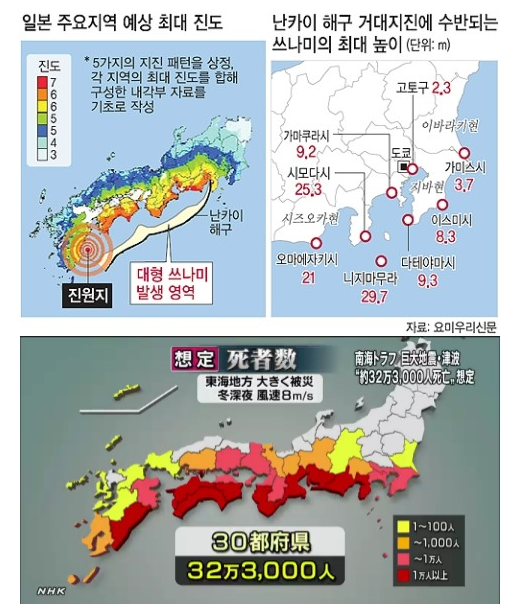
The Japanese Cabinet Office has released a shocking damage scenario based on the worst-case assumptions.
- Casualties: Up to 330,000 deaths, 12.3 million evacuees
- Infrastructure Damage: Collapse or loss of 2.5 million buildings
- Economic Shock: Damage of up to 270 trillion yen (approximately 1.8 trillion dollars), with recovery taking over 20 years
These figures are based on the assumption of inadequate disaster prevention measures, conveying a sophisticated risk communication strategy that emphasizes the potential for significant damage reduction through preparedness.
Part 4: National Mobilization: Japan’s Preparedness and Mitigation Strategies
‘Megaquake Alert’ System
Based on the lessons learned from past linked earthquakes, Japan operates the ‘Nankai Trough Earthquake Temporary Information’ system. When specific conditions (such as an M7.0 or greater earthquake) are met, ‘Megaquake Caution’ or ‘Megaquake Alert’ information is issued to raise awareness of subsequent earthquakes and encourage preemptive evacuations.
Blueprint for Survival: National Disaster Prevention Basic Plan
The Japanese government has set an ambitious plan aiming to reduce expected casualties by 80% and building destruction by 50% over the next 10 years. To achieve this, they are pursuing three main strategies: ▲ Strengthening hardware infrastructure (earthquake resistance reinforcement, flood barriers) ▲ Enhancing software infrastructure (evacuation route maintenance, disaster prevention digital transformation) ▲ Promoting public participation and awareness (training, stockpiling).
Part 5: Prophecy, Pseudoscience, and Public Anxiety
“So, is there really no way to predict when an earthquake will occur?” Many may ask this question. In a situation where science cannot provide a specific date, public anxiety often turns to unscientific narratives.
“I Saw the Future”: Deconstructing Ryo Tatsuki’s Prophecy
Manga artist Ryo Tatsuki’s prophecy of a disaster on “July 5, 2025” is a representative sociocultural phenomenon that taps into the public’s psychological thirst for ‘certainty’ that science cannot provide. The Japan Meteorological Agency and experts have officially rebutted this as “a baseless rumor”, but once anxiety spreads, it is not easily quelled.
Reading “Signs”: Scientific Critique of Anomalous Phenomena
What about the so-called precursors to earthquakes, such as earthquake clouds and the appearance of deep-sea fish?
- Earthquake Clouds: Scientific consensus is clear. The phenomenon known as ’earthquake clouds’ does not exist. The clouds referred to as earthquake clouds are merely cloud formations that can be explained by existing meteorology.
- Appearance of Deep-Sea Fish: A 2019 analysis by a Tokai University research team revealed that there is no statistically significant correlation between the appearance of deep-sea fish and earthquakes.

Such beliefs stem from psychological mechanisms like ‘illusory correlation’ or ‘confirmation bias’, where the brain mistakenly perceives a causal relationship between two coincidental events.
Part 6: Beyond the Archipelago: International Impact
The Nankai Trough megaquake is not just a problem for Japan.
- Threat to the Korean Peninsula: The generated tsunami could reach Jeju Island and the southern coast, and there is also a possibility that strong seismic waves could trigger localized earthquakes within the Korean Peninsula.
- Shockwaves to the Global Economy: If the production and logistics functions of this region, the heart of the Japanese economy, are paralyzed, it poses a significant global risk that could lead to a worldwide supply chain collapse.
Checklist: Minimum Earthquake Preparedness for You and Your Family
- Prepare emergency supplies: Have at least 3 days’ worth of water, emergency food, first aid supplies, flashlights, radios, and backup batteries?
- Secure safe spaces: Have you identified the safest places in your home (under sturdy tables, areas with load-bearing walls)?
- Secure furniture: Have you firmly anchored tall furniture (bookshelves, cabinets) that could fall?
- Establish evacuation plans: Have you set evacuation routes and meeting places for your family in case of an earthquake?
- Know how to verify information: Do you know how to check reliable information (public broadcasts, government disaster messages) during a disaster?
Conclusion
The key points we must remember about the Nankai Trough megaquake are:
- Scientific Inevitability: The occurrence of an earthquake is a highly probable scientific fact.
- Historical Lessons: Past cases of linked earthquakes remind us that we must prepare for the worst-case scenarios.
- Importance of Preparedness: While we cannot prevent earthquakes, we can reduce the scale of damage through thorough preparedness.
The most certain way to face an uncertain future is not to rely on prophecy but to establish a preparedness posture based on science. How about checking the safety of our homes and making evacuation plans with our families right now?
References
- Nankai Earthquake - Wikipedia Link
- Nankai Trough Megaquake - Wikiwand Link
- Nankai Trough Earthquake - Japanese Cabinet Office Disaster Information Link
- Nankai Earthquake - Namu Wiki Link
- YTN - [Issue Pick] “80% Probability of Nankai Megaquake… ‘100-Year Cycle’ Returns Link
- Hankyoreh - Expected Casualties of 300,000… Japanese Government Finalizes Nankai Megaquake Preparedness Plan Link
- Japan Meteorological Agency - Impact of Emergency Earthquake Alerts on DONET’s Planning Work Link
- Japan Seismological Society - FAQ 2-12. Earthquake Clouds Link
- Tokai University - “The Appearance of Deep-Sea Fish is a Precursor to Earthquakes” Dismissed as Superstition (Tokai University × Prefectural University Research Group) Link